Skip to content
Contacts
  • Home
  • Acoustic Wave Technology
    • Device & Equipment
    • Medical Applications
    • Procedures & Methods
    • Sensors & Technology
    • Wave Physics
  • AI
    • Computational Science
    • Software & Programming
  • Data Science
    • Data Analysis
    • Mathematical Methods
    • Optimization Methods
    • Predictive Modeling
    • Probability & Distributions
    • Statistical Analysis
  • Engineering Systems
    • Control Systems
    • Simulation & Modeling
    • System Design
  • Heat Transfer
    • Equipment & Techniques
    • Materials & Substrates
    • Printing & Sublimation
    • Thermal Fundamentals
      • Transfer Methods
    • Vinyl & Crafting
  • Materials
    • Crystal & Structure
    • Electromagnetic Properties
  • Medical Imaging
    • CT Imaging
    • MRI Technology
    • Ultrasound Systems
  • Microfluidics Technology
    • Advanced Applications
    • Cell & Molecular
    • Device Fabrication
    • Droplet Systems
    • Flow Control
    • Paper Microfluidics
  • Particle Manipulation
    • Acoustic Techniques
    • Concentration Techniques
    • Electrophoretic Methods
    • Separation Methods
    • Thermophoretic Systems
  • About

Category: Acoustic Wave Technology

Classical mechanics is the foundation of our physical understanding of the universe, describing the motion of macroscopic objects from the trajectory of a projectile to the orbital dynamics of planets. Mastering the laws formulated by Newton and refined by Euler and Lagrange is the essential starting point for any serious study of engineering, aviation, or theoretical physics.


The Classical Mechanics & Dynamics hub explores the laws that govern the physical world. Key attributes of a mechanical system include its kinematic variables (position, velocity, acceleration), the conservation laws (energy, momentum), and the fundamental forces that drive state changes. The value of studying mechanics lies in the ability to predict and manipulate physical outcomes with mathematical precision, providing the blueprints for everything from the design of a bridge to the launch of a spacecraft into the Ionian vacuum.

Kinematics, Statics, and Rotational Motion

Motion is described through the language of calculus. We analyze the role of vectors in representing force and displacement, and the importance of ‘Free Body Diagrams’ in solving complex equilibrium problems. Our guides focus on the mechanics of simple machines and the role of friction and air resistance in real-world environments. By building a robust mental model of classical physics, you gain a professional insight into the invisible forces that shape our reality and define the limits of what is possible in mechanical engineering and design.

FAQ: Physics Foundations

What is the ‘Law of Inertia’? Newton’s First Law states that an object will remain at rest or in uniform motion unless acted upon by an external force; it is the fundamental definition of how mass interacts with the universe.
Why is calculus necessary for physics? Calculus allows for the precise description of change—calculating how displacement becomes velocity and how velocity becomes acceleration in a continuous, dynamic system.

Advanced topics: Quantum Physics.

What Is Surface Acoustic Wave Technology: Essential Guide

What Is Surface Acoustic Wave Technology: Essential Guide

Unlock the potential of Surface Acoustic Wave Technology! Discover how this groundbreaking tech enhances communication and sensing applications. Learn more now!

Sperm Whales Unveil: Pressure Reliefs Through Echolocation

Sperm Whales Unveil: Pressure Reliefs Through Echolocation

Discover how sperm whales use echolocation for pressure relief! Unveil their secrets and learn the science behind this astonishing adaptation. Click now!

Are Surface Acoustic Waves Airborne? Propagation Mechanics

Are Surface Acoustic Waves Airborne? Propagation Mechanics

Uncover the truth: Are Surface Acoustic Waves airborne? Discover their propagation mechanics and applications in advanced tech. Get insights now!

What Occurs During Acoustic Wave Treatment for ED? Protocol
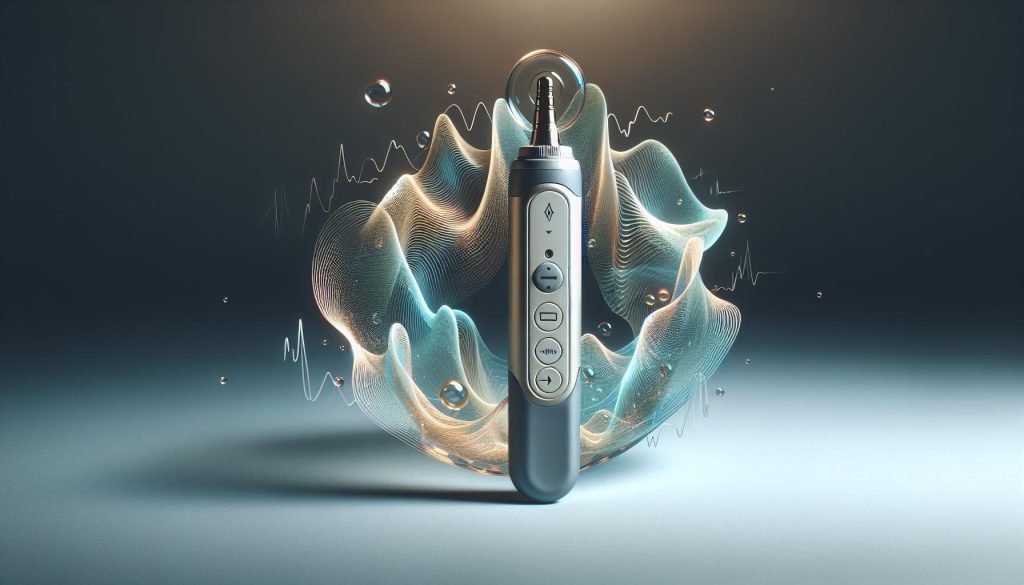
What Occurs During Acoustic Wave Treatment for ED? Protocol

Discover how Acoustic Wave Treatment for ED can revitalize your intimacy. Learn the step-by-step protocol and unlock a renewed sense of confidence today!

Straightline Line Source: Audio Technology Breakthrough

Straightline Line Source: Audio Technology Breakthrough

Transform your audio experience with the Straightline Line Source breakthrough. Discover the technology reshaping sound quality and get immersive clarity today!

Is Acoustic Wave Therapy Effective? Clinical Results

Is Acoustic Wave Therapy Effective? Clinical Results

Discover if acoustic wave therapy is effective for your needs! Learn about clinical results, benefits, and how this innovative treatment can transform recovery.

Acoustofluidic Droplet Manipulation: Sound Based Precision

Acoustofluidic Droplet Manipulation: Sound Based Precision

Unlock the future of lab technologies! Explore how “Acoustofluidic Droplet Manipulation: Sound Based Precision” revolutionizes microscale control. Get insights now!

What Is Surface Acoustic Wave Sensors Used For? Applications

What Is Surface Acoustic Wave Sensors Used For? Applications

Discover how Surface Acoustic Wave (SAW) sensors revolutionize industries! Learn their applications and see how they enhance efficiency. Get informed now!

What Is the Difference Between Acoustic Waves & Mechanical?

What Is the Difference Between Acoustic Waves & Mechanical?

Unlock the secrets behind sound! Discover the difference between acoustic waves and mechanical waves and enhance your understanding of these essential concepts today.

Does Acoustic Wave Therapy Work? Evidence-Based Analysis

Does Acoustic Wave Therapy Work? Evidence-Based Analysis

Discover if Acoustic Wave Therapy really works. Get the evidence-based insights you need to make informed health choices. Learn how it could change your life today!

Next →
  • Homepage
  • Blog
  • About PhysicsClass.blog
  • Frequently Asked Questions
  • Contact
  • Privacy Policy
  • Homepage
  • Blog
  • About PhysicsClass.blog
  • Frequently Asked Questions
  • Contact
  • Privacy Policy
AI Editorial Policy