
Imagine a world where precise manipulation of tiny droplets can transform industries from pharmaceuticals to diagnostics. Acoustofluidic droplet manipulation harnesses the power of sound waves to control fluid dynamics at the micro-scale, offering non-invasive, highly precise techniques for sorting, mixing, and analyzing droplets. This innovative approach not only enhances lab efficiency but also opens pathways for breakthroughs in medical research and personalized medicine. By using acoustic fields, researchers can achieve complex fluid manipulations without the need for physical contact, reducing contamination risk and preserving sample integrity. Dive into the fascinating realm of acoustofluidics, where sound meets science, and discover how this technology can address the pressing challenges of today’s scientific landscape.
Understanding Acoustofluidics: Key Principles and Applications
Acoustofluidics represents a groundbreaking convergence of acoustics and fluid dynamics, enabling precise manipulation of small droplets through the application of ultrasonic sound waves. This technology harnesses the physical principles of acoustic radiation forces, allowing scientists and engineers to control the behavior of fluids at micro and nanoscale levels. For instance, in lab-on-a-chip applications, precise droplet positioning and manipulation can enhance the efficiency of chemical reactions and biological assays, opening doors to innovations in various fields ranging from pharmaceuticals to environmental monitoring.
In essence, the core principle of acoustofluidics relies on the interaction between sound waves and the medium they travel through. When ultrasound is applied, it generates pressure nodes and antinodes within the fluid, which can trap, transport, or mix droplets with remarkable accuracy. This capability not only simplifies existing processes but also leads to novel methodologies, such as contactless droplet transport-a game changer for reducing contamination risks in sensitive experiments. Moreover, the non-invasive nature of sound-based manipulation makes it suitable for delicate biological applications, where conventional mechanical approaches could cause damage.
Several applications of acoustofluidics are worth exploring. For instance, in medical diagnostics, acoustofluidic devices can facilitate rapid point-of-care testing by manipulating tiny volumes of liquids for precise measurements. Additionally, in the realm of materials science, the technology aids in the synthesis of nanoparticles by enabling fine control over reaction conditions-leading to products with tailored properties. As researchers delve deeper into the principles of acoustofluidics, the potential for integrating this technology with other systems promises significant advancements, underscoring its importance as a versatile tool in modern science and engineering.
Acoustofluidics not only enhances existing methodologies but also presents new opportunities for innovation in droplet manipulation, making it a crucial area of study for those interested in the intersection of fluid mechanics and wave physics. The intricacies of this technology, combined with its practical applications, position it as a valuable asset across a multitude of disciplines.
The Role of Sound Waves in Droplet Manipulation
The manipulation of droplets using sound waves is a remarkable demonstration of how physical principles can be harnessed to control fluid behavior with astonishing precision. At the core of this process lies the interaction between ultrasonic sound waves and the medium through which they travel, typically a fluid. When ultrasound is applied, it creates alternating areas of high and low pressure known as pressure nodes and antinodes. This acoustic field can effectively “trap” droplets within nodes, allowing researchers to transport and manipulate them without direct contact, which is particularly valuable for sensitive materials.
Droplet manipulation through acoustofluidics offers significant advantages in various fields, including biology and chemistry. For instance, in biomedical applications, sound waves can aid in the precise positioning of droplets containing cells or reagents, facilitating complex assays without the risk of contamination that often accompanies traditional mechanical methods. This non-invasive approach not only preserves the integrity of biological samples but also allows for real-time adjustments during experiments. In chemical synthesis, the ability to mix and react tiny volumes of reagents with careful control means that reaction conditions can be finely tuned to produce desired outcomes, producing compounds with high specificity.
The application of sound waves for droplet manipulation is further enhanced by innovative techniques that deploy phased arrays-arrays of ultrasonic transducers that can be precisely timed to create specific acoustic fields. By adjusting the phase and amplitude of each transducer, researchers can dynamically direct the flow of droplets, enabling sophisticated operations such as sorting and merging. This technology expands the possibilities for lab-on-a-chip applications, where controlling droplets with such accuracy can lead to substantial improvements in efficiency and throughput, particularly in high-throughput screening and microfluidics.
In summary, exemplifies how acoustic principles can be utilized to revolutionize the handling of fluids at micro and nanoscale levels. This influence not only drives innovation in research practices but also opens new avenues for the development of technologies that promise to enhance precision and effectiveness in a range of applications. The continuous exploration of these methods underscores the potential of acoustofluidics as a critical tool in modern science and engineering.
Advantages of Acoustofluidic Technology Over Traditional Methods
The emergence of acoustofluidic technology has transformed how droplets are manipulated in various scientific and industrial applications, offering numerous advantages over traditional methods. One of the most significant benefits is the ability to control droplets with extraordinary precision without physical contact. This non-invasive manipulation is crucial in sensitive environments, such as in biological assays where maintaining the viability of cells and reagents is paramount. Unlike mechanical techniques that can introduce contamination or damage samples, acoustofluidics utilizes ultrasound to create pressure waves that guide droplets, ensuring their integrity is preserved throughout the process.
Moreover, the dynamic nature of acoustofluidic systems allows for real-time adjustments. Researchers can fine-tune conditions on-the-fly, which is particularly beneficial in experiments requiring high adaptability. For example, in high-throughput screening, the ability to quickly change droplet positioning or composition can significantly enhance productivity and reduce the time needed to achieve results. This adaptability stands in stark contrast to traditional methods, which often involve static setups that can limit experimentation and require labor-intensive adjustments.
Another advantage is the potential for miniaturization and integration into lab-on-a-chip devices. Acoustofluidic technologies can be compacted into small spaces, enabling more efficient use of resources and reducing reagent volumes. This is not only cost-effective but also environmentally sustainable, as it minimizes waste. Furthermore, the scalability of acoustofluidic techniques means that they can be easily adapted for various applications, from single-cell analysis in research labs to large-scale production in industrial settings.
In summary, acoustofluidic technology outperforms traditional droplet manipulation methods through its precision, adaptability, and efficiency. The ability to control droplets without contact, make real-time adjustments, and integrate into miniaturized systems makes it an invaluable tool in modern scientific research and industrial processes. As this technology continues to advance, its capacity to facilitate innovative solutions across multiple disciplines will only grow, paving the way for new discoveries and improvements.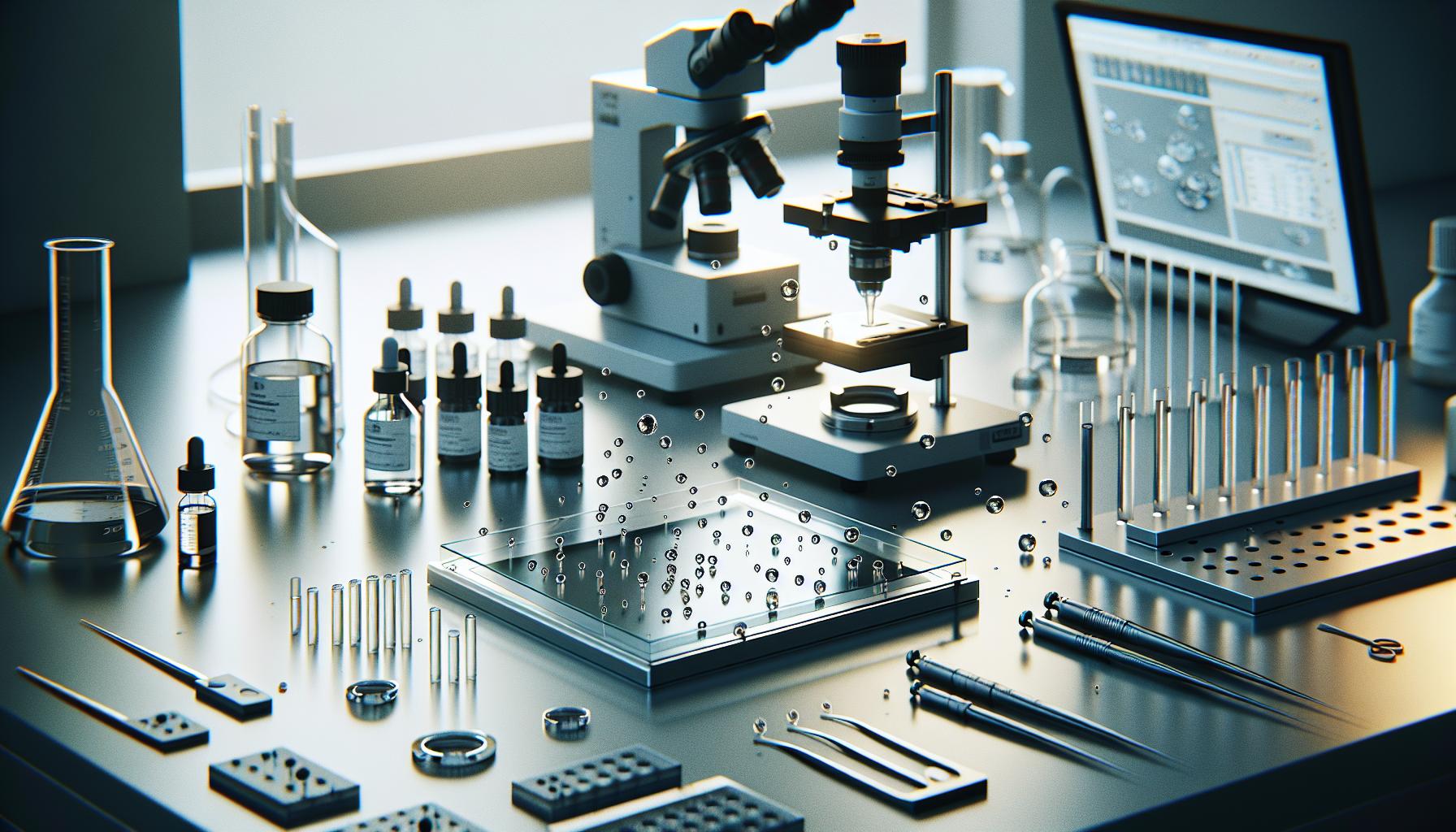
Innovative Techniques for Precise Droplet Control
The precision achieved in droplet control through innovative acoustofluidic techniques is reshaping various fields, from biomedical research to materials science. One standout method is the use of standing surface acoustic waves (SAW), which creates localized pressure nodes on surfaces, effectively trapping and moving droplets without contact. This technique not only allows for high-frequency manipulation but also enables precise positioning with micrometer accuracy, supporting applications such as single-cell analysis and drug screening.
Another compelling approach is utilizing acoustic droplet ejection (ADE), where focused ultrasound beams are applied to eject small volumes of liquid from a source. This technology is remarkable for its ability to generate uniform droplet sizes on demand, allowing for reproducible and scalable processes vital in high-throughput screening environments. By carefully controlling the acoustic parameters, researchers can modify droplet trajectory and volume, facilitating experiments that require exacting conditions.
To maximize control, researchers are increasingly integrating machine learning algorithms to predict and optimize droplet behavior. By analyzing vast datasets from acoustofluidic operations, these algorithms can discern patterns and make real-time adjustments to the acoustic field, improving efficiency and accuracy in droplet manipulation. For instance, predictive models can adjust wave frequencies in response to changing system dynamics, ensuring continuous optimal performance.
Furthermore, the prospects of multifunctional acoustofluidic platforms are on the horizon. Combining acoustic manipulation with optical and thermal control opens new avenues for applications such as sensitive biochemical assays. Here, droplets can be sorted not only based on their acoustic properties but also by their fluorescent characteristics, enhancing the capabilities beyond simple droplet transport and aggregation.
These advancements underline the transformative potential of acoustofluidic technology in precise droplet control, not simply by improving existing methods but by paving the way for new possibilities in scientific exploration and industrial applications. As these techniques continue to evolve, they promise to enhance research outcomes, driving innovation across multiple domains.
Real-World Applications of Acoustofluidic Manipulation
The ability to manipulate small droplets with high precision using acoustofluidic technology is revolutionizing fields ranging from biomedical diagnostics to materials science. One striking example is in the realm of drug development, where researchers employ acoustic droplet ejection (ADE) techniques to form precise, uniform droplets containing potential pharmaceuticals. This not only enhances the efficiency of screening processes but also enables the formulation of complex drugs in a controlled manner. By controlling the droplet volume and ejection timing, scientists can conduct high-throughput experiments that were once tedious and time-consuming.
In addition to pharmaceuticals, acoustofluidic manipulation finds applications in environmental monitoring. For instance, the technology can be utilized to create microreactors that evaluate water quality by analyzing contaminants at trace levels. By generating and directing droplets through various detection systems, researchers can perform sensitive assays efficiently. This capability is critical in providing quick responses to pollution events, ultimately contributing to environmental protection and public safety.
Another fascinating application is in diagnostics, especially in the field of point-of-care testing. Acoustofluidic devices can sort and isolate rare cells, such as circulating tumor cells (CTCs), from blood samples with exceptional precision. This is achieved by using acoustic forces to manipulate the droplets that contain the target cells, enhancing the sensitivity and specificity of cancer diagnostics. Such capabilities allow for earlier detection of cancers and personalized treatment plans, illustrating the profound impact of this technology on patient outcomes.
Moreover, the integration of acoustofluidic systems with microfluidics is paving the way for next-generation lab-on-a-chip devices. These multifunctional platforms can perform various biochemical assays simultaneously, significantly reducing the time and resources required for laboratory analyses. As research continues to expand in this field, the potential uses of acoustofluidic manipulation are likely to grow, promising exciting advancements in healthcare, environmental science, and beyond.
In summary, the are vast and varied, showcasing its potential to enhance precision, efficiency, and outcomes in scientific research and industry. As this technology evolves, it will undoubtedly unlock new frontiers in various disciplines, making it an area of active interest for researchers and practitioners alike.
Exploring Acoustic Pressure: Fundamentals and Effects
Sound waves, an often-overlooked force, play a critical role in the precise manipulation of droplets in acoustofluidic systems. By leveraging acoustic pressure, researchers can control fluidic dynamics with remarkable finesse, opening new avenues for applications such as drug development and diagnostics. This manipulation occurs due to the pressure variations created by sound waves, which act upon the droplets, exerting forces that influence their movement and behavior within fluids.
Understanding acoustic pressure involves recognizing its sources and effects. When a sound wave propagates through a medium, it creates alternating zones of high and low pressure. This phenomenon results in standing waves that can be used to trap and manipulate droplets at specific locations. In more technical terms, the acoustic radiation force can cause droplets to migrate to areas of higher pressure, enabling their precise arrangement and controlled movement. The strength of the acoustic pressure can be fine-tuned by adjusting the amplitude and frequency of the sound waves, providing a versatile toolkit for achieving specific droplet behaviors.
One practical example of this technology in action is in the development of lab-on-a-chip devices, where acoustic pressure is harnessed for the manipulation of small volumes of fluids. In these devices, droplets can be directed, merged, or split based on the application needs-whether for chemical reactions, cell sorting, or signal amplification in diagnostic assays. The benefits of acoustic manipulation are significant, including reduced sample volume requirements and enhanced reaction control, which minimizes waste and improves reaction outcomes.
In conclusion, acoustic pressure serves as a fundamental mechanism in acoustofluidics, facilitating the sophisticated manipulation of droplets. This technology not only enhances precision in scientific research but also paves the way for novel applications across various fields, from healthcare to environmental monitoring. As research evolves, the full potential of acoustic pressure manipulation will continue to unravel, promising advancements that could reshape how we approach fluid dynamics in innovative ways.
Materials and Devices Used in Acoustofluidic Systems
The realm of acoustofluidics blends the principles of acoustics and fluid dynamics to manipulate droplets with incredible precision. Central to this innovative technology are the materials and devices that facilitate the generation and control of acoustic fields. Understanding these components can enhance the application of acoustofluidic systems in various fields, from biomedical diagnostics to microfluidics.
One of the primary materials used in acoustofluidic devices is piezoelectric materials, which are capable of converting electrical energy into mechanical vibrations. Common examples include materials like quartz and certain ceramics. These piezoelements are typically configured into transducers, which generate sound waves when an electrical voltage is applied. The selection of the piezoelectric material affects not only the frequency of the generated waves but also the efficiency of energy conversion and the overall performance of the device. High-frequency transducers (ranging from hundreds of kHz to several MHz) are particularly effective in generating the standing waves necessary for droplet manipulation.
In addition to piezoelectric materials, the microfluidic chips themselves are crucial for manipulating droplets. These chips are often made from materials like polydimethylsiloxane (PDMS) or thermoplastics, which are easily fabricated and allow for high-integrity fluidic paths. The design of these chips can include features like channels and chambers specifically tailored for acoustic trapping and manipulation. Critical to their effectiveness, the geometry of the fluidic structures significantly influences how the droplets respond to the acoustic fields, offering the potential for design customization based on targeted applications.
Actuators and Sensors
Devices in acoustofluidic systems also incorporate various actuators and sensors to facilitate real-time monitoring and control. These might include laser Doppler vibrometers for measuring surface vibrations of the piezoelectric components or microphones to quantify acoustic emissions. By integrating feedback systems that utilize these sensors, researchers can optimize the performance of the acoustofluidic setup, adjusting parameters dynamically to enhance droplet manipulation.
Table 1 below illustrates some of the prominent materials and their applications in acoustofluidic systems:
| Material | Type | Application |
|---|---|---|
| Quartz | Piezoelectric | Sound wave generation |
| PDMS | Microfluidic substrate | Fluidic channel fabrication |
| Piezoelectric ceramics | Transducer | High-frequency wave generation |
| Microphones | Sensor | Acoustic field monitoring |
Ultimately, the synergy between these materials and devices empowers researchers to explore new avenues in droplet manipulation technologies. By leveraging the unique properties of each component, the design of acoustofluidic systems becomes more versatile, paving the way for advancements that can significantly impact healthcare, environmental monitoring, and chemical processing industries. As this field continues to evolve, we anticipate a plethora of innovative solutions that harness the power of sound to enhance precision in fluidic manipulation.
Challenges and Limitations in Droplet Manipulation
Despite its transformative potential, droplet manipulation through acoustofluidics faces several challenges that can hinder its widespread adoption and effectiveness. Many researchers encounter difficulties in optimizing the parameters of acoustic fields, such as frequency, power, and geometry of fluidic devices, each of which can drastically affect droplet formation, movement, and stability. Fine-tuning these parameters is crucial because even minor variations can lead to inconsistent results, which may pose a significant issue when precision is paramount, particularly in applications like drug delivery or diagnostics.
Another noteworthy limitation lies in the complexity involved in scaling up acoustofluidic systems for industrial applications. While laboratory-scale devices may demonstrate excellent control over droplet manipulation, translating these results to larger, more complex systems is not straightforward. The acoustical properties change in larger volumes, which can alter the efficiency of droplet manipulation. As such, methods that work well on a small scale may not yield the same precision when scaled up, resulting in lower reliability and increased operational costs.
In addition, material compatibility poses a crucial hurdle in the design of acoustofluidic devices. Many common fluids and biological samples can interact adversely with the materials used in microfluidic chips, leading to issues such as clogging, chemical degradation, or unwanted reactions. Furthermore, the acoustic properties of the materials themselves must be considered; not all materials transmit sound waves effectively, which can limit the range of materials available for device construction. It becomes essential to select materials that not only meet the required performance standards but also show compatibility with the fluids used in specific applications.
Addressing Limitations
Strategies to combat these challenges include developing more sophisticated feedback systems to autonomously adjust parameters in real-time, enabling higher adaptability. Additionally, researchers are exploring new materials and fabrication techniques, such as 3D printing, which may allow for better customization and integration of various functionalities within a single device. By overcoming these limitations, the field of acoustofluidic manipulation can expand its capabilities, paving the way for innovative applications across multiple sectors, including healthcare and environmental monitoring.
Future Trends in Acoustofluidic Research
The landscape of acoustofluidics is evolving rapidly, propelled by advancements in technology and an increasing understanding of acoustic phenomena in fluid systems. Researchers are now focusing on integrating machine learning and artificial intelligence to optimize droplet manipulation processes. By using predictive algorithms, systems can autonomously adjust parameters in real-time, greatly enhancing the adaptability of acoustofluidic devices. This opens the door to more complex and efficient applications, allowing for precise control in dynamic environments such as biological analyses and chemical reactions.
Another exciting trend is the exploration of multi-frequency and multi-mode acoustic fields. Traditional acoustofluidic systems typically rely on single-frequency waves, but recent studies suggest that combining different frequencies might produce enhanced droplet manipulation and sorting capabilities. This approach could enable more sophisticated droplet behaviors, such as controlled merging and fission, which are crucial for high-throughput applications in drug discovery and diagnostics.
Emerging Materials and Devices
The future of acoustofluidics also lies in the development of innovative materials. Researchers are investigating novel polymers and composites that not only enhance acoustic properties but are also more compatible with a wider range of biological samples and chemical substances. For instance, the use of bioinert materials can reduce adverse reactions in sensitive applications such as cell encapsulation or biological assays. Moreover, 3D printing is being increasingly utilized to fabricate custom acoustofluidic devices with intricate geometries, which allows for more precise droplet manipulation and the integration of multiple functionalities within a single chip.
This convergence of various technologies and materials signifies a bright future for acoustofluidics, promising breakthroughs in fields ranging from healthcare to environmental monitoring. As these systems become more refined, we can expect them to revolutionize how we approach tasks like targeted drug delivery, environmental sampling, and even food safety testing, making precision-based acoustic manipulation not just a theoretical concept but a practical, transformative technology.
Integrating Acoustofluidics with Other Technologies
The intersection of acoustofluidics with other advanced technologies presents a dynamic frontier for enhancing droplet manipulation and control. By integrating acoustofluidic systems with digital microfluidics, for instance, researchers can leverage the strengths of both platforms to achieve unprecedented precision in handling small volumes of fluids. Digital microfluidics allows for the discrete movement of droplets on an array of electrodes, leading to more versatile experimental setups. When paired with acoustofluidic techniques, this combination can enable rapid and responsive control over droplet behavior, such as merging, splitting, or sorting based on acoustic properties. This synergistic approach not only increases throughput but also minimizes the need for extensive sample preparation.
Moreover, the incorporation of machine learning and artificial intelligence into acoustofluidic systems significantly enhances their functionality. By analyzing vast amounts of data from droplet behaviors and interactions in real time, predictive algorithms can optimize acoustic parameters for specific tasks. For example, in drug delivery applications, AI can determine the most effective frequency and amplitude settings to maximize the efficiency of droplet transport while maintaining the stability of sensitive drug compounds. This intelligent integration not only streamlines experiments but also facilitates adaptive experimentation, where the system learns and optimizes continuously based on previous results.
Multi-Modal Approaches
The emergence of multi-modal techniques offers further opportunities for innovation in acoustofluidic applications. By combining acoustics with optical manipulation, such as laser-induced droplet trapping and guiding, researchers can create highly responsive systems capable of both micron-level positioning and dynamic droplet control. This dual approach can be particularly advantageous in biological assays, where precise placement and modulation of droplets can significantly impact reaction outcomes.
Additionally, integrating acoustofluidics with other environmental monitoring technologies, such as sensors and biosensors, expands its utility in real-world applications. For instance, allowing acoustofluidic systems to work alongside microelectromechanical systems (MEMS) can result in highly sensitive detection platforms. These platforms could be employed in health diagnostics, where the simultaneous manipulation and analysis of biological samples are crucial for precise biomarker detection.
In conclusion, the integration of acoustofluidics with complementary technologies not only enhances the efficiency and versatility of droplet manipulation but also opens up new horizons for practical applications across various fields. Continued exploration in this area promises to drive significant advancements, enabling more sophisticated and responsive systems that fulfill the growing demands of research and industry.
Case Studies: Successful Implementations and Outcomes
In recent years, advances in acoustofluidics have led to remarkable implementations across various sectors, highlighting the technology’s potential to revolutionize droplet manipulation. One compelling example comes from the field of biomedical diagnostics, where researchers have successfully employed acoustofluidic systems to enhance the detection of biomarkers in small sample volumes. By utilizing sound waves to precisely control droplet movement, teams have significantly reduced the time and cost associated with traditional laboratory techniques. This approach facilitated the rapid and accurate detection of diseases, showcasing how acoustofluidics can streamline workflows and improve diagnostic accuracy.
Another noteworthy implementation can be seen in drug delivery systems. In a groundbreaking study, scientists integrated acoustofluidic techniques with drug formulation processes, achieving targeted delivery of therapeutic agents. By tailoring acoustic parameters-frequency and amplitude-they optimized the merging and splitting of droplets that contained different drug compounds. This method not only improved the efficiency of drug encapsulation but also ensured that the drugs remained stable and effective for longer periods. The successful demonstration of this system underscores the capability of acoustofluidics to meet the specific demands of targeted treatment protocols.
In the realm of environmental monitoring, researchers have also harnessed the power of acoustofluidics to create sensitive detection systems for pollutants. These systems utilize sound waves to manipulate droplets that capture environmental samples, which are then analyzed for contaminants. By combining this technology with microelectromechanical systems (MEMS), researchers achieved unprecedented sensitivity and specificity in detecting trace levels of toxic substances. This approach illustrates how acoustofluidic methods can enhance the effectiveness of conventional environmental assays, making them more adaptable to real-world challenges.
The versatility of acoustofluidic systems is further exemplified by their application in food safety testing, where rapid pathogen detection is critical. By leveraging droplet manipulation techniques, researchers have developed devices that facilitate the quick analysis of food samples for harmful bacteria. This real-time monitoring capability not only ensures consumer safety but also empowers manufacturers with the tools needed to respond swiftly to contamination threats.
These case studies collectively showcase the transformative impact of acoustofluidics in diverse fields, emphasizing the technology’s ability to enhance precision, reduce costs, and improve outcomes in droplet manipulation. As research continues to evolve, the promise of acoustofluidics will likely lead to even more innovative applications, paving the way for significant advancements in science and industry.
FAQ
Q: What is the principle behind acoustofluidic droplet manipulation?
A: Acoustofluidic droplet manipulation leverages acoustic waves to exert forces on droplets in a fluid medium. By varying parameters like frequency and wave amplitude, precise control over droplet formation, movement, and merging can be achieved, allowing for applications in microfluidics and lab-on-a-chip technologies.
Q: How does acoustofluidics compare to optical manipulation methods?
A: Unlike optical manipulation, which relies on lasers, acoustofluidics uses sound waves, offering advantages such as lower cost, greater versatility, and reduced thermal effects. This technology can manipulate multiple droplets simultaneously and without requiring clear visibility, making it suitable for opaque samples.
Q: What types of applications benefit from acoustofluidic droplet manipulation?
A: Numerous applications benefit, including biomedical diagnostics, drug delivery systems, and chemical synthesis. Acoustofluidics enhances precision in cell manipulation, droplet merging, and sorting processes, making it transformative for research and commercial uses in life sciences and beyond.
Q: Are there any limitations to acoustofluidic technology?
A: Yes, limitations include challenges related to scale-up, variability in droplet size, and the influence of fluid properties, which can affect sound propagation. Additionally, the complexity of designing systems for specific applications may pose hurdles in implementation.
Q: How does temperature affect acoustofluidic droplet manipulation?
A: Temperature impacts fluid properties such as viscosity and density, which in turn affect the acoustic wave propagation and droplet behavior. Maintaining optimal temperatures is crucial for achieving consistent manipulation results in acoustofluidic systems.
Q: What materials are typically used in acoustofluidic systems?
A: Acoustofluidic systems often utilize materials like PDMS, glass, or silicon, which facilitate the creation of microchannels and efficient acoustic wave transmission. The choice of materials can significantly influence the system’s performance and compatibility with various fluids.
Q: Can acoustofluidics manipulate non-Newtonian fluids?
A: Yes, acoustofluidics is capable of manipulating non-Newtonian fluids, though it requires careful tuning of acoustic parameters due to their complex flow behavior. By adjusting frequency and power, effective manipulation can still be achieved with these challenging fluids.
Q: What future trends are emerging in acoustofluidic research?
A: Emerging trends include integration with other technologies, such as microelectromechanical systems (MEMS) and enhanced real-time monitoring capabilities. Continued innovation aims to improve manipulation accuracy, scalability, and applicability across diverse scientific domains.
For more detailed insights, refer to sections of the main article discussing key principles and future trends in acoustofluidics.
Future Outlook
As we conclude our exploration of “Acoustofluidic Droplet Manipulation: Sound Based Precision,” it’s clear that harnessing sound waves is transforming how we manipulate droplets at a microscopic level. This innovative approach not only enhances precision but also opens doors to diverse applications in fields like biomedical engineering and materials science. Are you ready to implement these cutting-edge techniques in your own projects?
Don’t miss our related articles on the latest advancements in acoustic technologies and practical applications that can elevate your research. Consider subscribing to our newsletter for insights directly to your inbox, or reach out for a consultation to discuss how we can assist you in leveraging these breakthroughs. Share your thoughts and questions in the comments-your engagement helps us shape future content to better serve our community. Embrace the future of acoustofluidics today!
Get our latest guides, news, and insights highlighted in your Google Search & AI Overviews.