Skip to content
Contacts
  • Home
  • Acoustic Wave Technology
    • Device & Equipment
    • Medical Applications
    • Procedures & Methods
    • Sensors & Technology
    • Wave Physics
  • AI
    • Computational Science
    • Software & Programming
  • Data Science
    • Data Analysis
    • Mathematical Methods
    • Optimization Methods
    • Predictive Modeling
    • Probability & Distributions
    • Statistical Analysis
  • Engineering Systems
    • Control Systems
    • Simulation & Modeling
    • System Design
  • Heat Transfer
    • Equipment & Techniques
    • Materials & Substrates
    • Printing & Sublimation
    • Thermal Fundamentals
      • Transfer Methods
    • Vinyl & Crafting
  • Materials
    • Crystal & Structure
    • Electromagnetic Properties
  • Medical Imaging
    • CT Imaging
    • MRI Technology
    • Ultrasound Systems
  • Microfluidics Technology
    • Advanced Applications
    • Cell & Molecular
    • Device Fabrication
    • Droplet Systems
    • Flow Control
    • Paper Microfluidics
  • Particle Manipulation
    • Acoustic Techniques
    • Concentration Techniques
    • Electrophoretic Methods
    • Separation Methods
    • Thermophoretic Systems
  • About

Category: Paper Microfluidics

Paper Microfluidics (microfluidic paper-based analytical devices, μPADs) represents low-cost diagnostic technology that leverages porous cellulose and nitrocellulose matrices to transport liquids via autonomous capillary wicking within hydrophobic-barrier-patterned channels, enabling equipment-free biochemical analysis.

Foundational Pillars
Principles & Methods
Topic Directory
Frequently Asked Questions

Foundational Pillars (Start Here)

WICKING PHYSICS

How Does Paper Microfluidics Work: Wicking and Transport Basics

Lucas-Washburn capillary transport dynamics, Darcy’s law in porous media, paper porosity effects, and fluid front velocity modeling.

Read Guide →

CLINICAL TRANSLATION

What Is Paper Microfluidics: Low-Cost Diagnostics Breakthrough

Clinical deployment paradigms in low-resource environments, multiplexed assays, and disposable lateral flow test architecture.

Read Guide →

DIAGNOSTIC SENSORS

A Review on Microfluidic Paper-Based Devices for Glucose Detection

Enzymatic colorimetric and electrochemical glucose detection mechanisms integrated onto cellulose test strips.

Read Guide →

Lucas-Washburn Capillary Kinetics in Porous Cellulose Networks

Fluid transport in paper microfluidics requires no external pumps, driven entirely by spontaneous capillary wicking. In a 1D paper channel, the fluid penetration distance L as a function of time t is governed by the classical Lucas-Washburn equation: L(t) = √((γ · r_eff · cos θ · t) / (2 · μ)), where γ is liquid surface tension, r_eff is effective cellulose pore radius, θ is liquid-solid contact angle, and μ is fluid dynamic viscosity. As the fluid penetrates deeper, viscous drag along the wetted length progressively retards the advancing front.

Fabrication MethodHydrophobic Barrier MaterialResolution LimitAdvantages & Limitations
Wax Printing & MeltingSolid commercial wax (paraffin/resin)500 – 800 μm channel widthZero cleanroom requirement, rapid prototyping; thermal melting broadens barrier margins
PhotolithographySU-8 or positive photoresist100 – 200 μm channel widthHighest spatial resolution and sharpest boundaries; requires organic solvent washing
Laser Micromachining / CuttingPhysical air boundaries (ablated voids)150 – 300 μm channel widthComplete physical isolation without chemical contamination; structurally fragile channels
Screen PrintingHydrophobic inks / polydimethylsiloxane400 – 600 μm channel widthIdeal for roll-to-roll high-volume commercial production; requires patterned mesh stencils

Engineering multiplexed diagnostic assays on paper requires defining distinct hydrophilic test zones bounded by hydrophobic walls. Wax printing on chromatography paper (Whatman No. 1) followed by brief thermal reflow on a hotplate allows molten wax to melt through the entire paper thickness, creating vertical and horizontal hydrophobic barriers that prevent sample cross-contamination.

Topic Directory & Methodologies

Paper Microfluidic Fundamentals

  • Wicking & Fluid Transport in Paper Devices
  • Low-Cost Paper Diagnostic Breakthroughs
  • Future Diagnostics in Paper Microfluidics
  • Two Hurdles in Paper-Based Testing

Biosensing & Particle Separation

  • Paper-Based Glucose Detection Review
  • Calorimetric Bio-Chem Paper Platforms
  • Dielectrophoresis Separation on Paper
  • Particle Manipulation & Concentration on Paper

Frequently Asked Questions

Why does fluid flow velocity decrease over time in a paper channel?

According to the Lucas-Washburn relation, fluid advancement scales with the square root of time (L ∝ √t). As wicking progresses, the length of wetted porous media increases, multiplying viscous resistance while the driving capillary pressure at the meniscus remains constant, causing continuous deceleration.

What are the main technical hurdles limiting quantitative paper diagnostics?

The primary hurdles are sample evaporation during wicking (altering reagent concentration), non-specific biomolecular adsorption to cellulose fibers, uneven color development across the detection zone (coffee-ring effect), and optical variability due to ambient lighting during smartphone image readouts.

Can paper microfluidic devices perform multiplexed biochemical tests?

Yes. By designing branching distributor channels originating from a central sample inlet port, a single droplet of biological fluid (blood, urine, saliva) splits into separate test zones containing distinct lyophilized chromogenic or electrochemical reagents for concurrent biomarker detection.

How are blood cells separated from plasma in paper microfluidic chips?

Direct separation uses asymmetric porous polysulfone or glass-fiber membrane filters integrated upstream of the cellulose test strip. Red and white blood cells become physically entrapped within the tighter matrix pores, allowing cell-free plasma to wick into the diagnostic reaction zone without hemolysis.


A Perspective on Paper-Based Microfluidics: Future Diagnostics

A Perspective on Paper-Based Microfluidics: Future Diagnostics

Unlock the future of diagnostics with paper-based microfluidics! Discover how this innovative technology can transform healthcare and improve testing efficiency.

What Is Paper Microfluidics: Low-Cost Diagnostics Breakthrough
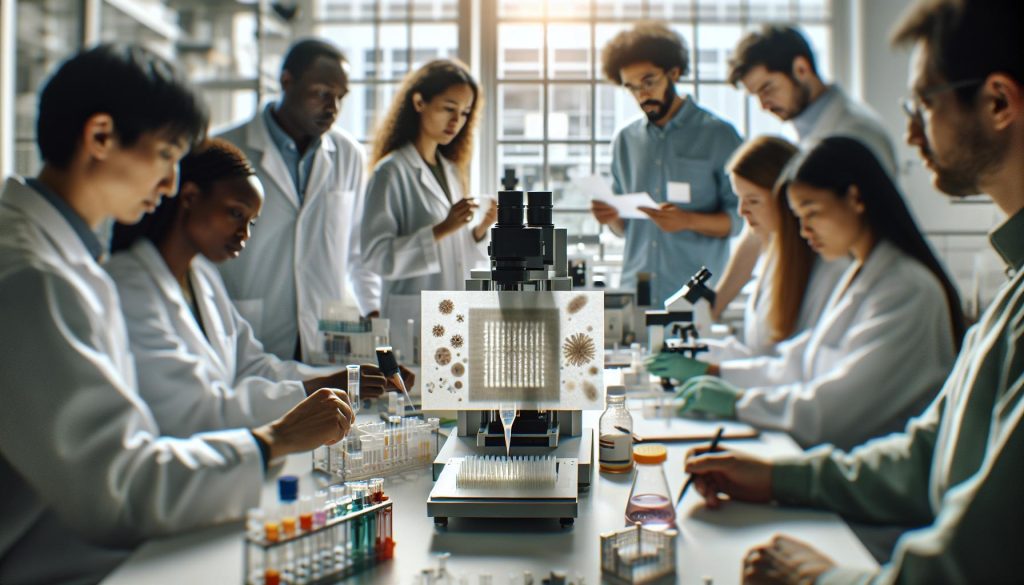
What Is Paper Microfluidics: Low-Cost Diagnostics Breakthrough

Discover how paper microfluidics revolutionizes low-cost diagnostics! Uncover breakthrough solutions for accessible healthcare and transform medical testing today.

A Paper-Based Calorimetric Microfluidics Platform for Bio-Chem
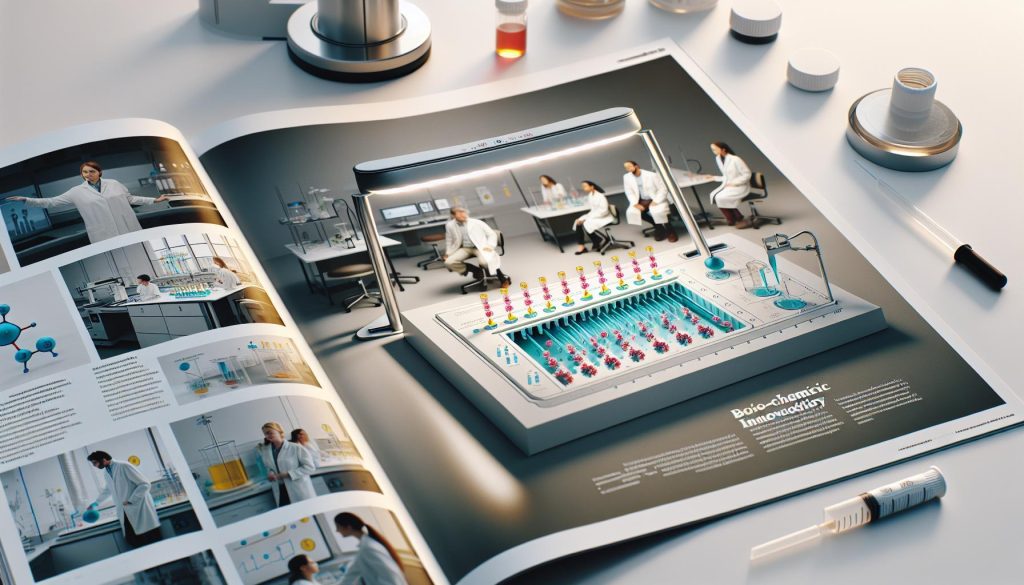
A Paper-Based Calorimetric Microfluidics Platform for Bio-Chem

Unlock the future of research with a paper-based calorimetric microfluidics platform for bio-chemistry. Discover how this innovative tech can transform your experiments!

What Are Two Hurdles to Using Paper-Based Microfluidic Testing

What Are Two Hurdles to Using Paper-Based Microfluidic Testing

Unlock the potential of paper-based microfluidic testing! Discover two major hurdles and how overcoming them can revolutionize your research. Click to learn more!

Dielectrophoresis Paper Microfluidics: Separation Simplified

Dielectrophoresis Paper Microfluidics: Separation Simplified

Unlock the power of Dielectrophoresis Paper Microfluidics! Discover simple, effective separation techniques that revolutionize your research today. Don’t miss out!

How Does Paper Microfluidics Work: Wicking and Transport Basics

How Does Paper Microfluidics Work: Wicking and Transport Basics

Unlock the secrets of paper microfluidics! Discover how wicking and transport basics drive innovations in diagnostics and biosensing. Learn more now!

A Review on Microfluidic Paper-Based Devices for Glucose Detection

A Review on Microfluidic Paper-Based Devices for Glucose Detection

Unlock precise glucose detection with microfluidic paper-based devices! Discover innovative solutions in our comprehensive review that transforms diabetes management today.

Can Cells Be Sorted with Paper Microfluidics: Feasibility Study

Can Cells Be Sorted with Paper Microfluidics: Feasibility Study

Discover if cells can be sorted with paper microfluidics in this groundbreaking feasibility study. Uncover innovative solutions for enhanced bioanalytical methods!

Particle Manipulation Paper Microfluidics: Control Methods

Particle Manipulation Paper Microfluidics: Control Methods

Unlock the potential of particle manipulation in microfluidics! Discover innovative control methods that optimize precision and efficiency for your research.

Paper Microfluidics: Particle Concentration Breakthrough

Paper Microfluidics: Particle Concentration Breakthrough

Unlock groundbreaking advancements in paper microfluidics! Discover how particle concentration breakthroughs can transform diagnostics. Don’t miss out-learn more now!

  • Homepage
  • Blog
  • About PhysicsClass.blog
  • Frequently Asked Questions
  • Contact
  • Privacy Policy
  • Homepage
  • Blog
  • About PhysicsClass.blog
  • Frequently Asked Questions
  • Contact
  • Privacy Policy