Microfluidic spirals play a crucial role in the innovative field of separation mechanisms, which are essential for optimizing processes in biochemistry, pharmaceuticals, and materials science. These intricate devices utilize fluid dynamics to segregate particles based on their size, density, and shape in a controlled manner. This technology addresses specific challenges faced by researchers and engineers, such as enhancing purification protocols and improving diagnostics. As industries increasingly depend on precise and efficient separation methods, understanding how microfluidic spirals operate becomes essential. Dive deeper to discover how these mechanisms work and how they can revolutionize your research and applications.
Understanding Microfluidic Spiral Functionality
Microfluidic spirals are ingenious devices that leverage the principles of fluid dynamics to achieve efficient separation of particles or droplets within a microchannel. These spirals exploit the inertial effects and secondary flows generated in curved channels to enhance both the speed and resolution of separation processes. By guiding the flow through a spiral path, these devices can manipulate various particle characteristics-like size, shape, or density-to achieve targeted separations in a highly efficient manner. This functionality is not just theoretical; it is rooted in well-established physics that translates into practical applications across many fields, particularly in biomedical research and diagnostics.
In microfluidic spirals, separation occurs due to the differential inertia of particles. As a fluid containing a mixture of particles passes through the spiral, centrifugal forces push larger or denser particles outward towards the channel walls, while smaller or less dense particles move closer to the center of the flow. This creates distinct streams of separated particles, which can then be easily collected for analysis or further processing. This mechanism is highly valuable in applications such as cell sorting, where specific cell types need to be isolated for therapeutic or diagnostic purposes.
The design of microfluidic spirals is crucial to their functionality. Factors such as the curvature radius, channel width, and fluid viscosity must be carefully considered to optimize separation efficiency. A tighter spiral increases the centrifugal force, enhancing the spatial separation of particles; however, it also increases pressure drops, which can lead to practical challenges in device operation. Thus, achieving a balance between these parameters is essential for effective separation processes. Furthermore, advanced fabrication techniques allow for the customization of spiral geometries to meet the specific needs of various applications, ranging from drug development to environmental monitoring.
Overall, the operational principle behind microfluidic spirals epitomizes the convergence of engineering and biological sciences, driving innovation in fluid separation technologies. Their ability to manage micro-scale flows with precision not only makes them essential in laboratory settings but also paves the way for future advancements in automated high-throughput screening and diagnostics. As research continues and new designs are developed, the applications of microfluidic spirals are likely to expand, promising even greater efficiencies in particle separation techniques.
The Science Behind Microfluidic Separation
Microfluidic spirals operate on the fascinating principles of fluid dynamics, specifically leveraging inertial forces to enable high-efficiency particle separation. In these systems, a mixture of particles flows through a carefully designed spiral channel. As the fluid navigates the curves, it experiences centrifugal forces that exert different effects on particles based on their size and density. This differentiation is a game-changer in various fields, particularly in biomedical applications, where isolating specific cell types or biomolecules can lead to significant advancements in diagnostics and therapeutics.
The key to understanding the separation mechanism lies in the concept of differential inertia. Larger or denser particles are pushed outward towards the channel walls due to the increase in centrifugal force, while smaller or lighter particles remain closer to the central axis of the spiral. This creates well-defined streams of particles that can be selectively extracted. In practical applications, this means that microfluidic spirals can be used for tasks such as sorting rare cells from blood samples or separating different cellular components in a biological study. The efficiency and specificity of separation achievable through these devices make them invaluable in laboratory settings.
Several factors influence the effectiveness of microfluidic separation, including the geometry of the spiral, the flow rate of the fluid, and the properties of the particles being separated. Design considerations are critical; for example, a tighter spiral can enhance separation efficiency by increasing the centrifugal forces at play, but it may also lead to increased pressure drops that could challenge the device’s operation. Therefore, optimizing these parameters is essential for robust performance. Advanced fabrication techniques continue to evolve, enabling engineers to create customized spiral designs tailored to the unique requirements of various applications, from drug development to environmental monitoring.
Overall, the operational dynamics of microfluidic spirals bridge theoretical principles with practical innovation, demonstrating how physics can be harnessed to solve complex separation challenges. As research progresses and technology advances, we can expect to see even more sophisticated spiral designs revealing new applications and efficiencies in fluid separation, pushing the boundaries of what is possible in microfluidic technology.
Common Applications of Microfluidic Spirals

Microfluidic spirals have emerged as a transformative tool across various domains, effortlessly connecting complex science with practical applications. By harnessing the principles of inertial microfluidics, these devices excel in separating particles with remarkable efficiency, positioning themselves as vital components in fields ranging from medical diagnostics to environmental monitoring.
One of the most prominent applications of microfluidic spirals lies in biomedical research, where they facilitate the isolation and analysis of rare cells and biomolecules. For instance, in cancer diagnostics, microfluidic spirals can be employed to separate circulating tumor cells (CTCs) from a vast majority of normal blood cells. This capability is crucial for early detection of cancer and for monitoring treatment responses. Moreover, the ability to customize spiral designs enhances the specificity of cell separation, allowing researchers to target specific subpopulations within complex mixtures, such as immune cells or stem cells.
In the realm of chemical analysis, microfluidic spirals are invaluable for the separation of nanoparticles and other particulate matter. Their efficiency enables the synthesis of nanoparticles under controlled conditions, which is essential for applications in drug delivery systems and catalysis. For example, researchers can fine-tune the particle size and distribution of nanoparticles used in targeted therapies by manipulating the flow rates and spiral geometries, ultimately leading to improved therapeutic outcomes and reduced side effects.
Microfluidic spirals are also making strides in environmental applications. They can be utilized for detecting pollutants or pathogens in water samples through targeted separation techniques. By isolating specific contaminants, researchers and environmental agencies can conduct a more accurate assessment of water quality, paving the way for timely interventions to safeguard public health.
Understanding these applications not only illustrates the versatility of microfluidic spirals but also highlights their impact on scientific and practical advancements. As technology evolves, we can anticipate even broader uses in fields like agriculture and synthetic biology, where precise manipulation of fluid dynamics can lead to innovative solutions for pressing global challenges.
Design Principles of Microfluidic Spirals
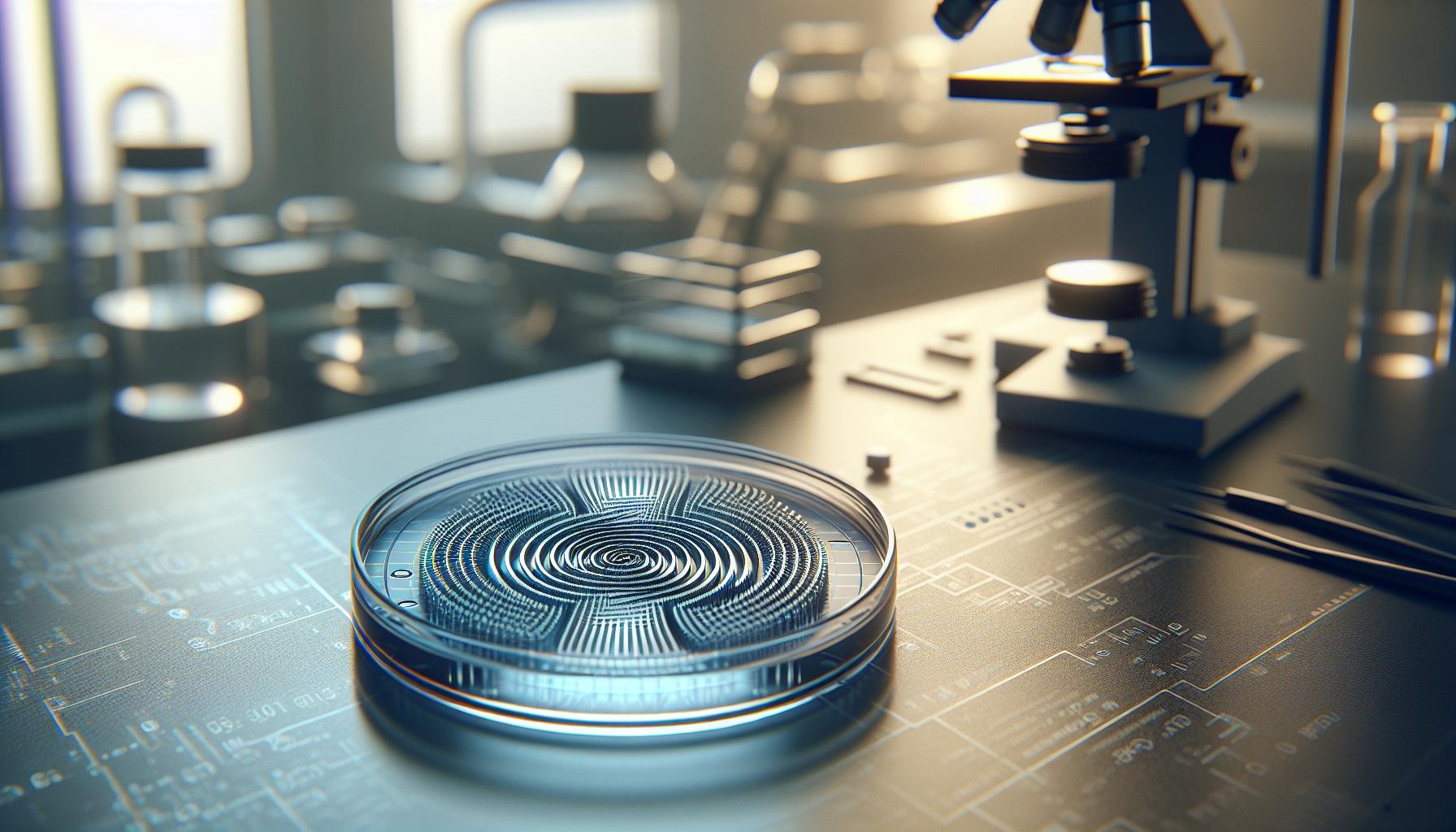
Microfluidic spirals operate on well-defined principles that leverage fluid dynamics, offering innovative solutions for particle separation. Central to their design is the concept of inertial focusing, wherein particles are directed towards specific flow paths within the spiral. As fluid moves through the curved channels, the inertial forces cause particles to migrate laterally, effectively segregating them according to size and density.
A pivotal aspect of spiral design lies in the geometry of the channel itself. The diameter, length, and curvature of the spiral can significantly impact the flow characteristics. Shorter, tighter spirals can enhance centrifugal effects, promoting faster particle separation, while longer spirals may improve resolution by allowing more time for the particles to settle into their designated pathways. Additionally, variations in the cross-sectional shape-whether circular or rectangular-can influence how particles interact with the channel walls and, consequently, each other.
Materials used in microfluidic spirals also play a critical role in their performance. Common choices such as polydimethylsiloxane (PDMS) or thermoplastics not only facilitate ease of fabrication but also allow for modifications like surface treatment to optimize flow and reduce friction. Smooth surfaces help maintain laminar flow, crucial for predictable separation outcomes. Furthermore, understanding the Reynolds number, which indicates the flow regime within the channels, is essential when designing spirals. A low Reynolds number typically represents laminar flow, ideal for precise separation, while higher numbers may introduce turbulence that can disrupt separation efficiency.
Ultimately, the design of microfluidic spirals is a balance of engineering and biological principles-a true intersection of fluid dynamics and applied science. By tailoring geometries, flow conditions, and materials, researchers can create highly effective separation devices suited for diverse applications, ranging from medical diagnostics to environmental monitoring. As advancements in fabrication techniques continue to evolve, the adaptability of these spirals promises even greater efficiency and capability in particle manipulation.
Key Parameters Influencing Separation Efficiency

Microfluidic spirals are fascinating devices that utilize the principles of fluid dynamics to achieve highly efficient particle separation. Several key parameters influence the effectiveness of this separation, making understanding these factors essential for optimizing microfluidic design.
One of the primary elements to consider is flow rate, which dictates the speed at which fluid moves through the spiral channels. A higher flow rate may speed up throughput, but it can also lead to reduced separation efficiency if particles do not have enough time to interact with the forces at play. Conversely, a lower flow rate provides a longer residence time for particles within the spiral, enabling more precise sorting based on size and density. However, too slow a flow can result in clogging or prolonged processing times, which can be undesirable in many applications.
Another critical factor is the design geometry of the spiral itself, including the width, depth, and curvature of the channels. The geometry determines how inertial forces and viscous drag influence particle trajectory. For instance, narrower channels can enhance lateral migration effects, promoting better separation. Additionally, the curvature of the spiral affects how rapidly particles can be separated; tighter curves can facilitate faster separation of particles based on their inertial properties. Understanding these geometric nuances allows engineers to tailor designs to specific applications, whether for biomedical diagnostics or environmental monitoring.
Lastly, the viscosity of the fluid is a decisive parameter affecting separation performance. Viscous fluids dampen particle movement and alter flow dynamics, impacting the interactions within the spiral. Selecting an appropriate fluid-whether it’s a biological sample or a synthetic medium-is crucial, as it must balance operational efficiency with the desired separation characteristics. For example, a higher viscosity might help separate larger particles more effectively but may hinder the flow and increase pressure drop.
By carefully balancing these parameters-flow rate, design geometry, and fluid viscosity-researchers and engineers can enhance the efficiency of microfluidic spirals and broaden their applicability across various fields. Understanding the interplay between these elements not only aids in designing better devices but also sparks innovation in applications that require precise particle manipulation.
Comparative Analysis: Straight vs. Spiral Microfluidics
In the realm of microfluidics, the design of the channel can significantly influence the behavior of fluid flow and the efficiency of particle separation. While straight microfluidic channels have been the conventional choice for many applications, spiral channels present unique advantages that are increasingly recognized in various fields, from biomedical diagnostics to environmental testing. Understanding the key differences between these two designs can aid researchers and engineers in selecting the appropriate configuration for their applications.
One of the primary distinctions is the mechanism of particle separation. In straight channels, particle separation relies predominantly on size and diffusion. The flow is linear, which can limit the interaction between particles and the buffer, often resulting in insufficient separation efficiency, especially for closely sized particles. On the other hand, spiral microfluidics leverage inertial forces and centrifugal effects to enhance separation. As fluid moves through spiraled paths, particles experience varying forces depending on their size and inertia, allowing for more efficient sorting. The curved geometry facilitates enhanced lateral migration of particles towards the outer edge of the channel, which significantly improves separation outcomes for similar-sized entities.
- Separation Efficiency: Spiral designs often yield better separation performance, especially in heterogeneous mixtures, because of the inertial forces at play.
- Throughput: Spiral microfluidic devices can handle higher flow rates without sacrificing separation quality, making them suitable for high-throughput applications.
- Complexity and Customization: Designing straight channels may be more straightforward, but spirals can be tailored to various applications, allowing engineers to optimize channel dimensions and flows for specific tasks.
Despite these advantages, spiral microfluidic systems are not without challenges. Their intricate designs may lead to complications in manufacturing and scaling up production. Additionally, the precise control of flow rates is crucial; any fluctuations can compromise the separation process. In contrast, straight channels, being simpler to fabricate and less sensitive to flow variations, may still be preferred in applications where ease of use and reproducibility are paramount.
Ultimately, the choice between straight and spiral microfluidics hinges on specific application requirements. For tasks demanding high efficiency and performance in particle separation, spiral configurations are often the ideal choice. However, for straightforward applications with less critical separation needs, straight channels might suffice. Understanding these differences not only empowers researchers to make informed design choices but also drives innovation in the microfluidics field, as they explore new possibilities for device applications and improvements.
Advanced Techniques for Enhanced Separation
In the world of microfluidics, enhancing particle separation efficiency can significantly impact the outcomes of experiments, particularly in fields like biomedicine and environmental analysis. Spiraled microfluidic devices harness unique flow dynamics that can be fine-tuned with advanced techniques, yielding improved results over traditional separation methods. By integrating these strategies, researchers can tackle challenges related to precision and throughput in their applications.
One effective approach involves altering the channel geometry and flow rates. For instance, varying the pitch and diameter of the spiral can optimize inertial forces, allowing for better separation of particles based on their densities and sizes. Increasing the flow rate can enhance the throughput, but it also requires careful balancing to avoid compromising separation quality. Techniques such as computational fluid dynamics (CFD) modeling are invaluable for simulating fluid behavior in different geometrical configurations, enabling researchers to predict and refine separation outcomes before fabricating the devices.
Another promising technique is the incorporation of functional surfaces within the spirals. By modifying the channel walls with specific coatings or materials, researchers can introduce interactions between particles and surfaces that enhance separation. For example, using hydrophilic or hydrophobic materials can promote or inhibit interactions with certain biological entities, allowing for selective enhancement of specific particle types. Furthermore, the application of magnetic or electric fields can also aid in the manipulation of charged or magnetic particles, pushing them towards desired separation pathways.
To exemplify these techniques’ effectiveness, consider an application in sorting circulating tumor cells (CTCs) from blood samples. By customizing spiral designs with specific surface modifications and controlling flow rates, researchers have successfully increased the capture efficiency of CTCs, making early cancer detection more viable. These advancements emphasize how tailoring microfluidic spiral designs can dramatically enhance the performance of separation technologies, paving the way for innovative applications in diagnostics and beyond.
Overall, embracing advanced techniques in spiral microfluidics not only maximizes separation efficiency but also opens doors to novel applications across various scientific disciplines. This commitment to optimization ensures that researchers can derive more precise and relevant insights from their studies, reinforcing the critical role of microfluidic technology in contemporary research.
Challenges in Microfluidic Spiral Implementation
Implementing microfluidic spirals for particle separation can be a game changer in various fields, but it comes with its own set of challenges. One significant hurdle is the precise fabrication of these spiraled devices. Given that microfluidic channels need to be fabricated with high accuracy at the micron scale, even minor deviations in dimensions can adversely affect fluid flow characteristics and separation efficiency. This necessitates advanced manufacturing techniques, such as soft lithography and 3D printing, which can be costly and require skilled personnel to operate effectively.
Another issue arises in scaling up these devices for increased throughput. While microfluidic spirals are designed to enhance separation efficiency at small scales, translating this efficiency to larger volumes poses technical difficulties. Optimizing the flow rates to maintain effective separation while avoiding issues like cross-contamination requires careful balance. Furthermore, the complexity of the devices can lead to challenges in integration with existing laboratory systems, making lab automation more intricate.
Moreover, biological samples often introduce variability that can complicate the separation process. For instance, variations in cell morphology or the presence of diverse biomolecules can hinder the reproducibility of results. This calls for rigorous validation processes for each new application to ensure the device performs reliably under varying conditions. Such validations often involve extensive trial-and-error testing, which can be time-consuming and resource-intensive.
Lastly, user familiarity with the technology is crucial. Many researchers are accustomed to traditional separation methods, and transitioning to microfluidic spirals requires a shift in mindset and experimental design. Educational resources and training are essential for maximizing the potential of these innovative devices. As researchers gain confidence and understanding of the mechanics involved, the adoption of microfluidic spirals will likely increase, paving the way for more widespread application and innovation in the field.
Future Trends in Microfluidic Spiral Technology
Integrating microfluidic spiral technology into various sectors promises a revolution in how we approach particle separation and analysis. With ongoing advancements, future trends point toward enhanced capabilities and broader applications across biomedical research, industrial processes, and environmental monitoring. One of the most compelling directions is the development of hybrid systems that combine microfluidic spirals with other technologies, such as acoustic or electromagnetic techniques. These integrations can enhance separation efficiency and broaden the types of particles that can be processed simultaneously.
Another significant trend is the push towards more automated and user-friendly microfluidic systems. As researchers seek higher throughput and reproducibility, there will be a growing emphasis on creating integrated platforms that can automate sample input, separation, and analysis without extensive manual intervention. The integration of smart sensors and real-time data analytics will enable researchers to monitor processes dynamically, adjusting operational parameters instantaneously for optimal results. This would not only streamline laboratory workflows but also enhance the quality of obtained data.
Furthermore, miniaturization and portability are gaining traction, especially in point-of-care applications. Future microfluidic devices are expected to be more compact, enabling them to be used in diverse settings outside traditional laboratories, such as in field diagnostics or at home testing. Such advancements will necessitate the design of robust and versatile devices capable of handling various sample types while maintaining precision and sensitivity.
Lastly, as sustainability initiatives gain momentum worldwide, there is a burgeoning interest in developing eco-friendly microfluidic systems. This could include materials that are biodegradable or techniques designed to minimize waste. By addressing environmental concerns alongside technological advancements, researchers can ensure that microfluidic spiral technology contributes positively to both science and society.
Overall, the future of microfluidic spirals is bright, filled with innovation that combines enhanced functionality, user-centric designs, and a commitment to sustainability. As these trends evolve, researchers will find themselves equipped with increasingly powerful tools for better separation and analysis, driving forward countless applications in health, industry, and environmental science.
Case Studies: Successful Spiral Applications
Microfluidic spiral technology has revolutionized the way scientists approach particle separation and analysis, enabling high efficiency and precision in various applications. One of the most notable cases is its use in the isolation of circulating tumor cells (CTCs) from blood samples for cancer diagnostics. Traditional methods for CTC isolation often suffer from low recovery rates and contamination from other blood components. In contrast, microfluidic spirals leverage inertial forces to separate CTCs based on size and density with remarkable accuracy. By flowing blood through a spiral microchannel, CTCs can be effectively separated from red blood cells and platelets, facilitating earlier cancer detection and improved patient outcomes.
Another impactful application is in the field of environmental monitoring, specifically for detecting microplastics in water samples. Researchers have developed microfluidic spiral devices that can filter and separate microplastics from larger particles and organic matter. By adjusting flow rates and channel dimensions, these devices increase capture efficiency, allowing scientists to quantify microplastic pollution with precision. This advancement not only aids in research but also supports regulatory efforts aimed at reducing plastic waste in our water systems.
By harnessing the principle of Dean vortices, these spiral systems enhance separation efficiency, making them suitable for high-throughput applications. In a recent study, a microfluidic spiral was employed to isolate extracellular vesicles (EVs) for biomarker discovery. This technology allows for the collection of EVs from biological fluids at a scale and purity that is increasingly crucial for understanding cell-to-cell communication in diseases. The successful application of microfluidic spirals in these areas demonstrates their potential to drive significant advancements in healthcare, environmental science, and beyond.
Impactful Applications Across Disciplines
The case studies underscore the versatility of microfluidic spiral technology, showcasing its ability to address complex challenges in separating particles in various fields. The developments not only enhance operational efficiencies but also pave the way for new discoveries and innovations that could fundamentally change diagnostic and research practices in the future. Such successes hint at a promising trajectory for microfluidics, cementing its place as a crucial tool in modern science and technology.
Tips for Optimizing Your Microfluidic Design
In the rapidly evolving field of microfluidics, optimizing design is crucial for maximizing separation efficiency and enhancing the overall performance of spiral systems. To achieve this, it’s essential to consider several key factors that influence fluid behavior and particle interactions within microchannels. Understanding these elements can lead to breakthroughs in applications ranging from biomedical diagnostics to environmental monitoring.
Flow Rate and Reynolds Number
One of the most critical parameters in microfluidic spiral design is the flow rate. By adjusting the flow rate, you can manipulate the Reynolds number, which governs the flow regime within the microchannel. Generally, a lower flow rate minimizes turbulence, allowing for better control of separation based on size and density. However, too low a flow rate might reduce throughput efficiency. Finding the optimal flow rate often requires a balance-coupling computational fluid dynamics (CFD) simulations with empirical experiments can help identify the sweet spot.
Channel Geometry and Dimensions
The design of the spiral microchannel itself is another vital aspect. Parameters such as the width, height, and curvature of the channel impact the formation of Dean vortices-secondary flow patterns that enhance separation. To maximize effectiveness, consider the following adjustments:
- Channel Width: Wider channels may allow for higher flow rates without increasing shear forces that can damage delicate particles.
- Curvature Radius: A smaller radius can increase the secondary flow effects useful for separation but may also lead to increased shear stress.
- Aspect Ratio: A higher aspect ratio can facilitate better separation by leveraging the differences in particle inertia.
Experimenting with these geometrical configurations can significantly enhance the microfluidic spiral’s ability to sort various biomolecules or particles effectively.
Material Selection
The choice of materials used for fabricating microfluidic devices can also influence performance. Common materials such as polydimethylsiloxane (PDMS) offer flexibility and ease of use but may absorb certain analytes. In contrast, materials like glass or silicon provide better chemical resistance and lower adhesion for target particles. Additionally, surface coatings can minimize nonspecific binding, which is critical for obtaining high-purity results in applications like CTC isolation.
Developing a deep understanding of these design principles and materials allows researchers and engineers to create more efficient, robust microfluidic systems tailored to their specific needs. By systematically optimizing these variables, you can achieve superior separation outcomes, driving innovation across diverse scientific fields.
Integration of Microfluidic Spirals in Lab Automation
Integrating microfluidic spirals into lab automation represents a transformative step in efficient workflow design, enhancing both throughput and accuracy in various laboratory settings. These spiral systems excel in separating and analyzing minute quantities of biological and chemical samples, making them invaluable in high-throughput environments such as drug development, environmental monitoring, and diagnostics. The ability to finely control fluid flow and enhance particle separation through the geometry of spiral channels offers significant advantages over traditional methods.
One of the pivotal aspects of integrating these systems into automated labs is the capability for real-time monitoring and adjustment. By coupling microfluidic spirals with advanced sensors and control systems, researchers can continuously track reagent concentrations, flow rates, and separation efficiencies. Should deviations from optimal conditions occur, automated responses can be implemented immediately, thus maximizing yield and reducing the risk of error. This blend of automation and microfluidics not only streamlines processes but also enables more intricate experiments requiring precise control over reaction conditions.
Furthermore, the modular nature of microfluidic devices allows for easy scaling and adaptation in automated systems. For instance, multiple spiral units can be set up in parallel to handle larger sample volumes or accommodate different protocols simultaneously, significantly enhancing laboratory productivity. Incorporating high-performance liquid chromatography (HPLC) capabilities into the spiral microfluidic platforms further expands their application potential. Researchers can conduct multi-step analyses within a single chip, decreasing the time required for sample preparation and analysis while increasing the overall efficiency of laboratory operations.
In addition to improving automation efficiency, integrating microfluidic spirals can reduce reagents’ consumption and waste generation. The precision of microfluidics enables the use of smaller volumes of costly reagents without compromising the quality of the results. This not only makes experiments more economical but also aligns with the growing emphasis on sustainability in research practices. As laboratories continuously seek innovative approaches to enhance efficiency and reduce their environmental footprint, microfluidic spirals emerge as a key technology in this evolution.
FAQ
Q: What is the principle behind microfluidic spiral separation mechanisms?
A: Microfluidic spiral separation mechanisms use centrifugal forces to segregate particles based on size and density. As the fluid moves through the spiral channel, denser particles migrate outward while lighter ones stay toward the center, allowing for effective separation along the spiral path.
Q: How do microfluidic spirals compare to other separation methods?
A: Microfluidic spirals offer advantages such as reduced sample volume and faster processing times compared to traditional separation methods. They also provide high resolution in separation, making them ideal for applications like cell sorting and chemical analysis, as detailed in the *Comparative Analysis: Straight vs. Spiral Microfluidics* section.
Q: What factors influence the efficiency of microfluidic spiral separation?
A: Key factors influencing separation efficiency include fluid viscosity, flow rate, and channel geometry. Adjusting these parameters can optimize particle separation and enhance the overall performance of the microfluidic device, as explored in the *Key Parameters Influencing Separation Efficiency* section.
Q: What types of substances can be separated using microfluidic spirals?
A: Microfluidic spirals can separate a variety of substances, including cells, DNA, and nanoparticles. Their design allows for the distinct categorization of different sizes and densities, making them useful in biomedical and chemical applications highlighted in the *Common Applications of Microfluidic Spirals* section.
Q: Are there specific design considerations for creating effective microfluidic spirals?
A: Effective microfluidic spirals require careful consideration of channel width, pitch, and spiral radius. These design principles ensure optimal flow characteristics and separation capability. More details can be found in the *Design Principles of Microfluidic Spirals* section.
Q: What challenges are associated with implementing microfluidic spirals?
A: Challenges include potential clogging of channels, the sensitivity of results to flow rates, and the need for precise fabrication techniques. Awareness of these challenges is crucial for successful implementation, as discussed in the *Challenges in Microfluidic Spiral Implementation* section.
Q: How can I enhance the performance of microfluidic spiral devices?
A: Enhancing performance can be achieved through advanced techniques such as surface modification and optimization of fluid dynamics. These strategies improve separation efficiency and reliability, further detailed in the *Advanced Techniques for Enhanced Separation* section.
Q: What future trends are emerging in microfluidic spiral technology?
A: Future trends include integration with nanotechnology and automation in labs to increase throughput and precision. Innovations in materials and design will also lead to more versatile applications across various fields, as discussed in the *Future Trends in Microfluidic Spiral Technology* section.
To Conclude
Understanding the mechanics of microfluidic spirals opens the door to numerous applications, from biomedical diagnostics to advanced materials synthesis. By effectively harnessing fluid dynamics on a microscale, these devices simplify complex separation processes and enhance analytical precision. Don’t miss out on our in-depth exploration of their practical applications in fields like bioengineering and materials science-check out our articles on microfluidic mixing methods and the latest advancements in lab-on-a-chip technologies for deeper insights.
Ready to take your knowledge to the next level? Subscribe to our newsletter for the latest updates and insights into microfluidics and related technologies, and connect with a community of enthusiasts and professionals eager to share their experiences. If you’re considering implementing microfluidic solutions in your projects, don’t hesitate to reach out for a consultation or explore our resources for detailed guides and case studies. Your journey into the world of microfluidics is just beginning-let’s explore it together!
Get our latest guides, news, and insights highlighted in your Google Search & AI Overviews.