
Have you ever touched a hot stove only to quickly pull your hand away? That immediate heat sensation is an example of conduction, one of the primary ways heat transfer occurs through direct contact. Understanding how heat transfer works is essential for everyone-from cooking enthusiasts wanting to perfect their culinary skills to engineers designing more efficient systems. In this article, we’ll explore conduction in detail, discussing its principles, applications, and how it affects everyday life. By the end, you’ll have a clearer grasp of this fundamental concept and its significance in various fields, empowering you to see the science behind simple experiences in a new light. Let’s dive in!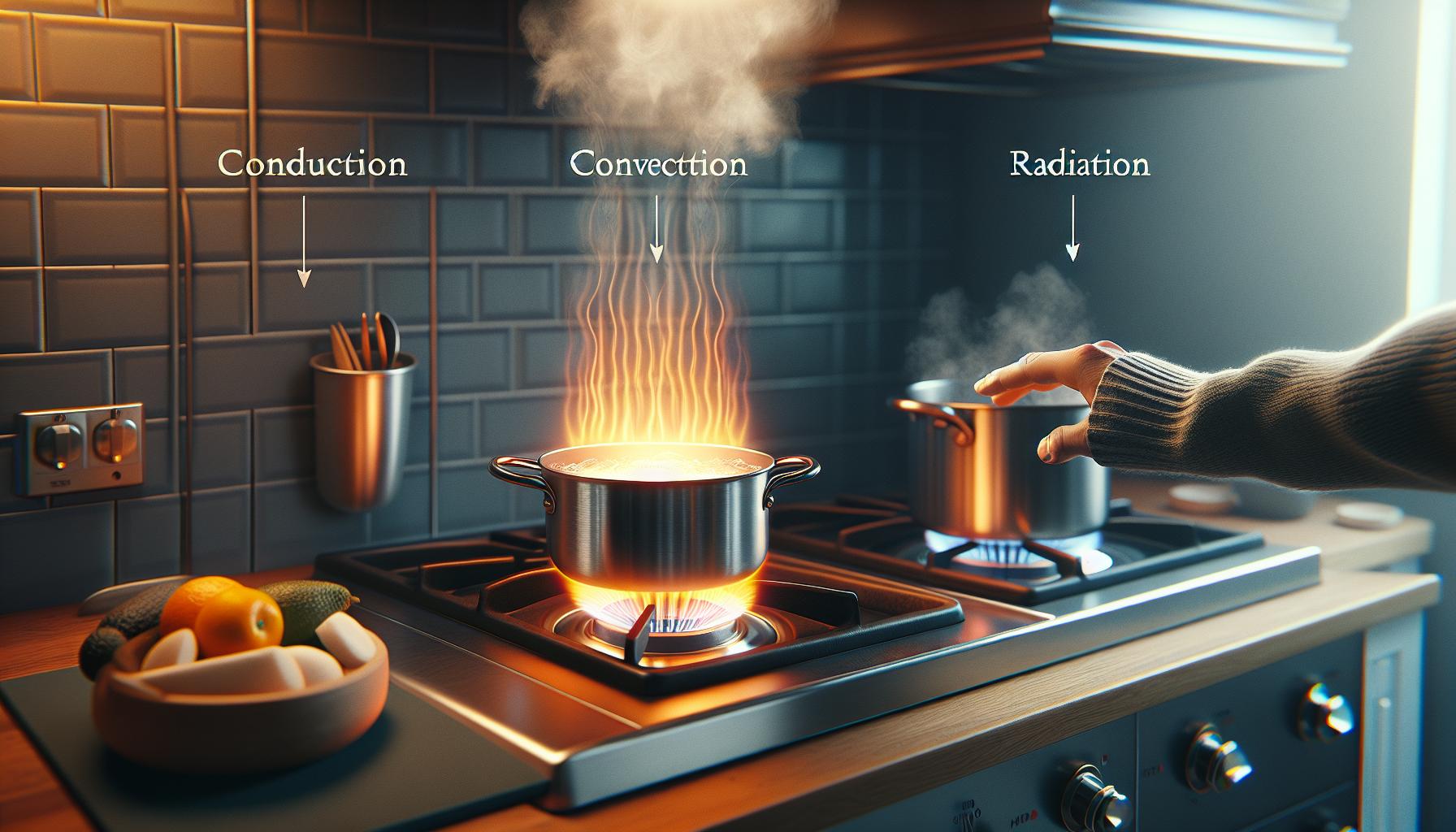
Types of Heat Transfer Mechanisms
Heat transfer is an essential concept that underpins much of our understanding of thermodynamics and physical science. Among the mechanisms of heat transfer, conduction is the process that occurs through direct contact of materials, making it a familiar phenomenon in our daily lives. When two objects at different temperatures touch, energy flows from the hotter object to the cooler one until thermal equilibrium is achieved. This mechanism is not only crucial for scientific principles but also for practical applications in cooking, engineering, and even climate control.
Understanding Conduction
At its core, conduction involves the transfer of heat through a solid material without any movement of the material itself. It relies on the vibrational energy of atoms and molecules that collide with their neighboring particles. This microscopic activity translates to macroscopic heat flow. The efficiency of heat conduction varies significantly between materials, influenced by their atomic structure and bonding.
Real-World Examples
- Spoons in Soup: When a metal spoon is placed in a hot bowl of soup, the heat from the soup transfers to the spoon through conduction, making the spoon hot to the touch.
- Heating Pads: Electric heating pads transfer heat to the body directly when contacting the skin, providing relief through conduction.
- Bridges and Railways: Engineers must consider thermal expansion due to heat conduction in designing bridges and railways, ensuring materials can withstand temperature changes without compromising structural integrity.
Key Factors Influencing Heat Transfer
The rate of heat transfer by conduction is influenced by several factors, including:
- Material Properties: Metals, for example, exhibit high thermal conductivity compared to insulators like wood or rubber.
- Temperature Difference: A greater temperature gradient between two materials increases the rate of heat transfer.
- Surface Area: More extensive contact areas facilitate more efficient heat transfer.
Understanding Conduction: The Basics
At its essence, heat transfer via conduction occurs through direct contact between materials, making it a fundamental process in our daily interactions with the physical world. When two objects at different temperatures touch each other, the hotter object’s molecules, which vibrate more vigorously, collide with the cooler object’s molecules. This collision transfers energy, causing the cooler object to heat up, while the hotter object cools down until they reach thermal equilibrium. This principle can be observed in various real-life scenarios, from cooking to construction.
The efficiency of conduction is primarily determined by the properties of the materials involved. For instance, metals like copper and aluminum are excellent conductors due to their free-moving electrons, allowing heat to flow rapidly through them. In contrast, materials such as wood and plastic, which lack free electrons, act as insulators and hinder heat transfer. This difference in thermal conductivity is crucial in applications such as thermal management in electronic devices, where overheating is mitigated by using materials that efficiently disperse heat, or in home insulation where the goal is to minimize heat loss.
Moreover, several factors influence the rate of heat transfer by conduction. The temperature gradient-the difference in temperature between the two materials-is a critical determinant; the greater the difference, the faster the heat transfer. The contact area size also plays a role-larger areas facilitate more efficient heat transfer. Recognizing these factors enables better design and material choices in engineering, ensuring durability and energy efficiency in countless applications from heating systems to everyday cookware. Understanding the basic mechanics of conduction not only enhances our practical knowledge but also informs scientific and engineering solutions across disciplines.
Real-World Examples of Conduction
When you touch a hot stove, the immediate warmth you feel is a clear and powerful illustration of conduction in action. This process occurs through direct contact, where heat transfers from the hot surface of the stove to your skin. The efficiency of this heat transfer is influenced by several factors, including the materials involved and the temperature difference between them.
In our everyday lives, conduction manifests in numerous scenarios. For instance, when cooking, metal pots conduct heat rapidly from the flame or burner to the food inside, allowing for efficient cooking. Similarly, in construction, metal roof beams transfer heat from the sun into the building, emphasizing the importance of choosing materials with appropriate thermal conductivity. This principle is also critical in the design of heat sinks used in electronics, where efficient heat conduction is essential for preventing overheating and ensuring device longevity.
Another relatable example is the way a cold glass of water warms up when left sitting in a room. The heat flows from the warmer air into the glass, demonstrating conduction between the surrounding air and the glass surface. These everyday examples illustrate just how integral conduction is to many of our daily activities, affecting everything from cooking food to maintaining comfortable living environments. Understanding how this process works helps us make better decisions about the materials and methods we use in various applications, from home design to cooking techniques.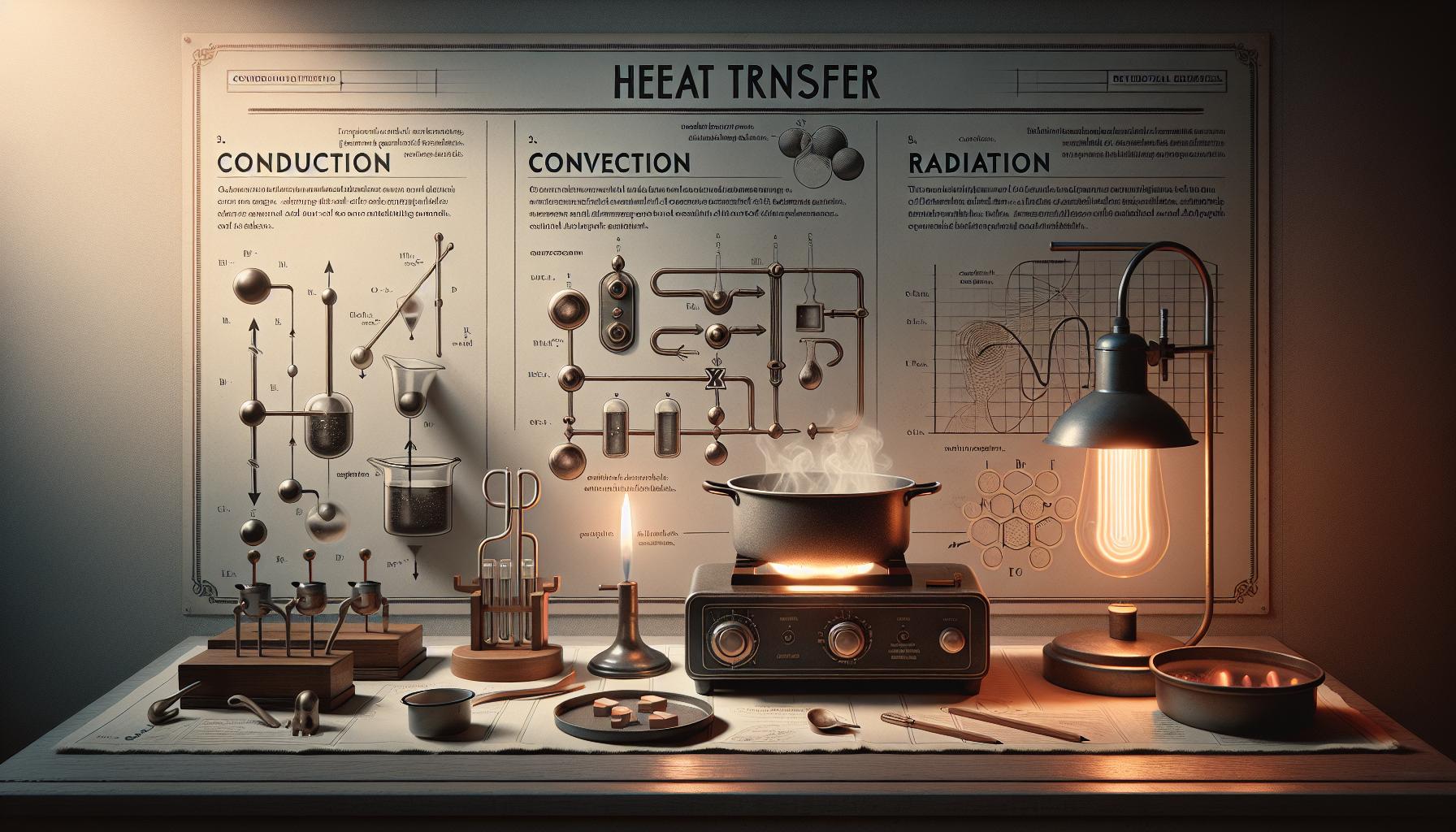
Key Factors Influencing Heat Transfer
The efficiency of heat transfer through conduction can significantly vary based on several key factors. Understanding these influences not only enhances our grasp of thermal dynamics but also equips us with the knowledge necessary to optimize heating and cooling processes in various applications.
One of the primary factors is the material type involved in the heat transfer process. Materials are characterized by their thermal conductivity, which measures how efficiently they can conduct heat. Metals, such as copper and aluminum, are excellent conductors due to their dense arrange of free electrons that facilitate rapid energy transfer. In contrast, materials like wood or air are poor conductors, acting as insulators that resist heat flow. This fundamental understanding aids in selecting the appropriate materials for specific applications, like using copper for electrical wiring or fiberglass for insulation in buildings.
Another essential factor is the temperature gradient between two objects in contact. The greater the difference in temperature, the faster the rate of heat transfer. This principle explains why a cold drink warms up more quickly on a hot day than indoors, where the temperature variation is less stark. The rate of heat transfer is also impacted by the surface area in contact; larger surfaces can facilitate greater heat exchange. For example, a frying pan with a broad base distributes heat more efficiently compared to a smaller pot.
Other considerations include the contact quality between surfaces. An uneven or dirty surface can create air pockets and reduce direct contact, thereby impeding heat flow. Regular maintenance and ensuring a flat, clean interface can enhance thermal performance. Furthermore, the duration of contact plays a role; sustained contact allows more time for heat transfer, making this a vital aspect in processes like cooking or welding. By recognizing and manipulating these factors, we can effectively enhance heat conduction in practical scenarios, leading to improved energy efficiency and better outcomes in everyday tasks and industrial applications.
Differences Between Conduction and Other Types
Heat transfer can occur through various mechanisms, each with distinct characteristics and applications. While conduction is the transfer of heat through direct contact between materials, convection and radiation are two other primary methods that differ significantly from conduction. Understanding these differences is crucial for optimizing heat management in both industrial applications and everyday situations.
Conduction is inherently a localized process. It occurs at the atomic and molecular level where particles transfer kinetic energy directly through collisions. For example, when a metal spoon is placed in a hot pot, heat flows from the pot to the spoon by direct contact. This is a slow process compared to convection, which involves the bulk movement of fluids (liquids and gases). In convection, heated fluid rises and cooler fluid moves in to take its place, creating a circulation pattern that enhances heat distribution. A practical example of convection can be seen in boiling water, where hot water rises to the surface while cooler water sinks, continuously mixing and transferring heat throughout the pot.
Radiation is another distinct form of heat transfer that does not require a medium; it occurs through electromagnetic waves. All objects emit radiant energy, and the transfer occurs regardless of the space between them. The sun warming your face on a bright day is a prime example of thermal radiation at work. Unlike conduction, which requires direct contact, or convection that needs a fluid medium, radiation can happen through a vacuum, making it unique in its efficiency for transferring heat over long distances.
Here’s a brief comparison of these three heat transfer mechanisms:
- Conduction: Heat transfer through direct contact, typically solid materials; efficient in metals.
- Convection: Heat transfer through the movement of fluids; relies on fluid dynamics for effective heat distribution.
- Radiation: Heat transfer via electromagnetic waves, can occur through a vacuum; involves emission and absorption of radiant energy.
In practice, understanding these differences allows us to choose the right methods and materials for heating and cooling applications. For instance, in building design, engineers use thermal insulation to reduce conduction, while HVAC systems leverage convection for effective climate control. Meanwhile, radiant heaters utilize radiation for efficient heating without requiring air movement. Thus, each mechanism plays a vital role in our overall approach to heat transfer, contributing uniquely to thermal management practices.
Applications of Conduction in Everyday Life
Heat transfer through conduction is fundamental to many everyday applications, and understanding how it impacts our daily lives can enhance our awareness of energy use and efficiency. One of the most common examples is in cooking. When you place a metal pan on a hot stove, the pan heats up directly from the contact with the burner. This is conductive heat transfer-molecules in the burner vibrate more vigorously with increased temperature, transferring energy to the pan. This principle is crucial not only for cooking but also for baking, as maintaining the right contact temperature with pans can affect how evenly food cooks.
Everyday Applications
In our daily lives, conduction is evident in various household items and appliances. For instance, consider a heating pad used for pain relief. These pads are designed to transfer heat directly to the body through contact, providing therapeutic warmth. The effectiveness of such devices relies on the materials used; conductive materials like rubber or silicone can enhance the delivery of heat. Similarly, in winter, using metal radiators that warm up through hot water or steam exemplifies conduction-heat generated in one part of the radiator is transferred through to the outer metal surface, heating the surrounding air when it comes into contact with it.
Another key application is in thermal management within buildings. Materials with high thermal conductivity, like metals, are often used in heat exchangers in HVAC systems to enhance heat transfer efficiency. In contrast, insulation materials with lower thermal conductivity are utilized in walls and roofs to minimize unwanted heat loss or gain. This concept is vital for energy efficiency; by understanding which materials conduct heat well, architects and builders can design structures that require less energy for heating and cooling, ultimately reducing costs and environmental impact.
Heat Conduction in Everyday Items
A practical approach to understanding conduction can be found in common household items. For example:
- Cooking Utensils: Metal spoons and cookware are excellent conductors of heat, while wooden utensils are used to comfortably handle hot items.
- Thermal Mugs: Some mugs are designed with double-walled construction to minimize heat transfer, keeping beverages hot while preventing the outer surface from becoming too hot to handle.
- Electronic Devices: Heat sinks made of metals allow computers and electronic devices to dissipate heat efficiently, helping to maintain optimal operating temperatures.
By recognizing these practical applications of conduction, we can make more informed choices, from the products we purchase to how we use them efficiently. Whether it’s choosing the right cooking utensil or understanding insulation in our homes, the principles of conduction play a significant role in our comfort and energy consumption.
Materials That Conduct Heat Effectively
The ability of materials to conduct heat varies significantly, influencing their application across various industries and everyday scenarios. Metals are widely recognized as the most effective conductors of heat. For example, copper and aluminum are often utilized due to their high thermal conductivity, making them ideal for electrical wiring and heat exchangers. Their efficiency allows for rapid heat transfer, essential in applications like cooking utensils where quick and even heating is necessary. Stainless steel, though slightly less conductive, is also popular in kitchen appliances for its durability and resistance to corrosion.
In contrast, non-metals typically exhibit lower thermal conductivity. Materials such as wood and plastics are often used where heat insulation is required. These materials prevent heat from transferring too quickly, making them suitable for items like handles on cookware, which need to remain cool to the touch. Moreover, the development of composite materials has led to innovative solutions that combine both heat-conducting and insulating properties, effectively broadening the range of applications.
Interestingly, the efficiency of heat conduction in materials can also be influenced by their physical structure. For instance, graphite and carbon-based materials, although non-metallic, exhibit a unique ability to conduct heat well due to their layered atomic structure. This quality is exploited in applications like thermal management systems within high-performance electronics, where effective heat dissipation is crucial for maintaining performance.
Ultimately, understanding the conductive properties of various materials empowers us to make informed choices in countless applications-from selecting the appropriate cooking tools to designing energy-efficient buildings. Incorporating materials with the right thermal conductivity can facilitate better energy management and enhance user comfort in everyday life.
Measuring Thermal Conductivity: Overview
Measuring thermal conductivity is essential in understanding how heat transfers through materials, especially during direct contact scenarios where conduction occurs. This property is quantified using a variety of methods that help determine how efficiently a material can conduct heat. The measurement is typically expressed in watts per meter-kelvin (W/m·K), providing a standardized way to compare different materials.
One common method for measuring thermal conductivity is the steady-state method, where a constant heat source is applied to one side of a material and the temperature difference across it is measured. By calculating the heat flow and using Fourier’s law of heat conduction, the thermal conductivity can be derived. Another method involves the transient method, which measures how quickly a material heats up after a brief exposure to a heat source, allowing for dynamic assessments of thermal conductivity. Each method has its advantages; steady-state methods are often more precise, while transient methods can be quicker and applicable to smaller samples.
It’s important to consider several factors that can influence thermal conductivity measurements, such as temperature, moisture content, and the physical structure of the material. For instance, the thermal conductivity of materials like concrete can change with moisture levels, affecting their insulation properties significantly. This awareness is crucial for engineers and designers during the selection process of materials for building and manufacturing, ensuring efficiency and safety in thermal management applications.
By understanding how to measure and interpret thermal conductivity, professionals can make informed decisions in fields ranging from construction to electronics. For example, effective thermal management in electronic devices is vital to prevent overheating, and using materials with appropriate thermal conductivity can enhance performance and longevity. Recognizing these relationships empowers engineers and technicians to use their resources wisely, optimizing designs for better heat transfer management.
How Temperature Gradient Affects Heat Transfer
Heat transfer is fundamentally driven by temperature differences. The greater the difference in temperature between two objects, the more rapid the transfer of heat. This principle is especially crucial in the context of conduction, where heat moves through direct contact between materials. In practical terms, the efficacy of heat transfer through conduction can often be visualized by considering two metal rods placed end to end: if one end is heated, the increase in temperature will propagate to the other end, and the rate at which this occurs is governed by the temperature gradient.
When two objects of different temperatures are in contact, heat energy flows from the hotter object to the cooler one until thermal equilibrium is reached. This movement of heat is not uniform; it accelerates with an increasing temperature gradient. For example, if one side of a metal pane is heated while the other remains cool, the difference in temperature creates a strong gradient that drives thermal energy quickly through the pane. Conversely, if both sides of the metal are warmed similarly, the temperature gradient diminishes, resulting in slower heat transfer.
### Factors Influencing Temperature Gradient Effects
Several factors can influence how effectively a temperature gradient impacts heat transfer:
- Material Properties: Different materials have distinct thermal conductivities. Metals, for example, are excellent conductors of heat, while wood is a poor conductor. A material’s ability to maintain a steep temperature gradient is crucial to efficient heat transfer.
- Surface Area: The area of contact between the two objects affects heat transfer as well. A larger surface area allows for more heat to be exchanged at once, enhancing the effect of the temperature gradient.
- Time: The duration of contact also plays a role; longer exposure to a temperature differential allows for more significant heat transfer.
Understanding how these factors interplay helps in practical applications. For instance, in designing heat exchangers, engineers take temperature gradients into account to maximize efficiency. By selecting materials with high thermal conductivity and ensuring ample surface area for heat exchange, they can facilitate faster cooling or heating processes, which is invaluable in industries ranging from manufacturing to HVAC systems.
In summary, the temperature gradient is a key player in determining the rate of heat transfer through conduction. By controlling this gradient-and the various factors that influence it-engineers and researchers can optimize applications in energy efficiency and thermal management.
Conduction in Different States of Matter
The way heat is conducted varies significantly across different states of matter-solids, liquids, and gases-each exhibiting distinct characteristics that influence thermal transfer. Understanding these differences can enhance your comprehension of thermal management in various applications, from industrial processes to everyday situations.
In solids, conduction occurs most efficiently due to closely packed atoms or molecules that facilitate the transfer of kinetic energy. For instance, consider a metal rod; when one end is heated, the energy rapidly travels through the tightly bonded lattice structure. Metals, such as copper and aluminum, are particularly effective conductors due to their free-moving electrons, which transfer heat quickly across the material. This property is why metal cookware heats evenly on a stove and why insulation is often made from materials that minimize conduction.
When it comes to liquids, the situation changes somewhat. While liquids are less dense than solids, allowing for more movement among particles, the effectiveness of heat transfer diminishes compared to solids. In a pot of water, heat energy introduced at the bottom causes the water molecules to move faster; however, they must bump into and transfer energy to adjacent molecules, which is a less efficient process than in solids. This results in convective currents, where the heated water rises, and cooler water moves down, aiding heat transfer but also complicating direct conduction.
Gases present the least efficient means of conduction due to their low density and widely spaced molecules. In this state, heat transfer is primarily through molecular collisions, and because these molecules are far apart, the frequency of collision-and thus heat transfer-is significantly reduced. This explains why air is a poor conductor of heat; it’s why we can hold a metal spoon in a hot pot without burning our hands-the air insulates the heat from the pot.
### Key Differences in Heat Conduction
The differences in conduction across states can be encapsulated in a few key points:
- Efficiency: Solids (especially metals) conduct heat much more efficiently than liquids and gases.
- Molecular Arrangement: Close molecular packing in solids enhances energy transfer; liquids allow for some energy transfer, while gases severely limit it.
- Heat Transfer Mechanism: In addition to conduction, liquids and gases also rely on convection, which can significantly affect how heat is distributed.
Grasping these differences is essential for practical applications, such as designing heating systems or selecting materials for thermal insulation. By understanding how heat moves through various states of matter, you can better navigate challenges in thermal management across diverse fields.
Troubleshooting Poor Heat Conduction Issues
The effectiveness of heat conduction can often be surprisingly poor in some applications, which may be frustrating when you expect materials to behave in a certain way. It’s important to diagnose and troubleshoot these issues to ensure efficient thermal transfer. When heat doesn’t convey as expected, it could be due to several factors, including material choice, surface contact quality, and temperature differentials.
First, consider the materials involved. Different substances possess varying thermal conductivities; metals like copper and aluminum are excellent conductors, whereas materials like rubber or wood are not. If you’re attempting to transfer heat through interfaces made of poor conductors, you’ll significantly limit your efficiency. To enhance conduction, ensure you are using materials known for their conductive properties in any application involving direct contact.
Next, examine the quality of surface contact between the two objects. Even the best conductors can underperform if their surfaces are rough, dirty, or poorly aligned. A small air gap between surfaces can create insulation, drastically reducing heat transfer. Enhance contact by ensuring surfaces are clean and as flat as possible. In some applications, using thermal interface materials (TIMs), like thermal paste or pads, can help fill microscopic voids and improve conduction by eliminating air gaps.
Finally, temperature gradients play a crucial role in conduction efficiency. The greater the difference in temperature between two objects, the faster heat will transfer. If you’re facing poor heat conduction, make adjustments to increase this gradient. This could mean altering the source of heat or using methods to lower the temperature of the other material, thus improving the overall efficiency of heat flow through direct contact.
By addressing these factors-material properties, surface contact, and temperature gradients-you can effectively troubleshoot poor heat conduction issues in your applications, ensuring optimal thermal performance.
The Role of Insulation in Heat Transfer
Insulation plays a crucial role in managing heat transfer by directly affecting the efficiency of conduction. When we think about how heat moves, particularly through direct contact, we realize that not all materials behave the same way. For instance, metals like copper transfer heat efficiently, while insulation materials such as fiberglass or foam significantly reduce this flow. By implementing proper insulation, we can minimize unwanted heat loss or gain, making processes more efficient in both residential and industrial contexts.
To understand the impact of insulation, consider its influence on everyday appliances. For example, a well-insulated refrigerator keeps your food cold by limiting how much warmth enters, while a poorly insulated one wastes energy fighting off heat. Insulation materials work by trapping air or creating barriers that resist heat flow. These materials have low thermal conductivity, meaning they do not allow heat to pass through easily. This property is vital in applications such as building construction, where the goal is often to maintain comfortable indoor temperatures while reducing energy costs.
In practical terms, the effectiveness of insulation can be quantified using the concept of “R-value,” which measures thermal resistance. A higher R-value indicates better insulation performance. Selecting the right insulation material is essential based on the specific application. For example, in a hot climate, reflective insulation that reflects radiant heat can be more beneficial than traditional insulating materials. Similarly, in cold environments, using materials with high R-values can help retain heat more effectively.
Utilizing insulation not only addresses efficiency in heat transfer but also enhances the overall performance and durability of structures and appliances. It aids in creating stable environments, protecting sensitive equipment from heat fluctuations, and contributing to energy conservation efforts. By understanding and applying the principles of effective insulation, one can significantly improve thermal management across various applications, ensuring that systems operate optimally while minimizing energy use.
FAQ
Q: What is conduction in heat transfer?
A: Conduction is the transfer of heat through direct contact between materials. It occurs when two objects at different temperatures come into contact, allowing thermal energy to flow from the hotter object to the cooler one. Common examples include a metal spoon heating up in a hot soup.
Q: How does heat transfer by conduction occur?
A: Heat transfer by conduction happens at the molecular level as vibrating molecules collide with neighboring cooler molecules, transferring energy. The rate of conduction depends on the temperature difference, the material’s thermal conductivity, and the contact area.
Q: What materials are best for heat conduction?
A: Metals, such as copper and aluminum, are excellent heat conductors due to their free-moving electrons. Materials like glass and wood are poorer conductors, making them suitable as insulators. For applications requiring efficient heat dissipation, choose metals with high thermal conductivity.
Q: Can conduction occur in gases?
A: Yes, conduction can occur in gases, but it is less efficient than in solids or liquids due to the larger distances between gas molecules. Heat transfer in gases relies on collisions between molecules, making it slower compared to solids.
Q: What factors affect the rate of heat conduction?
A: The rate of heat conduction is influenced by temperature gradient, the type of material involved, the contact area, and the thickness of the materials. Thicker materials generally impede heat flow, while higher temperature differences enhance it.
Q: What is the difference between conduction and convection?
A: The primary difference is that conduction transfers heat through direct contact, while convection involves the movement of fluids (liquids or gases) that carry heat with them. This makes convection more effective in larger spaces compared to conduction.
Q: How can I improve conduction in materials?
A: To improve conduction, select materials with higher thermal conductivity and reduce air gaps or insulation that may impede heat flow. Additionally, ensure good contact between surfaces to maximize energy transfer.
Q: Where is conduction commonly observed in daily life?
A: Conduction is commonly observed in everyday scenarios, such as cooking on a stove, where heat transfers from the burner to the pot, or warming your hands by holding a hot mug. These examples highlight conduction in practical applications.
In Conclusion
Understanding the nuances of heat transfer, especially through direct contact, enhances practical applications in various fields, from engineering to everyday cooking. As you explore the critical mechanisms of conduction, consider how these principles manifest in real-world scenarios, like efficient thermal management in devices or optimizing home heating. Don’t miss out on our in-depth articles on “Understanding Conduction,” or “The Role of Insulation in Energy Efficiency,” which can deepen your comprehension of these concepts.
If you found this information valuable, take the next step-subscribe to our newsletter for insider tips and expert insights delivered straight to your inbox. Also, feel free to leave a comment below with any questions or share your experiences; engage with a community that values knowledge as much as you do! Your journey into the world of heat transfer continues here-explore, learn, and apply these insights to boost your expertise!
Get our latest guides, news, and insights highlighted in your Google Search & AI Overviews.