
Did you know that heat is transferred in three primary ways: conduction, convection, and radiation? Many people mistakenly believe that all forms of heat transfer fall into these categories, overlooking common myths that can cloud our understanding. Understanding what constitutes a method of heat transfer is crucial for students, engineers, and anyone interested in thermodynamics. Misconceptions can lead to inefficiencies in systems or incorrect problem-solving approaches. In this article, we’ll clarify which methods truly qualify while debunking the myths that can stall your progress. By the end, you’ll have a sharper insight into how heat behaves, ensuring you navigate this essential aspect of physics with confidence and clarity.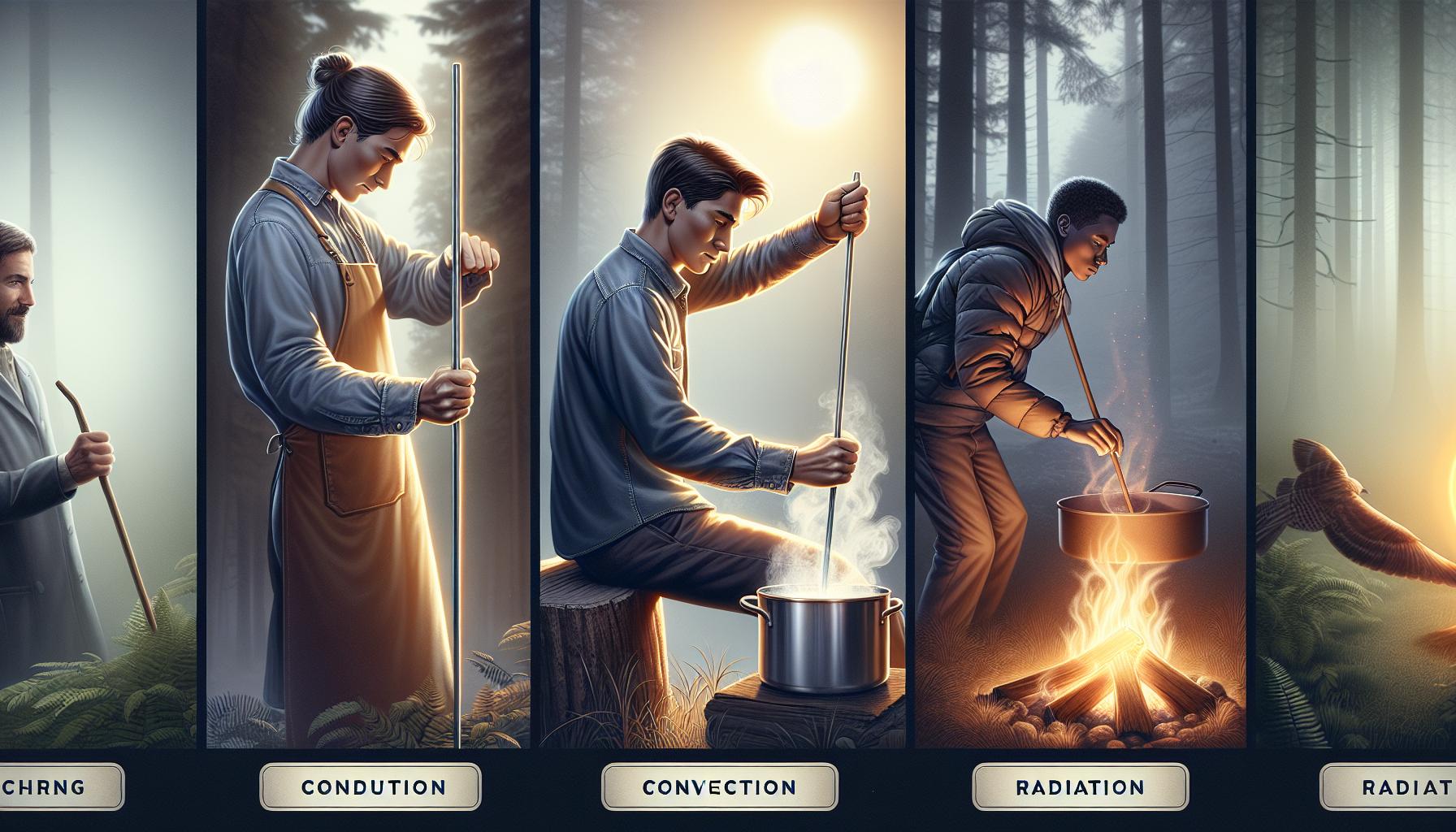
Misconceptions About Heat Transfer Methods
Many popular ideas surrounding heat transfer methods often stray into the realm of misconceptions. One prevalent myth is the belief that all heat transfer occurs through direct contact or visible media. However, this oversimplification fails to account for crucial mechanisms such as radiation, which is essential in various real-world scenarios. Understanding these nuances can help clarify the differences between actual heat transfer methods and false assumptions.
Another common misconception is that convection and conduction are interchangeable terms. While both involve heat transfer, they operate under distinct principles. Conduction refers to the transfer of heat through direct contact within solid materials, such as a metal rod heated at one end. Conversely, convection occurs within fluids (liquids and gases) where the warmer part of the liquid or gas rises, while the cooler part sinks, creating a circulation pattern.
Moreover, some individuals believe that all heat transfer requires a medium. This is not accurate; radiation can occur through a vacuum. For instance, the heat from the sun reaches the Earth not through air or space but through electromagnetic waves, demonstrating that heat can travel without a direct medium. Clarifying these misconceptions helps solidify a comprehensive understanding of how heat transfer truly functions in different environments.
Highlighting these misinterpretations is critical for both academic and practical applications, especially in fields like engineering and environmental science. By fostering a clearer understanding of the principles of heat transfer, we can better comprehend its implications and utilize these concepts effectively in technological innovations and energy conservation efforts.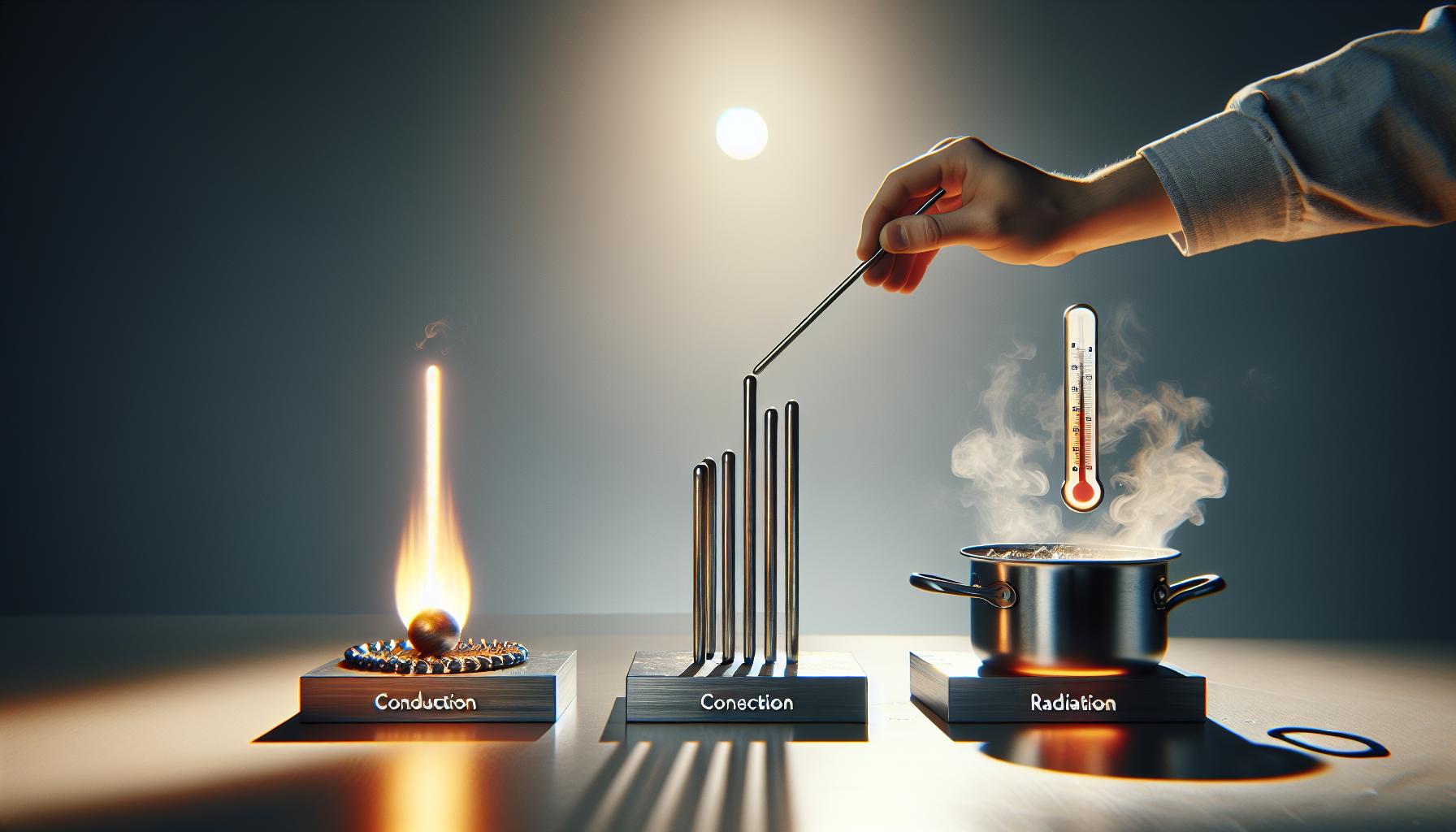
Understanding the Three Main Methods of Heat Transfer
Heat transfer is an essential concept in both everyday life and advanced scientific applications, and understanding its three main methods-conduction, convection, and radiation-is key to debunking common misconceptions. Each method possesses unique characteristics and operates under distinct principles, contributing to our understanding of thermal interactions in various environments.
Conduction is the process of heat transfer through direct contact, primarily occurring in solids. Imagine holding a metal spoon in a pot of hot soup; the heat from the soup transfers to the spoon, warming it up. This transfer occurs at the molecular level, as the energetic molecules of the hot material collide with the slower-moving molecules of the cooler material. Good conductors, like metals, facilitate this transfer efficiently; therefore, they are commonly used in cookware and heat exchangers. The effectiveness of conduction is often quantified by a property known as thermal conductivity, which measures how well a material conducts heat.
Convection, on the other hand, involves the movement of fluids (liquids and gases) to transfer heat. Warm fluid expands, becoming less dense, and rises, while cooler fluid moves in to take its place, creating a circulation pattern. This process is observable when boiling water; the hot water at the bottom rises while cooler water descends. Convection is particularly significant in large-scale systems like ocean currents and atmospheric circulation, impacting weather patterns and climate. The efficiency of convection is influenced by factors like fluid velocity and temperature difference, making it essential in applications ranging from heating systems to atmospheric sciences.
Radiation is distinct because it does not require a medium, allowing heat transfer through a vacuum. All objects emit thermal radiation, and the amount of energy radiated increases with temperature. A relatable example is feeling warmth from the sun, which travels to Earth via electromagnetic waves, demonstrating that heat can transfer through empty space. This process is crucial in applications like solar energy collection and thermal imaging.
Understanding these methods unlocks a deeper comprehension of temperature regulation, material science, and even energy conservation strategies. By recognizing how conduction, convection, and radiation differ, we can demystify many misconceptions about heat transfer, leading to improved design practices and energy efficiency in various technological innovations.
Conduction: The Transfer of Heat Through Materials
To understand the intricacies of heat transfer, it’s essential to delve into conduction, a fundamental process that often gets overshadowed by its more dynamic counterparts like convection and radiation. Conduction is not merely the simple act of heat moving through materials; rather, it is a complex interaction at the molecular level. When two objects at different temperatures come into direct contact, heat flows from the hotter object, which has more energetic molecules, to the cooler one, where molecules exhibit slower vibrational activity. This transfer occurs until thermal equilibrium is reached, where both objects stabilize at a similar temperature.
Good conductors like metals exemplify this principle with remarkable efficiency. For instance, feel a metal rod heated on one end-you’ll quickly notice that the heat travels to the opposite end much faster than it would in a wooden stick. This efficiency can be quantified with thermal conductivity, a value representing a material’s ability to conduct heat. Materials with high thermal conductivity, such as copper and aluminum, are not only used in household cookware but also in industrial applications where heat dissipation is critical, such as in electronic devices and heat exchangers.
However, misconceptions abound regarding conduction; one of the most common is that all materials conduct heat equally well. In reality, insulators like rubber and glass have very low thermal conductivity, making them poor heat conductors. This is why they’re used in situations where heat retention is desired, such as in thermal flasks or coolers. Another myth is that heat always travels from hot to cold. While true in a sense, the notion that heat can spontaneously travel through one object to another without direct contact is simply not correct.
Understanding conduction is pivotal in various applications, from daily cooking practices to designing advanced thermal management systems in technology. Recognizing the characteristics of different materials and their conductivity can significantly impact choices in engineering, construction, and even culinary arts, leading to more energy-efficient designs and better performance in thermal applications. By clearing up these common misconceptions and educating ourselves on the underlying principles of conduction, we not only enhance our comprehension of heat transfer but also empower ourselves to make informed decisions in our projects and daily lives.
Convection: How Fluids Move Heat
Fluids are remarkable in their ability to transfer heat, making convection an essential process in both natural and engineered systems. When we boil water, for example, we can observe convection in action as hot water rises to the surface, while cooler water sinks, creating a continuous circulation. This movement is not random; rather, it is driven by differences in temperature and density, leading to the efficient transfer of heat throughout the fluid.
In essence, convection occurs in two primary forms: natural convection and forced convection. Natural convection happens when fluid motion is caused by buoyancy differences due to temperature variations. For example, the warm air rising from a radiator creates a natural circulation in a room. Conversely, forced convection involves external forces, such as fans or pumps, actively moving the fluid, which is often seen in systems like heating, ventilation, and air conditioning (HVAC).
Despite being a well-understood phenomenon, misconceptions about convection persist. One common myth is that convection is only relevant in liquids. In reality, gases convect just as effectively; consider how warm air from a heating vent spreads throughout a room. Another misconception is that convection is an isolated process. It frequently works in conjunction with conduction and radiation, contributing to overall heat transfer in systems. Understanding these interactions is vital for optimizing thermal performance in various applications, from household heaters to complex industrial processes.
To illustrate the efficiency of convection, consider designing a home radiator. Effective radiator systems use principles of convection to maximize heat output. Engineers often specify the placement and orientation of radiators to promote optimal airflow, ensuring warm air efficiently circulates throughout the space. In contrast, designing a radiator that does not account for convection principles can lead to inadequate heating and cold spots. By understanding how convection works, we can make informed choices in designing and utilizing heating systems, ultimately enhancing comfort and energy efficiency.
Radiation: Heat Transfer Through Electromagnetic Waves
Heat transfer through electromagnetic waves, commonly referred to as radiation, is a fascinating and often misunderstood aspect of thermal dynamics. Unlike conduction, which requires direct contact, or convection, which depends on fluid movement, radiation allows heat transfer across a vacuum. This means that heat from the sun, for example, travels through the emptiness of space to warm our planet. Understanding radiation is crucial, especially as it highlights a common misconception that heat transfer can only occur through physical mediums.
Radiation occurs when electromagnetic waves, primarily in the infrared spectrum, are emitted by all objects with a temperature above absolute zero. The intensity and wavelength of these emitted waves depend on the temperature of the object. A hot stove emits more radiation than a cold one, which is why you can feel the heat radiating from it even when standing a distance away. This principle is exploited in various real-world applications, such as solar thermal panels that convert sunlight into usable energy and infrared heaters designed to provide warmth without the need for air movement.
Misconceptions about radiation often lead to confusion regarding its role in everyday processes. For instance, some people believe that radiation is dangerous solely because of its association with nuclear sources. However, the vast majority of radiation we encounter in daily life is harmless and vital. The warmth you feel from sunlight is entirely due to thermal radiation, which is non-ionizing and essential for sustaining life on Earth.
Importantly, radiation can also be impacted by surface characteristics. Dark, matte surfaces are excellent emitters and absorbers of thermal radiation, while shiny, reflective surfaces tend to reflect rather than absorb heat. This understanding plays a critical role in architectural design and energy efficiency practices, where the placement of windows, types of materials, and thermal coatings can dramatically affect heating and cooling dynamics in buildings. By bridging theoretical principles with practical applications, we can harness the power of radiation effectively, debunking myths and improving energy systems worldwide.
Common Misconceptions: Heat Transfer Myths Debunked
Many people mistakenly believe that heat transfer can only occur through direct contact or in the presence of a medium. However, the methods of heat transfer-conduction, convection, and radiation-each operate under different principles, and each has its own nuances that are frequently misunderstood. For instance, while conduction is the transfer of heat through a material by direct contact of its particles, it is important to note that it cannot occur in a vacuum. This misconception leads to the erroneous belief that heat can pass through empty space without any medium, which is decidedly untrue.
Another common misunderstanding is about convection, where heat is transferred by the movement of fluids. Many believe that convection only occurs with liquids; however, convection also happens in gases. For example, warm air rises in a room, displacing cooler air and creating a circulation pattern that helps distribute heat evenly. This principle is often employed in heating systems, such as radiators, where the design leverages natural convection to enhance thermal comfort.
Equally misleading is the idea that all types of radiation are harmful. The term “radiation” can invoke thoughts of nuclear energy or hazardous exposure, but most radiation, particularly thermal radiation, is completely safe and vital for life. The warmth felt from the sun-a form of thermal radiation-helps sustain all living organisms on Earth. Understanding this concept can shift perceptions and highlight the importance of harnessing radiation in various applications, such as solar energy technologies.
Educating ourselves and others about these misconceptions not only fosters a better understanding of thermal dynamics but also encourages the correct application of heat transfer principles in technology and daily life. By demystifying these concepts, we can better utilize their properties in innovative ways and improve energy efficiency in our environments.
Examples of Non-Methods of Heat Transfer
Many people often confuse different phenomena with heat transfer, leading to common misconceptions about what constitutes a method of transferring heat. While conduction, convection, and radiation are the three primary methods, several activities and processes do not qualify as heat transfer methods, even though they might seem related.
For instance, temperature change in a system is not itself a method of heat transfer. While heating or cooling a substance involves heat transfer, the actual process of a substance changing temperature-such as water boiling or ice melting-does not convey heat on its own. Rather, it is the result of heat being transferred into or out of the substance. Similarly, the expansion of materials upon heating does not equate to heat transfer. When a metal rod expands when heated, it indicates that heat transfer has occurred, but the expansion itself is merely a physical change resulting from that transferred energy.
Another common misconception is the belief that thermal equilibrium signifies a heat transfer process. When two objects at different temperatures are brought into contact, heat does flow from the hotter to the cooler object until they reach thermal equilibrium. However, the state of equilibrium itself does not involve ongoing heat transfer-it merely indicates that heat has stopped flowing between the two objects because they are now at the same temperature.
Finally, terms like vibration and motion are frequently misinterpreted as methods of transferring heat. While molecular vibrations can contribute to conduction, they do not operate as a standalone method of heat transfer. Similarly, general motion, such as wind blowing or an object moving through space, may influence the convection effect, but it is not the fundamental mechanism of heat transfer itself.
Understanding these distinctions helps clarify how heat transfer truly operates and dispels the myths that can cloud our grasp of thermal dynamics. By distinguishing between actual methods of heat transfer and related but separate phenomena, we deepen our comprehension of energy interactions in various systems.
Impact of Environmental Factors on Heat Transfer
Environmental factors play a crucial role in determining the efficiency and effectiveness of heat transfer processes. Factors such as temperature difference, the state of matter (solid, liquid, gas), and the properties of the materials involved significantly influence how heat moves through systems. For example, the greater the temperature difference between two objects, the faster the rate of heat transfer will occur, whether through conduction, convection, or radiation. This principle is evident in real-world applications, such as how a hot cup of coffee cools down more rapidly in a cold room compared to a warm one due to the increased temperature gradient.
Another key environmental factor is the medium through which heat is being transferred. In a fluid medium like air or water, convection currents can enhance heat transfer significantly. For instance, in a well-ventilated room, warmer air rises, creating a cycle that helps distribute heat more evenly throughout the space. Conversely, in stagnant air or water, this movement is greatly reduced, slowing down the heat transfer process. Furthermore, the thermal conductivity of materials also varies with environmental conditions; materials may conduct heat differently when dry compared to when they are wet, which is important in considerations for building materials and insulation.
Indeed, external conditions such as humidity and wind can interfere with or enhance heat transfer. High humidity levels can impede evaporative cooling, affecting how heat dissipates from surfaces, while strong winds can increase convective heat transfer rates dramatically, thereby cooling surfaces more efficiently.
To illustrate these concepts, consider the following:
| Environmental Factor | Impact on Heat Transfer |
|---|---|
| Temperature Difference | Increased gradient accelerates heat transfer rates. |
| Medium State | Gaseous mediums affect convection currents differently than liquids or solids. |
| Material Properties | Thermal conductivity varies with material type and condition (e.g., wet vs. dry). |
| Humidity | Affects evaporative cooling, impacting how heat dissipates from surfaces. |
| Wind | Can significantly increase convective heat transfer rates. |
Understanding these environmental factors enriches your knowledge of heat transfer and helps clarify misconceptions about what enhances or retards heat flow. It’s not merely a matter of “how heat moves,” but rather how external conditions can substantially alter that movement, further supporting the distinction between legitimate heat transfer methods and other related phenomena.
Real-World Applications of Heat Transfer Principles
Heat transfer principles are not just theoretical concepts; they play vital roles in everyday applications that affect how we live, work, and interact with our environment. By understanding these principles, we can see their implications in a variety of fields, from industrial processes to home heating systems. For instance, in modern HVAC (heating, ventilation, and air conditioning) systems, engineers meticulously design units to optimize both conduction and convection, enhancing efficiency and ensuring comfortable indoor climates.
Applications in Cooking
In the kitchen, we observe heat transfer at work almost every day. Cooking methods can be classified based on predominant heat transfer techniques. Grilling, for example, primarily utilizes radiation from the hot grill surface to cook food. On the other hand, boiling involves convection as water circulates and transfers heat to the food submerged within. Understanding these methods can help cooks optimize their techniques – a chef can get a perfect sear on a steak by mastering the balance between conduction from the hot pan and the radiation from nearby heat sources.
Industrial Applications
In industrial settings, heat transfer principles are crucial for processes such as metal working and chemical production. In metallurgy, for example, the process of alloy hardening relies heavily on conduction. The heated metal must be cooled at specific rates to achieve desired material properties, such as strength or flexibility. Additionally, in petrochemical plants, careful control of heat transfer rates during the distillation process ensures the efficiency and safety of fuel production. Without a solid grasp of heat transfer, these processes could fail, leading to potential safety hazards and inefficient operations.
Energy Efficiency Improvements
Another significant real-world application of heat transfer principles is in energy efficiency improvements in buildings. Understanding how heat moves through walls, roofs, and windows enables architects and engineers to design structures that minimize heat loss in winter and keep interiors cool in summer. For instance, the use of thermal insulation exploits the principles of conduction to create barriers that reduce heat flow. Insulating a building properly can lead to substantial savings in energy costs, making homes not only more comfortable but also more environmentally friendly.
By recognizing the diverse applications of heat transfer principles across various sectors, we can appreciate their importance and engage deeper with concepts often taken for granted. This understanding not only enhances our technical knowledge but also empowers us to make informed decisions in practical scenarios ranging from our homes to large-scale industrial operations.
Teaching Heat Transfer: Best Practices for Educators
Engaging students in the fascinating world of heat transfer requires not only clear explanations but also innovative teaching strategies that dispel common misconceptions. Many learners enter the classroom with preconceived notions about how heat moves, often believing that it travels only through direct contact or only in one specific way. As educators, our role is to illuminate these concepts through dynamic teaching practices that promote understanding and spark curiosity.
One effective method is to use interactive demonstrations that allow students to visualize the three main methods of heat transfer: conduction, convection, and radiation. For instance, a simple experiment involving a metal spoon in a hot cup of water can vividly illustrate conduction as students feel the heat traveling through the spoon. Similarly, a convection experiment using colored water placed over a heat source can showcase fluid movement, effectively bridging theory with practice. Providing clear visual aids, such as diagrams highlighting the molecular movement during conduction versus convection, can further clarify these processes.
Moreover, it’s important to directly address and correct misconceptions during discussions. Create an environment where students feel comfortable asking questions and expressing their thoughts. Encourage them to explore real-world applications of heat transfer-like how engineers design eco-friendly buildings or how chefs optimize cooking techniques using different methods. Incorporating case studies or current events that relate to energy efficiency can resonate with students, making the topic relevant and engaging.
To ensure comprehensive understanding, educators should assess student comprehension regularly. This can be done through quizzes that focus specifically on common myths surrounding heat transfer, or through group discussions where students can debate which scenarios exemplify accurate heat transfer methods. By utilizing a mix of hands-on activities, visual demonstrations, and discussion-based learning, educators can effectively demystify the complexities of heat transfer and inspire students to appreciate the science behind it.
Frequently Asked Questions About Heat Transfer
Understanding heat transfer can often be muddled by common misconceptions, especially when it comes to identifying methods of heat transfer. Many people believe that certain processes, like breathing or sensing warm air, are methods of heat transfer, when in fact, they serve different functions. This confusion can make it difficult to grasp how heat truly moves from one place to another.
A frequent point of confusion arises with the concept of warmer air rising. While this phenomenon is related to convection, it does not represent a standalone method of heat transfer. Instead, convection is the process that includes the movement of air and heat exchange within fluids. Thus, observing warm air rise is a response to the properties of convection rather than a heat transfer method by itself. Similarly, many believe that direct contact is the only way heat can move, when in fact, radiation can transfer heat across a vacuum without needing any medium.
Another misconception involves conduction being associated solely with solids. While it is true that conduction is primarily observed in solid materials, it can also occur at the interfaces of fluids or in mixtures when particles collide. This interplay often trips up learners, who may think of conduction as limited to solid objects, neglecting its broader implications.
Understanding these nuances is vital, as they pave the way for a clearer grasp of how heat transfer operates in our everyday lives. Addressing these misconceptions directly prepares individuals to not only learn about heat transfer but also to apply these principles in practical situations, such as in designing energy-efficient systems or understanding meteorological phenomena.
Emerging Research and Innovations in Heat Transfer
Recent advancements in the field of heat transfer are shaping the way we understand and utilize thermal energy in various applications. Innovative technologies are emerging not only to enhance efficiency but also to debunk some of the long-held misconceptions surrounding heat transfer methods. For instance, researchers are currently exploring advanced materials that exhibit improved conductivity and thermal management properties, which can address issues related to energy loss in buildings or electronic devices.
One exciting area of innovation is the development of metamaterials designed to manipulate thermal radiation. These engineered materials can control heat transfer in ways that were once thought impossible, such as enhancing or inhibiting the flow of thermal energy at specific wavelengths. This has significant implications for thermal insulation and passive cooling systems, which can leverage these materials to reduce energy consumption without the need for mechanical systems.
Nanotechnology and Heat Transfer
Nanotechnology is another frontier revolutionizing heat transfer methodologies. By manipulating materials at the nanoscale, scientists can increase the surface area available for conduction and enhance heat exchange in systems. Applications range from better heat sinks in electronics to advancements in thermal fluids used in energy systems. For example, incorporating nanomaterials into conventional thermal fluids can lead to greater heat transfer efficiency, making renewable energy systems like solar panels more effective.
Additionally, machine learning and artificial intelligence are increasingly being applied to optimize heat transfer processes. These technologies can analyze vast datasets to identify trends and predict outcomes, enabling engineers to design more efficient systems based on real-time data. This predictive capability also holds potential for addressing misconceptions in heat transfer dynamics, allowing for a better understanding of complex interactions under varied conditions.
By staying abreast of these developments, educators and researchers can better illustrate the complex phenomena of heat transfer, making it easier to dispel myths and communicate accurate concepts. Understanding emerging technologies not only enriches academic discourse but also plays a crucial role in practical applications across multiple industries, paving the way for more sustainable energy use and innovative engineering solutions.
Practical Experiments to Illustrate Heat Transfer Methods
To grasp the complexities of heat transfer methods, practical experiments can be both illuminating and engaging. These hands-on activities not only reinforce the principles of conduction, convection, and radiation but also clarify common misconceptions about what constitutes a method of heat transfer. By encouraging exploration and experimentation, we empower learners to see heat transfer in action.
One simple yet effective experiment involves comparing the conduction of heat in different materials. Set up a heat source, such as a hot plate or a candle, and use three different materials: metal (like copper or aluminum), wood, and plastic. Attach thermometers to each material at one end, maintaining equal exposure to the heat source. After a set duration, measure the temperature change. Students will observe that metals transfer heat quickly through conduction due to their high thermal conductivity, while wood and plastic demonstrate slower heat transfer. This vivid demonstration helps debunk the myth that all materials transfer heat equally.
Another engaging experiment showcases convection using a glass tank filled with water. Add a few drops of food coloring at one location, and observe how the color disperses over time. As the water near the heat source warms, it rises while cooler, denser water sinks, creating a convection current. This experiment illustrates how fluids transfer heat energy, providing a clear visual representation that counters misconceptions about convection being merely ‘moving air.’
Exploring Radiation with a Simple Setup
To explore radiation, a fascinating experiment can be set up using a heat lamp and two different colored surfaces-one black and one white. Place both objects at an equal distance from the heat lamp and monitor the temperature changes over a specific period. Students will observe that the black surface absorbs and subsequently radiates heat more efficiently than the white surface, reinforcing the concept that color and surface texture can impact heat transfer via radiation. Such experiments effectively demonstrate how misunderstandings about unique modes of heat transfer can arise from oversimplified views that neglect the influence of material properties.
In summary, these practical experiments bridge theory and application, demonstrating key concepts of heat transfer while dispelling prevalent myths. By conducting these hands-on activities, learners can appreciate the diverse interactions of thermal energy in real-world contexts, paving the way for deeper understanding and curiosity in the realm of thermodynamics.
Faq
Q: What is a common misconception about heat transfer methods?
A: A common misconception is that all heat transfer occurs through direct contact. In reality, heat can be transferred through conduction, convection, and radiation. Understanding these methods helps clarify how energy moves through various environments and systems.
Q: Which processes are not considered heat transfer methods?
A: Processes like work and mass transfer are not considered methods of heat transfer. While they can influence energy movement, they do not involve the transfer of heat energy specifically as conduction, convection, and radiation do.
Q: How do conduction, convection, and radiation differ in heat transfer?
A: Conduction is the transfer of heat through solid materials, convection involves the movement of fluids, and radiation transfers heat through electromagnetic waves. Each method operates under different principles and conditions, impacting their effectiveness.
Q: Why is it important to understand non-methods of heat transfer?
A: Understanding non-methods is crucial to avoid confusion while studying thermodynamics. It helps in accurately applying the concepts of heat transfer in practical scenarios, like engineering or environmental science.
Q: Can temperature alone indicate heat transfer?
A: No, temperature alone does not indicate heat transfer. It is a measure of thermal energy, but heat transfer requires a difference in temperature and a mechanism (conduction, convection, or radiation) to facilitate energy movement.
Q: How do materials affect heat transfer efficiency?
A: Materials affect heat transfer efficiency through their thermal conductivity. Conductive materials, like metals, transfer heat more efficiently than insulators, such as rubber or glass, which impede heat flow, affecting heating and cooling systems.
Q: What role does environment play in heat transfer?
A: The environment plays a significant role in heat transfer by influencing the various methods and rates of heat exchange. Factors such as atmospheric pressure, humidity, and surface area can enhance or reduce the efficiency of heat transfer.
Q: Are there exceptions in heat transfer across different states of matter?
A: Yes, heat transfer varies across solids, liquids, and gases. For example, conduction is effective in solids, while convection dominates in liquids and gases. Understanding these differences is key in thermodynamic applications.
To Conclude
Understanding heat transfer is essential for grasping common misconceptions in thermal science. Remember, conducting experiments and engaging with hands-on materials can solidify your knowledge even further. If you’re curious about related concepts, explore our articles on “The Different Methods of Heat Transfer” and “Real-World Applications of Heat Transfer.” Don’t miss out-sign up for our newsletter to stay updated with the latest insights and tools that demystify complex scientific topics.
We know you might have more questions or concerns about this fascinating subject. Share your thoughts in the comments below or reach out for personalized guidance. Your journey into the science of heat transfer doesn’t have to end here-dive deeper and unlock the secrets of thermal energy today!
Get our latest guides, news, and insights highlighted in your Google Search & AI Overviews.