
Imagine being able to manipulate tiny droplets of fluid at the microscale to conduct experiments in ways that were once thought impossible. This is the essence of microfluidic dropspots, a groundbreaking technology that enables precise control over fluids within microchannels, paving the way for advancements in varied fields like drug discovery, diagnostics, and biological research. By integrating microfluidics into experimental design, researchers can create highly controlled environments that mimic physiological conditions, allowing for more accurate data and improved reproducibility. Whether you’re a researcher looking to enhance your experimental results or a student eager to understand cutting-edge technology, this exploration of microfluidic dropspots will unveil how these systems not only streamline processes but also open new avenues for scientific innovation. Join us as we dive deeper into the mechanics, benefits, and diverse applications of this exciting technology, and discover how microfluidic dropspots are reshaping the future of research.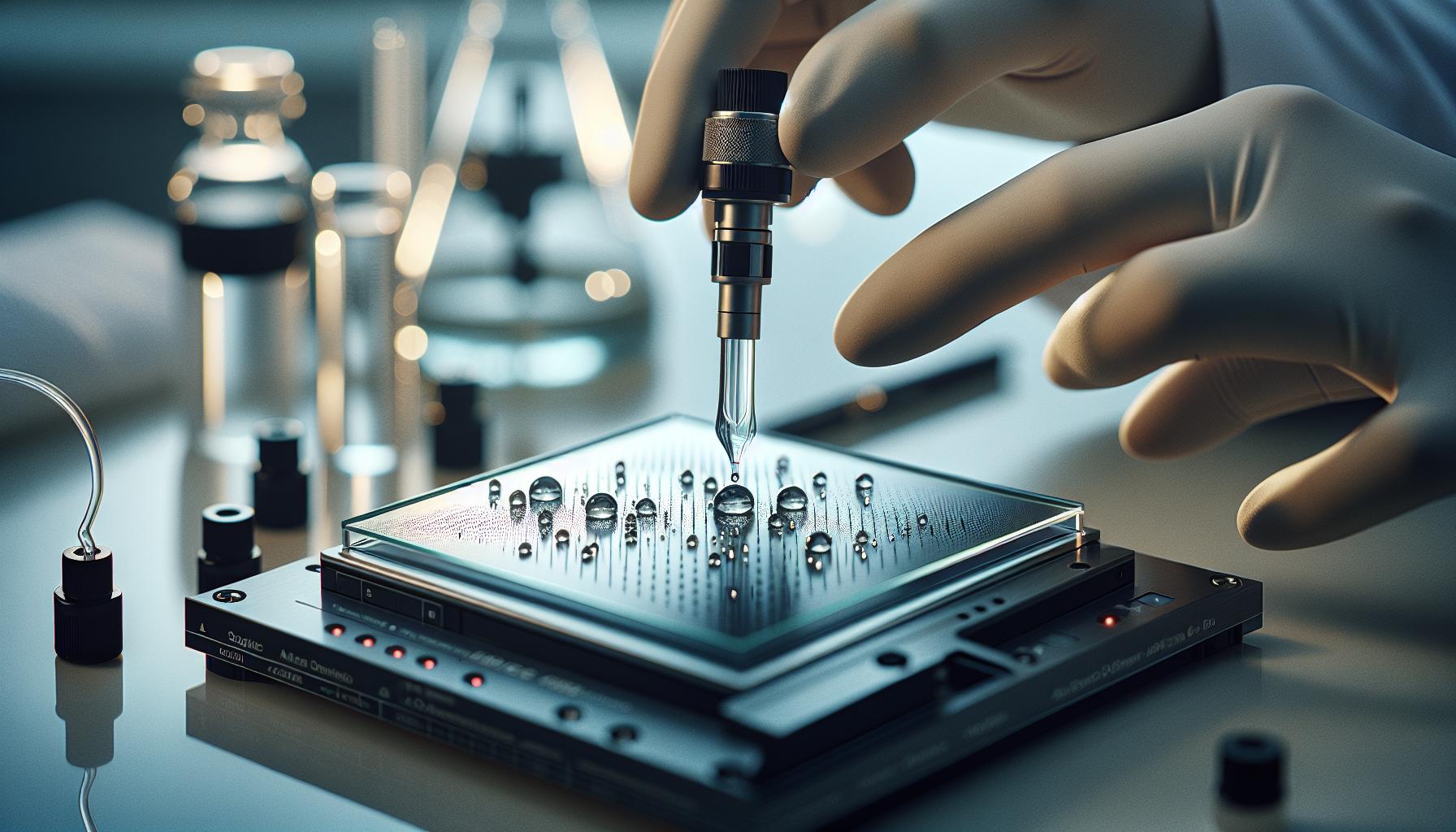
What is a Microfluidic Dropspot?
Microfluidic dropspots represent a revolutionary step forward in lab-on-a-chip technology, specifically designed to manipulate and analyze minute volumes of fluids. These devices utilize micro-scale channels to create controlled environments, enabling researchers to conduct experiments with a small number of samples while maximizing precision and reproducibility. Essentially, a microfluidic dropspot allows droplets containing various biological samples, reagents, or cells to form and react under conditions that closely mimic in vivo scenarios. This level of control not only enhances the efficiency of experiments but also significantly reduces the costs associated with sample materials.
One of the key features of microfluidic dropspots is their capacity to perform multiple analyses in parallel, often referred to as high-throughput screening. By integrating advanced fluidic control mechanisms and compatible with various assay types, these systems facilitate rapid testing and experimentation. For instance, researchers can quickly assess cellular responses to different drug formulations by exposing cells to various compounds in individual droplets without cross-contamination. This capability has profound implications for drug discovery, allowing scientists to create more accurate predictions of how compounds will perform in vivo, thus accelerating the development of new therapeutics.
Furthermore, the versatility of microfluidic dropspots extends beyond traditional laboratory use. They offer the potential for personalized medicine, where treatments can be tailored based on the biological reactions observed at the dropspot level. This adaptability is crucial in fields such as oncology, where understanding a tumor’s response to treatment can guide more effective therapeutic strategies. By harnessing the power of microfluidics, researchers can transform their approach to biological research and diagnostics, making significant strides toward more efficient and precise healthcare solutions.
Key Technologies Behind Microfluidic Dropspots
Microfluidic dropspots are at the forefront of lab-on-a-chip technology, leveraging cutting-edge engineering and design principles to manipulate fluids at a microscale. These devices typically employ several key technologies, which together create a powerful platform for conducting complex biological experiments efficiently. One of the foundational technologies is the integration of microchannels, which are intricately designed to ensure precise control of fluid dynamics. These channels allow for the generation and transport of droplets that can encapsulate small volumes of samples, enabling high-throughput analysis without the risk of contamination-an essential feature for pharmaceutical research and diagnostics.
To enhance functionality, microfluidic dropspots often incorporate pneumatic valves or electrowetting techniques that facilitate the dynamic control of droplet movement and merging. Pneumatic valves operate by using air pressure to open and close specific channels, directing the flow of liquids precisely where needed. In contrast, electrowetting employs electric fields to manipulate droplets on a surface, greatly increasing control over droplet size and position. This flexibility not only improves the reliability of assays but also expands the types of experiments that can be conducted on a single platform.
Moreover, the integration of sensors and detection systems within microfluidic devices is a game changer. These sensors can provide real-time feedback on chemical reactions or biological changes happening within the droplets, offering insights that are crucial for sensitive applications such as biomarker discovery and disease diagnostics. Techniques such as fluorescence, electrochemical detection, and impedance spectroscopy are commonly used to monitor reactions within the dropspots, translating complex biological data into usable and actionable information.
In essence, the advancements in microfluidic technology are paving the way for new methodologies in laboratory research. The ability to handle picoliter volumes of fluids not only conserves precious samples but also significantly reduces reagent costs, exemplifying how microfluidic dropspots are setting a new standard in efficiency and precision in scientific experimentation. The interplay between these technologies not only maximizes the capability of microfluidic dropspots but also broadens their application spectrum within life sciences and beyond, making them an indispensable tool in modern research.
Applications in Life Sciences and Research
Microfluidic dropspots are revolutionizing the landscape of life sciences and research by enabling miniaturized experiments that dramatically increase efficiency and data throughput. One of the standout applications of these dropspot technologies is in high-throughput screening (HTS) for drug discovery. Researchers can create thousands of different conditions simultaneously using tiny droplet volumes, allowing them to test numerous compounds quickly against biological targets. This capability not only accelerates the identification of promising drug candidates but also minimizes the consumption of valuable reagents and samples.
In addition to drug discovery, microfluidic dropspots are proving invaluable in genomics and proteomics. The ability to manipulate small fluid volumes allows researchers to perform complex assays such as polymerase chain reactions (PCR) and enzyme-linked immunosorbent assays (ELISA) with greater precision and speed. For example, droplets can be used to encapsulate single cells, enabling analysis at the single-cell level. This granular approach provides insights into cellular heterogeneity, vastly improving our understanding of diseases such as cancer, where variations in cell behavior can drive treatment resistance.
Diagnostics and Personalized Medicine
Microfluidic dropspots are also finding critical applications in diagnostics, particularly in the development of point-of-care tests. These tests can provide rapid results using minimal samples, which is especially beneficial in resource-limited settings. For instance, during infectious disease outbreaks, microfluidic chips can be engineered to detect pathogens quickly and efficiently, thereby aiding timely treatment decisions. Furthermore, personalized medicine benefits from microfluidics, wherein patient-specific droplet assays can be used to tailor treatments based on individual genetic profiles or biomarker expressions.
The innovative designs of these microfluidic systems foster the seamless integration of multiple functions on a single chip, enhancing the capability to conduct complex experimental setups. As technology evolves, we can expect even more advanced applications, such as real-time monitoring of biochemical processes and integration with artificial intelligence for data analysis. This synergy not only streamlines research workflows but also holds the promise of transformative impacts on how we approach precision medicine and therapeutic development.
Ultimately, the versatility of microfluidic dropspots signifies a major leap forward in life sciences, as these systems are paving the way for larger-scale applications in biomedicine and laboratory research. By harnessing the power of microfluidics, researchers are equipped to tackle some of the most pressing challenges in health and disease with unprecedented efficiency and accuracy.
Microfluidic Dropspots in Diagnostics and Testing
Microfluidic dropspots are transforming diagnostics and testing by offering rapid, accurate, and cost-efficient solutions that outpace traditional methods. These tiny droplets, manipulated on microfluidic chips, allow researchers to perform multiple assays simultaneously. Consequently, clinicians can obtain results from minuscule sample volumes, making the technology especially valuable in urgent scenarios such as outbreak management or patient-specific diagnostics.
One pivotal application of microfluidic dropspots is in point-of-care testing (POCT). These tests facilitate immediate results in locations such as clinics and remote settings, drastically reducing the time required for laboratory analysis. For instance, during infectious disease outbreaks, microfluidic platforms can be designed to detect pathogens in just a few minutes using only a drop of blood or saliva. This not only speeds up diagnosis but also enables healthcare professionals to make timely treatment decisions, potentially saving lives and curbing the spread of diseases.
The ability to create patient-specific assays adds another layer to the utility of microfluidic dropspots. Personalization in diagnostics means tests can be developed based on an individual’s genetic makeup or biomarker expression. This targeted approach fosters a more nuanced understanding of diseases and allows for tailored treatment strategies, a key principle in the emerging field of personalized medicine. For example, specific droplet assays can be employed to analyze tumor markers in cancer patients, leading to more informed therapeutic choices based on the unique characteristics of an individual’s cancer.
Furthermore, the integration of automation and data analytics within microfluidic platforms enhances their diagnostic capabilities. By incorporating machine learning algorithms, doctors can predict disease progression and treatment outcomes with greater accuracy. These advancements are paving the way for real-time monitoring of patient health, thus enabling proactive healthcare strategies rather than reactive measures. As microfluidic technology continues to evolve, it holds the promise of integrating more complex functions, consolidating multiple testing capabilities onto a single device, and pushing the boundaries of what is possible in diagnostics.
Comparative Advantages Over Traditional Methods
The rise of microfluidic dropspots marks a pivotal advancement in laboratory and diagnostic processes, significantly outshining traditional methodologies in numerous ways. One of the standout benefits of microfluidic technology is its ability to drastically reduce sample volumes needed for testing. This miniature approach means that only a fraction of a milliliter, or even just a drop, is sufficient for complex analyses, a stark contrast to the larger sample sizes typically required in conventional assays. As a result, precious biological samples are preserved, allowing for more tests and a reduced likelihood of sample waste.
Another critical advantage lies in the speed of analysis. Microfluidic dropspots facilitate rapid testing through streamlined workflows that cut down the time to result significantly. In traditional laboratories, steps can be cumbersome and involve multiple manual processes, leading to delays in diagnostic outcomes. However, with microfluidics, assays can often be completed in just minutes. For example, in emergency situations such as disease outbreaks, this swift turnaround provides healthcare professionals with timely data necessary for crucial decision-making. Such immediacy could mean the difference between effective containment measures and a public health crisis.
Moreover, the integration of automation and real-time data analysis within microfluidic platforms empowers users with enhanced diagnostic capabilities unmatched by traditional methods. Automated processes reduce human error and increase throughput, allowing for higher accuracy and consistency in results. For instance, when combined with machine learning algorithms, microfluidic systems can identify patterns in data that may not be apparent through manual analysis. This leads to insights that can improve patient outcomes through proactive health management and tailored treatment plans.
Cost-Effectiveness
The cost implications of adopting microfluidic dropspot technology are also noteworthy. Traditional testing often involves extensive equipment and materials, translating to higher operational costs. Microfluidics, on the other hand, utilizes less reagent and fewer consumables, significantly lowering overall expenses. This is particularly advantageous for resource-limited settings or for organizations aiming to streamline laboratory operations without sacrificing quality.
In summary, the transition from traditional testing methodologies to microfluidic dropspot technology not only enhances efficiency and accuracy but also fosters a more patient-centric approach in diagnostics and treatments. As we continue to embrace this technology, its potential to revolutionize healthcare and life sciences is increasingly clear.
Innovations and Future Trends in Microfluidics
The landscape of microfluidics is rapidly evolving, with innovations emerging that not only enhance existing technologies but also open new frontiers in research and medical diagnostics. One of the most intriguing developments involves the integration of artificial intelligence (AI) with microfluidic systems. This combination allows for sophisticated data analysis and interpretation, enabling researchers to extract meaningful insights from the complex data generated during assays. For instance, machine learning algorithms can now predict outcomes and optimize experimental conditions in real-time, improving efficiency and accuracy.
Another exciting trend is the advancement of materials used in microfluidic devices. Traditional microfluidic chips are often made from materials like glass or polydimethylsiloxane (PDMS), but new biocompatible materials are being developed to enhance the usability and functionality of these devices. Researchers are exploring the use of 3D printing technology to create intricate microfluidic structures, allowing for customized designs that can be tailored to specific applications. This enables the rapid prototyping of new devices, significantly speeding up the development cycle of diagnostic tests and experimental setups.
Moreover, there is a growing interest in point-of-care diagnostics facilitated by microfluidic dropspots. The ability to perform complex assays outside of traditional laboratory settings is becoming increasingly viable as technology improves. Devices that can conduct accurate tests at a patient’s bedside or in remote locations are being developed, which is particularly crucial in managing infectious diseases and chronic health conditions. This portability not only speeds up the decision-making process but also enhances patient accessibility to necessary testing.
Overall, as microfluidic technologies continue to advance, we are likely to see increased collaborations across disciplines-combining insights from engineering, biology, and computer science to fuel innovations. This interdisciplinary approach will foster the development of versatile microfluidic platforms that can tackle a wider array of challenges in healthcare and beyond. Staying at the forefront of these trends not only provides researchers and developers with a competitive edge but also enhances the potential for real-world applications that can significantly benefit society.
Design Considerations for Microfluidic Devices
Designing microfluidic devices, especially microfluidic dropspots, requires a careful balance of multiple factors to ensure optimal performance and usability. One of the primary considerations is the scale and geometry of the fluid channels. The dimensions must be precisely engineered-often on the micron scale-to control flow characteristics effectively, as even minor variations can significantly impact fluid dynamics. The design should facilitate laminar flow, which is essential for achieving reliable results in mixing, reactions, and separation within the device. For instance, devices equipped with serpentine or other complex channel layouts can enhance mixing efficiency despite using small volumes of liquid.
Another critical aspect is the choice of materials. Traditionally, microfluidic devices have been manufactured from materials like glass, silicon, or polydimethylsiloxane (PDMS). Each material has its advantages and limitations in terms of biocompatibility, optical transparency, and chemical resistance. Recent trends are leaning towards advanced materials, including 3D-printed polymers, which allow for rapid prototyping and more complex geometries. The choice of material not only affects the fabrication process but also the intended application-devices intended for biological assays may prioritize biocompatibility, while those for chemical analysis may require more chemically resistant materials.
Integration with Detection Systems
An equally important consideration is how the microfluidic device integrates with detection systems. For microfluidic dropspots, solutions often involve the incorporation of sensors, optical systems, or electrochemical elements to facilitate real-time analysis of the fluid. This integration should not hinder the flow but rather enable efficient data collection without significant backpressure. Maintaining an interface that allows for easy access to whatever instrumentation is required can simplify both usability and data interpretation.
Simplicity and User-friendliness
Finally, user-friendliness can never be overlooked. The complexity of microfluidic devices can create barriers to their use, particularly in point-of-care settings. Therefore, intuitive design-such as clearly labeled connectors and easy-to-use pumps-is essential. Including features that reduce the need for skilled personnel, such as automated fluid loading or intuitive software for data analysis, can enhance the accessibility of these technologies.
By meticulously considering channel geometry, material selection, integration with detection systems, and overall user experience, developers can create effective microfluidic devices that meet the demands of various applications in life sciences and diagnostics. Such thoughtful design ensures that microfluidic dropspots stand at the forefront of innovative technologies capable of transforming analytical processes in research and healthcare.
Challenges in Microfluidic Dropspot Development
In the realm of microfluidics, developing microfluidic dropspots presents a unique set of challenges that can significantly impact their performance and reliability. One of the primary difficulties is ensuring consistent and reproducible fluid flow within the microchannels. Factors such as channel geometry, viscosity of the samples, and incorporation of external forces can lead to variations in flow rates. Achieving laminar flow, which is crucial for precise mixing and reaction kinetics, requires meticulous design and fabrication. Even slight deviations in channel dimensions can result in substantial changes in flow characteristics, highlighting the need for precision in the manufacturing process.
Another significant challenge lies in the selection of materials. Microfluidic dropspots are typically made from materials like polydimethylsiloxane (PDMS), glass, or silicon, each offering different advantages. For instance, while PDMS is popular for its ease of fabrication and flexibility, it can absorb small molecules, potentially interfering with biological assays. Conversely, glass provides excellent optical clarity and chemical resistance but can be more difficult and expensive to work with. Advancements in materials science, such as the development of biocompatible polymers and 3D-printed structures, promise to enhance the functionality and applicability of these devices, yet the transition to these innovative materials often comes with its own set of technical hurdles.
Integration with detection systems also poses challenges in dropspot technology. These devices often require seamless connection to sensors or optical systems for real-time analysis, which can complicate the design and increase the likelihood of manufacturing defects. Ensuring that integration does not impede fluidic movement while maintaining accurate measurements is essential for the effectiveness of microfluidic applications. Moreover, the systems must be robust enough to handle variations in environmental conditions, such as temperature and pressure, which can affect both flow and detection performance.
In summary, addressing these challenges-flow consistency, material selection, and integration with detection systems-requires a collaborative approach combining insights from engineering, materials science, and biology. Continuous innovation and a willingness to iterate on existing designs can lead to breakthroughs that not only enhance the reliability of microfluidic dropspots but also expand their potential applications in diagnostics, therapeutics, and beyond.
Case Studies: Successful Implementations
Innovative applications of microfluidic dropspots are revolutionizing the landscape of diagnostics and research, showcasing their remarkable versatility and efficiency. For instance, a notable case study in the realm of personalized medicine highlights how researchers at Stanford University developed a microfluidic dropspot that can analyze patient blood samples to determine the presence of cancer biomarkers. This device utilizes an array of tiny fluid channels, allowing for rapid processing of multiple samples simultaneously. The result is not only a reduction in analysis time from hours to mere minutes but also an increase in sensitivity compared to traditional methods. This rapid diagnostic capability is particularly vital in clinical settings where timely information can lead to better patient outcomes.
Another striking example comes from the food safety sector, where a team at the University of California, Davis, crafted a microfluidic dropspot designed to detect pathogens in food products. Their approach integrates molecular diagnostics with microfluidic technology, enabling rapid identification of bacteria such as E. coli and Salmonella. The device employs a compact and automated process that significantly diminishes the risk of contamination during testing, making it a game changer for food safety protocols. This application not only enhances the accuracy of testing but also accelerates response times in addressing potential foodborne illnesses, thereby providing a crucial layer of protection for public health.
These case studies exemplify the potential of microfluidic dropspots in various fields, demonstrating how they can streamline processes, improve accuracy, and provide swift results that traditional methods often fail to deliver. As this technology progresses, we can anticipate even broader implementations across other domains, further enriching our capabilities in research and healthcare. With ongoing advancements, the future of microfluidics seems poised for groundbreaking innovations that can reshape how we approach diagnostics and beyond.
Best Practices for Using Microfluidic Dropspots
Utilizing microfluidic dropspots can dramatically enhance analytical processes, but success hinges on several best practices that ensure optimal performance and reliability. First and foremost, proper design and fabrication of the dropspot are critical. The size and geometry of the microchannels should be tailored to the specific fluids and assays being used. Incorporating channels that are too narrow can result in flow restrictions, while overly wide channels may lead to inefficient mixing and dispersion. Employing techniques like computer-aided design (CAD) simulations can help in evaluating flow dynamics before fabrication, ensuring designs meet the required functional criteria.
When it comes to fluid handling, meticulous attention to detail is paramount. Use precision pumps that are capable of controlling flow rates accurately, as this directly affects the performance of the dropsot in delivering consistent and reproducible results. Another helpful strategy involves the use of surface treatments that promote desired interactions between the fluid and the channel walls. For instance, surface modifications can reduce unwanted adhesion or enable specific binding events, thus enhancing sensitivity and accuracy in detection assays.
Additionally, environmental controls during experiments play a significant role. Maintaining consistent temperature and pressure conditions within your working environment will minimize variability in fluid behavior, ensuring more reliable outcomes. This is particularly important when working with biological samples, where temperature fluctuations can impact cellular activity and assay performance.
Finally, thorough validation and ongoing optimization of your protocols is essential. Collecting baseline data allows for the identification of any deviations from expected results, enabling adjustments to be made to both the device and the assay procedures. Periodic reviews of performance metrics will help adapt protocols as the technology evolves and improve reproducibility and reliability over time. Following these best practices not only enhances the functionality of your microfluidic dropsots but also bolsters credibility in research findings, driving the field forward with robust solutions.
Interdisciplinary Impacts of Microfluidic Technology
The integration of microfluidic technology, particularly through the use of microfluidic dropspots, is transforming research across multiple disciplines, from biomedical engineering to chemical analysis. These miniature systems enable precise manipulation of fluids at the microscale, facilitating a wide range of innovative applications that push the boundaries of traditional approaches. The implications are profound, creating opportunities for enhanced diagnostics, drug development, and environmental monitoring, among other fields.
One of the most significant impacts of microfluidic dropspots is in the life sciences, where they streamline processes such as high-throughput screening and personalized medicine. For instance, in diagnostics, they allow for rapid testing of clinical samples with unprecedented sensitivity and accuracy. By enabling the analysis of small volumes of fluids, these devices reduce the amount of sample and reagents required, thus improving efficiency and decreasing waste. This capability is particularly valuable in developing countries, where access to medical resources can be limited. Moreover, their portability facilitates point-of-care testing, bringing rapid diagnostics directly to patients.
In environmental science, the ability to conduct complex fluid manipulations has led to innovative solutions for monitoring pollutants and analyzing water quality. Microfluidic devices can mimic natural ecosystems, allowing researchers to study the effects of contaminants on microbial communities in real-time. This capability provides greater insight into ecological responses to environmental changes compared to traditional methods, which often rely on bulk analyses that miss critical interactions at small scales.
The interdisciplinary nature of microfluidics also fosters collaboration between scientists and engineers, resulting in the development of new materials and techniques that enhance the performance of microfluidic systems. For example, advances in material science have led to the creation of biocompatible coatings that improve the durability and functionality of microfluidic devices in biological applications. As these technologies continue to evolve, they are likely to spur innovations that blur the lines between fields, emphasizing the importance of interdisciplinary approaches in driving scientific progress.
Overall, the impacts of microfluidic technology extend far beyond traditional laboratory settings, influencing various sectors and encouraging a more collaborative and innovative scientific culture. As researchers continue to explore and optimize these systems, the future of microfluidics holds the promise for even more ground-breaking applications across disciplines.
Resources for Further Learning and Exploration
Understanding the evolving landscape of microfluidic technology, particularly in the context of dropspots, opens up a realm of resources that are invaluable for researchers, students, and industry professionals alike. To deepen your knowledge and practical skills, consider tapping into a variety of academic journals, online courses, and workshops specifically focused on microfluidics and its applications.
Key Resources for Learning
- Academic Journals: Start with well-respected journals like Lab on a Chip and Microfluidics and Nanofluidics. These publications regularly feature groundbreaking research articles and reviews that dive into the latest advancements and detailed methodologies in microfluidic technologies.
- Online Courses: Platforms such as Coursera and edX offer specialized courses focusing on microfluidic systems. These can range from introductory to advanced levels, including modules on design principles and experimental techniques.
- Webinars and Workshops: Organizations like the International Society for Microbial Ecology (ISME) and MicroTAS often host webinars featuring industry leaders discussing practical applications and innovations in microfluidic technology. Attending these can provide insights directly from experts in the field.
Practical Guides and Technical Resources
For those interested in hands-on experience, consider exploring practical guides that outline step-by-step protocols for microfluidic device design and implementation. Resources like the “Microfluidic Device Handbook” or university-led publications can serve as comprehensive manuals. Furthermore, engaging with online forums such as ResearchGate or specific microfluidics-focused groups on LinkedIn allows you to ask questions, share experiences, and gain insights from a community of practitioners working in various fields that utilize dropspot technology.
Additionally, many leading universities and research institutions provide access to open-source software and simulation tools that can help model microfluidic systems before physical implementation. This approach optimizes design efficiency and fosters innovation by allowing users to experiment with different fluid dynamics scenarios virtually.
By utilizing these resources, you can enhance your understanding of microfluidic dropspots and their multifaceted applications, positioning yourself on the cutting edge of this rapidly evolving field.
Frequently asked questions
Q: What are the benefits of using a microfluidic dropspot in research?
A: Microfluidic dropspots offer several benefits, including reduced sample volume requirements, faster reaction times, and increased precision in analyzing small amounts of liquid. They enable researchers to conduct high-throughput experiments efficiently while minimizing waste, making them ideal for applications in diagnostics and life sciences.
Q: How do microfluidic dropspots enhance diagnostic testing?
A: Microfluidic dropspots enhance diagnostic testing by allowing for miniaturized assays that require less sample and reagent, thus reducing cost and time. They enable rapid analysis through automated processes, improving the accuracy and reliability of test results in clinical settings.
Q: What materials are commonly used to fabricate microfluidic dropspots?
A: Microfluidic dropspots are typically fabricated from materials such as polydimethylsiloxane (PDMS), glass, and polymers. These materials allow for precise channel designs and are chosen based on the specific requirements of the application, including chemical compatibility and ease of fabrication.
Q: How do microfluidic dropspots compare to traditional lab methods?
A: Microfluidic dropspots differ from traditional lab methods by offering greater automation, higher precision, and a significant reduction in reagent usage. They streamline workflows and enhance throughput, making them suitable for complex experiments that conventional techniques might struggle to accomplish.
Q: What future trends are emerging in microfluidic dropspot technology?
A: Emerging trends in microfluidic dropspot technology include the integration of artificial intelligence for data analysis, the development of more complex multi-layered chips, and advancements in materials that enhance functionality. These innovations are expected to expand the range of applications, particularly in personalized medicine.
Q: Are there specific design considerations for microfluidic dropspots?
A: Key design considerations for microfluidic dropspots include channel geometry, fluid dynamics, and integration of detection systems. It’s essential to optimize these factors to ensure efficient operation and accurate results, particularly in high-throughput testing scenarios.
Q: What challenges do researchers face in microfluidic dropspot development?
A: Researchers face challenges such as ensuring reliable fluid control, managing bubble formation, and achieving reproducibility in results. Additionally, scaling the technology for broader application while maintaining performance and cost-effectiveness can be difficult.
Q: How can microfluidic dropspots be used in educational settings?
A: Microfluidic dropspots can be used in educational settings to teach students about fluid dynamics, chemical reactions, and analytical techniques. They provide hands-on experience in a laboratory context, allowing students to visualize principles of microfluidics and their applications in real-world science.
Insights and Conclusions
In exploring the capabilities of microfluidic dropspots, we uncovered a technology that revolutionizes how we handle samples and streamline processes across biomedical applications. By utilizing micro-scale mixing and control, these dropspots enhance efficiency, accuracy, and versatility in experimental setups. Take your research to the next level with this innovative tool!
If you’re eager to dive deeper, be sure to check out our articles on microfluidic chip design and recent advancements in microfluidic mixing methods. Don’t miss out on staying ahead in this rapidly evolving field-subscribe to our newsletter for the latest insights and developments. Whether you’re looking to optimize your lab setup or explore new methodologies, microfluidic technology can offer transformative solutions. Engage with us in the comments below, and share how you’re implementing these technologies in your work!
Get our latest guides, news, and insights highlighted in your Google Search & AI Overviews.