
Microfluidic devices are revolutionizing various fields by manipulating tiny volumes of fluids, often at the microscopic scale. These innovative tools enable precise control in applications ranging from medical diagnostics to environmental monitoring and drug development. Did you know that these devices can perform complex laboratory functions that traditionally required bulky setups, all while fitting on a chip the size of a credit card? As we navigate the intricate relationship between technology and everyday challenges, understanding the transformative power of microfluidics becomes essential. In this article, we’ll explore ten groundbreaking applications of microfluidic technology, illustrating not only its importance but also its potential to reshape industries and improve lives. Whether you’re a researcher, a student, or simply curious, this journey into the world of microfluidics promises to reveal how small innovations can lead to massive changes.
What Exactly Are Microfluidic Devices?
Microfluidic devices represent a pivotal advancement in various scientific fields, functioning as miniature laboratories that manipulate tiny volumes of fluids, typically in the microliter to picoliter range. These innovative devices leverage the principles of fluid mechanics and engineering to achieve precise control over the movement and interaction of fluids, enabling the execution of complex experiments and analyses on a small scale. Whether it’s for diagnostics, drug delivery, or environmental monitoring, microfluidics has transformed how we conduct research and gather data.
At the core of microfluidic technology are the channels and chambers that comprise the devices, which can be fabricated using various materials such as glass, polymers, and silicon. The fabrication techniques include soft lithography and 3D printing, allowing for intricate designs that optimize fluid flow and reaction conditions. The manipulation of fluids at such small scales enhances surface area interaction, leading to faster reactions and the ability to process multiple samples simultaneously. For instance, a common application is in point-of-care testing, where rapid results are crucial, such as in the detection of infectious diseases.
One of the significant benefits of microfluidic devices is their ability to integrate multiple functions into a single platform. For example, they can combine sample preparation, mixing, and analysis in one compact unit, significantly reducing the time and resources required for laboratory testing. This integration not only accelerates research but also paves the way for more personalized and timely medical diagnostics. Additionally, advancements in microfluidics are being combined with technology such as artificial intelligence, further expanding their potential applications and efficiency in data analysis.
In summary, microfluidic devices encapsulate a revolutionary approach to fluid manipulation, offering unique solutions in healthcare diagnostics, drug development, and research. Their capacity for precision and efficiency continues to drive innovation across various disciplines, highlighting their importance in the future of science and technology.
Diagnostic Applications Revolutionizing Healthcare
Microfluidic devices are revolutionizing healthcare diagnostics by transforming how tests are performed, interpreted, and integrated into patient care. These devices manipulate small volumes of fluids, enabling rapid and highly precise analysis. In an era where timely diagnosis can mean the difference between life and death, microfluidic technology brings a game-changing capability that is as portable as it is powerful.
One of the most significant applications is in point-of-care testing (POCT), where analysts can conduct tests (such as for infectious diseases or chronic conditions) right at the patient’s location-whether in a doctor’s office, pharmacy, or even at home. This immediacy not only speeds up the diagnostic process but also enhances patient engagement. For instance, rapid tests for COVID-19 employed microfluidic assays that provided results in under 30 minutes. Such efficiency reduces the burden on healthcare facilities and allows for faster treatment decisions, an essential factor during public health emergencies.
Key Advantages of Microfluidic Diagnostics
The advantages of microfluidic devices extend beyond speed. Some of the compelling benefits include:
- Minimal Sample Size: Microfluidic tests often require only tiny amounts of biological samples, reducing discomfort for patients and making it feasible to conduct tests on infants or small animals.
- Cost-Effectiveness: By enabling simultaneous processing of multiple tests on a single platform, these devices help lower costs associated with diagnostic workflows.
- Integration of Multiple Tests: Many microfluidic designs can perform several assays in a single run, allowing comprehensive diagnostics that can link results for more effective decision-making.
As microfluidic technologies continue to advance, they are increasingly incorporating sophisticated features like digital readouts and connectivity to electronic health records. This integration facilitates seamless data sharing and enhances interdisciplinary coordination among healthcare providers. Furthermore, the increasing size of the global aging population and the burden of chronic diseases mean that the demand for rapid, reliable diagnostic solutions will only grow, positioning microfluidics as a critical component of future healthcare systems.
In summary, as microfluidic devices continue to evolve, their application in diagnostics stands out as a pivotal innovation. They not only enhance the speed and accuracy of healthcare delivery but also promise to make healthcare more accessible. As researchers explore new materials and technologies, the potential for microfluidics in diagnostics will expand even further, leading to breakthroughs that will benefit patients worldwide.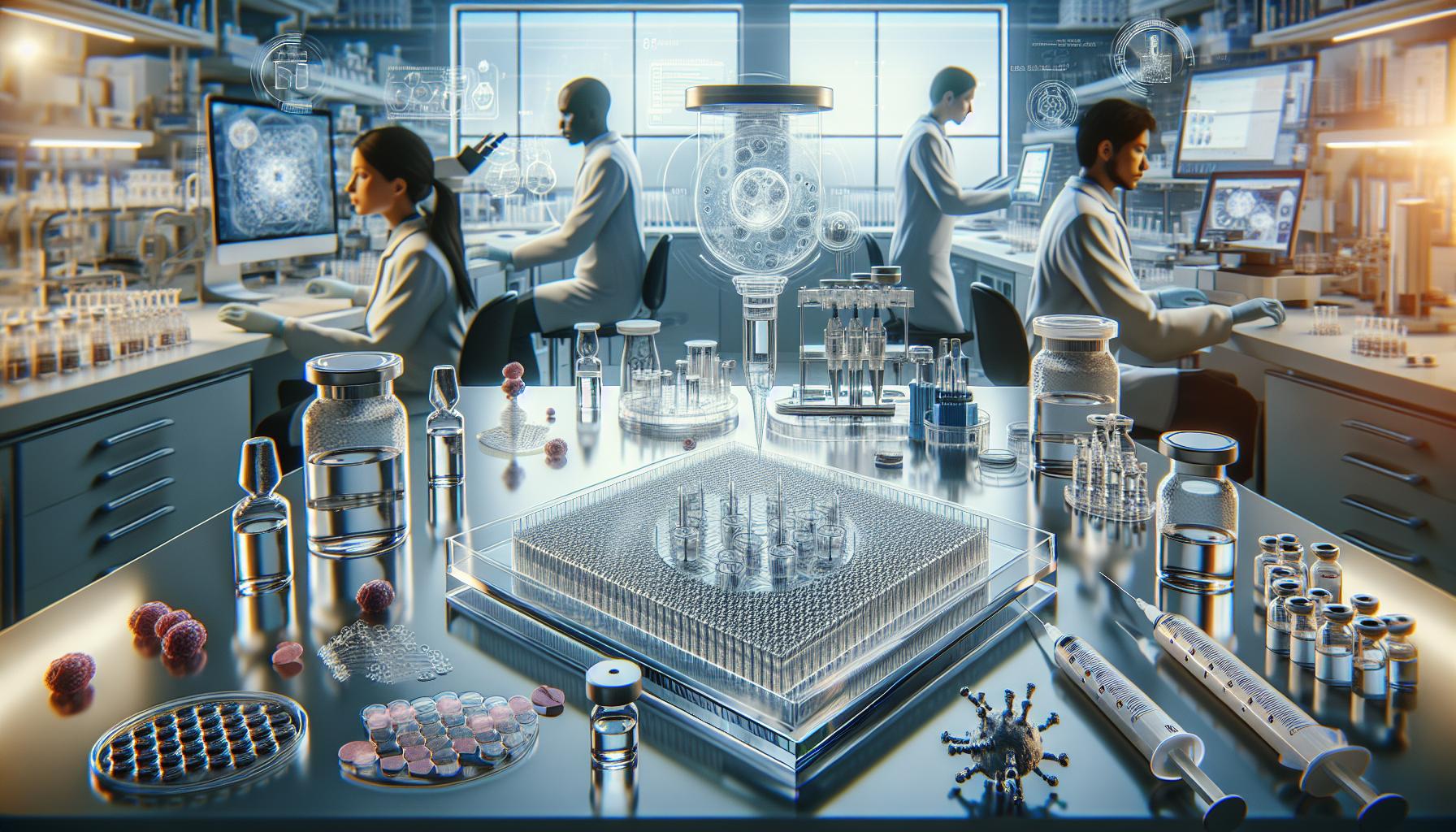
Microfluidics in Drug Development and Delivery
In the ever-evolving landscape of drug development, microfluidic devices are proving to be transformative tools that dramatically enhance the efficiency and precision of pharmaceutical research and manufacturing. These compact systems allow for the manipulation of tiny fluid volumes-sometimes as small as a picoliter-enabling scientists to conduct experiments and processes at an unprecedented scale. The ability to perform assays and synthesizations in miniature has created a paradigm shift, accelerating the time from discovery to delivery of new medications.
One of the significant applications of microfluidics in drug development lies in high-throughput screening. Traditional screening methods can be labor-intensive and time-consuming. In contrast, microfluidic platforms can automate and parallelize these processes, testing thousands of compounds in a fraction of the time. This not only increases the likelihood of identifying viable drug candidates but also reduces the overall cost of drug development. For example, researchers can use microfluidic chips to test the efficacy of a drug on various cell lines simultaneously, facilitating quicker and more comprehensive data collection.
Drug Delivery Systems
Microfluidics is also revolutionizing drug delivery, allowing for the creation of advanced formulations that improve bioavailability and therapeutic efficacy. Techniques such as encapsulation techniques within microfluidic devices enable precise control over the release profiles of drugs. For instance, nanoparticles can be engineered in microfluidic environments to enhance targeted delivery to specific tissues, thereby minimizing systemic side effects. This is particularly important in oncology, where localized delivery of chemotherapy agents can significantly improve patient outcomes while reducing harmful side effects associated with traditional delivery methods.
Moreover, the integration of microfluidics with biological models-such as organ-on-a-chip systems-provides researchers with innovative platforms for testing drug responses in environments that closely mimic human physiology. This approach not only enhances the predictive power of preclinical testing but also paves the way for personalized medicine. Patient-specific microfluidic chips can be developed using cells derived from individual patients, allowing for tailored drug responses to be studied, which is an exciting frontier for pharmacology.
In conclusion, the impact of extends far beyond mere efficiency improvements. By facilitating high-throughput screening, enabling advanced drug formulations, and integrating with biological models, these devices are reshaping the pharmaceutical landscape. As researchers harness the full potential of microfluidic technologies, we can anticipate a future where drug development is faster, more precise, and increasingly aligned with individual patient needs.
Breakthroughs in Environmental Monitoring
Advancements in microfluidic technology are reshaping the field of environmental monitoring by enabling rapid, accurate assessments of pollutants and hazardous substances in water, air, and soil. These devices, designed to manipulate minute volumes of fluids, facilitate the detection of environmental contaminants with unprecedented precision and at a fraction of the cost associated with traditional methods. This shift is essential as monitoring environmental health becomes increasingly critical in addressing climate change and pollution management.
Microfluidic devices operate on the principle of flowing fluids through narrow channels, allowing for enhanced reaction kinetics and detection limits. For instance, researchers have developed systems capable of detecting trace levels of heavy metals, such as lead and mercury, in water samples-a task that previously required expensive and time-consuming lab procedures. By integrating biosensors with microfluidic technology, it is possible to create portable devices that detect biological contaminants, such as pathogens, in real-time. This capability not only speeds up the response times to environmental hazards but also facilitates remote monitoring in harder-to-reach locations where traditional laboratory setups are impractical.
Applications in Water Quality Monitoring
One significant application of microfluidics in environmental monitoring is its use in assessing water quality. Microfluidic chips that incorporate multiple sensors enable users to run simultaneous tests for a variety of parameters, including pH levels, turbidity, and the presence of organic compounds. This multiplexing capability ensures comprehensive data collection, which is particularly useful for monitoring sources of contamination in rivers and lakes. Additionally, these devices can be designed to work with minimal sample preparation, making them highly user-friendly for fieldwork.
Another innovative aspect is the development of microfluidic systems capable of continuous monitoring. For example, submerged sensors can be deployed in water bodies to collect real-time data on pollutant levels, alerting authorities immediately if contamination exceeds safe thresholds. Such proactive monitoring not only aids in protecting wildlife and human health but also supports regulatory compliance and conservation efforts.
Air Quality and Soil Testing
Beyond water, microfluidics are finding their place in air quality and soil testing. Compact air sensors using microfluidic technology can detect volatile organic compounds (VOCs) and particulate matter, providing immediate feedback on air quality in urban areas. This data is vital for public health initiatives and environmental regulations, especially in cities facing pollution challenges.
In soil analysis, microfluidic devices help assess nutrient levels and contamination from pesticides or heavy metals. By employing small sample sizes, these devices facilitate quick screenings on-site, allowing farmers and environmental scientists to make informed decisions about land use and crop health.
Overall, the incorporation of microfluidics into environmental monitoring signifies a leap toward smarter, more responsive methods. As these technologies advance, they promise to enhance our capability to track environmental changes and manage ecological health effectively, bringing us closer to sustainable living practices.
Microfluidic Devices for Biological Research
Microfluidic devices are transforming biological research, providing unprecedented capabilities to manipulate tiny volumes of fluids with precision. This innovation is not just a technical marvel; it empowers researchers to conduct experiments that were previously cumbersome, time-consuming, or cost-prohibitive. For instance, by enabling assays to be performed on-chip, scientists can analyze multiple samples simultaneously while requiring only minuscule amounts of reagents. This not only minimizes waste but also enhances the throughput of experiments, which is essential in fast-paced research environments.
In the realm of cell biology, microfluidic devices are being used to create environments that closely mimic the physiological conditions of living organisms. Researchers can study cell behaviors in real time, observe cellular interactions, and even test drug responses under controlled conditions. The ability to observe single-cell responses in a microfluidic chamber allows for a much deeper understanding of biological processes, aiding advancements in fields such as cancer research and regenerative medicine. For example, organ-on-a-chip systems can simulate the kidney, heart, or liver, providing insights into how drugs affect these organs without the need for animal testing.
Moreover, these devices facilitate high-throughput screening for drug discovery, allowing researchers to quickly evaluate thousands of compounds for their biological activity. By integrating microfluidic systems with automated liquid handling and detection technologies, labs can significantly streamline the drug development pipeline. The ability to conduct parallel experiments in microfluidic formats speeds up the identification of potential drug candidates while ensuring that findings are both reproducible and reliable.
Applications in Genetic Research
Another exciting application of microfluidics is in genetic research, where these devices enable the manipulation and analysis of nucleic acids. Techniques such as PCR (Polymerase Chain Reaction) can be effectively miniaturized, allowing for faster and more efficient amplification of DNA sequences. Innovations in microfluidic chip design have led to the development of portable devices that perform genetic analyses in the field, which has profound implications for personalized medicine and disease outbreak responses. Imagine a researcher being able to not only conduct a DNA test but also get results immediately, all within a compact microfluidic device designed for easy transport.
In conclusion, the integration of microfluidics into biological research is reshaping how scientists conduct experiments, paving the way for new discoveries and enhanced efficiency. As technology continues to advance, the versatility and applicability of microfluidic devices will undoubtedly expand, driving further innovation in areas such as diagnostics, drug development, and fundamental biological understanding.
The Role of Microfluidics in Food Safety Testing
The increasing complexity of food supply chains has resulted in a greater demand for rapid and reliable methods to ensure food safety. Microfluidic devices are emerging as transformative tools in this field, providing innovative solutions for the detection and analysis of pathogens, allergens, and contaminants in food products. These compact systems enable precise manipulation of small fluid volumes, making them ideal for applications that require quick and effective testing.
One of the primary advantages of microfluidics in food safety testing is speed. Conventional laboratory methods can take days to yield results, while microfluidic technologies can significantly reduce this time to just a few hours, or even minutes. For instance, microfluidic chips have been developed to detect bacteria like E. coli or Salmonella in food samples swiftly. By integrating processes such as sample preparation, reaction, and detection on a single chip, these devices streamline workflows and enhance efficiency.
Moreover, microfluidic systems can employ multiplexing techniques, allowing simultaneous testing for multiple contaminants. This capability not only improves the throughput of food safety testing but also reduces the amount of sample and reagents required, contributing to cost-effectiveness and sustainability. For example, devices designed for the food industry can test for both chemical pollutants and biological pathogens in parallel, providing a comprehensive analysis that helps producers ensure compliance with safety standards.
As regulations surrounding food safety become stricter, the need for reliable testing methods is paramount. Microfluidic devices are not just enhancing the testing process; they’re revolutionizing how food safety is approached in the industry. By enabling rapid, accurate, and cost-effective testing, these technologies are paving the way for safer food systems globally. As innovation in microfluidics continues, we can expect further advancements that will significantly impact food safety protocols, making our food supply safer for consumers.
Portable Microfluidic Devices for Point-of-Care Testing
Portable microfluidic devices are changing the landscape of point-of-care testing, making diagnostics more accessible and efficient than ever before. Imagine a world where patients can receive lab-quality results in their own homes or at the bedside, without the need for extensive lab facilities. This is a reality made possible by miniaturized analysis systems that utilize the precision of microfluidics to deliver rapid and accurate results directly at the point of care.
One of the most significant advantages of these devices is their ability to conduct multiple tests from a small sample-often just a finger prick’s worth of blood or saliva. Speed is a critical factor in healthcare, especially in emergency situations. Traditional lab tests can take hours or even days, but portable microfluidic devices can provide results in as little as 15 minutes. For instance, devices designed for infectious disease diagnosis, such as detecting markers for diseases like HIV, malaria, or COVID-19, allow for immediate treatment decisions, improving patient outcomes dramatically.
Design and Functionality
These portable systems employ a variety of innovative technologies to function effectively. Many utilize lab-on-a-chip designs, which integrate several functions-sample preparation, reaction, and detection-on a single platform. This integration minimizes the risk of contamination and errors that can arise when handling samples. Additionally, some devices are designed to be user-friendly, allowing untrained individuals to perform tests effectively, which is particularly important in remote or resource-limited settings.
In practice, one of the standout examples is the portable glucose meters used by diabetics to monitor blood sugar levels. Many newer models use microfluidic technology to enhance performance and accuracy, providing reliable readings and enabling patients to manage their condition more effectively. These devices not only improve individual health management but also have broader implications for public health monitoring, allowing for the rapid collection of epidemiological data.
Future Prospects
As advancements in microfluidic technology continue, we can expect these portable devices to become even more sophisticated. Emerging trends include integration with mobile technologies for real-time data sharing and analysis. Imagine a future where a handheld microfluidic device communicates directly with a healthcare provider’s system, alerting them to any concerning results.
Moreover, the potential for integrating artificial intelligence with microfluidic devices opens new doors for predictive diagnostics, where algorithms can analyze results and anticipate health trends before they become critical. This progress signifies a revolutionary shift not just in how we approach patient care but in the very structure of healthcare delivery, making it more proactive and personalized.
These portable microfluidic devices exemplify the exciting intersection of technology and healthcare, promising to enhance the efficiency and accessibility of medical diagnostics worldwide. With continued innovation, the future of point-of-care testing looks bright, heralding a new era of healthcare that is responsive, efficient, and focused on patient empowerment.
Integration of AI in Microfluidic Applications
The integration of artificial intelligence (AI) into microfluidic applications is shifting paradigms in diagnostics, research, and healthcare delivery. By harnessing the vast computational power of AI, researchers are able to unlock deeper insights from the intricate data produced by microfluidic devices. These devices, known for their ability to manipulate tiny fluid volumes with precision, are becoming increasingly effective when combined with AI technologies that can analyze and interpret complex datasets rapidly.
In diagnostics, AI algorithms can process the data generated by microfluidic tests to identify patterns that may not be immediately apparent to human analysts. For instance, in cancer detection, microfluidic devices can isolate circulating tumor cells from blood samples, and AI can assist in recognizing these cells through machine learning techniques. This capability not only enhances the accuracy of diagnosis but also speeds up the process significantly, often reducing what could take weeks into a matter of hours.
Predictive Analytics in Disease Monitoring
AI’s role extends beyond diagnostics; it also plays a critical part in predictive analytics. By analyzing historical data and real-time inputs from microfluidic systems, AI can forecast health trends and potential outbreaks. For example, in infectious disease monitoring, machine learning models can analyze data from portable microfluidic devices used in point-of-care settings. This proactive approach allows healthcare providers to anticipate resource needs and potentially intervene before small outbreaks become larger public health crises.
On another front, the development of smart microfluidic devices equipped with AI algorithms offers a user-friendly approach to complex analyses. These systems can make on-the-fly adjustments to testing parameters based on incoming data, ensuring optimal performance without requiring constant human oversight. Such automation not only increases efficiency but significantly enhances access to advanced diagnostics in remote or resource-limited environments.
Real-World Applications and Future Directions
The future of microfluidics combined with AI is poised for impressive developments. One compelling application can be seen in personalized medicine, where AI analyzes data from microfluidic tests to help tailor treatments to individual patient needs. As we continue to refine these technologies, the integration of AI will likely lead to more sophisticated systems that not only improve accuracy and efficiency but also enhance the overall patient experience.
As researchers and developers push the boundaries of what’s possible with AI and microfluidics, ongoing innovations in this space promise to transform how we approach diagnostics and treatment, making healthcare more effective, accessible, and responsive to patient needs. The synergy of these technologies exemplifies a leap towards a smarter, more connected healthcare future.
Future Trends: What’s Next for Microfluidics?
The future of microfluidics is bright, with emerging technologies promising to revolutionize how we conduct research, diagnostics, and treatment. As these devices become more compact, versatile, and integrated with advanced technologies, they will unlock new possibilities across various fields. One of the most significant trends is the integration of artificial intelligence and machine learning into microfluidic systems. This fusion allows for smarter data analysis and decision-making, enabling devices to adapt in real-time to varying experimental conditions.
Advancements in Materials and Fabrication
Innovations in materials science are paving the way for next-generation microfluidic devices. Researchers are exploring the use of biocompatible materials and advanced polymers that not only enhance the performance of devices but also make them safer and more effective for biological applications. Additionally, methods like 3D printing and micro-molding are being refined, allowing for rapid prototyping and customization of microfluidic chips, which accelerates the pace of innovation in developing new applications.
Miniaturization and Portability
The trend toward smaller and more portable devices holds great promise for on-site diagnostics and environmental monitoring. Compact, lab-on-a-chip devices are poised to change how healthcare is delivered, especially in remote areas where traditional lab facilities are scarce. These portable systems can perform complex tests quickly and accurately, bringing advanced medical care directly to patients at point-of-care settings. This shift aligns with a growing demand for rapid results and better accessibility in healthcare.
Interdisciplinary Applications
As microfluidic technology matures, its interdisciplinary applications are expanding dramatically. Environmental monitoring, for instance, benefits from these devices by enabling real-time analysis of water and air quality at smaller scales than ever before. Similarly, agricultural uses, such as monitoring soil health or optimizing irrigation strategies, are becoming more feasible with portable microfluidic setups. Enhanced integration of microfluidics with other technologies-such as biosensors and robotics-will broaden the spectrum of its practical applications, enabling seamless interaction between various systems.
In conclusion, the convergence of microfluidics with cutting-edge technologies signals a transformative phase in research and healthcare. As these devices continue to evolve, their capabilities will expand, making profound impacts across multiple sectors, from healthcare to environmental sustainability. This ongoing evolution not only highlights the significant role of microfluidics in future technological landscapes but also emphasizes its potential to address some of the most pressing challenges faced by society today.
Overcoming Challenges in Microfluidic Design
Overcoming the hurdles inherent in microfluidic design is crucial for advancing its applications across various fields such as diagnostics, drug delivery, and environmental monitoring. Despite the undeniable potential of these devices, designers face several challenges that can impede their effectiveness. Understanding these issues and leveraging innovative solutions can significantly enhance microfluidic technology’s capabilities.
One major challenge lies in the material selection. The choice of materials directly impacts the performance and reliability of microfluidic devices. For instance, traditional materials like PDMS (polydimethylsiloxane) offer flexibility and ease of fabrication but may suffer from issues like gas permeability and surface aging. Newer materials, such as thermoplastics and hydrogels, present promising alternatives that can provide better chemical resistance and biocompatibility. Evaluating the properties of new materials and how they behave under various conditions is essential for meeting specific application requirements.
Another critical challenge is achieving accurate and reproducible fluid control within microchannels. Designing channels that enable precise mixing and manipulation of fluids at such small scales is no small feat. Techniques such as passive and active microvalves, capillary-driven flows, and electrokinetic phenomena can be employed to manage fluid dynamics effectively. Understanding how to integrate these control mechanisms into device designs can lead to more sophisticated applications, from intricate biochemical assays to tailored drug delivery systems.
Integration with external systems poses yet another design obstacle. For microfluidic devices to be truly transformative, they need to work seamlessly with sensors, data analytics tools, and robotics for automated operation. This requirement pushes researchers to develop robust interfaces that maintain the integrity of microfluidic functions while managing external communications. Exploring innovative methods for embedding sensors and connectivity features into the device architecture can facilitate real-time monitoring and improve the overall utility of microfluidic systems.
By addressing the material challenges, optimizing fluid control methods, and ensuring smooth integration with external technologies, designers can unlock the full potential of microfluidic devices. These advancements will not only enhance the effectiveness of current applications but also pave the way for novel solutions that can redefine diagnostic processes, environmental analysis, and therapeutic delivery. The journey is as much about innovation in design practices as it is about the technology itself, propelling the field into a future where microfluidics can address complex scientific challenges effectively.
Real-World Impact: Case Studies and Success Stories
The transformative potential of microfluidic devices is exemplified through numerous real-world applications that illustrate their impact across various sectors. From healthcare to environmental monitoring, these devices are not just theoretical innovations; they are actively reshaping industries by enabling precise control of fluid manipulations on a micro-scale. The integration of microfluidic technology has significantly enhanced the efficiency and accuracy of diagnostics, leading to faster turnaround times and improved patient outcomes.
Consider the case of a microfluidic device developed by researchers at Stanford University designed for rapid infectious disease diagnostics. This device can perform multiple tests from a single drop of blood, differentiating between several pathogens within minutes. By utilizing a series of microchannels and automated processes, the device significantly reduces the time needed for traditional lab tests, which can take hours or even days. This capability is particularly vital in fast-paced clinical environments, such as emergency rooms or during disease outbreaks, where timely identification of pathogens can save lives.
Success Stories in Drug Development
In the realm of drug discovery, microfluidics has emerged as a game-changing technology. A notable example is the work done by researchers at the Massachusetts Institute of Technology (MIT), who developed a microfluidic platform that enables high-throughput screening of drug compounds. This system allows scientists to test thousands of compounds simultaneously with minimal amounts of reagent, accelerating the drug discovery process. By creating a compact and efficient system, researchers are able to identify potential drug candidates more quickly, thereby reducing the time and cost associated with bringing new therapies to market.
The application of microfluidics in environmental monitoring also showcases its versatility. For instance, a startup called “Aquatech” has created a microfluidic device capable of detecting contaminants in water sources in real-time. This innovative system employs lab-on-chip technology, allowing for portable, on-site testing that provides immediate results, which is crucial for ensuring water safety and public health. By facilitating quicker response times to contamination events, such devices play a vital role in environmental protection and sustainability.
These examples underscore how microfluidic devices not only optimize current practices but also open new avenues for innovation. By streamlining processes in diagnostics, drug development, and environmental monitoring, microfluidics proves to be a powerful tool capable of addressing contemporary challenges across multiple fields. As these technologies continue to evolve, their real-world implications will only grow, fostering a future where precision and efficiency are at the forefront of scientific advancement.
Frequently Asked Questions
Q: What are the advantages of using microfluidic devices in diagnostics?
A: Microfluidic devices offer several key advantages in diagnostics, including *smaller sample volumes*, *increased speed of analysis*, and *enhanced sensitivity*. Their compact design allows for rapid testing and the ability to perform multiple analyses simultaneously, making them ideal for point-of-care applications and real-time monitoring.
Q: How do microfluidic devices contribute to personalized medicine?
A: Microfluidic devices enhance personalized medicine by enabling *tailored drug assays* and *patient-specific treatments*. These devices can analyze genetic material and biomarkers quickly, allowing healthcare providers to customize therapies based on individual patient profiles, which is crucial for effective treatment outcomes.
Q: In what ways can microfluidics be used in environmental applications?
A: Microfluidic technology is utilized in environmental monitoring for *detecting pollutants*, *analyzing water quality*, and *tracking pathogens*. These devices allow for real-time testing and monitoring, significantly improving our ability to assess environmental safety and manage resources effectively.
Q: What is the role of microfluidics in food safety testing?
A: Microfluidics plays a vital role in food safety testing by facilitating *rapid detection of contaminants* and pathogens in food products. These compact systems allow for efficient screening with minimal sample sizes, ensuring that food safety standards are met swiftly.
Q: Can microfluidic devices be integrated with artificial intelligence?
A: Yes, microfluidic devices can be integrated with artificial intelligence (AI) for *data analysis and process optimization*. The combination enhances the interpretation of results, accelerates decision-making, and improves predictive analytics in various applications, from healthcare to environmental monitoring.
Q: What challenges are faced in microfluidic device design?
A: Challenges in microfluidic device design include *fabrication complexity*, *scalability*, and *integration* of various components. Addressing these challenges requires innovative engineering solutions, material selection, and an interdisciplinary approach to optimize functionality for specific applications.
Q: How do portable microfluidic devices impact healthcare delivery?
A: Portable microfluidic devices significantly impact healthcare delivery by enabling *point-of-care testing*, which allows for quick diagnostics and decision-making. This convenience improves patient outcomes, particularly in remote or underserved areas by providing essential health services without the need for extensive laboratory infrastructure.
Q: What future trends are expected in microfluidic technology?
A: Future trends in microfluidic technology include advancements in *biomaterials and fabrication techniques*, increased *automation*, and *integration with digital health applications*. These innovations are expected to enhance device functionality and broaden their applications across various fields, from medicine to environmental science.
The Way Forward
Microfluidic devices are revolutionizing fields from healthcare to environmental monitoring, streamlining processes and enabling innovations previously thought impossible. Whether you’re looking to enhance diagnostics, improve drug delivery, or explore novel biological discoveries, the applications of microfluidic technology can significantly impact your work and research. Don’t let the opportunity pass-dive deeper into related content like our article on the latest advancements in lab-on-a-chip technology or discover how microfluidics is changing the landscape of personalized medicine.
Ready to harness the power of microfluidics? Sign up for our newsletter to stay updated on cutting-edge research and applications, or explore our product pages that offer the latest tools for your laboratory. If you have any thoughts or experiences to share, we invite you to comment below and engage with our community of innovators. Your journey in microfluidic applications begins now-explore, connect, and create the future of technology with us.
Get our latest guides, news, and insights highlighted in your Google Search & AI Overviews.