
Have you ever felt the warmth of the sun on your skin even when you’re not in direct contact with it? This phenomenon is known as heat transfer by radiation, a crucial concept in both everyday life and various scientific applications. Unlike conduction or convection, radiation allows energy to be transferred through the vacuum of space in the form of electromagnetic waves, impacting everything from climate science to engineering designs. This understanding is essential not only for researchers and students but also for anyone interested in the mechanisms that govern our environment. In this article, we’ll delve deeper into how radiation works without contact, uncovering the principles behind thermal radiation and its significance in both natural and technological contexts. Prepare to explore the intriguing world of radiant heat and how it shapes our experiences and innovations.
Understanding the Basics of Heat Transfer by Radiation
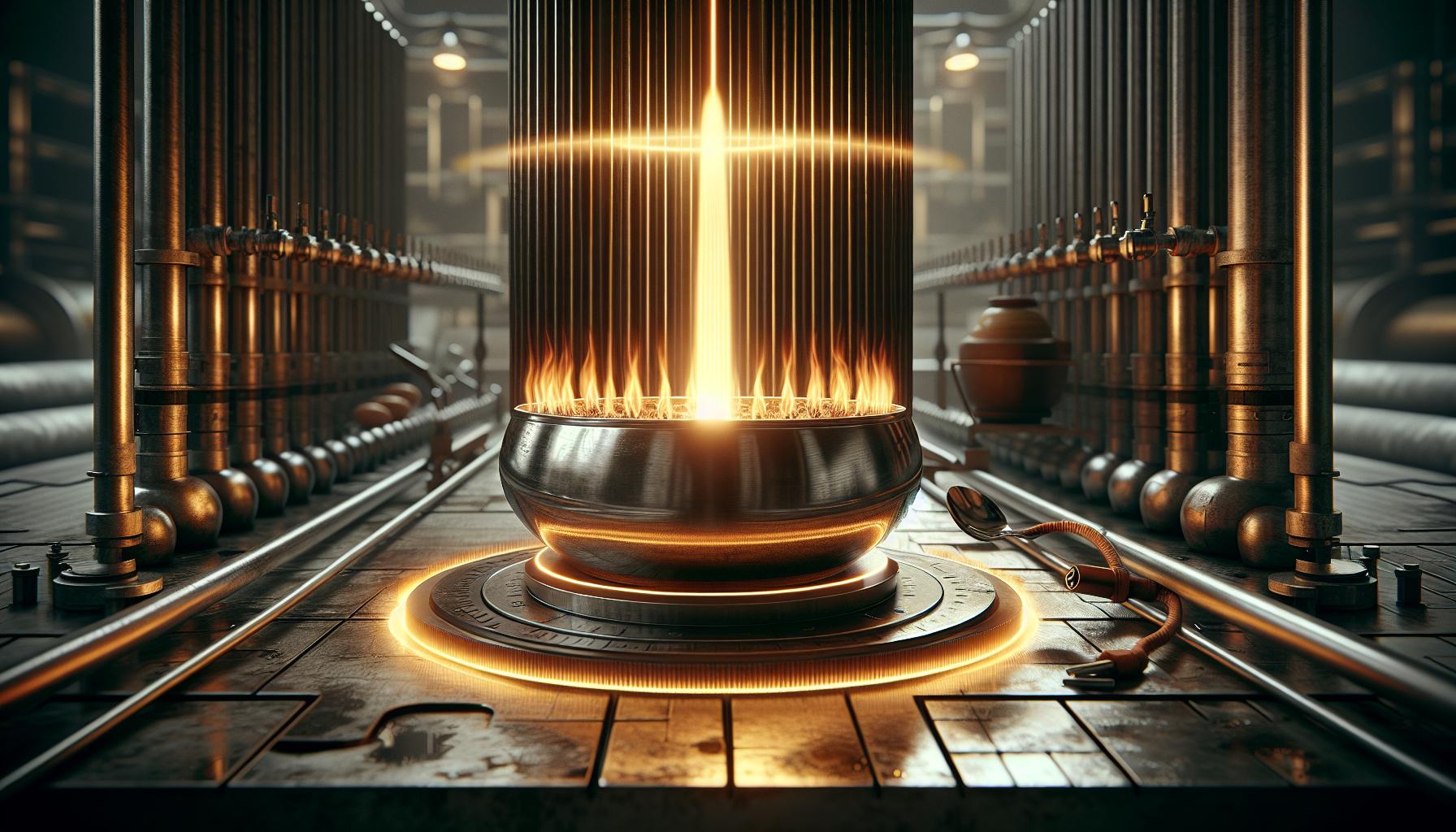
Heat transfer by radiation is a fascinating phenomenon that allows energy to travel through the vacuum of space without the need for direct contact between objects. Imagine standing by a cozy fire on a cold night; you can feel the warmth on your skin even though you are not touching the flames. This wonderful ability of energy to move from one body to another using electromagnetic waves is what makes radiation unique among the three primary modes of heat transfer: conduction, convection, and radiation.
Radiation occurs through the emission of infrared radiation from a hot object which then travels in all directions until it interacts with another object. The key aspect of this process is that it does not require a medium, unlike conduction or convection. In conduction, heat moves through direct contact, while convection involves the movement of fluid (liquid or gas) to transfer heat. This is why you can feel the sun’s warmth on your face even when the air around you is cool-sunlight travels through the vacuum of space and warms you directly.
One critical factor influencing radiative heat transfer is the temperature of the emitting body. According to the Stefan-Boltzmann law, the amount of energy radiated increases dramatically with temperature. The surface texture and color of objects also play a vital role; dark, matte surfaces are much better at absorbing and emitting radiation compared to shiny, reflective surfaces. Emissivity, a measure of how effectively an object emits energy as thermal radiation, varies between materials and significantly affects energy transfer rates. Understanding these principles can help in designing energy-efficient buildings, selecting materials for specific applications, and improving thermal management in engineering designs.
How Radiation Differs from Conduction and Convection
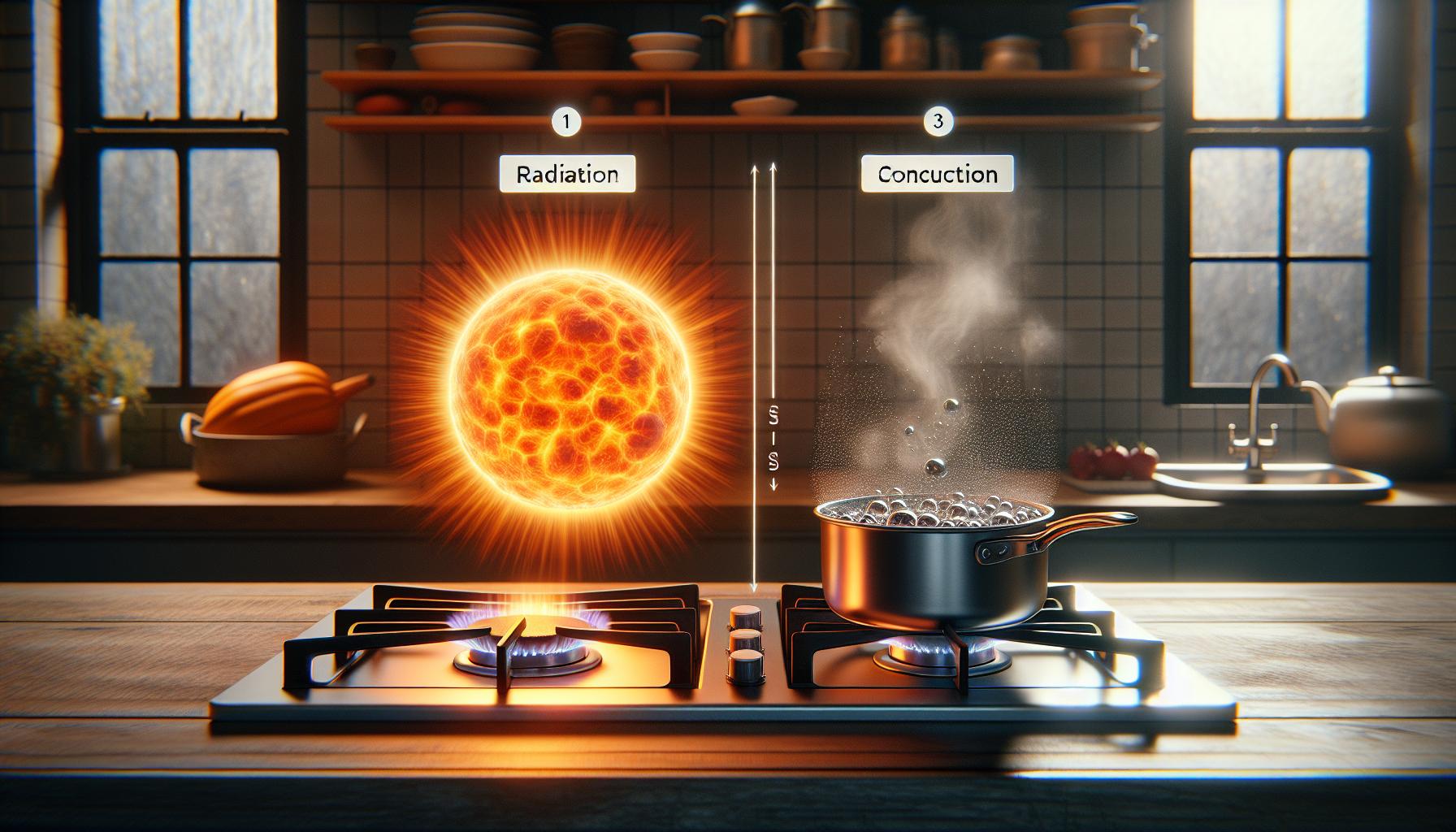
The distinction between radiation, conduction, and convection is essential in understanding how heat transfer functions without direct contact. Imagine a sunny day: you feel warmth from the sun long before you step outside, thanks to electromagnetic waves traveling through the vacuum of space. This phenomenon stands apart from conduction and convection, where physical contact or fluid movement is necessary for heat transfer.
In conduction, heat is transferred through direct molecular interaction. When you touch a hot stove, kinetic energy from the stove’s molecules agitates the molecules in your hand, creating heat transfer. This process is effective in solids but falters in gases and vacuums, where molecules are sparsely populated. Conversely, convection involves the movement of fluids, which transfer heat as warmer areas rise and cooler areas sink, creating currents. Think about boiling water: the heat from the stove warms the water at the bottom, and as it rises, it carries heat to the surface, where cooler water then descends to replace it. Both methods require a medium-solid or fluid-to facilitate heat transfer, while radiation transcends these limitations.
Radiation operates by emitting energy in the form of electromagnetic waves, primarily infrared radiation in thermal contexts. These waves can propagate through a vacuum, which is why sunlight can travel 93 million miles to warm the Earth. The amount of energy radiated by an object is influenced by its temperature and surface properties. For example, black surfaces usually absorb and emit radiant energy more effectively than white or shiny ones. Hence, understanding these differences can inform more energy-efficient designs, such as selecting proper materials for insulation or optimizing solar panels for maximum energy absorption. This foundational knowledge can be applied in various fields, from engineering and architecture to environmental science, driving innovations that harness or mitigate thermal energy effectively.
The Physics Behind Radiative Heat Transfer
The ability of heat to transfer through space without any medium involved is one of nature’s fascinating phenomena. At the heart of this unique process lies the principle of radiative heat transfer, where energy is emitted and absorbed in the form of electromagnetic waves, primarily infrared radiation. This mechanism allows energy from hot bodies, such as the sun or a campfire, to travel across the vacuum of space and reach cooler objects, warming them up without any direct contact. Understanding the physics behind this radiation can significantly enhance our ability to harness and manage energy in daily applications.
Radiation draws on the principles of thermodynamics and electromagnetic theory. When an object is heated, its atoms and molecules vibrate more vigorously, releasing energy in the form of photons-particles of electromagnetic radiation. The amount of radiation emitted is described by the Stefan-Boltzmann Law, which states that the total energy radiated per surface area is proportional to the fourth power of the absolute temperature of the object. Mathematically, it can be expressed as:
[ E = sigma T^4 ]
where ( E ) is the emissive power, ( sigma ) is the Stefan-Boltzmann constant, and ( T ) is the absolute temperature in Kelvin. This relationship emphasizes how even small increases in temperature lead to substantial increases in radiative energy, an essential concept for various technologies, from energy-efficient heating systems to advanced thermal imaging devices.
Different materials interact with radiated heat uniquely, dictated by their surface characteristics. Surfaces that are dark and matte tend to absorb and emit radiation more efficiently compared to shiny or light-colored surfaces. This is crucial in applications like solar energy collection, where specific materials are chosen for maximum absorption of solar radiation. Additionally, the concept of emissivity is key, representing how well a surface emits thermal radiation relative to a perfect black body. Emissivity values can range from 0 (reflective surfaces) to 1 (perfect absorbers). Thus, selecting appropriate materials based on their thermal properties allows engineers and designers to optimize energy transfer in various applications, from building insulation to spacecraft design.
In summary, the physics of radiative heat transfer not only describes how energy travels across empty spaces but also illuminates the principles that underpin energy efficiency in technology and design. By harnessing these principles, we can create more effective heat transfer systems, improve energy conservation techniques, and enhance our understanding of thermal dynamics in everyday life.
Key Factors Affecting Radiation Heat Transfer
Heat transfer by radiation is influenced by a variety of factors that dictate how effectively energy can be emitted and absorbed. Understanding these factors can enhance your ability to design systems that make optimal use of radiant energy.
The first major factor is the temperature of the emitting surface. According to the Stefan-Boltzmann Law, the amount of radiation emitted increases significantly with temperature. For example, an object at 100°C radiates much less energy than one at 300°C because of the fourth power relationship in the formula ( E = sigma T^4 ). This principle is crucial in applications such as radiative heaters or infrared emitters, where higher temperatures directly lead to greater heat outputs.
Next, the surface properties of materials play a crucial role. Different materials have varying degrees of emissivity, which measures how effectively a surface can emit thermal radiation. Dark, matte surfaces generally have higher emissivity values (closer to 1), meaning they are better at radiating heat compared to shiny or reflective surfaces, which might have values closer to 0. This characteristic is particularly important in solar panel design, where selecting materials that maximize absorption and minimize reflection enhances energy efficiency.
Lastly, the distance between surfaces can significantly affect radiation heat transfer as well. Radiation intensity diminishes with the square of the distance from the source, following the inverse square law. This means that in applications like thermal insulation, carefully considering spacing can help minimize heat loss. Effective insulation materials utilize this principle by trapping air and limiting the amount of radiant heat that escapes from or enters a space.
Incorporating these factors into practical design considerations can lead to more efficient thermal management systems in both industrial and residential applications.
Examples of Radiation in Everyday Life
The phenomenon of heat transfer via radiation is ubiquitous in nature, often unnoticed, yet profoundly impactful in our everyday lives. For instance, consider the warmth you feel when standing in direct sunlight. Despite the substantial distance between the Sun and Earth, radiant energy travels through the vacuum of space and heats your skin. This process doesn’t require any physical contact and demonstrates how radiation can effectively transfer energy over long distances.
In addition to natural examples, radiation plays a vital role in various common technologies. Infrared heaters, often used in homes and outdoor settings, emit infrared radiation, directly warming objects and people in their vicinity rather than the air around them. This targeted approach enables efficient heating, as it minimizes energy loss typically associated with warming large volumes of air. Similarly, food items placed in a microwave oven absorb electromagnetic radiation, converting it into thermal energy that cooks food without needing direct contact with heating elements.
Furthermore, the design of efficient thermal systems heavily relies on radiant heat transfer principles. Solar panels, for example, utilize highly emissive materials to absorb solar radiation effectively, converting it into usable energy. The design of buildings also incorporates these concepts; reflective coatings on windows can reduce heat gain in warmer months, while thermal mass materials can absorb and radiate heat in a controlled manner, enhancing energy efficiency.
Recognizing these examples highlights how profoundly radiant heat transfer affects not just our comfort but also our energy consumption and technologies, illustrating the importance of harnessing and optimizing this natural process in everyday applications.
Applications of Radiation in Technology
In our modern world, the application of radiation in technology is both innovative and crucial. One of the most pervasive examples is the use of infrared radiation in heating appliances, such as infrared heaters and saunas. Unlike traditional heaters that warm the air, infrared heaters emit radiation that directly heats the objects and people in their vicinity. This targeted effect not only improves energy efficiency but also provides a comfortable warmth without the uncomfortable dryness often associated with conventional heating methods.
Additionally, radiation plays a pivotal role in medical technology, particularly in treatments involving hyperthermia and radiation therapy for cancer. Hyperthermia treatment utilizes controlled heat from radiofrequency radiation to target and destroy cancer cells, enhancing the effectiveness of traditional therapies. Moreover, advances in diagnostic imaging, such as MRI and PET scans, rely heavily on the principles of radiative heat transfer, allowing for clear internal visualization without invasive procedures.
The effects of radiation are also harnessed in the culinary world, most notably in microwave ovens. Microwaves utilize electromagnetic radiation to excite water molecules in food, generating heat through friction and cooking food quickly and efficiently. This method of cooking exemplifies how radiation not only saves time but also conserves energy compared to traditional cooking methods.
As we explore further developments in technology, the integration of radiant heat transfer continues to expand across various industries. Innovations in solar energy capture through photovoltaic cells underscore this trend. By converting solar radiation into electrical energy, these systems provide a sustainable energy source while demonstrating the essential role that radiation plays in our efforts to harness renewable resources. Such applications highlight the substantial impact of radiation in enhancing technological efficiency and effectiveness across multiple fields.
Common Misconceptions About Radiative Heat Transfer
Understanding heat transfer by radiation often brings about several misconceptions that can lead to confusion. One prevalent myth is that radiative heat transfer requires a medium through which heat can travel, like air or water. However, radiation is unique in that it can occur in a vacuum. This is why the Sun’s warmth can reach Earth across the vast emptiness of space. The key to understanding this is that radiant energy travels in the form of electromagnetic waves, which do not require a material medium to propagate.
Another common misunderstanding involves the perception of heat intensity associated with radiation. Many people assume that the closer you are to a heat source, the warmer you will feel, but it’s more nuanced. Factors such as surface area and distance affect how much irradiance (power per unit area) you receive. For example, a small, very hot object can emit a great deal of radiant energy, but if you are far away or if there are obstructions, the intensity of the heat may diminish significantly. This principle is exemplified in outdoor environments where the effect of sunlight is felt more intensely when standing in direct light compared to being in the shade.
Misinterpretation of Temperature and Heat
Another misconception stems from confusing temperature with the amount of heat transferred. Temperature is a measure of the average kinetic energy of particles in an object, while heat is the energy transferred due to a temperature difference. When discussing radiation, people often think that all radiation results in a temperature rise; however, the effect of radiative heat transfer depends greatly on the materials involved. Darker surfaces tend to absorb more radiation, leading to higher temperatures, whereas lighter surfaces reflect much of that energy, remaining cooler.
Additionally, there’s a widespread belief that all types of radiation are harmful. While it’s true that certain forms of radiation, such as ultraviolet radiation, can be detrimental to health due to their high energy levels, others, like infrared radiation, are perfectly safe and even beneficial. Infrared radiation is used in numerous applications, from medical therapies to heating solutions, highlighting the diverse nature of electromagnetic radiation.
In summary, dispelling these misconceptions around radiative heat transfer enhances our understanding and application of this fundamental principle. Recognizing that radiation can transfer energy in a vacuum, distinguishing between temperature and heat, and understanding the safety of various radiation types can empower individuals to leverage radiative heat transfer more effectively in both everyday life and technological advancements.
Measuring Radiation: Tools and Techniques
Measuring radiation, particularly radiative heat transfer, is crucial in various fields ranging from engineering to environmental science. Unlike conduction and convection, which require matter for heat transfer, radiation can occur across vacuum. This unique property introduces specific methods and tools for quantifying radiative heat transfer effectively.
One common instrument used for measuring radiation is the pyrometer. This device is especially useful in high-temperature applications, such as metallurgy and glass manufacturing. A pyrometer measures temperature through the infrared radiation emitted by an object without direct contact, making it invaluable for both safety and accuracy. By capturing the thermal radiation, pyrometers provide a real-time reading of surface temperatures, ensuring that processes remain within optimal ranges. When using a pyrometer, it’s essential to calibrate it according to the emissivity of the material being measured, as different surfaces emit radiation differently.
Another essential tool is the radiometer, which quantifies the intensity of radiant energy. Radiometers are often utilized in meteorology and climate studies to analyze solar radiation. These devices can measure solar irradiance on a surface, which is pivotal for understanding how much solar energy is available for conversion in solar panels or for heating applications. Some radiometers come equipped with a sensor that differentiates between various wavelengths, providing insight into the radiative energy distribution across the spectrum, from ultraviolet to infrared.
In laboratory settings, spectrometers can be employed to measure precise wavelengths of radiation. This is especially beneficial in research that examines the properties of materials or the behavior of different gases under radiative heat conditions. By analyzing the spectrum of emitted radiation, scientists can infer the temperature and composition of a substance, enabling them to understand better how materials interact with thermal energy.
To summarize, accurately measuring radiation involves a variety of specialized tools, each tailored for specific applications. Observations made with instruments like pyrometers, radiometers, and spectrometers contribute to improved efficiency and safety in processes involving heat transfer by radiation. In a world increasingly reliant on sustainable energy sources, mastering these measurement techniques will continue to play a pivotal role in advancing technology and scientific research.
Real-World Implications of Heat Radiation
Heat radiation plays a critical role in our daily lives, influencing everything from climate patterns to the design of efficient heating systems. Most notably, heat transfer through radiation is the primary mechanism by which the Earth absorbs energy from the sun. This process is fundamental for maintaining life, as it regulates temperatures necessary for ecological balance. The efficiency of this energy transfer is predominantly influenced by factors such as the surfaces involved and their respective emissivity-essentially how well they absorb and emit thermal radiation.
In practical applications, understanding heat radiation is crucial for enhancing energy efficiency in buildings. For instance, the development of reflective coatings for roofs and walls can significantly reduce heat absorption during hot weather, thus decreasing the need for air conditioning. This principle is also visible in the design of sustainable architecture, where passive solar heating-harnessing solar radiation to warm living spaces-can be optimized through strategic placement of windows and materials that maximize sunlight exposure while minimizing heat loss.
Additionally, industries leveraging radiative heat transfer have made significant advancements. Take, for example, the field of renewable energy; solar thermal systems are extensively designed to collect and convert sunlight into usable energy, illustrating the importance of understanding radiative properties. Similarly, in manufacturing processes such as metalworking or glass fabrication, precise control over temperature through radiative heating can improve product quality and reduce energy consumption.
Common misconceptions may arise around the effectiveness and limitations of heat radiation. For instance, many people believe that thermal radiation only occurs at high temperatures. In reality, all objects emit radiation based on their temperature, albeit at different intensities. This understanding is pivotal in applications such as thermal imaging, where differences in radiative emissions allow for the detection of heat leaks in insulation or the monitoring of equipment performance.
In summary, the implications of heat radiation extend far beyond theoretical discussions. From enhancing energy efficiency in our homes to powering revolutionary technologies in renewable energy, mastering the principles of heat transfer by radiation is essential for both practical applications and future advancements. Understanding these concepts not only empowers individuals and industries alike but also paves the way for a more sustainable future.
Exploring the Role of Infrared Radiation
Infrared radiation plays a pivotal role in the realm of heat transfer, bridging the gap between thermal energy emissions and our everyday experiences. Often overlooked, this form of electromagnetic radiation not only allows us to perceive warmth but also powers numerous technological advancements. From remote sensing to energy-efficient systems, understanding how infrared radiation operates is essential for harnessing its full potential without any physical contact.
Infrared radiation is emitted by all objects with a temperature above absolute zero. As an object heats up, it radiates energy in the form of infrared wavelengths. This phenomenon is paramount in applications like thermal imaging, where infrared sensors detect differences in heat signatures to visualize heat patterns, allowing us to identify leaks in insulation or monitor equipment performance. In essence, the hotter an object gets, the more infrared radiation it emits, emphasizing the critical relationship between temperature and radiative heat transfer.
The practical implications of infrared radiation extend into several sectors. For instance, in energy-efficient buildings, infrared technology can monitor heat loss and optimize insulation materials. Reflective surfaces and specialized coatings can be designed to manipulate infrared emissions, either enhancing or reducing heat absorption depending on the season. This active management results in lower energy costs and enhances comfort levels. Similarly, in industrial settings, infrared heaters provide rapid and efficient heating options without direct contact, streamlining processes like drying and curing materials.
Furthermore, advancements in technology continue to harness the unique properties of infrared radiation. Innovative designs in solar thermal systems utilize infrared absorption to convert sunlight into usable heat effectively. This efficiency not only promotes renewable energy but also illustrates the intersection of physics and practical application, showcasing how an understanding of infrared radiation can lead to sustainable energy solutions.
As we delve into the future trends of radiation technology, the role of infrared radiation will undoubtedly grow in importance. With ongoing research into new materials and heating solutions, the potential for infrared radiation in improving energy efficiency and thermal management in various fields remains vast and exciting.
Future Trends in Radiative Heat Transfer
The evolution of radiative heat transfer technology is on the brink of revolutionizing how we approach energy use and efficiency. Emerging innovations are targeting more effective ways to harness and manipulate infrared radiation, which could lead to significant advancements across various sectors, from construction to consumer electronics. As a result, understanding these future trends is essential for anyone interested in maximizing energy efficiency and optimizing thermal management.
To begin with, one of the most exciting areas of development is the advancement of metamaterials, which are engineered to control electromagnetic waves, including infrared radiation. These materials can be designed to have properties not found in nature, enabling unprecedented control over how heat is transferred. For example, a metamaterial surface could reflect infrared radiation away from a building in summer while allowing heat absorption in winter, drastically reducing energy consumption for heating and cooling. This application not only serves environmental goals but can also lead to significant cost savings for homeowners and businesses alike.
Moreover, advancements in thermophotovoltaics (TPV) are set to change the energy landscape. TPV technology converts infrared radiation directly into usable electricity. By improving the efficiency of these systems, researchers aim to create renewable energy solutions that can seamlessly integrate with existing infrastructure. Such systems could become commonplace in settings ranging from residential solar panels to large-scale power plants, providing clean, sustainable energy without the need for contact or complex machinery.
Another trend is the increasing use of smart materials that can adapt to temperature changes in real time. These materials, embedded with sensors, are capable of responding to temperature variations by altering their properties-such as heat retention or insulative capacity-effectively optimizing heat transfer without manual intervention. In practical application, think of smart windows that automatically adjust their transparency based on the amount of sunlight, thus managing heat costs while enhancing occupant comfort.
As we explore the future, the convergence of artificial intelligence (AI) and thermal management will likely see smarter systems capable of learning from environmental data and user behavior. AI algorithms can optimize heating and cooling processes by predicting thermal loads, thereby efficiently managing energy resources and reducing waste. The incorporation of machine learning into the landscape of radiative heat transfer could take energy management to new heights, providing tailored solutions that adapt to individual needs over time.
In conclusion, the trends in radiative heat transfer not only herald a shift in how we perceive and use energy but also paint a promising picture for sustainability. Emphasizing efficiency, adaptability, and innovation, these advancements are paving the way for a future where energy use is smart, responsive, and environmentally friendly. The potential applications across diverse industries are not just theoretical; they represent actionable opportunities that can enhance both individual comfort and global sustainability efforts.
FAQs: Common Questions About Heat Transfer by Radiation
Heat transfer by radiation can be one of the most fascinating yet misunderstood concepts in thermodynamics. Unlike conduction and convection, which require physical contact between materials, radiation allows energy to be transmitted through empty space. This principle is not only fundamental to understanding how heat is transferred in our daily lives but is also pivotal in many innovative technologies.
One of the most common questions people have is: How does heat radiation work without contact? The answer lies in the electromagnetic spectrum. All objects emit electromagnetic waves based on their temperature. Hotter objects, like the sun or a heater, emit radiation primarily in the infrared spectrum. This radiation travels through space and can be absorbed by cooler objects, such as your skin or the surfaces of a room, warming them without any direct contact or medium. This is how sunlight warms your face on a chilly day, even when you’re not touching anything hot.
Another frequent inquiry concerns the ability of radiation to transfer heat in a vacuum. For example, Why does a spacecraft in deep space remain warm, despite the absence of air? The answer is that a spacecraft absorbs the sun’s radiation, converting it to heat, even in a vacuum where conduction and convection are impossible. This principle is fundamental to the design of thermal management systems in spacecraft, which need to balance the heat gained from solar radiation with the heat lost to space.
What materials are best for minimizing heat transfer by radiation?
When it comes to reducing unwanted heat transfer, certain materials are particularly effective. Reflective materials, such as aluminum foil or specialized coatings, can significantly minimize heat gain by reflecting infrared radiation away. In contrast, materials with high emissivity, like dark, matte surfaces, excel at absorbing radiation. Understanding these properties allows industries-from building construction to consumer goods-to design solutions that either trap or reject heat, enhancing energy efficiency.
Key Takeaways
- Heat transfers through electromagnetic waves: Infrared radiation enables heat transfer without contact, affecting our environment daily.
- Spacecraft rely on radiation for warmth: Through sunlight absorption, spacecraft maintain temperature even in the vacuum of space.
- Material properties crucial for thermal management: The choice of reflective versus absorptive materials determines how effectively we can control heat transfer by radiation.
In grappling with questions about heat transfer by radiation, it’s clear that understanding both the underlying physics and practical applications can significantly enhance our approach to energy efficiency and thermal management in everyday life.
Faq
Q: What is the primary mechanism behind heat transfer by radiation?
A: The primary mechanism of heat transfer by radiation involves the emission of energy in the form of electromagnetic waves, primarily infrared radiation. Unlike conduction and convection, which require matter for heat transfer, radiation can occur through a vacuum, allowing energy to travel across empty space.
Q: How does distance affect radiant heat transfer?
A: Distance significantly impacts radiant heat transfer; as the distance from the heat source increases, the intensity of the radiation diminishes according to the inverse square law. This means that the heat received decreases rapidly, making proximity crucial for effective heat transfer.
Q: Can objects cool down without direct contact using radiation?
A: Yes, objects can cool down without direct contact through radiation. They emit thermal radiation, losing heat energy despite no physical interaction. Cooler objects absorb this radiation, leading to a gradual temperature decrease of the emitting body over time.
Q: What role do surfaces play in radiation heat transfer?
A: Surfaces play a vital role in radiation heat transfer because their texture, color, and material properties affect their emissivity and absorptivity. Dark, matte surfaces generally emit and absorb radiant energy more effectively than light, shiny surfaces.
Q: How is radiative heat transfer measured?
A: Radiative heat transfer can be measured using infrared thermometers or thermal cameras, which detect the infrared radiation emitted by an object. These tools allow for non-contact measurement of temperature and can provide insights into heat loss or gain in various applications.
Q: Why is infrared radiation important in heat transfer?
A: Infrared radiation is crucial in heat transfer because it effectively carries thermal energy from hotter to cooler objects. Many everyday processes, such as heating, cooking, and even skin warming from sunlight, rely on infrared radiation for efficient energy transfer.
Q: How does radiative heat transfer apply in solar panels?
A: In solar panels, radiative heat transfer is harnessed through photovoltaic cells, which absorb sunlight and convert it into electricity. The efficiency of solar panels relies on effective absorption and conversion of solar radiation into usable energy.
Q: What common misconceptions exist about heat transfer by radiation?
A: A common misconception is that radiation requires a medium for transfer, similar to conduction or convection. In reality, radiation can occur through a vacuum, allowing heat energy to travel through space without the need for matter. This fundamental property sets it apart from other heat transfer methods.
Future Outlook
Understanding how heat transfer by radiation works without contact sheds light on essential scientific principles that govern our world, from the warmth of the sun to the efficiency of heaters. Embrace this knowledge to deepen your grasp of thermal dynamics, and consider exploring related topics such as “Conduction vs. Convection” or “Practical Applications of Thermal Radiation.”
Don’t let your curiosity stop here! Sign up for our newsletter to stay updated on the latest insights and breakthroughs in science and technology. As you continue your journey, feel free to drop your questions in the comments or share this article with friends who might benefit from it. Your engagement fuels our mission to make complex science accessible and relatable to everyone. Discover more and keep expanding your knowledge today!
Get our latest guides, news, and insights highlighted in your Google Search & AI Overviews.