
Acyclic hypergraphs are a fascinating area of study within combinatorial mathematics, where they offer unique insights into complex undirected structures. These hypergraphs provide a framework that can model a variety of real-world systems, from social networks to biological data. As you explore their undirected structure properties, you’ll uncover how their acyclic nature simplifies analysis and enhances computational efficiency, making them a vital tool in graph theory and its applications. Understanding these properties not only sharpens your theoretical grounding but also equips you with the techniques to tackle practical problems across diverse fields, including computer science and data science. Dive deeper into the rich interplay between theory and practice as we investigate the implications and benefits of acyclic hypergraphs in contemporary research.
Acyclic Hypergraphs: Understanding Key Concepts

Acyclic hypergraphs are fascinating structures that extend the concept of graphs, accommodating scenarios where relationships among groups of entities are more complex than pairwise connections. In an acyclic hypergraph, each hyperedge can connect any number of vertices, provided these connections do not form cycles. This unique feature makes them incredibly useful across various fields, including computer science, biology, and social network analysis.
To grasp the essence of acyclic hypergraphs, it’s vital to understand their defining characteristics. A hypergraph ( H ) is formalized as a pair ( (V, E) ), where ( V ) represents a set of vertices and ( E ) is a collection of hyperedges, which are subsets of ( V ). When these hyperedges are constrained such that no closed loops form, we classify the structure as acyclic. For practical applications, consider how many collaborative projects involve teams where individuals contribute in different combinations; modeling such scenarios with acyclic hypergraphs allows for analysis without the complications cycles introduce.
When analyzing acyclic hypergraphs, one can leverage multiple properties and operations that highlight their utility. One notable aspect is their relationship with trees. Any tree can be seen as a special case of an acyclic hypergraph, where each hyperedge connects a parent to its children, demonstrating not only hierarchical relationships but also efficient traversal algorithms. Implementations of such structures in data categorization, semantic networks, and database schema facilitate operations that are generally more efficient compared to traditional graph models due to reduced complexity in traversing connections.
In summary, understanding acyclic hypergraphs involves recognizing their role in modeling complex relationships without cycles, offering a robust framework for analysis across various domains. Their versatility in representing multifaceted connections is exemplary, paving the way for innovative applications and deeper insights into collaborative systems.
Fundamental Properties of Undirected Hypergraphs
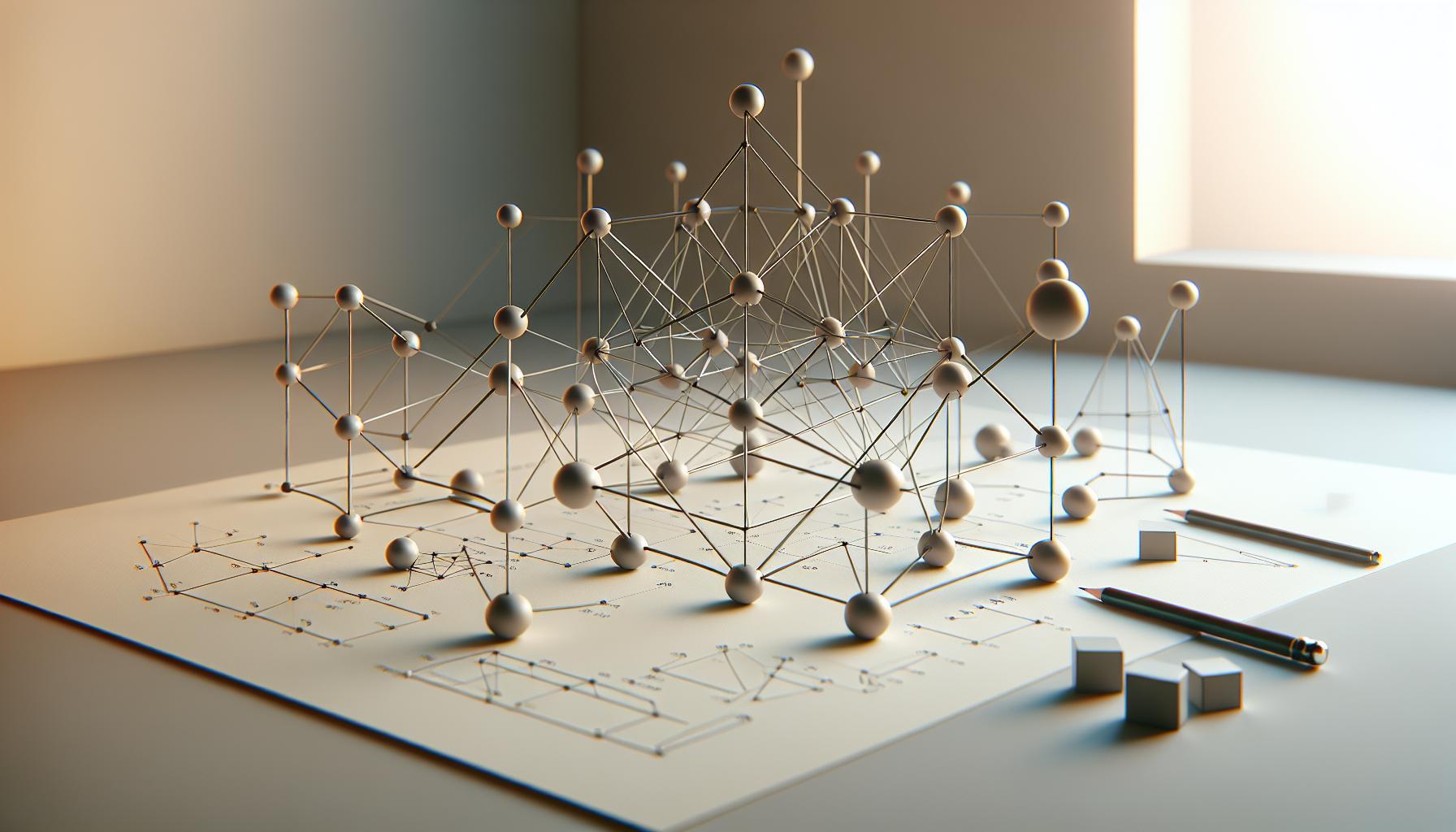
A hypergraph stretches the familiar concept of a traditional graph by allowing hyperedges to connect multiple vertices simultaneously. In the realm of undirected hypergraphs, these connections are bidirectional, emphasizing a symbiotic relationship between the vertices without any inherent directionality between them. This flexibility offers significant advantages in modeling complex relationships found in real-world scenarios, such as social networks, collaborative work, or biological systems.
One of the is that they enable intricate representations of group dynamics. Each hyperedge encompasses a set of vertices, which can represent entities involved in a particular relationship. For instance, consider a research team working on a project. Each scientist might belong to several teams simultaneously, collaborating with varying members based on thematic projects. Such relationships can be elegantly represented using undirected hypergraphs, where the hyperedges denote the various collaborative groups, facilitating an analysis of inter-team interactions and contributions.
Another critical aspect is the concept of connectivity within undirected hypergraphs. Unlike traditional graphs where edges strictly connect pairs of vertices, undirected hypergraphs can embody more complex interconnections. This feature allows for a richer understanding of connectivity thresholds and clusters within data. For example, if a hyperedge connects three vertices to represent a project, it effectively demonstrates how these entities collaborate, enabling research into interconnectedness within data sets. By analyzing the structure of these hypergraphs, researchers can glean insights into community structures, influence patterns, and more.
In practical applications, these properties translate to enhanced capabilities in computational efficiency and data organization. The inherent structure of undirected hypergraphs supports more straightforward traversal algorithms by reducing the need to manage directional flow, which is often more complex. This efficiency can be particularly beneficial in data mining tasks, where understanding relationships between non-linear connections becomes crucial. Thus, leveraging the empowers diverse applications, from network analysis to optimization problems in computer science, highlighting their essential role in understanding multi-faceted relationships.
Differentiating Between Directed and Undirected Hypergraphs
Understanding the distinctions between directed and undirected hypergraphs is crucial for grasping their unique applications and properties. At the core of this differentiation lies the nature of how relationships are represented through hyperedges. In directed hypergraphs, hyperedges connect subsets of vertices in a way that indicates a one-way relationship. That means if vertex A is connected to vertex B via a hyperedge, the relationship is not reciprocal-vertex B does not necessarily have a connection back to vertex A. This directional nature is particularly useful in modeling scenarios where influence or interaction flows in a specific direction, such as in citation networks, where a paper cited by another forms a directed link that cannot simply be reversed.
On the other hand, undirected hypergraphs treat the connections as bidirectional, meaning hyperedges can connect any set of vertices without specifying a direction. This bidirectionality allows for a more nuanced representation of collaboration or interaction within groups. For example, in a project team comprising several members, an undirected hyperedge would signify mutual engagement-each member works collaboratively without a designated lead direction. Hence, the undirected nature facilitates a clearer depiction of community structures and relational dynamics, enabling researchers to analyze shared contributions and cooperative patterns among participants.
Practical Implications
The choice between directed and undirected hypergraphs significantly impacts data analysis and algorithm development. When modeling complex systems, understanding whether relationships are inherently directional can influence how algorithms are constructed for tasks like traversal, clustering, or connectivity checks. For instance:
- Directed Hypergraphs: Often require algorithms that account for the flow of information or influence, making them suitable for scenarios such as traffic flow modeling or hierarchical structures.
- Undirected Hypergraphs: Allow for simpler traversal methods that do not involve directional constraints, making them useful in clustering applications where symmetry in relationships, like friendships in social networks, is essential.
In conclusion, recognizing the fundamental differences between these two types of hypergraphs sheds light on their practical applications in various fields. By leveraging the appropriate structure, researchers and practitioners can achieve more effective modeling of complex networks and phenomena, ultimately driving deeper insights into the relationships that govern them.
Applications of Acyclic Hypergraphs in Computer Science
Acyclic hypergraphs find a unique and versatile application in various domains within computer science, primarily due to their ability to effectively model complex relationships among data items. In contrast to traditional graphs, acyclic hypergraphs can connect multiple vertices through a single hyperedge, representing multi-way relationships that are increasingly relevant in today’s interconnected data-driven environments. This capability is especially beneficial in areas such as databases, machine learning, and bioinformatics.
In the realm of databases, acyclic hypergraphs are utilized to represent entity-relationship models. They simplify the depiction of complex relationships where a single entity may link multiple other entities simultaneously, enhancing query optimization and data retrieval processes. For instance, consider a social network where users can connect to multiple groups or events simultaneously; modeling this scenario with acyclic hypergraphs allows for efficient representation and analysis of these multifaceted relationships. The acyclic property guarantees that there are no circular references, improving data integrity and simplifying the tracking of relationships.
Machine Learning and Data Mining
Within machine learning, acyclic hypergraphs are employed in clustering algorithms to reveal intricate patterns in high-dimensional data. Traditional clustering techniques often struggle with non-linear relationships among features. However, by utilizing acyclic hypergraphs, one can capture these complexities more effectively. Techniques like hypergraph-based spectral clustering leverage the structure of acyclic hypergraphs to identify clusters that aren’t apparent through standard methods. This enhances the capability of algorithms to disclose hidden structures, leading to more accurate predictive modeling.
Moreover, applications extend to bioinformatics, where acyclic hypergraphs represent biological pathways and interactions among genes or proteins. By modeling such networks, researchers can analyze pathways without ambiguity, allowing for clear visualizations and insights into cellular functions and disease processes. Acyclic hypergraphs ensure that the relationships remain straightforward, thus facilitating the identification of key interactions vital for understanding biological systems.
In summary, the application of acyclic hypergraphs in computer science transcends mere theoretical constructs; they serve as powerful tools that enhance data analysis, representation, and relational understanding across diverse fields. Their ability to encapsulate complex relationships succinctly makes them invaluable for researchers and practitioners seeking to navigate and interpret today’s vast and intricate datasets.
Analyzing the Complexity of Acyclic Hypergraphs
Understanding the complexities of acyclic hypergraphs requires a dive into their structural attributes, particularly their unique nature that distinguishes them from traditional graphs. Acyclic hypergraphs, by definition, prevent cyclic relationships, which simplifies many computational processes. This property allows researchers and data scientists to exploit their potential in various applications, from databases to advanced machine learning algorithms. The challenge lies in efficiently analyzing and navigating the intricate relationships embedded within these structures.
In practical terms, the complexity of acyclic hypergraphs can be attributed to the interactions among their vertices and hyperedges. The hyperedges-which can connect more than two vertices at once-introduce a level of multifaceted connectivity that traditional edges do not replicate. This characteristic is particularly useful when it comes to data that exhibits multi-dimensional relationships. Analyzing such complexity often involves leveraging specialized algorithms that can accommodate the unique traversal requirements of hypergraphs. Consider using BFS (Breadth-First Search) or DFS (Depth-First Search) adaptations tailored for hypergraphs, which can handle hyperedges in a way that’s consistent with their acyclic nature.
Additionally, it’s crucial to look at the computational implications of working with acyclic hypergraphs. The complexity often translates into polynomial-time algorithms for problems like hypergraph partitioning or matching, which are fundamental in optimization problems across various fields of research. For instance, when employing optimization techniques in machine learning, utilizing acyclic hypergraphs can result in reduced computation times and improved efficiency in handling large datasets. This efficiency stems from their acyclic structure permitting the use of dynamic programming approaches more effectively than in cyclic graphs.
Improving upon foundational knowledge, researchers should utilize visualization tools and algorithms like hypergraph layout techniques to better grasp relationships represented in an acyclic hypergraph. Effective visualization facilitates the identification of underlying patterns and interdependencies that might not be readily apparent. For instance, employing interactive graphs can enable users to manipulate hyperedges and vertices dynamically, offering insights into potential paths and relationships within the data structure. Such a hands-on approach not only enhances understanding but also aids in the practical application of hypergraphs to real-world problems, such as social networks or biological molecular structures, where relationships are inherently complex and multi-directional.
By embracing the unique properties and challenges associated with acyclic hypergraphs, researchers and practitioners can unlock new potentials in data representation and analysis, promoting advancements across numerous sectors-from computer science to bioinformatics.
Visualization Techniques for Hypergraph Structures
In the realm of acyclic hypergraphs, effective visualization techniques are pivotal for distilling complex relationships into comprehensible formats. Unlike traditional graphs, hypergraphs allow for edges (hyperedges) that connect multiple vertices simultaneously, necessitating tailored visualization strategies that enhance clarity and insight. A well-structured visualization not only facilitates a better understanding of the underlying data relationships but also aids in identifying properties such as connectivity and dependency, which are essential for various computational applications.
Utilizing hypergraph layout algorithms is one of the most efficient ways to visualize these structures. For instance, layout techniques like the sugiyama method, which minimizes edge crossings, can significantly improve the readability of a hypergraph diagram. In this method, the vertices are layered in a way that clearly shows the hierarchical relationships and connections without clutter. Additionally, interactive visualizations enable users to manipulate the hypergraph dynamically, allowing researchers to observe how changes in one area affect others. This function is especially beneficial in applications like social network analysis, where the impact of adding or removing vertices can be immediately assessed.
Another effective technique is employing color coding and size variations to convey additional information about vertices and hyperedges. For example, larger vertices might represent more significant nodes in terms of connectivity or weight, while different colors could indicate various categories or types of relationships. Such enhancements transform a static diagram into a more expressive tool that communicates multi-dimensional relationships clearly. Furthermore, tools like Gephi or Cytoscape can be harnessed to create these visualizations, providing user-friendly interfaces for researchers to explore their hypergraph data interactively.
By embracing these visualization techniques, researchers can illuminate the complexities embedded within acyclic hypergraphs. The goal is not just to display data but to foster an environment where insights emerge organically. Whether you’re delving into machine learning applications, analyzing biological networks, or exploring data structures, knowing how to effectively visualize hypergraphs will enhance both comprehension and communication within your projects.
Algorithms for Efficient Hypergraph Traversal
Navigating the complex structures of acyclic hypergraphs often requires specialized algorithms tailored for efficient traversal. These algorithms are crucial in applications where understanding connections and dependencies between multiple entities is necessary, such as social networks, biological data, and multi-dimensional datasets. The traversal algorithms designed for hypergraphs often differ from those for traditional graphs due to the hyperedges that connect more than two vertices, posing unique challenges and necessitating innovative approaches.
One effective traversal strategy is based on Depth-First Search (DFS), which explores as far down a branch as possible before backtracking. In the context of hypergraphs, a hyperedge can connect multiple vertices, so when traversing, it’s essential to keep track of not only the current vertex but also all hyperedges that lead to unvisited vertices. This ensures a comprehensive exploration of the graph’s structure. By modifying the traditional DFS to accommodate hyperedges, you can efficiently visit nodes and uncover the relationships that exist within the hypergraph.
Another prominent method is Breadth-First Search (BFS), particularly useful when the shortest path or layer-by-layer exploration is desired. BFS can be adapted for hypergraphs by utilizing a queue that processes vertices in layers, where each layer corresponds to a set of vertices that can be reached through hyperedges. This method can visualize the connectivity and can be particularly useful in scenarios like community detection where understanding the immediate relationships is as crucial as the overall structure.
Practical Tips for Implementation
When implementing these traversal algorithms, consider the following:
- Hybrid Approaches: Both DFS and BFS can be combined to leverage their strengths. For example, utilize BFS for initial layer exploration, then switch to DFS for deeper dives into complex connections.
- Optimal Data Structures: Use adjacency lists for hyperedges to keep the representation flexible and memory-efficient. This data structure allows you to quickly access all vertices connected by a hyperedge.
- Caching & Memoization: Employ techniques to cache results of previously traversed paths, especially in large datasets, to avoid redundant calculations and enhance performance.
By adopting these algorithms and practices, researchers can effectively traverse acyclic hypergraphs, leading to richer insights and a deeper understanding of complex relationships within the data. Whether you’re developing algorithms for data mining or designing systems for real-time analysis, mastering hypergraph traversal is essential for exploiting the full potential of acyclic structures.
Real-World Examples of Acyclic Hypergraphs in Use
The versatility of acyclic hypergraphs extends across various domains, showcasing their effectiveness in modeling complex relationships. These structures can be particularly beneficial in fields such as social network analysis, biological systems, and database management.
In social networks, acyclic hypergraphs can represent relationships among groups of individuals, where a hyperedge indicates a connection among multiple users, such as a friends group on social media. For instance, consider a scenario where friends hang out together; instead of modeling each person with simple edges, a hyperedge can encapsulate the entire group, streamlining the exploration of community dynamics and influence propagation.
Biological systems also leverage acyclic hypergraphs to model relationships among different biological entities, such as genes, proteins, and biochemical pathways. In pharmacogenomics, researchers can use acyclic hypergraphs to illustrate how various drugs interact with multiple targets, facilitating the identification of potential side effects and drug interactions. This characteristic aligns with the structure of biological networks, where numerous components interact simultaneously.
Database management systems apply the principles of acyclic hypergraphs in organizing complex data relationships. For example, in a database schema that links users to various applications and permissions, acyclic hypergraphs can efficiently represent these connections. Each application can be an entity linked through hyperedges to its users, simplifying queries and enhancing database performance.
In summary, real-world applications of acyclic hypergraphs highlight their role in efficiently representing complex relationships in social networks, biological systems, and databases, making them invaluable tools for analysis and information management.
Challenges in Working with Acyclic Hypergraphs
Navigating the landscape of acyclic hypergraphs presents a fascinating challenge for researchers and practitioners alike. While these structures offer powerful capabilities in modeling complex relationships, several obstacles must be addressed when utilizing them in real-world applications. From computational complexity to visualization difficulties, understanding these challenges can greatly enhance the effectiveness of your hypergraph-related projects.
One major hurdle is the computational complexity associated with processing acyclic hypergraphs. Unlike traditional graphs, hypergraphs allow for hyperedges that connect multiple vertices, which can significantly complicate algorithms designed for traversal, search, and optimization. For instance, common algorithms for paths and cycles may not directly apply and often require adaptations that can increase their time complexity. This complexity can become problematic in large datasets where performance and efficiency are paramount.
Moreover, the visualization of acyclic hypergraphs can be particularly daunting. The multi-dimensional nature of hyperedges means that standard graph visualization techniques may not adequately convey the intricate relationships present within the data. Effective visualization tools are necessary to interpret these structures but can often be limited in their ability to display multiple hyperedges clearly, leading to a potential loss of information or misinterpretation of connections. Employing advanced visualization techniques, such as interactive graphing or layered representations, can mitigate this, but it also necessitates additional effort and resources.
Lastly, there is often a lack of standardized methods for constructing and analyzing acyclic hypergraphs, which can lead to inconsistencies across studies and applications. This variability can hinder collaboration and the sharing of findings, creating a fragmented understanding of how best to utilize hypergraphs within various domains. Streamlining best practices and developing common frameworks can facilitate knowledge transfer and enable more effective utilization across fields.
Addressing these challenges requires a concerted effort within the research community to innovate new algorithms, improve visualization methods, and establish standardized approaches to hypergraph analysis. By doing so, we can unlock the full potential of acyclic hypergraphs, making them even more valuable tools for complex data modeling and analysis.
Recent Advances in Hypergraph Theory
Exploring the landscape of hypergraph theory, particularly in relation to acyclic structures, reveals significant recent advancements that redefine our understanding and application of these mathematical models. One noteworthy development has been the refinement of algorithms that handle acyclic hypergraphs more efficiently. Traditional approaches often struggled with complexity, but recent techniques utilize modified search strategies and enhanced data structures, enabling quicker traversal and manipulation while retaining accuracy in capturing relationships among nodes.
Furthermore, a growing focus has been placed on understanding the combinatorial properties of acyclic hypergraphs. Researchers have successfully identified more comprehensive classification systems that highlight the differences and similarities between various subclasses of hypergraphs. This has allowed for the development of tailored methods for specific applications, such as data mining and network analysis, where understanding the underlying structure is crucial for effective processing.
Innovative Applications in Computer Science
Recent computational applications of acyclic hypergraphs have begun to flourish, especially in machine learning and artificial intelligence. For instance, the use of hypergraphs for feature selection has been a game changer, allowing algorithms to consider interactions between multiple features simultaneously rather than in isolation. This approach significantly enhances model accuracy and performance. Moreover, frameworks that integrate hypergraphs into neural networks are being designed, leveraging their structural advantages for better pattern recognition and prediction capabilities.
Research into visualization techniques has also made strides. Advanced software tools are now available that allow researchers to interactively explore acyclic hypergraphs in real time, facilitating a deeper understanding of the complex relationships they embody. These tools employ sophisticated rendering algorithms to present multi-dimensional data in user-friendly formats, making it easier for scientists and analysts to derive insights from their models.
As these advancements continue to evolve, the implications for various domains-from social network analysis to bioinformatics-are profound. By harnessing the power of acyclic hypergraphs and integrating these latest developments, we can unlock new pathways for innovation that will enhance both theoretical research and practical applications.
Future Directions for Research on Acyclic Hypergraphs
As recent advancements in hypergraph theory continue to unfold, the future of research on acyclic hypergraphs appears vibrant and full of potential. A compelling area of exploration lies in the integration of acyclic hypergraphs with machine learning algorithms. By leveraging the unique structures of hypergraphs, researchers can improve feature selection processes in ways that traditional models cannot achieve. These advances hold promise for enhancing predictive accuracy, especially in domains like genomics and social network analysis, where the relationships between variables are complex and multifaceted.
Furthermore, there is a growing demand for refined algorithms that can handle even larger hypergraphs efficiently. Current algorithms often face challenges with scalability and computational intensity as data volumes increase. Future research could focus on developing distributed algorithms that utilize parallel processing to manage hypergraph traversal and analysis at scale. Additionally, exploring hybrid models that combine acyclic hypergraphs with other data structures could result in innovative solutions that efficiently tackle the complexities of high-dimensional data.
Another promising direction is the development of more robust visualization techniques tailored for acyclic hypergraphs. Enhanced visualization tools could enable researchers to dynamically explore hypergraph relationships, thereby uncovering insights that remain hidden in traditional two-dimensional representations. By implementing interactive 3D models and leveraging virtual or augmented reality, researchers could facilitate a more intuitive understanding of hypergraphs, making complex data more accessible and comprehensible across various fields.
Lastly, interdisciplinary collaborations are likely to propel research forward, linking insights from mathematics, computer science, and applied domains. This convergence can lead to the discovery of new applications and methodologies that effectively utilize acyclic hypergraphs in tackling pressing real-world problems, such as optimizing supply chains, enhancing collaborative networks, and modeling ecological systems. As the landscape evolves, the interplay between theoretical advances and practical applications will be crucial for driving innovation in this dynamic field.
Faq
Q: What are the unique characteristics of acyclic hypergraphs?
A: Acyclic hypergraphs have unique properties, including the absence of cycles, meaning there are no closed paths within the structure. This characteristic leads to simpler traversal and analysis algorithms compared to cyclic hypergraphs. They are crucial for applications where hierarchical or ordered relationships are essential.
Q: How do acyclic hypergraphs differ in complexity from other hypergraphs?
A: Acyclic hypergraphs generally exhibit lower algorithmic complexity compared to cyclic hypergraphs. Their straightforward structure simplifies many computational problems, enabling more efficient algorithms for tasks such as traversal and data representation.
Q: In what practical scenarios are acyclic hypergraphs most beneficial?
A: Acyclic hypergraphs are beneficial in applications involving data organization, such as in database design or knowledge representation. They facilitate efficient querying and updates due to their hierarchical nature, making them ideal for semantic web applications and machine learning models.
Q: What are the key applications of acyclic hypergraphs in computer science?
A: Key applications include modeling databases, representing semantic networks, and structuring dependency graphs in software design. Their acyclic nature allows for effective data retrieval and manipulation, crucial for search algorithms and information retrieval systems.
Q: How can visualization techniques enhance understanding of acyclic hypergraphs?
A: Visualization techniques, such as graph drawing and interactive models, enhance understanding by providing intuitive representations of acyclic hypergraphs. These techniques help users grasp complex relationships and structures, facilitating better analysis and communication in research and applications.
Q: What challenges are faced when working with acyclic hypergraphs?
A: Challenges include scalability issues, as managing large acyclic hypergraphs can lead to significant resource consumption. Additionally, maintaining the acyclic property while manipulating data can complicate updates and create computational overhead.
Q: What recent advancements have been made in hypergraph theory?
A: Recent advancements include improved algorithmic approaches for efficient hypergraph traversal and enhanced methods for analyzing hypergraph properties. These developments are pushing the boundaries of applications in fields such as network theory and bioinformatics.
Q: How does one determine if a hypergraph is acyclic?
A: A hypergraph is determined to be acyclic if it can be partitioned into layers where each layer is composed of nodes that can be traversed without looping back. This can often be verified using algorithms designed to check for cycles or through topological sorting methods.
Future Outlook
Thank you for exploring the intricate world of acyclic hypergraphs and their undirected structure properties. We’ve delved into essential findings that highlight not only their theoretical importance but also their practical applications in fields like computer science and network theory. As you advance your understanding, consider exploring our related articles on hypergraph algorithms and applications in data analysis for deeper insights.
Ready to take the next step? Join our community by signing up for our newsletter, where you’ll receive cutting-edge research updates and exclusive resources right to your inbox. If you have questions or wish to discuss further, don’t hesitate to leave a comment below. Your input is invaluable as we foster a collaborative space for knowledge exchange. Stay curious and continue your journey with us-your next discovery awaits!
Get our latest guides, news, and insights highlighted in your Google Search & AI Overviews.