

Electric and temperature fields are fundamental concepts in physics that govern the behavior of charged particles and thermal systems, respectively. Understanding their key differences is crucial for various applications, from designing efficient electronic circuits to improving energy transfer in thermal management systems. Did you know that electric fields can influence the motion of particles over vast distances, while temperature fields provide insights into heat distribution in materials? This comparison is not just academic; it has practical implications in fields like electronics, materials science, and energy systems. As we delve into the nuances of these two types of fields, we’ll uncover how they interplay in real-world scenarios and why mastering their principles can enhance your work in technology and engineering. Get ready to explore the fascinating distinctions and applications that can elevate your understanding of both electrical and thermal phenomena!
Electric Fields: Understanding the Basics
Electric fields are fundamental to understanding the behavior of charged particles and the forces that influence them. At its core, an electric field is a region in space where an electric charge experiences a force. This occurs due to the presence of other electric charges, creating a field that can be visualized as lines radiating outward from a positive charge and converging toward a negative charge. The strength of this field diminishes with distance from the charge, following an inverse square law, which explains why we don’t feel electric forces at great distances.
To grasp the concept of electric fields more intuitively, think about how a magnet influences nearby metallic objects. Just as a magnetic field exerts forces on certain materials, an electric field interacts with charged objects, either accelerating them or causing them to repel or attract one another. This interaction depends on the nature of the charges involved-like charges repel, while opposite charges attract. The electric field strength (E) is quantified in volts per meter (V/m), providing a useful measure for comparing fields generated by different charges.
Key Characteristics of Electric Fields
One essential aspect of electric fields is their superposition principle, which states that the total electric field created by multiple charges is the vector sum of the fields due to each charge individually. This allows for complex calculations, especially in systems with multiple charges, such as in capacitors or during circuit analysis. Moreover, electric fields can be visualized with field lines: the closer the lines, the stronger the field. These visualizations not only help in conceptualizing the forces at play but also assist in predicting the motion of charges.
Furthermore, electric fields have vast practical applications. From the design of sensors and microelectronics to electrostatic discharge (ESD) protections and applications in medical technology like electrocardiograms, understanding electric fields is crucial in a diverse array of technologies. As we delve deeper into their applications, we find electric fields are essential components in advancing technologies, including those that operate at the nanoscale, where controlling electric fields can manipulate materials with unprecedented precision.
Temperature Fields Explained: Key Concepts
Temperature fields play a critical role in both natural phenomena and technological applications, serving as a driving force behind energy transfer and material behavior. At its essence, a temperature field represents the spatial distribution of temperature within a given environment, indicating how temperatures vary from one point to another. This variation affects various processes, such as heat flow and thermal gradients, which can be visualized as vectors pointing from hotter to cooler areas, similar to how electric fields direct the movement of charges.
Understanding temperature fields is essential for grasping key concepts like thermal conduction, convection, and radiation. For instance, the flow of heat in materials is governed by Fourier’s law of heat conduction, which states that the heat transfer rate is proportional to the negative gradient of temperature. This principle allows engineers and scientists to predict how quickly a material will heat up or cool down. Additionally, temperature fields are at the core of thermodynamics, influencing everything from climate modeling to the design of heat exchangers in industrial applications.
In practice, engineers often encounter temperature fields when designing systems like HVAC (heating, ventilation, and air conditioning) systems, where managing temperature effectively is crucial for energy efficiency and occupant comfort. Moreover, temperature fields are vital in processes like manufacturing, where precise control of temperature can influence material properties, such as the strength and conductivity of metals. For instance, in metallurgy, controlled cooling rates can lead to desired microstructural changes that enhance a metal’s performance in various applications.
By incorporating advanced measuring tools such as infrared thermography and thermocouples, practitioners can assess temperature distributions in complex systems. These methods allow for real-time monitoring and adjustments, enhancing operational efficiency and safety. As technology continues to evolve, understanding the nuances of temperature fields will remain integral to innovation across various industries, bridging theoretical concepts with real-world utility.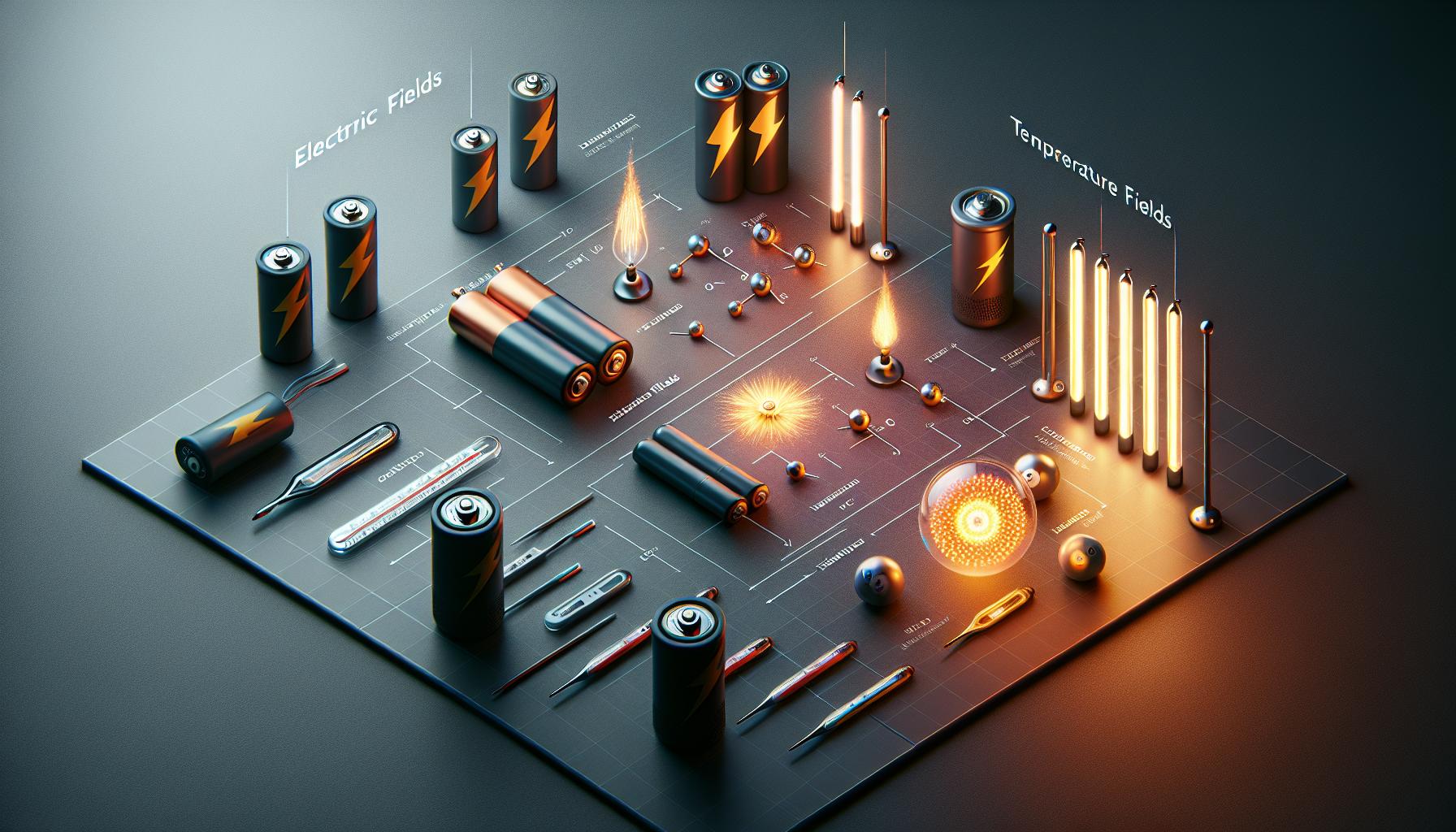
Fundamental Differences Between Electric and Temperature Fields
Electric fields and temperature fields may seem similar at first glance, both representing spatial distributions that influence physical effects in their respective domains. However, their underlying principles, mathematical formulations, and applications showcase profound distinctions that are crucial for understanding their roles in technology and nature. At the core, electric fields arise from charges and their movements, while temperature fields are rooted in the thermal behavior of materials, reflecting the kinetic energy of particles.
Electric fields are vector fields generated by electric charges or changing magnetic fields. The strength of an electric field (E) at a point in space is described by the force experienced by a positive test charge placed at that point, quantified by Coulomb’s law. The field influences charged particles, dictating their motion along paths influenced by direction and magnitude. Mathematically, electric fields can be expressed using the formula:
[ E = frac{F}{q} ]
where ( F ) is the force on the charge ( q ). This vector nature gives rise to potential gradients, leading to phenomena like current flow in conductors or the behavior of capacitors in electric circuits.
On the other hand, temperature fields represent the spatial distribution of thermal energy within a medium. They illustrate how temperature varies from one region to another, impacting heat transfer processes. The governing law for these fields, Fourier’s law of heat conduction, establishes that heat transfer (Q) is proportional to the negative gradient of the temperature field (( nabla T )):
[ Q = -k nabla T ]
where ( k ) is the thermal conductivity of the material. Unlike electric fields that interact with charge, temperature fields directly influence the motion and arrangement of particles within a substance, affecting phase transitions, thermal expansion, and reaction rates.
### Key Differences
Here are several key differences between electric and temperature fields:
- Nature and Source: Electric fields originate from electric charges or currents, while temperature fields arise from thermal energy and particle motion.
- Field Representation: Electric fields are vector fields with both magnitude and direction, while temperature fields are scalar fields, indicating only the temperature at various points without a directional component.
- Mathematical Framework: Electric fields are described using Coulomb’s law and related principles, while temperature fields rely on Fourier’s law for heat conduction and thermodynamic principles.
- Interaction Mechanism: Electric fields influence other charges and currents through force, whereas temperature fields drive heat transfer processes that affect material states and behaviors.
Understanding these distinctions is vital for engineers and scientists as they design and analyze systems where both electric and temperature fields interact. For example, electronics depend on electric fields for circuit functionality, while thermal management ensures optimal performance and reliability. Hence, recognizing how these fields operate independently and collectively is a fundamental aspect of advancing technology in various applications, including semiconductor devices, thermal management systems, and energy-efficient technologies.
Applications of Electric Fields in Technology and Science
Electric fields play a pivotal role in modern technology and scientific research, influencing various phenomena and enabling numerous applications. From the circuits that power our electronic devices to the principles behind telecommunications, electric fields are fundamental to the functionality and efficiency of many systems. For instance, in electronics, electric fields are responsible for the movement of electrons through conductive materials, allowing for current flow that powers everything from smartphones to supercomputers.
Power Generation and Transmission
Electric fields are critical in power generation and transmission. In devices like generators and transformers, electric fields facilitate the conversion of mechanical energy into electrical energy, a process governed by electromagnetic induction. This principle not only underpins the operation of turbines in power plants but also enables long-distance transmission of electricity via high-voltage power lines. The electric field established along these lines minimizes current loss, making it possible to transport electricity over vast distances while maintaining efficiency.
Electromagnetic Devices and Sensors
Numerous devices leverage electric fields for their operation. For example, capacitors store electrical energy in an electric field, vital for smoothing out voltage fluctuations in power supplies. Additionally, sensors such as piezoelectric devices convert mechanical stress into electrical signals, utilizing electric fields to detect and measure changes in the environment. These applications are crucial in fields ranging from automotive engineering, where they enhance safety features like airbags, to consumer electronics, where they improve device responsiveness.
Medical Applications
The medical field also benefits from the applications of electric fields. In techniques such as electrocardiography (ECG) and electrophysiology, electric fields are utilized to monitor and treat various conditions by assessing the electrical activity of the heart and other tissues. Furthermore, emerging treatments like electroporation use electric fields to enhance drug delivery into cells, increasing the effectiveness of therapies for conditions like cancer.
Research and Development
In scientific research, electric fields are used to manipulate particles and study their behaviors. For instance, in particle accelerators, electric fields accelerate charged particles to high speeds, facilitating groundbreaking discoveries in physics. Similarly, electric fields are instrumental in fields like nanotechnology, where they can manipulate materials at the molecular level, opening doors to innovative applications in medicine, electronics, and materials science.
The diverse applications of electric fields illustrate their significance across various domains. As technology continues to evolve, understanding and harnessing the properties of electric fields will remain crucial for advancements in innovation and research.
Real-World Applications of Temperature Fields
Understanding temperature fields is essential in numerous applications that span diverse fields such as engineering, meteorology, and environmental science. Temperature fields describe how temperature varies in a given space and can significantly influence various physical processes. For instance, in thermodynamics, temperature fields play a crucial role in designing systems for heating and cooling, affecting everything from HVAC systems in buildings to industrial processes.
Energy Efficiency and HVAC Systems
In heating, ventilation, and air conditioning (HVAC) design, temperature fields are meticulously analyzed to optimize energy efficiency. By modeling the temperature distribution within a building, engineers can strategically place heating and cooling sources, minimizing energy waste while ensuring comfort. Understanding how temperature gradients form and vary throughout a day or season helps in predicting and managing heating loads effectively. For example, using zoned heating systems that adjust based on specific areas’ temperature fields can lead to significant reductions in energy consumption.
Environmental Monitoring and Climate Science
Temperature fields are also pivotal in environmental monitoring. In climate science, remote sensing technologies collect data on the Earth’s surface temperature fields, which are fundamental for understanding global warming and climate change. These measurements enable scientists to create detailed climate models that predict future changes. Similarly, temperature fields affect local ecosystems; minor shifts can influence weather patterns and biological processes like flowering in plants or breeding cycles in animals.
Industrial Applications and Process Optimization
Industrially, temperature fields are crucial for processes such as metallurgy, where temperature gradients influence phase changes and material properties. For instance, during steel manufacturing, controlling the temperature field in a furnace can optimize material strength and durability. Advanced computational tools are employed to simulate these fields, allowing for fine-tuning of processes to enhance product quality while minimizing energy usage and waste.
Realizing the importance of temperature fields in these contexts helps professionals in various sectors to implement efficient practices and mitigate adverse environmental impacts. This understanding fosters a more nuanced approach to technology and resource management in the face of escalating environmental challenges.
Interplay Between Electric and Temperature Fields
Understanding the dynamic relationship between electric fields and temperature fields unveils fascinating insights into various applications across science and technology. Electric fields, generated by charged particles, can influence the behavior of materials and systems, affecting their thermal properties. This interplay is particularly evident in phenomena such as thermoelectric effects, where a temperature difference causes charge carriers to move, creating an electric current.
One of the most prominent applications of this relationship is found in thermoelectric materials, which are engineered to convert temperature differences directly into electrical energy. These materials utilize the Seebeck effect, whereby a voltage is generated when there is a temperature gradient across a conductive medium. This concept not only paves the way for efficient cooling systems and power generation but also highlights how electric fields can facilitate the control of thermal behaviors in these materials, enhancing their performance.
In addition to thermoelectric applications, the is crucial in electronic devices. Within semiconductors, the distribution of charge carriers (influenced by electric fields) can alter thermal conductivity and heat dissipation. Effective thermal management in these devices is essential to ensure reliability and efficiency. For instance, advancements in heat sinks and thermal interface materials are designed to optimize the heat transfer, accommodating the heat generated by electrical currents and thus maintaining operational stability.
Understanding this interrelationship not only aids in optimizing device designs but also opens new avenues for innovation. As researchers explore new materials and configurations, the potential for developing hybrid systems that harness both electric and temperature fields could lead to significant enhancements in energy efficiency and performance across various technologies, from renewable energy systems to advanced electronic devices.
Measuring Electric Fields: Techniques and Tools
Measuring electric fields accurately is crucial for applications in engineering, physics, and environmental science. Different techniques exist, each catering to specific requirements such as range, resolution, and the nature of the electric field under investigation. The most common methods for measuring electric fields involve using electric field sensors and various probe techniques based on the principles of voltage measurement, capacitance, and electromagnetic induction.
One of the simplest and most widely used devices for measuring electric fields is the field mill. This instrument can measure fluctuating electric fields with high precision and is suitable for both laboratory and field conditions. Field mills operate by using rotating chopper plates to alternately expose a sensing electrode to the electric field and shield it from it, generating a voltage that can be measured. This voltage correlates directly with the strength of the electric field. Field mills are ideal for studying environmental electric fields, such as those present in thunderstorm activities.
Another technique is the capacitive sensor, which can measure static electric fields. This method relies on the concept of capacitance, where a sensor detects changes in voltage relative to a reference electrode. Capacitive sensors are beneficial in applications like monitoring electric fields in power lines or laboratory settings where precise measurements are required. When deploying such sensors, care must be taken to minimize the influence of nearby conductive materials which can distort readings.
For high-frequency or transient electric fields, electromagnetic field probes can be utilized. These probes are sensitive to rapidly changing electric fields and are often used in telecommunications and RF applications. They often consist of specialized antennas or diffraction grating structures that can capture the oscillating electric field components. Understanding the frequency response of these probes is essential to ensure accurate measurements, particularly in high-speed data transmission scenarios.
In summary, selecting the right technique for measuring electric fields depends on the specific conditions and requirements of your application. Factors such as the type of electric field (static vs. dynamic), environmental conditions, and the necessary precision should guide your choice of measuring instruments. By employing these various techniques effectively, researchers can gain deeper insights into electric field behavior, paving the way for innovations in technology and enhancing safety in environments where electric fields are present.
Assessing Temperature Fields: Methods and Instruments
Understanding and accurately assessing temperature fields is essential in many scientific and engineering applications, from environmental monitoring to materials science. Temperature fields describe the distribution of temperature within a given space and can significantly influence material properties and system dynamics. By harnessing various measuring instruments and techniques, researchers and engineers can gain critical insights into thermal behavior in real-time and enhance performance in various applications.
One of the most common methods for temperature measurement is the use of thermocouples, which are composed of two different metals joined at one end. When the junction experiences a temperature change, it generates a voltage that can be correlated to the temperature difference. Thermocouples are particularly useful for measuring temperatures in harsh environments due to their robustness and wide temperature range. They are often deployed in industrial processes, aviation, and even medical applications for monitoring body temperatures.
Another effective instrument for assessing temperature fields is the infrared (IR) thermography camera. This advanced technology captures infrared radiation emitted by objects and converts it into temperature data, allowing for non-contact temperature measurement over large areas. IR thermography is invaluable in predictive maintenance, where it can identify overheating components in machinery, and in monitoring environmental conditions, such as identifying heat loss in buildings.
For a more localized and precise measurement, thermistors and RTDs (Resistance Temperature Detectors) are frequently employed. Thermistors are temperature-sensitive resistors that provide high sensitivity and fast response times, making them ideal for applications requiring rapid temperature changes, such as in electronics cooling. RTDs, on the other hand, offer exceptional accuracy and stability over a narrower range, which is suitable for laboratory settings or precise temperature control systems.
In complex applications, it’s essential to consider the integration of these various methods. For example, combining thermocouples for bulk temperature measurement with IR thermography for surface temperature distribution can provide a comprehensive view of thermal dynamics in a system. This multi-faceted approach not only enhances the understanding of temperature fields but also assists in optimizing performance across a wide range of applications, from thermal management in electronics to climate research and building efficiency analysis.
Implementing a proper selection and combination of these temperature measurement methods enables researchers and engineers to address specific challenges effectively and harness the full potential of temperature fields in their work.
Case Studies: Electric vs. Temperature Field Applications
In the fascinating interplay between electric fields and temperature fields, real-world applications reveal critical insights into how these two phenomena impact technology and science. Consider, for example, the role of electric fields in semiconductor manufacturing. Here, precise control of electric fields is paramount to creating integrated circuits. The electrostatic forces applied during photolithography not only dictate the patterning accuracy on silicon wafers but also influence the thermal management within the fabrication process. Active cooling systems often leverage temperature fields to maintain optimal conditions, ensuring the integrity of sensitive electronic components during production.
On the other hand, temperature fields find significant application in energy conservation strategies within electrical systems. For instance, electric motors generate heat due to resistive losses during operation. Utilizing advanced thermal imaging cameras, engineers can visualize the temperature distribution across the motor’s surface. By pinpointing hot spots, they can implement cooling strategies-such as enhanced airflow or heat sinks-that reduce thermal stress and prolong the motor’s lifespan. This integration of temperature monitoring with electric field dynamics showcases an essential cross-disciplinary approach to improving efficiency in industrial applications.
Moreover, in the realm of renewable energy, the interplay becomes even more pronounced. Photovoltaic cells convert sunlight into electricity, but they are sensitive to temperature variations. Higher operating temperatures can decrease their efficiency due to alterations in the semiconductor properties influenced by electric fields within the cell. The optimal operation of solar panels hence involves understanding and regulating both the electric and temperature fields surrounding them. Innovative cooling systems paired with smart grid technologies are being developed to maintain ideal temperature ranges while optimizing electric output, illustrating the synergy of thermal and electrical sciences in advancing sustainable energy solutions.
This nuanced understanding of electric and temperature fields, illustrated through varied applications, underscores their fundamental differences yet highlights the symbiosis that drives technological advancements. By harnessing their distinct properties, practitioners in fields ranging from material science to electrical engineering can enhance system performance, pave the way for innovative solutions, and address challenges in the modern technological landscape.
The Role of Electric and Temperature Fields in Material Science
The interaction of electric and temperature fields plays a crucial role in the field of material science, serving as fundamental components in the design and application of advanced materials. Take, for instance, thermoelectric materials, which convert temperature differences into electric voltage. Their performance is contingent upon finely tuned temperature gradients and electric fields, showcasing how both can influence material properties like electrical conductivity and thermoelectric efficiency. Researchers are continuously exploring how manipulating these fields can lead to more efficient energy conversion processes, highlighting a key synergy in material design.
Understanding the interplay of these fields is essential, especially in the context of semiconductors. The electrical behavior of semiconductor materials is sensitive to both temperature and electric fields. For instance, temperature can affect the bandgap energy of a semiconductor, determining the threshold at which it conducts electricity. By modifying the electric field applied to these materials, engineers can control charge carrier mobility, thereby enhancing device performance in applications such as transistors and diodes. This dual dependence is critical in the development of efficient electronic and optoelectronic components.
Moreover, researchers are increasingly focusing on how temperature fields can affect material properties at the microscopic level. For example, in alloy systems, temperature gradients can lead to phase segregation, where different phases of the material form unevenly across a sample. Using electric fields in conjunction with controlled heating, scientists can influence phase transitions and refine the microstructure of alloys, resulting in improved mechanical properties and performance characteristics for materials used in aerospace and automotive industries.
In summary, the roles of electric and temperature fields in material science are intertwined, driving innovation and advancements in various applications. Their combined effects enable researchers to engineer materials with tailored properties, paving the way for breakthroughs in electronics, energy systems, and composite materials. This multifaceted approach not only enhances our fundamental understanding of material behaviors but also facilitates the development of cutting-edge technologies that rely on precise control of these fields.
Future Trends: Innovations in Electric and Temperature Fields
The intersection of electric and temperature fields is at the forefront of scientific innovation, driving breakthroughs that could redefine numerous industries. As researchers further unravel these complex interactions, we can expect to see significant advancements in materials technology, particularly in the realm of thermoelectric devices and heat management systems. For instance, advancements in nanomaterials-where electric fields can be manipulated at the atomic level-promise to enhance energy conversion efficiency, making renewable energy sources like solar panels and thermoelectric generators more effective than ever.
One of the most exciting trends lies in the development of smart materials that can actively respond to changes in electric and temperature fields. These materials can adapt their properties based on environmental conditions, offering dynamic solutions in applications ranging from aerospace to consumer electronics. For example, researchers are exploring shape-memory alloys that can change shape with fluctuations in temperature or electric fields, paving the way for self-healing structures and flexible electronics that can withstand extreme environments.
The rise of microfabrication techniques is also contributing to the future of electric and temperature fields. As manufacturing processes evolve, engineers can create devices that integrate electric and temperature sensors at micro and nanoscale levels, leading to highly sensitive and precise measurements. Such innovations find applications in medical devices, where real-time monitoring of temperature and electric signals can provide critical data for patient care.
Lastly, the fusion of artificial intelligence with material science is set to revolutionize how we design and implement systems reliant on electric and temperature fields. Machine learning algorithms can analyze vast datasets to predict material responses to specific electric and thermal conditions, accelerating the discovery of new materials with tailored properties. This synergy between advanced computational tools and experimental techniques holds the promise of creating a new era in material innovation, where the efficiency and performance of electrical and thermal systems can be optimized far beyond current capabilities.
Common Misconceptions About Electric and Temperature Fields
Misunderstandings about electric and temperature fields abound, often complicating their study and applications. For instance, many people equate electric fields solely with electricity flowing through wires, overlooking their significance in various phenomena, such as electrostatic interactions and energy transfer processes. Electric fields originate from charges, while temperature fields stem from thermal energy, but both significantly influence materials on a molecular level. Understanding these distinctions is critical when addressing practical applications, from designing efficient electronic devices to managing thermal energy in various systems.
One prevalent misconception is that electric fields and temperature fields operate independently of each other. In reality, they are frequently interconnected. For example, in thermoelectric materials, the interaction between electric and temperature fields enables the direct conversion of temperature differences into electrical voltage. This principle is exploited in applications ranging from power generation to cooling systems. The interplay between these fields can enhance performance, making materials more efficient in energy conversion processes.
Additionally, there is a belief that temperature does not influence electric fields. This notion neglects scenarios such as temperature-dependent conductivity, where the warmth of a material can significantly alter its ability to conduct electricity. For instance, conductors typically exhibit reduced resistance at higher temperatures, impacting the efficiency of electrical systems. Understanding these dynamics allows engineers and scientists to design better materials for specific applications, optimizing performance based on environmental conditions.
In summary, dispelling these misconceptions is vital for advancing knowledge in the fields of material science and engineering. Recognizing the intricate connections between electric and temperature fields can unlock innovative solutions to contemporary challenges across technology and science. By fostering a clearer understanding, researchers and practitioners can better leverage these fields for practical applications, paving the way for future advancements in various industries.
Frequently Asked Questions
Q: What are electric fields and how do they differ from temperature fields?
A: Electric fields are regions around charged particles where other charges experience a force, while temperature fields indicate variations in temperature across a space. The fundamental difference lies in their nature: electric fields relate to electric forces, whereas temperature fields relate to thermal energy distribution.
Q: How are electric fields measured compared to temperature fields?
A: Electric fields are commonly measured using devices like electric field meters or sensors, while temperature fields are assessed with thermometers or infrared cameras. Each measurement tool is tailored to detect specific properties-charge for electric fields and thermal radiation for temperature fields.
Q: Why are electric fields significant in engineering applications?
A: Electric fields are crucial in engineering for designing circuits, capacitors, and sensors. They enable the manipulation of electrical energy, which is vital in modern technology. Understanding electric fields helps engineers optimize performance and efficiency in electronic devices.
Q: What role do temperature fields play in material science?
A: Temperature fields are essential in material science for studying phase transitions and thermal properties of materials. They provide insight into how materials behave under varying temperatures, impacting everything from manufacturing processes to the performance of materials in different environments.
Q: Can electric fields influence temperature fields?
A: Yes, electric fields can affect temperature fields through Joule heating, where the electrical energy dissipates as heat in a conductor. This interaction is important in applications such as heating elements and electronic components, where managing heat is crucial for optimal performance.
Q: What are practical applications of temperature fields in real-world scenarios?
A: Temperature fields are utilized in climate control, thermal imaging, and food processing. They help monitor environmental conditions, ensure consistent heating during production, and optimize energy usage by managing heat distribution efficiently.
Q: How do electric fields impact biological systems?
A: Electric fields can influence biological systems by affecting nerve signal transmission and cellular processes. Understanding these effects is important for developing medical devices and therapies that leverage electrical stimulation for healing or diagnostics.
Q: What is the future of research on electric and temperature fields?
A: Future research aims to explore advanced applications of electric and temperature fields in nanotechnology and renewable energy. Innovations may lead to smarter materials that respond to environmental changes, enhancing efficiency and functionality in various technologies.
Insights and Conclusions
Understanding the key differences between electric and temperature fields can transform your approach to various scientific and engineering applications. We explored how electric fields influence charge interactions while temperature fields affect material properties and temperature distribution. Don’t miss out on deepening your knowledge-check out our articles on “Fundamentals of Electric Fields” and “Thermal Dynamics in Engineering.”
If you found this comparison intriguing, we invite you to subscribe to our newsletter for the latest insights in physics and engineering, or explore our resources to guide your next project. Remember, grasping these concepts can lead to innovative solutions and enhanced designs. Join the conversation-share your thoughts in the comments below, and let’s connect further on this fascinating topic!


