

Imagine a world where medical diagnostics are as fast as a heartbeat-this is becoming a reality thanks to microfluidic processors. These remarkable devices manipulate tiny volumes of fluids, enabling precise and rapid analysis in fields ranging from healthcare to environmental monitoring. Understanding how these processors work, from their intricate architecture to their operational dynamics, is crucial for anyone involved in innovative research or development. As we delve into the mechanics of microfluidic processors, you’ll uncover the transformative potential they hold for future technologies. Whether you’re a seasoned researcher, a curious student, or a technical maker, this exploration will illuminate how these miniaturized systems bridge the gap between complex science and practical applications, revolutionizing how we approach problems in various fields. Join us as we break down the architecture and operations of microfluidic processors, and discover how they can enhance efficiency in numerous applications, paving the way for breakthroughs that could reshape our world.
Understanding Microfluidics: Key Concepts and Terminology

Microfluidics, often heralded as a game changer in scientific research and industrial applications, deals with the manipulation of fluids at a microscale level-typically in the range of nanoliters to microliters. This technology streamlines processes that were once cumbersome, packing complex laboratory functions onto a compact chip known as a “Lab-on-a-Chip.” Such advancements allow researchers to conduct a multitude of experiments involving chemical reactions, biological analyses, and diagnostics with remarkable efficiency and precision.
Understanding microfluidics starts with familiarizing oneself with several key concepts and terminologies. One foundational term is laminar flow, which describes the smooth, orderly movement of fluid in parallel layers with minimal disruption between them. Unlike turbulent flow, common in larger-scale operations, laminar flow is crucial for maintaining controlled reactions and measurements in microfluidic systems. Another essential concept is surface area-to-volume ratio, which greatly influences chemical reactions at the microscale. Increased surface area allows for quicker and more efficient interactions among the components, making microfluidic designs highly effective for applications like cell culture and assay development.
There are also various microfluidic device architectures, including straight channels, mixers, and droplet generators, each designed for specific functions. For example, microreactors are engineered to facilitate rapid reactions by maximizing contact between reagents, while droplet microfluidics excels at encapsulating small volumes of liquids for drug delivery and diagnostics. The use of materials such as PDMS (polydimethylsiloxane) and glass in constructing these devices is chosen based on factors like chemical compatibility, optical transparency, and ease of fabrication.
In operational terms, microfluidic processors often rely on integrated systems for controlling flow, temperature, and reaction conditions, employing pumps, valves, and sensors to optimize performance. Advances in this technology have made it adaptable, allowing integration with external devices like digital sensors and software for data analysis, enhancing both control and functionality. Thus, microfluidics stands at the intersection of innovation, precision, and practical applicability, paving the way for breakthroughs across scientific fields.
The Architecture of Microfluidic Processors: Components Explained
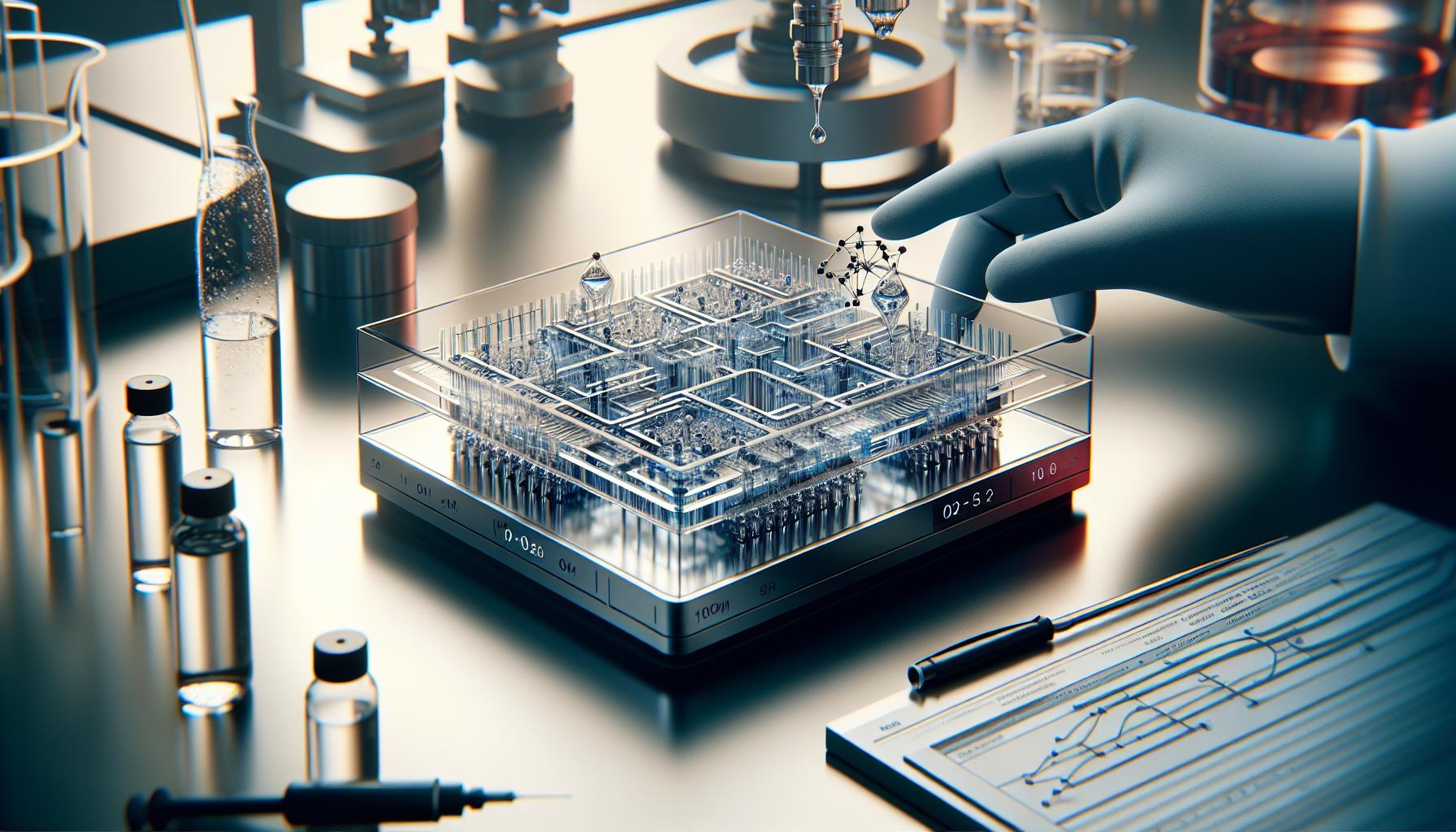
Microfluidic processors are intricate systems that operate on a miniature scale to manipulate fluids for a variety of applications, ranging from biomedical diagnostics to chemical synthesis. These devices are built upon a thoughtful architecture designed to streamline processes that traditionally required larger, more cumbersome laboratory setups. At the core of this architecture are several essential components that work together to enable precise control of fluid movement and reaction conditions.
One of the principal components of a microfluidic processor is the microchannel, which serves as the pathway for fluid transport. These channels are typically just a few micrometers in width and can be designed in various configurations, including straight lines, curves, or more complex networks. The design of the microchannels directly affects fluid dynamics and mixing efficiency. Engineers often use computer simulations to optimize these designs before fabrication. Commonly used materials for microchannel construction include PDMS (polydimethylsiloxane) and glass, chosen for their biocompatibility and optical clarity, making them ideal for applications that require real-time imaging or optical monitoring.
Another vital component is the valve system, which controls the flow of fluids within the microfluidic chip. These valves can be passive, designed to take advantage of pressure differentials, or active, where electronic control mechanisms create pressure to open or close the pathways. Additionally, pumps are integral for driving fluid through the microchannels, with options ranging from syringe pumps to peristaltic pumps, each selected based on the specific requirements of flow rate and precision.
Integration of sensors is also a critical aspect of microfluidic architectures. These sensors can monitor variables such as temperature, pressure, and fluid composition, allowing for real-time adjustments to reaction conditions. This level of integration not only enhances the functionality of microfluidic processors but also paves the way for the development of “smart” chips that respond dynamically to changing conditions.
Overall, the architecture of microfluidic processors is a remarkable convergence of engineering and science. By leveraging small-scale fluid manipulation, researchers can conduct complex experiments with minimal reagent use and rapid turnaround times, enabling significant advancements in fields like diagnostics and drug development. As technology progresses, further innovations in microfluidic components will undoubtedly lead to even more sophisticated systems capable of tackling an expanding range of scientific and industrial challenges.
How Microfluidic Processors Operate: Step-by-Step Breakdown

The operation of microfluidic processors is a fascinating interplay of physics, engineering, and chemistry that allows precise manipulation of small volumes of liquids. By reducing the scale of fluid handling, researchers can achieve complex processes with greater efficiency and less waste than traditional methods. To understand how these devices work, it’s helpful to break the process down into a series of clear, manageable steps.
The process begins with the introduction of fluids into the microfluidic device. Fluids are typically loaded into the system using external pumps or syringes, which provide the necessary pressure to drive the liquids through the microchannels. The microchannels, designed with specific geometries, dictate the flow characteristics-such as speed and turbulence-of the fluids as they travel through the device. Engineers often simulate fluid dynamics beforehand to optimize flow patterns, ensuring effective mixing and reaction conditions in subsequent steps.
Once in motion, the fluids can interact within the microchannels, allowing for various processes such as mixing, separating, or chemical reactions. For example, when two or more reagents are introduced into a single channel, they can meet and react in a controlled manner, resulting in the desired chemical output. The precise control over the timing and sequence of fluid introduction enables sophisticated assays and reactions that would be challenging to achieve at larger scales.
Monitoring and control are crucial aspects of microfluidic operations. Integrated sensors within the device can provide real-time data on parameters such as temperature, pressure, and fluid composition. This data not only facilitates real-time adjustments to maintain optimal conditions but also enhances the reproducibility of experiments. In addition, advanced software applications often accompany microfluidic systems, enabling automated control and data analysis, which are essential for scaling applications beyond basic research to clinical diagnostics or industrial applications.
Overall, the step-by-step operation of microfluidic processors exemplifies the convergence of various scientific disciplines, resulting in streamlined procedures that offer high precision, reduced reagent usage, and quicker turnaround times in experimental workflows. As technology advances, the capabilities of these processors will continue to expand, further impacting a range of scientific and industrial fields.
Types of Microfluidic Devices: Applications in Science and Industry
Microfluidic devices are revolutionizing how we approach a variety of scientific challenges, enabling innovative applications across multiple fields. By manipulating tiny volumes of fluid-often on the microliter scale-these devices facilitate intricate biochemical assays and analyses that were once cumbersome or impossible with traditional methods. The versatility and precision of microfluidics extend into numerous applications, making these devices indispensable tools in modern research and industry.
Healthcare and Diagnostics
In the healthcare sector, microfluidic devices play a crucial role in diagnostics and personalized medicine. Lab-on-a-chip technology allows for the integration of multiple diagnostic tests on a single platform, dramatically reducing the amount of sample and reagent needed. For example, point-of-care testing devices enable rapid analysis of blood samples for diseases such as diabetes and infectious diseases, yielding results in real-time. This not only speeds up diagnosis but also empowers clinicians to make informed decisions without waiting for extensive laboratory tests.
Chemistry and Biochemical Research
The field of chemistry benefits immensely from microfluidic technology, particularly in synthetic chemistry and reaction screening. Researchers can conduct high-throughput experiments where multiple conditions are tested in parallel within microchannels. This streamlined approach enhances the efficiency of discovering new compounds and optimizing reactions. For instance, using microfluidics for combinatorial chemistry allows scientists to explore a vast chemical space in a fraction of the time traditionally required, improving the productivity of research and development.
Environmental Monitoring
Environmental science is another area where microfluidic devices demonstrate their capabilities. These tools can detect trace amounts of pollutants in water or air samples, offering precise measurements needed for monitoring environmental health. Microfluidics enhances the ability to analyze samples rapidly and on-site, enabling timely responses to ecological threats. Additionally, this technology aids in the development of sustainable solutions for resource management by allowing for detailed analysis of bioprocesses in environmental contexts.
Industrial Applications
In industrial settings, microfluidic systems are increasingly used for process optimization and quality control. Their ability to handle small volumes with high precision is invaluable in chemical manufacturing and materials science. For example, microfluidics can be utilized to screen for optimal reaction conditions or materials properties, significantly increasing the efficiency of product development cycles. Furthermore, these systems can integrate multiple steps of production, reducing costs and minimizing waste, thus aligning with sustainability goals.
In summary, the diverse applications of microfluidic devices underscore their importance in advancing science and technology. From healthcare diagnostics to environmental monitoring and industrial use, these systems not only enhance precision and efficiency but also pave the way for innovative solutions to complex challenges. As research in microfluidics continues to evolve, we can expect even broader implications across scientific and industrial landscapes, making them an exciting area of study and application.
Design Considerations for Microfluidic Systems: Challenges and Solutions
Successful microfluidic system design requires a keen understanding of both the inherent challenges and the innovative solutions that can be applied to overcome them. As these devices function at the microscale, where fluid dynamics behave differently than in traditional systems, designers must consider factors such as flow rates, interfacial tensions, and material compatibility to achieve optimal performance.
One major challenge in microfluidic design is managing the precise control of flow rates and pressures. At the microscale, capillary forces can dominate fluid movement, leading to unpredictable behaviors. To mitigate this, researchers often employ a combination of pump systems and passive components like valves and mixers. For instance, using electrokinetic or magnetohydrodynamic actuators can enhance flow control, allowing for more accurate manipulation of fluids within the microchannels. The integration of these technologies into the system architecture is crucial for achieving reliable outcomes in applications ranging from biochemical assays to drug delivery.
Another consideration is the materials used in the construction of microfluidic devices. Materials need to be biocompatible if the application involves biological samples, while also demonstrating chemical resistance to avoid reactions that could skew results. Polydimethylsiloxane (PDMS) is widely favored for its optical transparency and flexibility, although recent advances have introduced a variety of new materials, including thermoplastics and glass, each with its own set of benefits and drawbacks. Designers must weigh these factors based on the specific requirements of their applications, such as the need for ease of fabrication versus durability.
Moreover, scaling up from prototype to production poses distinct challenges. Prototyping often allows for extensive modification and customization, but transitioning to mass production demands a standardized approach without sacrificing functionality. This can involve automating the fabrication process and employing techniques such as soft lithography or injection molding. A robust design should also incorporate a feedback mechanism to monitor performance, allowing for real-time adjustments and minimizing potential failures during operation.
In summary, effective microfluidic system design is a complex interplay of theoretical principles and practical applications. Understanding fluid dynamics, selecting appropriate materials, and addressing scalability concerns are essential steps in developing devices that not only meet current scientific needs but also pave the way for future innovations in the field. By staying at the forefront of material science and fluid mechanics, researchers and engineers can continue to push the boundaries of what microfluidic technology can achieve.
Innovations in Microfluidic Technology: Future Trends and Developments
Technological advancements in microfluidics are paving the way for innovations that promise to revolutionize healthcare, diagnostics, and pharmaceuticals. As research in this field accelerates, several key trends are emerging that highlight the potential of microfluidic technologies to enhance functionality, efficiency, and integration. One particularly exciting development is the rise of 3D microfluidics, which allows for more complex fluid interactions and versatile device geometry. By adding a third dimension to chip design, researchers can create networks that facilitate intricate processes like cell culture and multimodal analysis, which were previously challenging to achieve with traditional planar designs.
Another notable trend is the incorporation of integrated sensors and real-time data analytics within microfluidic devices. By embedding sensors directly into the microchannels, devices can monitor chemical or biological reactions in real-time, providing immediate feedback without the need for external measurement systems. This can significantly enhance the functionality of lab-on-a-chip devices, making them suitable for applications ranging from point-of-care diagnostics to environmental monitoring. Moreover, advanced data analytics using machine learning algorithms can improve the predictive capabilities of these devices, leading to faster and more accurate results.
Emerging Applications and Material Innovations
Research is also pushing the boundaries of materials used in microfluidic devices. Novel polymers and composites are being developed to enhance durability and expand the operational range of microfluidics in various environments. For instance, hydrophobic surface coatings can improve droplet manipulation on a chip, while bioinert materials can minimize contamination when dealing with sensitive biological samples. These material innovations enable the creation of multifunctional microfluidic platforms that can serve diverse applications from drug delivery to complex biochemical assays.
Lastly, the convergence of microfluidics with other technologies-such as nanotechnology, robotics, and bioengineering-is set to unlock new possibilities. The integration of microfluidics with biosensors can enhance the detection capabilities for diseases at much lower concentrations than conventional methods. Furthermore, coupling microfluidic systems with automated robotics enables high-throughput screening, accelerating the pace of research and development in pharmaceuticals and personalized medicine.
In summary, the future of microfluidic technology looks promising, with continual innovations enhancing its versatility, efficiency, and application range. By staying attuned to these trends, researchers and developers can leverage microfluidics to address some of the most pressing challenges in science and industry today. As these technologies evolve, they will play a crucial role in shaping the next generation of diagnostic tools and therapeutic methods.
Comparative Analysis: Microfluidics vs. Traditional Methods
The advent of microfluidics has transformed various fields by enabling the manipulation of fluids at a scale that traditional methods struggle to achieve. By analyzing the distinct advantages of microfluidic technology compared to conventional approaches, we can better appreciate its significance in scientific and industrial applications.
Microfluidic devices operate on the principle of precise fluid control, allowing for the handling of tiny volumes-often in the nanoliter or picoliter range. This contrasts sharply with traditional methods, which typically require larger sample sizes, leading to greater reagent consumption and increased costs. For instance, in drug development, microfluidics facilitates high-throughput screening of compounds with significantly reduced material usage, which not only conserves resources but also minimizes waste.
The enhanced capability for real-time monitoring within microfluidic systems is another game changer. By integrating sensors directly into the microchannels, researchers can observe chemical and biological reactions live, a feat that traditional batch processes do not easily allow. This capability fosters rapid optimization in experimental procedures, yielding faster results that can significantly accelerate research timelines. Moreover, the small scale of microfluidic devices allows for better control over reaction environments, leading to more consistent and reproducible outcomes.
Furthermore, the versatility of microfluidic systems supports diverse applications-from medical diagnostics to environmental testing-often integrating multiple processes within a single platform. For example, a microfluidic lab-on-a-chip can perform assays, mix fluids, and analyze results all in one device, which is more complex and resource-intensive in traditional laboratory settings. This integration not only streamlines workflows but also reduces the footprint of laboratory equipment needed in practical applications, making microfluidics a cost-effective solution.
In summary, while traditional methods remain valuable, the agility, efficiency, and precision of microfluidic technology present compelling advantages that can enhance research outcomes across disciplines. By embracing these innovations, scientists and industry professionals can harness a tool that not only meets current demands but also anticipates future challenges in fluid manipulation and analysis.
Real-World Examples: Successful Applications of Microfluidic Processors
Many breakthroughs in medicine and environmental science are now powered by microfluidic processors, which control fluid dynamics at incredibly small scales. One striking example lies in cancer diagnostics, where microfluidic devices enhance the sensitivity and speed of identifying circulating tumor cells (CTCs) in a patient’s blood. Traditional methods for CTC detection can be time-consuming and require larger sample volumes. However, a microfluidic lab-on-a-chip can filter and isolate CTCs from whole blood with remarkable efficiency, requiring only a few milliliters for the process. This advancement not only accelerates diagnosis but also minimizes patient discomfort and facilitates earlier intervention strategies.
Another noteworthy application is in the field of pathogen detection. Microfluidic systems can rapidly analyze samples for infectious diseases by integrating multiple diagnostic steps into a single platform. For instance, researchers have developed microfluidic chips that can simultaneously amplify and detect DNA from pathogens like HIV or hepatitis with high specificity and speed. This kind of integrated approach can significantly reduce the time to diagnosis from days to mere hours, which is crucial in outbreak situations where timely information can save lives.
In the realm of drug development, microfluidics provides a powerful platform for high-throughput screening. By enabling researchers to mix and test thousands of compounds against biological targets in a matter of hours, microfluidic systems help streamline the discovery of new medications. For example, pharmaceutical companies use these devices to conduct assays in an automated fashion, ensuring consistency and reproducibility while drastically cutting down on reagent usage and lab space needed for traditional high-throughput methods.
Finally, environmental monitoring has also seen the benefits of microfluidic technology. Researchers are now using microfluidic devices to detect hazardous substances in water and soil. These portable sensors can analyze samples on-site, providing instant feedback about contaminants like heavy metals or pathogens, which is vital for ensuring public health and safety. This rapid, on-site analysis is a significant shift from conventional laboratory testing, which often requires longer processing time and has higher logistical costs.
In summary, the successful applications of microfluidic processors are transforming various fields, demonstrating not only their versatility but also their critical role in advancing scientific research and improving public health outcomes. As technology continues to evolve, new and innovative uses for microfluidics will likely emerge, further establishing their importance in addressing modern challenges in health and environmental sustainability.
Troubleshooting Common Issues in Microfluidic Processing
Microfluidic systems have revolutionized the way researchers interact with fluids at microscopic scales, offering unprecedented precision and efficiency. However, as with any complex technology, users may encounter a variety of issues during operation. Understanding and troubleshooting these common problems is essential for optimizing the performance and reliability of microfluidic devices.
One frequent issue in microfluidic processing is clogging of the channels, which can disrupt fluid flow and compromise experimental results. This can occur due to particulate matter in samples or inadequate flushing of the system. To mitigate this, researchers should ensure rigorous sample preparation, including filtering solutions to eliminate solids. Regular cleaning protocols, such as flushing the system with appropriate solvents between experiments, can also help maintain clear channels.
Another challenge arises from pressure inconsistencies, which can result in uneven fluid flow rates and lead to inaccurate experimental outcomes. Such inconsistencies can stem from variations in the pump settings or through air bubbles trapped in the system. To address this, it is crucial to calibrate the pumps regularly and to implement bubble removal strategies, such as incorporating degassing methods or using pressure sensors to monitor real-time flow rates. This proactive approach can enhance reliability in fluid delivery across various experiments.
Lastly, one should not overlook the impact of temperature fluctuations on microfluidic experiments, especially when temperature-sensitive reactions are involved. Uncontrolled variations can alter reaction kinetics and affect the overall performance of the microfluidic device. Employing temperature regulation equipment, such as heating or cooling jackets, will help maintain a stable environment for sensitive assays.
By focusing on these key issues-clogging, pressure inconsistencies, and temperature control-researchers can significantly improve their handling of microfluidic systems, resulting in more reliable and reproducible results. Emphasizing preventive maintenance and regular checks will ultimately lead to a smoother operational experience with these advanced technologies.
The Role of Software in Microfluidic Operations: Data Analysis and Control
In the realm of microfluidics, the importance of software cannot be overstated. It serves as the backbone for controlling operations and analyzing data, transforming how researchers manage and interpret fluid interactions at tiny scales. This technology allows for precision that is critical not only in research settings but also in clinical applications, making it essential to understand software’s role in optimizing these systems.
Control systems embedded within microfluidic devices use sophisticated algorithms to regulate parameters such as fluid flow rate, pressure, and temperature. For instance, modern microfluidic setups often incorporate LabVIEW or similar graphical programming environments, allowing users to design custom control workflows that can dynamically respond to real-time data. This adaptability is key; for example, a researcher can pre-set conditions for a chemical reaction and adjust them on the fly based on immediate readings from integrated sensors, ensuring optimal outcomes.
Data analysis is another critical aspect where software plays a transformative role. Advanced imaging and analysis software can process data collected from microfluidic experiments, delivering insights that might have otherwise gone unnoticed. For example, software tools can facilitate the visualization of fluid movement and mixing processes on microscopic scales, offering qualitative and quantitative data that guide interpretation and further research. Many tools now leverage machine learning algorithms to analyze experimental outcomes, predicting trends and improving efficiency in experimental design.
Effective software integration enhances microfluidic systems’ overall performance, facilitating complex experiments such as single-cell analysis or high-throughput screening. By employing user-friendly interfaces and robust analytical capabilities, researchers can spend less time troubleshooting manual processes and more time focusing on discovery. This seamless interaction between software and hardware exemplifies the shift towards more intelligent and automated laboratory environments. With ongoing advancements, we can expect software to continue increasing the power, flexibility, and efficiency of microfluidic operations, heralding significant progress in various scientific fields.
Q&A
Q: What are the main components of a microfluidic processor?
A: A microfluidic processor typically includes microchannels, pumps, valves, sensors, and actuators. Each component plays a crucial role in controlling fluid flow, mixing substances, and analyzing samples, as discussed in the section on Architecture of Microfluidic Processors.
Q: How do microfluidic processors improve laboratory efficiency?
A: Microfluidic processors streamline laboratory processes by allowing for smaller sample volumes, faster reactions, and automated analyses. This efficiency reduces costs and resource usage, critical in the context of scientific research and medical diagnostics.
Q: What applications utilize microfluidic technology in healthcare?
A: Microfluidic technology is widely used in diagnostic testing, drug delivery systems, and cell analysis. These applications enhance capabilities in personalized medicine and disease monitoring, showcasing microfluidics’ impact on modern healthcare.
Q: What are common challenges in designing microfluidic systems?
A: Common challenges include ensuring reproducibility, achieving precise control of fluid flow, and integrating multiple functions within a compact design. Addressing these issues is essential for developing reliable microfluidic devices, as highlighted in our article.
Q: How do microfluidic processors compare to traditional laboratory methods?
A: Microfluidic processors generally offer greater precision, speed, and the ability to conduct multiple assays concurrently compared to traditional methods. This comparative advantage can lead to improved outcomes in research and diagnostics, as outlined in our Comparative Analysis section.
Q: Why is integration with other technologies important for microfluidic processors?
A: Integrating microfluidic processors with technologies like sensors and data analytics software enhances their capabilities, enabling better monitoring and control of experiments. This integration is pivotal for advancing applications in real-time diagnostics and precision medicine.
Q: What is the future trend for microfluidic technology?
A: Future trends include the development of lab-on-a-chip systems and increased automation. Innovations will likely focus on miniaturization, cost reduction, and improving user-friendliness, positioning microfluidics at the forefront of scientific and medical advancements.
Q: How can troubleshooting be approached in microfluidic processing?
A: Troubleshooting microfluidic issues typically involves checking for clogs, ensuring proper fluidic connections, and calibrating sensors and pumps. Regular maintenance and validation tests can prevent common problems and enhance system performance, as discussed in the Troubleshooting Common Issues section.
Key Takeaways
By understanding the architecture and operations of microfluidic processors, you’ve taken a significant step towards harnessing this revolutionary technology, which optimizes processes in various fields, from healthcare to environmental science. Remember, the versatility of microfluidic devices means there’s always more to explore-whether it’s their applications in drug delivery or their role in diagnostics. Don’t miss out on our related articles, such as “Applications of Microfluidics in Medicine” and “The Future of Microfluidic Technology,” which dive deeper into practical uses and innovative developments.
Act now! Subscribe to our newsletter for the latest research insights and emerging trends, or consider consulting with our experts to leverage microfluidics in your own projects. Your journey into the cutting-edge world of microfluidics is just beginning. Join the conversation-share your thoughts in the comments below or connect with us on social media. With each new exploration, you’re not only expanding your knowledge but also contributing to a community eager to push the boundaries of innovation.


