

Heat transfer is a fundamental concept that affects everything from climate control in our homes to the efficiency of engines and the comfort of our daily lives. Understanding what determines the direction of heat transfer is crucial, as it impacts how energy flows in systems we rely on. At its core, heat transfer occurs from areas of higher temperature to those of lower temperature, guided by the laws of thermodynamics.
This principle isn’t just theoretical; it has practical applications in various fields, including engineering, environmental science, and even culinary arts. By grasping these concepts, you can optimize processes, improve designs, and make informed decisions that enhance efficiency. Curious about how these mechanisms work and the implications they hold for innovation and everyday life? Join us as we dive deeper into the laws of physics that govern heat transfer and discover how to harness this knowledge effectively.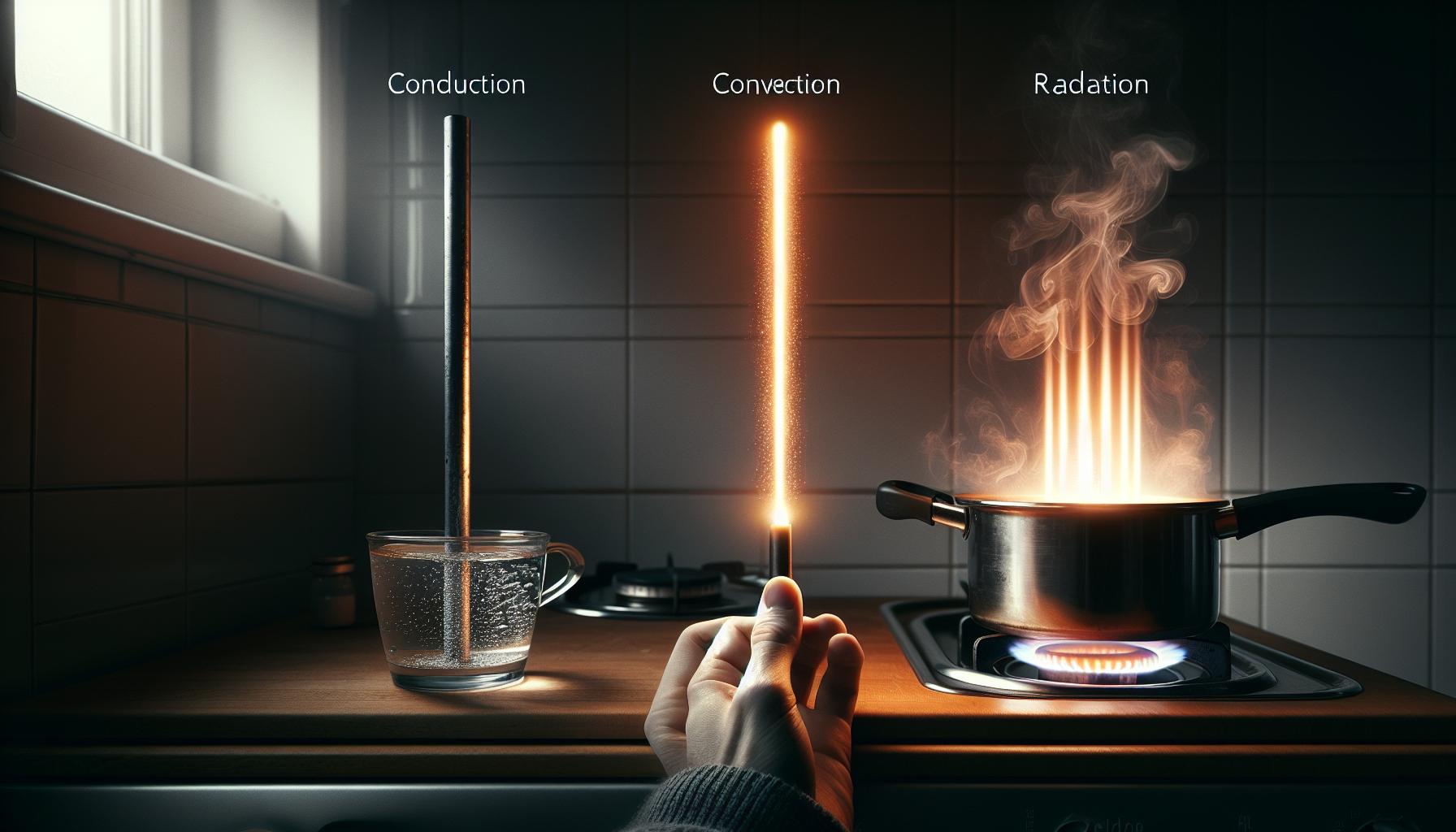
What Is Heat Transfer and Its Importance?
Heat transfer is a fundamental concept in physics and engineering that describes how energy in the form of heat moves from one location to another. Understanding heat transfer is crucial not only in scientific contexts but also in everyday life and industry applications. Whether it’s through cooking, heating systems, or climate control, the principles of heat transfer govern how we interact with the world around us. This interplay is defined by three primary modes: conduction, convection, and radiation, each working efficiently under different conditions and materials.
The significance of heat transfer cannot be overstated. It is essential in designing energy-efficient systems, optimizing thermal management in electronics, and developing sustainable manufacturing processes. For instance, in thermal insulation applications, materials with low thermal conductivity are used to minimize heat loss, which is vital for building energy efficiency. The greater the understanding of how heat transfers, the more effective engineers and designers can be in creating solutions that save energy and reduce costs.
Modern technologies increasingly leverage these principles to improve performance in various sectors. In the automotive industry, for example, heat exchangers are designed to optimize engine cooling systems, ensuring vehicles operate efficiently under a variety of environmental conditions. Similarly, in the aerospace sector, knowledge of heat transfer is crucial for thermal protection systems that safeguard spacecraft during re-entry. Hence, understanding the nuances of heat transfer is not just academic; it is a cornerstone of innovation and efficiency across multiple fields.
The Laws of Physics Governing Heat Transfer
Heat transfer is a fascinating interplay of energy that is guided by fundamental physical laws. Understanding these laws not only deepens our appreciation of everyday phenomena-like why a hot cup of coffee cools down-but also enhances our ability to harness heat transfer for technological advancements. At the core of heat transfer lies the Second Law of Thermodynamics, which states that heat naturally flows from regions of higher temperature to those of lower temperature until thermal equilibrium is achieved. This principle underpins many real-world applications, such as refrigeration and air conditioning systems.
Key Laws Governing Heat Transfer
One of the most essential laws governing heat transfer is Fourier’s Law of Heat Conduction. This law quantitatively describes how heat energy transfers through a material. It asserts that the rate of heat transfer (or heat flux) is proportional to the negative gradient of temperature and the area through which heat is conducted. Mathematically, it is expressed as:
[ q = -k cdot A cdot frac{dT}{dx} ]
where:
– ( q ) is the heat transfer rate (W),
– ( k ) is the thermal conductivity of the material (W/m·K),
– ( A ) is the cross-sectional area (m²),
– ( frac{dT}{dx} ) is the temperature gradient (K/m).
Another crucial law is Newton’s Law of Cooling, which details convective heat transfer. It states that the rate of heat loss of a body is proportional to the difference in temperature between the body and its surroundings. This principle not only applies to cooling but is instrumental in processes like heating as well.
Understanding Heat Transfer Dynamics
Radiative heat transfer, defined by Stefan-Boltzmann Law, adds another layer of complexity to heat transfer principles. It calculates the power radiated by a black body in terms of its absolute temperature. The law states:
[ P = sigma cdot A cdot T^4 ]
where:
– ( P ) is the power radiated (W),
– ( A ) is the surface area (m²),
– ( T ) is the temperature in Kelvin (K),
– ( sigma ) is the Stefan-Boltzmann constant ((5.67 times 10^{-8} text{ W/m²·K}^4)).
Perhaps the most actionable insight from these governing laws is understanding that effective heat transfer can be optimized by manipulating temperature differences, surface areas, and material properties. For instance, engineers often use materials with high thermal conductivity for heat sinks in electronics to enhance heat dissipation. On the other hand, insulators with low thermal conductivity are used in building materials to minimize unwanted heat loss.
By mastering these fundamental laws and the factors that influence heat transfer, one can better design systems that optimize thermal management, whether in a simple cooking appliance or a complex aerospace vehicle. This knowledge not only mitigates energy losses but also opens pathways for innovation in energy efficiency across various sectors.
Conduction, Convection, and Radiation Explained
Heat transfer occurs through three primary mechanisms: conduction, convection, and radiation. Each method plays a crucial role in how heat moves through materials and environments, influencing everything from the efficiency of heating systems to the comfort of our living spaces.
In conduction, heat transfer happens at the microscopic level as atoms and molecules vibrate and collide. This process is evident when a metal spoon, placed in a hot cup of coffee, becomes warm to the touch. Here, thermal energy flows from the hot coffee to the cooler spoon through direct contact. The rate of heat transfer in conduction is governed by materials’ properties, primarily thermal conductivity. Metals, known for their high thermal conductivity, facilitate rapid heat transfer, whereas insulators like wood or rubber slow the process down. Understanding this allows engineers to select appropriate materials for thermal applications, enhancing energy efficiency.
Convection differs fundamentally from conduction, involving the movement of fluids (liquids and gases). When water is heated in a pot, the warmer, less dense water rises while cooler, denser water descends, creating a current. This circulation pattern is crucial in natural processes, such as ocean currents and atmospheric conditions. Newton’s Law of Cooling provides insight into convective heat transfer, stating that the rate of heat loss is proportional to the temperature difference between a surface and the surrounding fluid. Thus, increasing airflow around a hot object can accelerate cooling, making this principle essential in both heating and cooling systems.
Radiation is the third mechanism and the only method that does not require a medium to transfer heat. It occurs through electromagnetic waves, with the sun being the most prominent example. All objects emit radiant energy based on their temperature-hotter objects emit more energy. The Stefan-Boltzmann Law quantifies this relationship, illustrating how the energy radiated increases with the fourth power of the object’s absolute temperature. This principle is pivotal in many applications, including thermal imaging, solar panels, and even building design, where maximizing or minimizing heat absorption can significantly impact energy efficiency.
Navigating the complexities of these heat transfer mechanisms can enhance practical applications in everyday life. For instance, understanding how to optimize convection in heating systems can lead to better home insulation, while leveraging conduction principles can inform the design of more effective cooking appliances. A well-rounded grasp of conduction, convection, and radiation not only helps in practical scenarios but also fosters innovation in technology and energy management solutions.
How Temperature Differences Drive Heat Flow
Heat flow is a fundamental principle that governs many natural phenomena and engineered systems. At its core, it hinges on the difference in temperature between two objects or environments. When there is a temperature gradient-where one area is hotter than another-heat naturally moves from the hotter region to the cooler one. This movement occurs across various mediums, whether they are solids, liquids, or gases, and is dictated by the laws of thermodynamics.
Understanding how this temperature difference drives heat transfer requires a grasp of the three fundamental mechanisms: conduction, convection, and radiation. In conduction, heat flows through materials by direct contact as faster-moving particles collide with slower-moving ones, transferring energy. For example, consider a metal rod heated at one end; the heat conducts along the rod to the cooler end until an equilibrium is reached. The thermal conductivity of the material plays a crucial role here-metals, with high thermal conductivity, facilitate quicker heat transfer compared to insulators, which resist it.
In the realm of fluids, convection takes center stage. As a fluid is heated, it becomes less dense and rises, while cooler, denser fluid descends, creating a circulation pattern known as a convection current. This principle is evident in boiling water, where hot water bubbles rise to the surface. Understanding this flow dynamic allows engineers to design more efficient heating systems, from home radiators to industrial heat exchangers, optimizing how heat is distributed through a space.
Radiation, unlike conduction and convection, requires no medium to transfer heat; it moves through electromagnetic waves. All objects emit radiant energy proportional to their temperature, and the greater the temperature difference, the more significant the heat transfer through radiation. For instance, the sun warms the Earth through solar radiation, and understanding this process is crucial in fields like building design, where maximizing solar gain in winter or minimizing it in summer can lead to significant energy savings.
In practical terms, the driving force behind heat transfer-temperature differences-can be harnessed for a variety of applications. For example, in HVAC systems, engineers can design optimal airflow patterns to enhance heat distribution or removal, based on these principles. By leveraging the natural tendencies of heat flow, we not only improve energy efficiency but also make strides towards more sustainable practices in technology and resource use. Understanding these concepts helps bridge the gap between theoretical knowledge and real-world application, allowing for innovative solutions to common thermal challenges.
Why Heat Naturally Moves Towards Cold
Heat has a singular tendency: it moves towards cold. This natural inclination is a fundamental principle of thermodynamics and can be observed in everyday life, from a hot cup of coffee cooling down to a frozen pizza warming up in a room temperature kitchen. The reason behind this behavior lies in the laws of physics that govern energy transfer-specifically the second law of thermodynamics, which states that energy systems naturally progress towards thermodynamic equilibrium. In simpler terms, heat seeks balance, redistributing energy from hotter areas to cooler ones until an equilibrium is reached.
To understand this process, consider the atomic and molecular behavior within materials. When particles in a substance are heated, they gain energy and begin to vibrate more vigorously. This increase in motion is what we perceive as heat. When these energetic particles come into contact with cooler ones-those that are less energetic-they share this energy through collisions. Over time, this energy transfer leads to the cooling of the hot substance and the warming of the cold one. This behavior is a microscopic reflection of the larger, observable phenomenon of thermal equilibrium.
This natural flow can be categorized further into the mechanisms of heat transfer: conduction, convection, and radiation. In conduction, heat transfer occurs through direct contact, while convection involves the movement of fluids where warmer, less dense regions rise and cooler, denser regions sink, creating currents. Radiation differs as it allows heat transfer through electromagnetic waves, enabling warmth to be felt from a distance-like the sun warming your face on a chilly day. Understanding these mechanisms not only highlights the way heat flows from hot to cold but also informs engineers and scientists on how to create efficient systems that leverage this natural tendency.
Practically speaking, harnessing this principle can lead to significant advancements in technology and environmental efficiency. For instance, solar panels capture radiant energy from the sun and convert it to usable electrical power, while home insulation slows heat loss to the environment, maintaining warm temperatures efficiently. By prioritizing designs that respect the natural flow of heat towards cold, we can improve the efficiency of heating and cooling systems, conserve energy, and reduce costs, aligning with sustainability goals. Recognizing and applying the science of heat transfer enables us to innovate and create solutions that resonate across various industries, ultimately benefiting both the economy and the environment.
Factors Influencing Heat Transfer Efficiency
Heat transfer efficiency is influenced by several critical factors that can significantly impact how effectively heat moves from one medium to another. Understanding these factors can not only enhance our grasp of thermal dynamics but also provide actionable insights for improving energy efficiency in various applications, from industrial processes to everyday home heating.
One major factor is temperature difference. The greater the disparity in temperature between two objects, the more rapid the rate of heat transfer will be. This phenomenon is closely tied to the principles of thermodynamics; essentially, heat moves from a region of higher thermal energy to one of lower energy in an attempt to reach thermal equilibrium. This principle can be harnessed, for instance, in heating systems, where the temperature gradient between indoor and outdoor environments dictates how effectively heat is retained or lost.
Another crucial aspect to consider is the surface area through which heat transfer occurs. According to the laws of conduction, for example, the rate of heat transfer is directly proportional to the area of contact between materials. In practical terms, larger surface areas allow for more interactions between hot and cold molecules, resulting in more efficient heat movement. This is why specialized heat exchangers, which maximize surface area through intricate designs, are often employed in industrial applications to optimize thermodynamic efficiency.
The thermal conductivity of materials also plays a significant role. Different materials possess varying abilities to conduct heat, measured by their thermal conductivity. Metals, for instance, are known for their high thermal conductivity, making them ideal for fast heat transfer, such as in cookware. In contrast, materials like fiberglass and foam have low thermal conductivity and are often used for insulation to impede heat loss.
Lastly, the medium of heat transfer-whether conduction, convection, or radiation-affects efficiency as well. In convection, for example, the movement of fluid (liquid or gas) significantly enhances heat transfer rates compared to conduction. Engineering systems that utilize forced air or liquid circulation can greatly improve the efficiency of heating or cooling processes.
By recognizing these factors-temperature difference, surface area, thermal conductivity, and the mode of transfer-engineers and designers can devise more effective systems and materials that optimize heat transfer. Whether improving insulation in buildings or developing better heat exchangers in industrial applications, these insights are crucial for energy efficiency and overall performance.
The Role of Material Properties in Heat Transfer
Understanding how materials behave in relation to heat transfer is crucial in numerous applications, from designing more efficient buildings to creating advanced heat exchangers in industrial processes. At the heart of this relationship lies the concept of thermal conductivity, which measures a material’s ability to conduct heat. For instance, metals like copper and aluminum are generally excellent conductors due to their high thermal conductivity, making them ideal choices for cookware and heat sinks. In contrast, insulating materials such as polystyrene foam or fiberglass have low thermal conductivity, effectively slowing down heat transfer and minimizing energy loss in buildings.
The structure of a material also plays a significant role in its heat transfer properties. Take, for example, the difference between crystalline and amorphous solids. Crystalline materials typically have well-defined atomic structures that allow heat to flow more easily through them, contributing to higher thermal conductivity. Amorphous materials, on the other hand, lack this regular structure, which can hinder heat transfer due to the disorder in their atomic arrangement. Understanding these material properties enables engineers and designers to select the right materials for specific applications, enhancing overall performance and efficiency.
Additionally, the phase of a material-solid, liquid, or gas-greatly influences how heat is transferred. In solids, heat generally transfers via conduction, while in liquids and gases, convection becomes more significant. For example, heating water in a pot involves both conduction (heat moving from the burner to the pot) and convection (hot water rising and cooler water sinking). This interplay between different modes of heat transfer is essential for optimizing heating systems and improving energy efficiency.
Finally, the context in which these materials are used often dictates how effectively they transfer heat. Surface treatments, coatings, or even the geometry of a system can affect the rates of conduction, convection, and radiation. By selecting materials with the right properties and arranging them strategically within a system, it’s possible to create highly efficient thermal management solutions that cater directly to specific needs and applications. This knowledge not only contributes to cost savings but also enhances sustainability in design and engineering efforts.
Real-World Applications of Heat Transfer Principles
Efficient heat transfer is crucial in various industries and everyday applications, influencing both performance and energy consumption. One striking example is the automotive industry, where thermal management plays a pivotal role in engine efficiency and vehicle safety. Manufacturers utilize principles of heat transfer to regulate engine temperatures, ensuring optimal performance and preventing overheating. Advanced cooling systems, such as liquid cooling, harness the principles of convection and conduction to transfer excess heat away from critical engine components, enhancing reliability and longevity.
In the realm of construction, understanding heat transfer is integral to designing energy-efficient buildings. Architects and engineers apply thermal insulation materials to reduce heat flow, ensuring that buildings maintain comfortable temperatures year-round without excessive energy consumption. For example, insulated walls and roofs utilize materials with low thermal conductivity, minimizing heat loss during colder months while reflecting heat away during the summer. This not only contributes to sustainability efforts by lowering energy use but also helps occupants save significantly on utility bills.
Another noteworthy application can be found in modern electronics, where effective heat dissipation is critical for maintaining device performance and lifespan. Heat sinks made of high-conductivity materials like aluminum are employed to draw heat away from computer processors, ensuring they operate within safe temperature limits. This application reflects a broader trend in technology, where innovations in materials science are leading to new heat management solutions, such as phase change materials and advanced thermal interface materials, which are being researched and developed to further enhance efficiency in heat transfer.
The food industry also leverages heat transfer principles, particularly in cooking processes. Techniques like sous-vide utilize the principles of conduction and convection to achieve precise temperature control, ensuring food is cooked evenly without risk of overcooking. By immersing food in a water bath at a consistent temperature, cooks maintain optimal heat transfer, resulting in perfectly cooked meals that retain moisture and flavor. This real-world application showcases how understanding thermodynamics can elevate culinary techniques, offering both recreational and professional chefs enhanced control over their cooking processes.
Through these examples, it’s clear that the principles of heat transfer are not merely academic; they are woven into the fabric of numerous sectors, driving innovation and efficiency in applications that directly impact our daily lives.
Common Misconceptions About Heat Flow
Understanding heat transfer can sometimes lead to confusion, especially when misconceptions prevail. One common belief is that heat moves “up” or “down” due to gravity. However, the reality is more nuanced. Heat transfer occurs through three primary mechanisms: conduction, convection, and radiation, each operating independently of gravitational forces. For instance, while hot air does rise in a room due to convection, this phenomenon is about the behavior of fluids rather than a directional flow of heat influenced by gravity.
Another misconception is that heat will automatically flow from a warmer object to a cooler one until they reach the same temperature. While it’s true that heat flows from hot to cold, the process is influenced by various factors such as material properties, surface area, and temperature gradient. For example, a metal rod placed in a hot substance will heat at one end and, due to conduction, might transfer that heat along its length. Yet this process is not instantaneous; it takes time for the temperature to equalize, allowing for a more gradual energy transfer.
Some also assume that insulation is solely about trapping heat. While good insulation is vital for reducing heat loss in buildings-keeping warmth in during winter and out during summer-its effectiveness hinges on the material’s thermal conductivity. Materials with low conductivity slow heat transfer, but they don’t necessarily “trap” heat. Instead, they create a barrier that minimizes the energy exchange with the environment. This is why a well-insulated home can maintain a comfortable temperature with less energy consumption.
Lastly, many people think that all materials conduct heat equally. In reality, materials exhibit vastly different thermal conductivities. Metals like copper and aluminum transfer heat efficiently, making them suitable for applications like heat exchangers and thermal interfaces. Conversely, materials like wood and rubber are poor conductors. Understanding these properties helps in selecting the right materials for specific thermal management applications, whether in construction, manufacturing, or electronics. By correcting these misconceptions, we can better appreciate the complexities of heat transfer and its critical role in our daily lives.
Advanced Concepts: Thermodynamics and Heat Exchange
Understanding thermodynamics is essential for grasping why heat naturally transfers between objects. The laws of thermodynamics govern how energy flows, fundamentally explaining the direction and efficiency of heat transfer. The first law, known as the law of energy conservation, states that energy cannot be created or destroyed, only transformed. This principle is crucial when considering heat exchange processes, where energy shifts from one system or medium to another, ensuring total energy remains constant.
Temperature difference is the driving force behind heat transfer, influencing how quickly and effectively energy moves. Heat always flows in the direction that diminishes temperature disparity – from hot to cold. This can be observed in everyday situations, like a cold drink warming up in a warm room. Mathematically, this relationship is often expressed in terms of Fourier’s law for conduction, Newton’s law of cooling for convection, and the Stefan-Boltzmann law for radiation. Each law helps quantify heat transfer under various conditions, facilitating predictions about system behavior.
Heat Exchange Mechanisms
Three principal mechanisms illustrate heat transfer: conduction, convection, and radiation. For conduction, the interaction between adjacent particles leads to energy transfer through direct contact, acting efficiently in solids like metals. Consider a metal spoon left in a hot pot; the end submerged in the liquid heats up, conducting energy through the spoon’s material.
Convection, on the other hand, involves fluids (liquids and gases) as warm particles rise and cooler particles sink, creating a current that enhances heat distribution. This is why heating water on a stove leads to the warm water rising to the surface while cooler water descends.
Radiation encompasses energy transfer through electromagnetic waves and does not require a medium, which explains how sunlight warms our skin or objects even in the absence of direct contact. Understanding these mechanisms allows us to optimize energy systems in engineering and environmental science, where controlling heat flow is essential for efficiency.
Practical Applications and Considerations
In real-world applications, the design of thermal systems aims to manage heat transfer strategically to conserve energy or enhance heat exchange rates. For instance, in HVAC systems, engineers calculate airflow and material properties to control indoor climates effectively. Insulation proves critical in maintaining desired temperatures in buildings. The thermodynamic properties of insulation materials reduce heat flow, dramatically influencing energy consumption and comfort levels.
As technology progresses, innovations in materials science, such as phase change materials (PCMs) and advanced thermal insulators, promise significant advancements in heat transfer efficiency. These materials change state in response to temperature, absorbing and releasing heat as needed, thus stabilizing thermal environments in smart buildings and industrial applications.
In summary, a firm grasp of thermodynamics and heat exchange principles equips researchers and practitioners with the tools to optimize energy efficiency, enhancing our approach to both everyday problems and advanced engineering challenges. Understanding the fundamental laws and mechanisms behind heat transfer fosters better decisions that support sustainability and innovation in numerous fields.
Practical Tips for Managing Heat Transfer in Systems
Effective management of heat transfer in systems is crucial for optimizing energy efficiency and maintaining desired temperatures in various applications, from manufacturing to household heating. Understanding the fundamental principles of heat transfer can lead to actionable strategies that enhance performance and sustainability. Here are some practical tips to help manage heat transfer effectively.
One critical strategy is insulation, which minimizes unwanted heat loss or gain. Insulating materials, such as fiberglass or foam, can significantly reduce conduction, especially in buildings where maintaining indoor temperatures is essential. When selecting insulation, consider the thermal resistance value (R-value); higher R-values indicate better insulating properties. Additionally, ensure that insulation is installed correctly and without gaps to optimize its effectiveness.
Another valuable approach involves leveraging heat sinks and heat exchangers. In electronic devices, heat sinks are designed to absorb and dissipate heat efficiently, preventing overheating. Using materials with high thermal conductivity, such as copper or aluminum, enhances the efficiency of these systems. Similarly, heat exchangers can transfer heat between two or more fluids without mixing them, which is particularly useful in heating and cooling applications. Employing these tools smartly can result in significant energy savings and improved performance.
Moreover, understanding the role of airflow in heat transfer can lead to better thermal management. For instance, in an HVAC system, arranging ductwork to facilitate efficient airflow enables better heat distribution and comfort. Ensuring that vents are unobstructed and utilizing fans to promote circulation can help maintain more uniform temperatures throughout a space.
Lastly, regularly monitoring and maintaining systems can prevent inefficiencies caused by heat leaks or blockages. Implementing temperature sensors and smart thermostats can provide real-time data on thermal performance, allowing for adjustments that optimize heat management. By adopting these practices, you can harness the laws of physics governing heat transfer to enhance both energy efficiency and comfort in a variety of settings.
Future Trends in Heat Transfer Research and Technology
The future of heat transfer research and technology is on the brink of transformation, driven by advances in materials science, computational modeling, and energy efficiency demands. As the world increasingly focuses on sustainable practices, innovative techniques in heat transfer are emerging to improve performance across various applications-from energy generation to electronic cooling.
One promising trend is the development of advanced materials that can enhance heat transfer properties. For instance, metamaterials, engineered materials with unique structures, are being explored for their ability to manipulate thermal radiation in ways that conventional materials cannot. Researchers are investigating how these materials can be used in thermal cloaking or in promoting efficient heat dissipation in electronics. By tailoring the material properties at the micro or nanoscale, we can significantly improve thermal management in devices, contributing to longer lifespans and enhanced performance.
Additionally, nanotechnology is revolutionizing heat transfer efficiency. Nanofluids, which are fluids engineered with nanoparticles, have shown remarkable improvements in thermal conductivity compared to their base fluids. This property opens new avenues for cooling applications, particularly in high-performance contexts like computer hardware or automotive engines. The ongoing research in this area aims to optimize the size, composition, and dispersion of nanoparticles to maximize heat transfer.
Furthermore, the integration of smart technologies in managing heat transfer systems is gaining momentum. Utilizing IoT (Internet of Things) devices for real-time monitoring of thermal performance allows for precise control over heating and cooling systems. This data-driven approach can optimize energy consumption, reduce waste, and adaptively respond to fluctuating environmental conditions. For example, smart thermostats and building management systems can learn occupant patterns, adjusting temperatures based on actual use rather than predefined schedules, leading to more efficient energy use.
Finally, the implications of these advancements extend into everyday life and industry. The shift toward sustainability and renewable energy sources is prompting engineers to explore efficient heat transfer solutions in solar thermal systems, waste heat recovery, and thermal energy storage. The ability to leverage heat transfer principles truly makes it a cornerstone in the quest for greener technologies. As research continues, we can expect to see not just incremental improvements, but potentially revolutionary techniques that redefine how we harness and manage heat.
Frequently Asked Questions
Q: What role do temperature differences play in the direction of heat transfer?
A: Temperature differences are the primary drivers of heat transfer. Heat naturally flows from areas of higher temperature to areas of lower temperature until thermal equilibrium is achieved. This principle ensures efficient heat transfer in various physical processes and systems, as discussed further in the section on How Temperature Differences Drive Heat Flow.
Q: How does material composition affect heat transfer direction?
A: Material composition significantly influences heat transfer. Different materials have varying thermal conductivities, which affect how quickly and effectively heat is transferred through them. Highly conductive materials, like metals, allow faster heat flow compared to insulators, which can obstruct it. For deeper insight, refer to the Role of Material Properties in Heat Transfer section.
Q: Why is heat transfer important in engineering systems?
A: Heat transfer is crucial in engineering systems for optimizing performance and safety. Understanding heat flow allows for effective thermal management, leading to improved energy efficiency and the prevention of overheating, as explored in Real-World Applications of Heat Transfer Principles.
Q: What are common misconceptions about heat transfer?
A: Common misconceptions include the belief that heat only moves upwards or that cold can be pushed. In reality, heat transfer occurs in all directions and always moves toward lower temperatures. Clarifying these misconceptions can enhance understanding, as detailed in the section on Common Misconceptions About Heat Flow.
Q: How does convection differ from conduction and radiation in heat transfer?
A: Convection, conduction, and radiation represent distinct heat transfer mechanisms. While conduction occurs through direct contact, convection involves fluid movement to transfer heat, and radiation transfers energy through electromagnetic waves. Each mechanism plays a role in different contexts, which is elaborated in the Conduction, Convection, and Radiation Explained section.
Q: What factors can enhance heat transfer efficiency?
A: Factors that enhance heat transfer efficiency include increasing surface area, improving material conductivity, and optimizing fluid flow. Understanding these factors can lead to better design and operation of thermal systems, as discussed in detail in the section on Factors Influencing Heat Transfer Efficiency.
Q: In what ways can heat transfer principles be applied in everyday life?
A: Heat transfer principles are applicable in everyday life through cooking, heating systems, and refrigeration. Knowing how heat interacts with materials can lead to improved efficiency in household devices, as highlighted in the Real-World Applications of Heat Transfer Principles section.
Q: When does heat transfer occur in thermodynamic processes?
A: Heat transfer occurs during thermodynamic processes whenever there is a temperature gradient. This can happen in closed systems, such as gas expansion, or open systems, like natural convection currents. For a closer look, explore the Advanced Concepts: Thermodynamics and Heat Exchange section.
In Conclusion
Understanding heat transfer is crucial for both academic exploration and practical applications. By recognizing the fundamental laws of physics that dictate how heat moves-from conduction to convection-you can deepen your knowledge and enhance your experiments. If you’re eager to apply these principles, consider exploring our detailed articles on thermal conductivity and heat exchangers to broaden your perspective.
We encourage you to join our community by signing up for our newsletter, where we share the latest discoveries and expert insights into thermodynamics. Feel free to leave a comment or share your thoughts below; your engagement helps us create content that addresses your interests. Remember, the journey into the dynamics of heat transfer is just beginning-stay curious and keep exploring!


