

Did you know that heat transfer is a fundamental process that affects everything from daily household activities to complex industrial operations? Understanding how heat moves is crucial for improving energy efficiency, enhancing comfort in our environments, and even designing better technology. In this article, we’ll explore the three primary mechanisms of heat transfer: conduction, convection, and radiation. Each of these methods plays a vital role in how energy is exchanged in various systems, impacting everything from cooking food to regulating climate control. By grasping these concepts, you’ll not only satisfy your curiosity but also gain valuable insights that can be applied in practical scenarios, whether you’re an engineer, a student, or simply someone looking to enhance their home. Join us as we demystify the science of heat transfer and its everyday implications.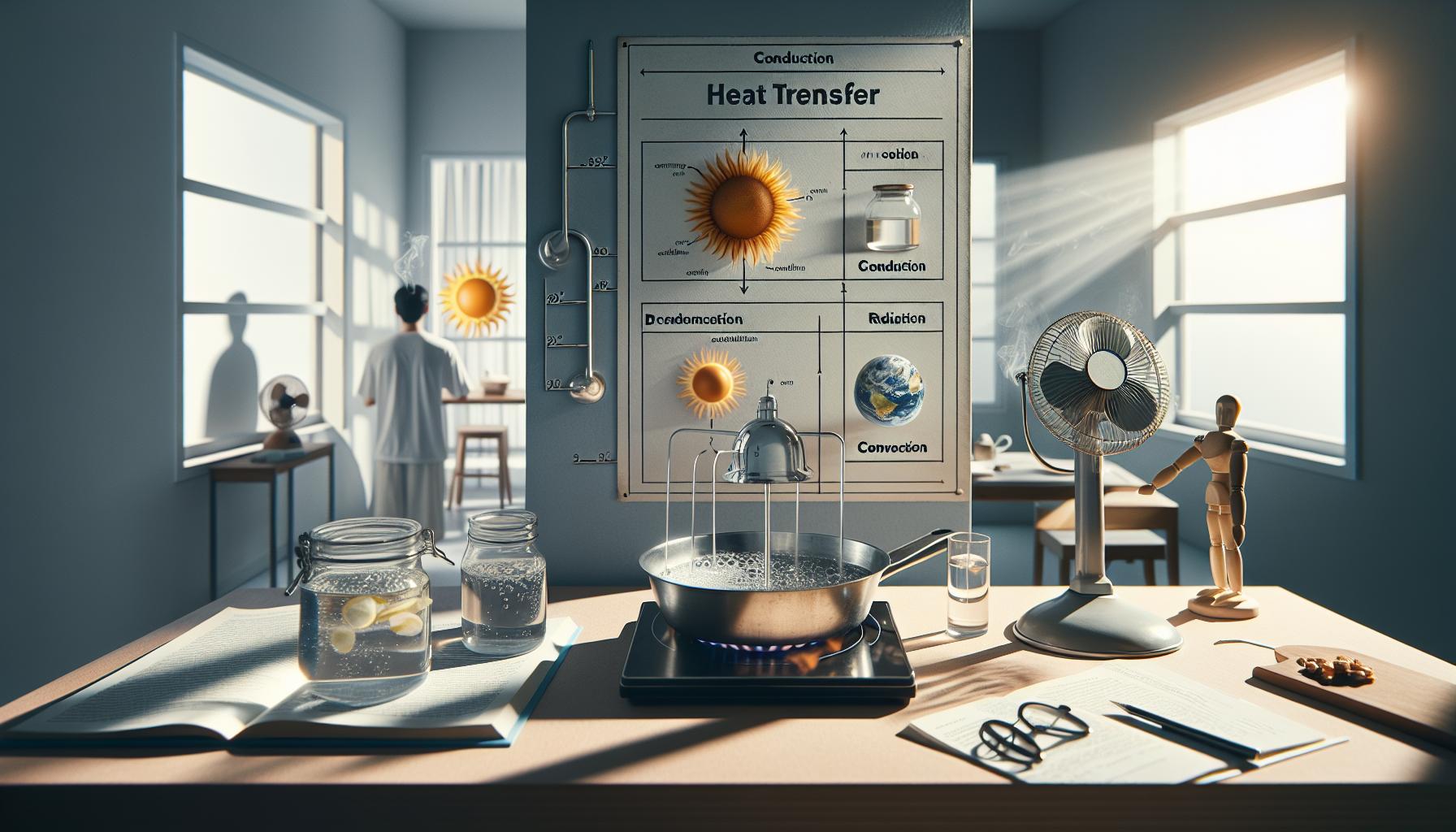
Understanding Heat Transfer: The Basics Unveiled
Heat transfer is a fundamental concept in physics, seamlessly integrating into our everyday experiences, from cooking to climate control. Understanding how heat moves can significantly influence our technological developments and daily lives. Heat transfer occurs primarily through three mechanisms: conduction, convection, and radiation. Each mechanism plays a distinct role in how energy is exchanged in various environments, whether in a home, workplace, or the wider natural world.
At its core, conduction involves the direct transfer of heat between materials in contact. Think of a metal spoon left in a hot pot of water; the heat from the water transfers directly to the spoon, warming it up. This process occurs at the molecular level as faster-moving molecules collide with their neighbors, imparting energy. Materials that are good conductors, like metals, allow heat to flow easily, while insulators, such as wood and rubber, resist this transfer, making them ideal for preventing heat loss in construction and cookware.
Convection and Radiation: Complementary Mechanisms
On the other hand, convection is the transfer of heat through fluids (liquids and gases) driven by the motion of the fluid itself. Warm fluid rises while cooler fluid sinks, creating a cycle that effectively disperses heat. This can be observed in boiling water, where the heat from the burner causes the water at the bottom to rise to the surface, thereby distributing the heat throughout the pot. Radiant heat transfer, by contrast, doesn’t require a medium; it involves heat energy traveling in electromagnetic waves. The warmth felt from sunlight or a fire is a prime example of radiation at work, effectively transferring energy across space.
Understanding these mechanisms is essential for a variety of applications, from engineering to environmental science. By leveraging the principles of heat transfer, we can design more efficient heating systems, improve energy conservation practices, and innovate solutions for managing temperature in a variety of settings. With this foundational knowledge, we can explore the factors influencing heat transfer efficiency and how these principles manifest in the technology and processes around us.
Conduction: The Direct Heat Exchange Mechanism
The process of conduction is a fundamental way heat is transferred, often exemplified by simple, yet powerful illustrations found in daily life. When a metal spoon is placed in a hot pot of water, it absorbs heat and quickly becomes hot to the touch. This phenomenon occurs because metals are excellent conductors of heat, allowing thermal energy to flow efficiently from the hotter substance (the water) to the cooler one (the spoon). At a molecular level, this transfer happens through collisions: fast-moving molecules in the hot water collide with slower-moving molecules in the spoon, transferring energy and increasing their velocity.
The effectiveness of conduction hinges on two primary factors: the material’s intrinsic properties and the contact area. Metals, such as copper and aluminum, have high thermal conductivity, enabling them to conduct heat rapidly. Conversely, materials like wood or plastic act as insulators, resisting heat flow, which is why they are often used to create handles for cooking implements. When designing systems that rely on effective heat transfer, selecting the right materials can significantly impact overall performance.
Key Factors Influencing Conduction
Several variables influence the efficiency of conduction, including:
- Material Type: Metals conduct heat better than non-metals due to their free-flowing electrons.
- Temperature Difference: A greater temperature differential leads to more vigorous energy transfer as molecules collide more frequently.
- Contact Surface Area: Larger contact areas allow for more collisions and greater heat transfer.
- Thickness of the Material: Thinner materials generally conduct heat better than thicker ones, as there is less distance for heat to travel.
Understanding conduction is crucial for a variety of applications, including cooking, manufacturing, and building. In cooking, for instance, using materials that conduct heat evenly can result in better cooking outcomes, as hot spots are minimized. In construction, choosing insulating materials can help maintain energy efficiency in buildings, reducing heating and cooling costs. By mastering the principles of conduction, we can optimize systems for both better performance and energy savings, making the most out of the heat transfer that governs our interactions with the physical world.
Convection: The Role of Fluid Motion in Heat Transfer
The movement of fluids is vital in the transfer of heat, creating a dynamic process that plays a crucial role in heating and cooling systems across various applications. Imagine a pot of water heating on the stove; not only does the heat transfer from the burner to the pot through conduction, but it also circulates through the water via convection. This phenomenon involves the bulk movement of molecules within fluids, allowing thermal energy to be distributed throughout the material. As warmer regions of the fluid rise and cooler areas sink, a continuous cycle of flow is established.
In convection, two primary forms exist: natural and forced convection. Natural convection occurs due to buoyancy differences in the fluid, driven by temperature variations. For example, when you heat water, the warm water becomes less dense and rises, while cooler, denser water sinks, creating currents. On the other hand, forced convection involves external means to circulate fluid, such as fans or pumps, which significantly enhances the heat transfer rate. This is widely utilized in a variety of systems, including radiators, heating, ventilation, and air conditioning (HVAC) systems, where fans distribute heated air throughout a space quickly and efficiently.
Main Factors Affecting Convection
Understanding the nuances of convection can help optimize systems for better performance. Key factors affecting convective heat transfer include:
- Fluid Properties: The type of fluid, its viscosity, and thermal conductivity greatly influence how effectively it can transfer heat.
- Temperature Difference: A greater temperature gradient typically results in a higher convection heat transfer rate as it drives more vigorous fluid motion.
- Velocity of the Fluid: Faster-moving fluids increase heat exchange; thus, forced convection enhances heat transfer significantly compared to natural convection.
- Surface Area: The area in contact with the fluid can affect the effectiveness of heat exchange. For instance, fins on a radiator increase surface area and improve heat dissipation.
In practical applications, the principles of convection can lead to more efficient designs and processes. For example, in the culinary arts, understanding how heat distributes through liquids can help chefs make better choices while cooking, whether it’s for boiling pasta or simmering sauces. Additionally, industries leveraging large-scale heat exchangers, such as power plants, benefit from optimizing the fluid flow patterns to maximize efficiency and energy conservation. By appreciating the dynamics of convection, we can harness its potential for improved efficiency in various systems, from the simplest home heating setups to complex industrial processes.
Radiation: How Heat Travels through Space
Heat transfer through radiation is a captivating phenomenon that operates without the need for a medium. Unlike conduction and convection, which require physical contact or fluid motion, radiation relies on electromagnetic waves to transfer energy. This is why you can feel the warmth of the sun on your skin even when standing in the shade; the sun’s rays travel through the vacuum of space, reaching us and imparting heat. This unique method of heat transfer plays a crucial role in many natural and engineered systems.
Radiation is defined by the Stefan-Boltzmann law, which states that the energy radiated per unit area is proportional to the fourth power of the absolute temperature of the surface. This means that as temperatures increase, the amount of energy emitted increases dramatically. For example, a small increase in temperature can lead to a significantly larger output of thermal radiation. This relationship underscores why, in applications like thermal insulation, materials with low emissivity are crucial; they reflect more radiant heat than they absorb, which helps keep spaces warmer in winter and cooler in summer.
Real-World Applications of Radiative Heat Transfer
Understanding radiative heat transfer is essential for various practical scenarios. For instance, in building design, architects often consider thermal radiation when selecting windows. Low-emissivity (low-e) coatings reflect solar radiation, reducing heat loss during colder months while minimizing heat gain in the summer. This not only enhances comfort but also improves energy efficiency, leading to lower heating and cooling costs.
In industrial settings, radiative heat transfer is critical in processes such as metal alloying and glass manufacturing, where precise temperature management is vital. Engineers design furnaces and kilns with materials that either absorb or reflect radiation effectively to optimize process efficiency. Additionally, in the realm of space exploration, spacecraft utilize radiant barriers to protect sensitive instruments from extreme temperature fluctuations in the vacuum of space, showcasing the unique challenges posed by radiative heat transfer in environments devoid of atmosphere.
By recognizing the principles behind radiation and its practical implications, we can harness its power more effectively-not only improving existing systems but also inspiring innovations across various industries.
Comparing the Three Mechanisms of Heat Transfer
When considering how heat moves from one place to another, we often think of conduction, convection, and radiation as distinct processes, yet they interconnect in intriguing ways. Each mechanism has its unique properties, advantages, and limitations that dictate where and how they operate most effectively. Understanding these differences not only enriches our knowledge of thermodynamics but also equips us to apply this understanding in real-world applications-from cooking and building design to advanced engineering.
Conduction is perhaps the most straightforward mechanism, taking place when heat energy is transferred through direct contact between materials. It’s the reason why a metal spoon becomes hot when left in a pot of boiling water. Heat flows from the hotter pot into the cooler spoon through interactions at the atomic level. This process is efficient in solids, especially metals, which possess high thermal conductivity. However, conduction becomes significantly less effective across larger distances or in non-metals, highlighting a limitation in scenarios requiring heat distribution over wide areas.
In contrast, convection involves the movement of fluids-liquids or gases-which carry heat away from one location to another. When you boil water, for example, hot water at the bottom rises while cooler water descends, creating a continuous cycle. This mechanism can be significantly more effective than conduction for transporting heat across large systems, such as in HVAC applications or ocean currents. However, convection is limited to fluids and requires the material to be in motion, either naturally (due to temperature differences) or mechanically (using fans or pumps).
Radiation, the third mechanism, transcends the material constraints of conduction and convection. It allows heat transfer through electromagnetic waves, such as infrared radiation. This is why you can feel warmth from a campfire even when sitting several feet away. Radiation can occur in a vacuum, making it essential for processes like heating in space habitats. However, it is less efficient over long distances in the presence of other mediums, which can absorb or scatter the radiative energy.
Ultimately, comparing these three heat transfer mechanisms reveals their unique roles in various applications. While conduction excels in solid materials and is straight to manage in localized systems, convection shines in fluid movement scenarios. Radiation stands out for its ability to function across empty space. By intelligently combining these mechanisms, engineers and designers can create more effective heating and cooling systems, optimize energy use, and enhance comfort in our built environments. Understanding when and how to apply these principles will lead you to better solutions for everyday challenges and advanced technological designs.
Real-World Applications of Heat Transfer Principles
Heat transfer is a fundamental principle that influences countless aspects of our daily lives, from the design of our homes to the technology behind our heating and cooling systems. Understanding how conduction, convection, and radiation work allows us to harness these mechanisms for practical uses, enhancing efficiency and comfort in our environments.
One vivid example of conduction is found in cookware. When you place a pot on a stove, the heat from the burner directly transfers to the pot’s material through direct contact, resulting in a hot surface that can cook food. Different materials conduct heat at varying rates; for instance, copper and aluminum are excellent conductors, making them ideal for kitchenware. In contrast, materials like rubber or glass offer much lower thermal conductivity, making them suitable for handles to prevent burns. Understanding these differences helps consumers select the right kitchen tools for their cooking needs.
In residential settings, convection plays a crucial role in heating and cooling systems. HVAC systems rely on convection to evenly distribute air throughout a space. When air is heated, it becomes lighter and rises, causing cooler air to descend and complete the cycle. This natural movement of air can be enhanced with fans, which propel the airflow, making systems more efficient. In larger applications like ocean currents, convection helps regulate temperatures of water bodies, influencing weather patterns and climate globally.
Radiation, on the other hand, is at play in solar heating systems. Solar panels capture sunlight and convert it into heat energy, which can then be used to warm water or spaces. This heat transfer method is efficient because it does not rely on physical mediums; it occurs even in a vacuum, making it effective for applications in space or in situations where other forms of transfer may be ineffective.
In conclusion, the interplay of these heat transfer mechanisms is not just theoretical; they are actively utilized across various fields. Whether it’s through selecting the right materials for cooking, optimizing HVAC systems, or harnessing solar energy, understanding and applying the principles of heat transfer can significantly improve performance and sustainability in our technological advancements and daily living. By recognizing how each mechanism functions, individuals and industries alike can make informed decisions that enhance efficiency and effectiveness in both simple tasks and complex engineering challenges.
Factors Influencing Heat Transfer Efficiency
The efficiency of heat transfer can play a pivotal role in both industrial applications and everyday scenarios, significantly impacting energy consumption and comfort levels. Several factors come into play, influencing how effectively heat is exchanged between materials and environments. Understanding these elements not only enhances theoretical knowledge but also has real-world implications for engineers, designers, and consumers alike.
One of the primary factors is the thermal conductivity of materials involved in the heat transfer process. Thermal conductivity measures how well a material can conduct heat. Metals, such as copper and aluminum, have high thermal conductivity, enabling them to transfer heat quickly, which is why they are commonly used in cookware and heat exchangers. Conversely, insulating materials like fiberglass or polystyrene are designed with low thermal conductivity to minimize heat loss in buildings, making them essential for energy-efficient construction.
Another crucial factor is surface area. The larger the surface area of a material in contact with another, the more heat can be transferred. For instance, consider a pot with a flat bottom versus one with a rounded bottom. The flat-bottomed pot maximizes contact with the heating element and allows for quicker heat transfer to the contents. This principle extends to industrial applications, where maximizing surface area can enhance the efficiency of heat exchangers used in HVAC systems or chemical processing.
Temperature difference between the materials or environments is also vital. The greater the temperature gradient, the more significant the driving force for heat transfer. In practical terms, this means that maintaining a substantial temperature difference can lead to enhanced performance in heating systems, whether in radiators that warm a room or in processes requiring precise temperature control.
Other factors include the movement of fluids, which affects convection. As a fluid is heated, it becomes less dense and rises, facilitating further movement and mixing within the existing fluid. In forced convection scenarios, like those employed in modern heating and cooling systems, using fans or pumps can considerably increase the rate of heat transfer by actively circulating the fluid, significantly improving the efficiency of systems designed for thermal management.
Taking these factors into consideration, one can make informed decisions that improve heat transfer efficiency in various applications. Whether selecting materials for a new heating system or designing industrial equipment, understanding the underlying principles can lead to better performance, lower energy costs, and enhanced comfort in both industrial and residential spaces.
Heat Transfer in Everyday Life: Examples and Implications
Cooking a simple breakfast can illustrate the profound ways heat transfer influences our everyday lives. Whether you’re boiling water for tea or frying an egg, the mechanisms of heat transfer-conduction, convection, and radiation-play a pivotal role in how effectively and quickly food is prepared. Understanding these principles allows not just chefs, but anyone involved in food preparation, to maximize efficiency in the kitchen, saving time and energy.
In cooking, conduction is the transfer of heat through direct contact. When you place a pan on a stovetop, heat travels from the burner through the metal of the pan and into the food. For example, using a cast iron skillet is advantageous because it has high thermal conductivity, meaning it heats up quickly and retains heat well. Conversely, a pan with a thick base reflects poor conductivity; thus, it takes longer to heat, leading to uneven cooking. An effective practice is to preheat your pan before adding food, as this optimizes the surface temperature and enhances the overall cooking process.
Convection also plays a vital role, especially when cooking liquids. For instance, when boiling pasta, heated water becomes less dense and rises, creating a cycle that efficiently cooks the noodles. In industrial settings, this principle is utilized in processes such as chemical manufacturing and HVAC systems, where controlling fluid motion can improve heat distribution and energy efficiency. To enhance heat transfer via convection, cooks often stir ingredients to promote even heating, ensuring that all components reach the desired temperature without undercooking.
Additionally, radiation contributes to heat transfer, particularly in methods like grilling or broiling, where heat emanates from a source (like coals or an electric element) and travels through the air. In this case, the distance between the food and the heat source is crucial; closer placements will result in faster cooking due to increased exposure. Moreover, reflective surfaces can be added-like using a broiler pan with a shiny finish-to bounce more heat onto the food.
In everyday applications, recognizing the principles of heat transfer can lead to smarter energy use and more effective cooking. For instance, adjusting the size of burners based on pot size can significantly improve energy efficiency. Similarly, understanding how temperature gradients affect cooking times (like a preheated oven versus a cold one) empowers us to achieve better culinary results. By applying these principles, one can enhance not only the cooking experience but also positively impact energy consumption and food quality, bridging the gap between cooking techniques and scientific understanding in practical, meaningful ways.
Advanced Concepts in Heat Transfer: Beyond the Basics
Understanding the nuances of heat transfer allows us to optimize our processes, whether in cooking, manufacturing, or technology. As we delve deeper than the basics, it’s essential to recognize how advanced concepts in heat transfer can further enhance efficiency and promote innovation in various fields. Utilizing sophisticated techniques not only leads to improved performance but also encourages energy conservation and sustainability.
One critical concept involves thermal conductivity, which is the measure of a material’s ability to conduct heat. Materials such as metals have high thermal conductivity, making them excellent choices for cookware and heat exchangers. However, in applications requiring insulation, materials like fiberglass or foam are preferred due to their low thermal conductivity. For instance, in home insulation, the choice of materials critically influences heating and cooling costs. Using materials with appropriate thermal properties can dramatically reduce energy consumption, highlighting the importance of selecting the right materials based on their thermal characteristics.
Another fascinating area is phase change materials (PCMs), which absorb or release significant amounts of energy when undergoing phase transitions, such as from solid to liquid. PCMs are pivotal in enhancing thermal management in various systems, such as in smart buildings for temperature regulation or in thermal batteries. This technology can store excess heat generated during the day for use at night, effectively balancing energy supply and demand. Incorporating these materials into building designs can lead to increased energy efficiency and greater comfort for occupants.
Advanced Computational Fluid Dynamics (CFD) is another tool that revolutionizes our understanding of convection. By simulating fluid flow and heat transfer, engineers can visualize and predict how fluids will behave under different conditions. This application is crucial in designing HVAC systems, ensuring efficient heat distribution and control. Furthermore, CFD is invaluable in optimizing processes in industries such as aerospace and automotive, where managing heat is critical for safety and performance.
Incorporating these advanced concepts not only improves efficiency but also drives innovation. As we continue to explore the intersection of material science, thermal dynamics, and engineering, the possibilities for enhancing heat transfer mechanisms will expand, leading to sustainable practices that benefit both industries and consumers. As a community of researchers, students, and practitioners, embracing these advancements will cultivate a deeper understanding of science while fostering practical applications that make a difference in our everyday lives.
Practical Tips for Enhancing Heat Transfer in Systems
Understanding how to optimize heat transfer in various systems is essential for improving efficiency and reducing energy costs. Whether you’re dealing with cooking appliances, industrial processes, or HVAC systems, employing effective strategies can lead to significant benefits. Here are some practical tips for enhancing heat transfer that can be applied in a variety of contexts.
One straightforward method to improve conduction is to maximize the contact area between surfaces. For instance, using pans with flat bases on stovetops ensures better contact with heating elements, leading to more effective heat transfer. Similarly, when designing heat exchangers, ensuring tight fits and optimal surface materials can dramatically increase heat transfer efficiency. Thermal greases or conductive pastes can also be employed between surfaces to fill in microscopic gaps, improving thermal connectivity.
To enhance convection, consider increasing fluid velocity. In heating systems, pumping fluids faster can help transfer heat more quickly and efficiently. Adding fins or extended surfaces in heating elements allows for greater exposure of the heat source to the moving fluid, boosting the overall heat transfer rate. Furthermore, selecting fluids with higher specific heat capacities can also yield better results, as these fluids can absorb more heat energy during the process.
Radiation can be optimized by utilizing reflective surfaces. For instance, in solar thermal systems, incorporating mirrors or reflective coatings can direct more energy towards the absorber, enhancing the system’s efficiency. Additionally, using materials with high emissivity in radiative cooling applications helps maximize heat loss effectively. It’s beneficial to keep surfaces clean and free from dust or oxidation, as accumulation can decrease performance by reducing emissivity.
Ultimately, combining these strategies can lead to improved heat transfer across various applications. The key is to assess the specific requirements of your system and selectively implement these tips to achieve the desired performance outcomes. By focusing on effective design and material choices, you can enhance thermal management, leading to increased energy conservation and sustainability in your practices.
Frequently asked questions
markdown
Q: What are the different types of heat transfer?
A: The three main types of heat transfer are conduction, convection, and radiation. Each mechanism operates differently: conduction involves direct contact, convection involves the movement of fluids, and radiation allows heat transfer through electromagnetic waves. Understanding these can enhance your grasp of thermal processes.

Q: How is conduction different from convection and radiation?
A: Conduction is the transfer of heat through direct contact, while convection involves heat transfer by the movement of fluids. Radiation, on the other hand, transfers heat through electromagnetic waves without needing a medium. This fundamental distinction is crucial for comprehending various thermal systems.

Q: Why is understanding heat transfer important in engineering?
A: Understanding heat transfer is vital in engineering for designing efficient systems, optimizing energy use, and preventing overheating in machinery. Awareness of heat transfer principles aids in creating safer and more effective heating and cooling solutions in various applications, from HVAC to manufacturing.

Q: What factors influence heat transfer efficiency?
A: Heat transfer efficiency is affected by material properties, surface area, temperature differences, and environmental conditions. For instance, using materials with high thermal conductivity can improve conduction, while increasing fluid flow can enhance convection. Proper material selection and design play essential roles in system performance.

Q: When does heat transfer occur in everyday life?
A: Heat transfer occurs daily, such as when a pot heats on a stove (conduction), warm air rises in a room (convection), or you feel the warmth of the sun (radiation). Recognizing these processes in action can enhance your understanding of thermal dynamics in everyday scenarios.

Q: How can I enhance heat transfer in my home systems?
A: To enhance heat transfer in home systems, consider improving insulation, optimizing fluid flow in heating systems, and using thermal mass materials. Regular maintenance of HVAC systems and positioning radiators effectively can also promote better heat distribution throughout spaces.

Q: What is thermal conductivity, and why does it matter?
A: Thermal conductivity is a material's ability to conduct heat. It significantly impacts heat transfer rates in various applications. Materials with high thermal conductivity enable efficient heat transfer, making them ideal for thermal management in engineering and construction. This knowledge helps in selecting appropriate materials for specific applications.

Q: How do temperature differences affect heat transfer?
A: Temperature differences drive heat transfer; heat moves from areas of higher temperature to lower temperature until thermal equilibrium is reached. A larger temperature gradient results in more rapid heat transfer, emphasizing the importance of temperature management in thermal systems and applications.
In Summary
Understanding heat transfer through conduction, convection, and radiation not only enriches your knowledge of physics but also equips you with practical insights for everyday applications. If you’re curious about how these mechanisms influence thermodynamics in real-world scenarios, consider exploring our in-depth articles on thermal insulation techniques and the principles of heat exchangers. Don’t miss the opportunity to delve deeper-subscribe to our newsletter for the latest updates and insights right in your inbox!
Have any questions or insights on heat transfer? We encourage you to share your thoughts in the comments below. Remember, knowledge is powerful! Your journey doesn’t end here; check out our resource hub for tools and guides that can deepen your understanding. By exploring our related content, you’ll not only enhance your learning experience but also become part of our community of curious minds eager to unlock the secrets of the universe.


