

Have you ever felt the warmth of the sun on your skin, even on a chilly day? This phenomenon is a perfect example of radiation heat transfer, which occurs without the need for a medium, unlike conduction or convection. Understanding whether radiation requires a medium to transfer heat is crucial for a range of fields, from engineering to environmental science. By uncovering the truth behind this fundamental concept, we can enhance our grasp of energy transfer mechanisms and their practical applications. This exploration not only satisfies scientific curiosity but is also vital for designing efficient heating systems, improving thermal management in technology, and advancing sustainable energy solutions. Join us as we delve into the fascinating world of radiation and its independent ability to traverse the void, shaping our experience in ways we often overlook.
Does Radiation Transfer Heat Without a Medium?
Heat transfer through radiation stands out as a unique phenomenon because it does not require a medium for transmission. Unlike conductive and convective heat transfer, which rely on the direct contact between materials or the movement of fluid, radiation can occur through a vacuum. This characteristic is pivotal in understanding how energy is transferred in space, where no air or other substances exist.
Radiative heat transfer occurs through electromagnetic waves that are emitted by all objects with a temperature above absolute zero. These waves can travel through a vacuum without the need for physical particles. For example, the heat from the sun reaches Earth through the vast emptiness of space, relying solely on radiation to convey energy. The ability of radiation to cross gaps in space is governed by the Stefan-Boltzmann Law, which indicates that the total energy radiated per unit surface area of a black body is proportional to the fourth power of its absolute temperature. This means that as an object gets hotter, it emits significantly more energy through radiation, fundamentally shaping our understanding of thermal dynamics in various systems.
Moreover, the effectiveness of radiative heat transfer is linked not just to temperature differences but also to the surface properties of the materials involved, such as their emissivity. Black bodies, for instance, are perfect emitters and absorbers of radiation, which means they will interact with thermal radiation more efficiently than other materials. In practical applications, this principle is exploited in designing energy-efficient systems, such as in radiative cooling technologies, reflective thermal barriers, and solar energy systems.
In summary, radiation transfers heat effectively without the need for a material medium, leveraging electromagnetic waves to facilitate energy exchange across empty spaces. This understanding is crucial not only in theoretical physics but also in numerous engineering applications, from optimizing building designs for thermal efficiency to advancing space technologies.
Understanding the Basics of Heat Transfer Mechanisms
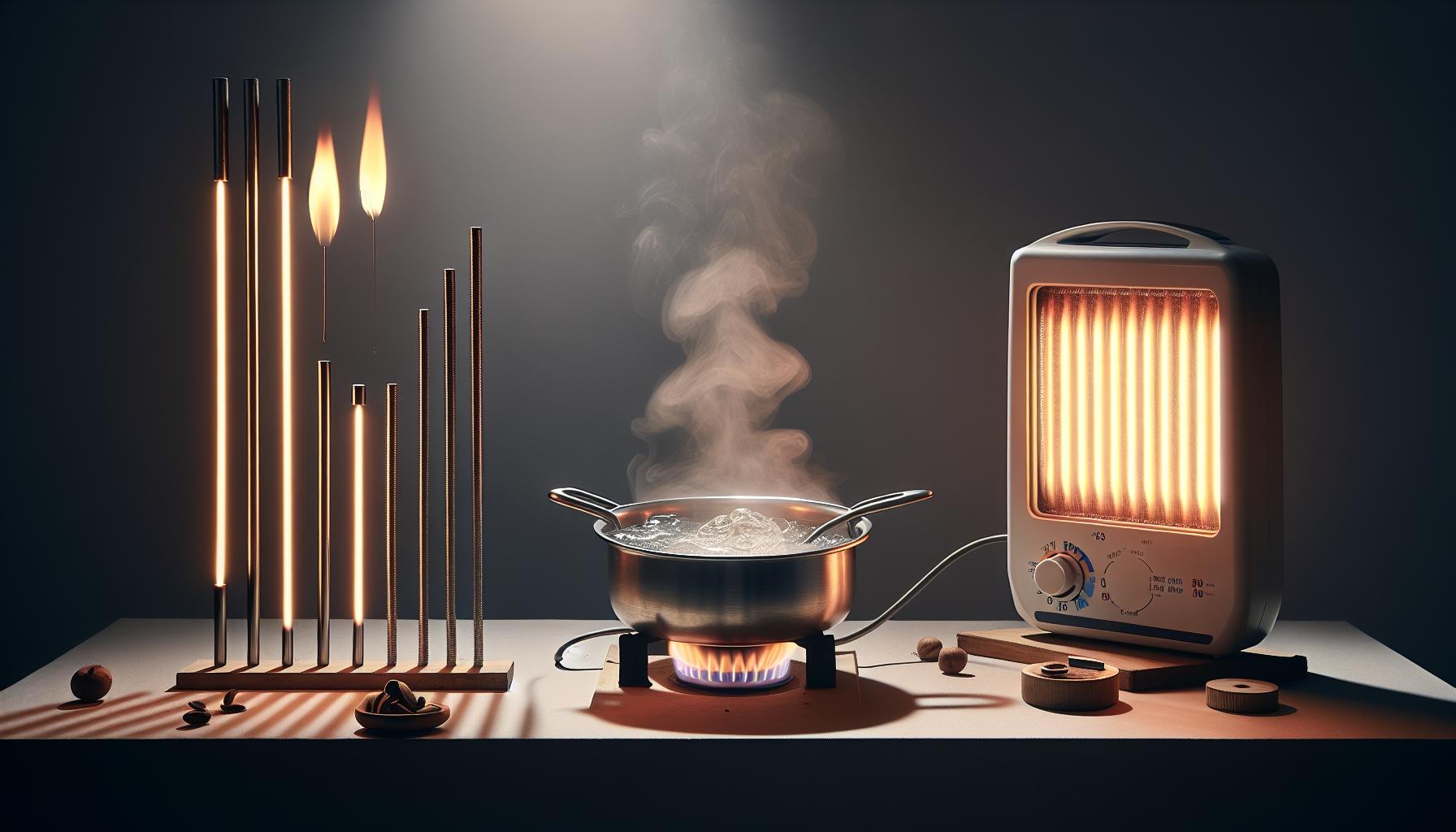
Understanding heat transfer is crucial in various fields, from engineering to environmental science. At its core, heat transfer occurs through three primary mechanisms: conduction, convection, and radiation. Each method operates under different principles and conditions, reflecting the distinct ways energy interacts with materials and environments.
Conduction
Conduction is the transfer of heat through direct contact between materials. When molecules in a heated object vibrate, they collide with neighboring molecules, transferring energy in the process. This mechanism is most effective in solids, particularly metals, where tightly packed atoms facilitate quick energy transfer. A practical example of conduction is when a metal spoon is placed in a hot cup of coffee; the heat travels up the spoon, warming the handle as it connects with the heated liquid.
Convection
In contrast, convection involves the movement of fluids (liquids and gases) that carry heat along with them. As a portion of a fluid is heated, it becomes less dense and rises, while the cooler, denser fluid sinks, creating a convective current. This process is fundamental in weather patterns and heating systems, where hot air rising can circulate warm air throughout a room. For instance, a radiator heats the air around it, causing it to rise and allowing cooler air to take its place, creating a continuous flow of warm air.
Radiation
Radiation sets itself apart from conduction and convection by transferring heat through electromagnetic waves, not requiring any medium. This allows thermal energy to travel through a vacuum, exemplified by the sun’s warmth reaching Earth across the void of space. Here, the principles involve each object emitting energy based on its temperature, governed by the Stefan-Boltzmann Law. This law states that the power radiated per unit area of a black body is proportional to the fourth power of its absolute temperature, illustrating how an increase in temperature exponentially raises energy emission.
Understanding these mechanisms not only clarifies how heat is exchanged but also informs design strategies in technology and engineering. For instance, engineers optimize thermal insulation by considering radiant properties, using materials with low emissivity in homes to reduce heat loss. This knowledge is vital when designing energy-efficient systems or harnessing solar energy efficiently.
- Conduction: Transfer of heat through direct contact (e.g., cooking on a stove).
- Convection: Heat transfer through fluid movement (e.g., boiling water on a stovetop).
- Radiation: Transfer of heat through electromagnetic waves (e.g., warmth from the sun).
By grasping these foundational concepts, one can appreciate the critical role of heat transfer in both natural processes and technological advancements. The ability of radiation to function without a medium highlights its unique significance in scenarios where conduction and convection cannot occur, paving the way for innovative applications in a variety of fields.
The Role of Medium in Conductive and Convective Heat Transfer
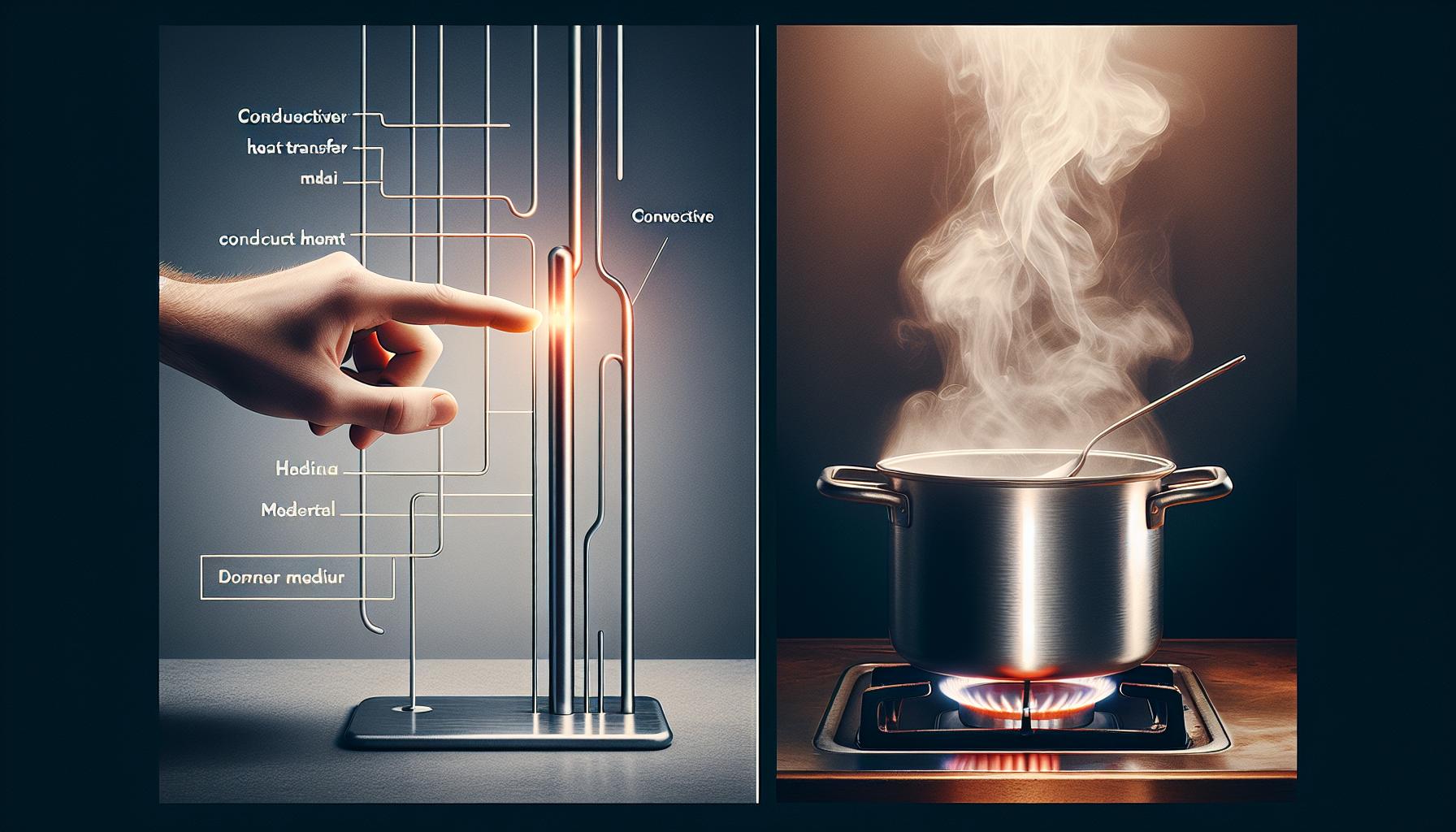
The basis of conductive and convective heat transfer lies in the presence of a medium that facilitates energy exchange. Unlike radiation, which can traverse the vacuum of space, both conduction and convection depend heavily on matter-solids, liquids, or gases-to transport thermal energy from one location to another. Understanding how these mechanisms function and their relationship with different materials is crucial in effectively utilizing heat transfer in technology and everyday applications.
In conductive heat transfer, heat is transferred through direct contact between materials. The efficiency depends on the material’s properties, such as thermal conductivity. Metals like copper and aluminum are excellent conductors; thus, they are often used in cookware and heat exchangers. For example, when a metal pot is heated on a stove, the heat from the flame is transferred directly to the pot’s surface, raising its temperature and subsequently transferring heat to any food within. Insulating materials, on the other hand, have low thermal conductivity and serve to minimize heat loss, as seen in houses equipped with fiberglass insulation.
Convection relies on the movement of fluid-either liquid or gas-to carry heat. Here, the medium not only transfers the heat but also circulates, creating a continuous flow that enhances thermal exchange. Consider the action of boiling water: as water at the bottom of a pot is heated, it becomes less dense and rises, while cooler, denser water descends to take its place. This cycle continues, efficiently distributing heat throughout the liquid. Understanding fluid dynamics is critical for engineers designing efficient heating systems, such as radiators or HVAC systems, where optimizing air flow and temperature gradients can dramatically enhance performance and comfort.
In summary, the role of a medium in conductive and convective heat transfer is fundamental to how energy is exchanged in our physical world. Whether you’re designing an efficient heating system, selecting materials for construction, or simply understanding the everyday experience of cooking, recognizing how these mechanisms operate with the help of a medium empowers better decision-making and innovation.
Exploring Radiation: Is a Medium Necessary?
The remarkable nature of radiation lies in its ability to transfer heat without the need for a physical medium. This stands in stark contrast to conduction and convection, which rely heavily on materials to move thermal energy. In fact, radiation is the only mode of heat transfer that can occur across the vacuum of space, allowing energy from the Sun to warm our planet. This means optical phenomena, such as sunlight streaming through a window, illustrate how efficient and essential radiative heat transfer is in our daily lives.
Radiation operates through the emission of electromagnetic waves, primarily in the infrared spectrum. Any object above absolute zero emits thermal radiation; the amount of energy emitted increases with temperature. This principle is fundamental in technologies like infrared thermography, where heat emissions are captured to assess temperature variations in objects without any physical contact. For instance, engineers utilize infrared cameras to examine the integrity of electrical systems or to identify heat losses in buildings. Such applications underscore the power of radiation as a heat transfer mechanism that does not require a medium.
Moreover, the concept of radiative heat transfer is woven into various practical scenarios, from the warmth you feel sitting near a fire to the thermal regulation in spacecraft, where heat shields must manage the radiant energy from outer space. Even in everyday experiences-like feeling the sun’s warmth on your skin without the air around you acting as a conductor-radiation’s unique ability to function in a vacuum is evident. This seamless interaction between energy and thermal emissions not only reinforces radiative heat transfer’s independence from a medium but also its critical role in both natural and engineered systems.
By embracing the principles of radiation, we can better design and utilize technology that harnesses this fascinating mode of heat transfer. From energy-efficient heating solutions to advanced scientific instruments, understanding how radiation operates opens the door to innovative advancements that depend on its intrinsic properties. This reflection on radiative heat transfer reveals its significance beyond scientific exploration-it’s a fundamental process that connects us to both our environment and the broader universe.
Key Differences Between Radiation and Other Heat Transfer Types
Radiation distinguishes itself as a unique mode of heat transfer by operating independently of any physical medium, a feature that is not shared with conduction or convection. While conduction involves the transfer of heat through direct contact between materials, where particles collide and transfer energy, and convection relies on the movement of fluids to convey heat, radiation conveys energy through electromagnetic waves. This fundamental difference means that radiation can effectively traverse the vacuum of space, allowing solar energy to travel over 93 million miles and warm our planet without needing air or any other intermediary.
Understanding how radiant heat transfer functions can clarify its contrast with other heat transfer methods. In conduction, heat flows from a hotter object to a cooler one through molecular vibrations, limiting its effectiveness to solids and requiring a direct physical connection. In contrast, convection transmits heat through the bulk movement of fluids, making it reliant on the presence of liquid or gas. This can manifest in everyday phenomena, like warm air rising in a room or the boiling of water, but it ceases when there is no movement, as seen in stagnant air.
Radiation, on the other hand, emits thermal energy in the form of electromagnetic radiation, primarily in the infrared spectrum, which emanates from objects that have heat. Any object above absolute zero emits some level of thermal radiation, and this emission increases with temperature, following Stefan-Boltzmann Law. This characteristic is integral to many technologies today, such as infrared cameras, which allow us to visualize temperature variation without touching the object or requiring any contact, emphasizing radiation’s efficiency and indigenous properties in thermal transfer scenarios where conduction and convection would prove impractical.
The practical implications of these differences are significant across various applications. For instance, in space exploration, spacecraft must rely on radiative cooling methods to dissipate heat into the vacuum of space effectively. In domestic scenarios, understanding the principles of radiation highlights why you can feel warmth from a fire even without being in direct contact with the flames, illustrating how radiant heat can travel through air and other environments effortlessly. As technology advances, this unique ability of radiation continues to pave the way for innovations aimed at enhancing energy efficiency and reducing reliance on conductors or convectors, showcasing its crucial role in both nature and engineered systems.
Common Misconceptions About Radiation and Heat Transfer
Misunderstandings about how radiation transfers heat can lead to confusion, particularly regarding its independence from a medium, a key distinction from conduction and convection. One common misconception is that radiation requires a medium-like air or water-to transfer heat, similar to how convection necessitates a moving fluid. In reality, radiation transfers energy via electromagnetic waves, which can propagate through a vacuum. This is how solar energy travels approximately 93 million miles to reach Earth, warming it without needing a physical medium.
Another widespread myth is that all bodies emit radiation at the same rate. In truth, the rate of radiative heat transfer depends significantly on the temperature and surface characteristics of the body. For instance, a black body-an idealized physical object that absorbs all incident electromagnetic radiation-emits radiation more efficiently compared to a shiny, reflective surface, which can diminish its radiative heat transfer capabilities. This variation is governed by the Stefan-Boltzmann Law, which states that the power radiated by a body is proportional to the fourth power of its absolute temperature. Thus, while all objects emit thermal radiation, the amount and effectiveness of that emission can differ dramatically.
Understanding these principles is crucial when considering practical applications of radiation. For example, thermal radiation is a critical consideration in the design of spacecraft, which rely on effective radiative heat transfer to disperse heat into the vacuum of space. Misconceptions about the need for mediums can hinder innovative solutions in thermal management systems, where optimizing the design for radiative heat loss is often more beneficial than relying on conductive or convective methods, especially in environments devoid of air or other fluids.
By addressing these common misunderstandings and clarifying the nature of radiative heat transfer, we empower ourselves to better understand and utilize radiation in various scientific and engineering fields. Whether in daily life or advanced technologies, recognizing that radiation operates independently of a medium opens up a world of possibilities for efficient heat management and energy use.
Practical Applications of Radiation in Real-World Scenarios
In many modern applications, the unique properties of radiative heat transfer harness energy without the need for a physical medium. This ability has significant implications across multiple industries, influencing everything from building design to aerospace engineering. For instance, consider how solar panels utilize the principles of radiative heat transfer to convert sunlight into electricity. They operate effectively even in the vacuum of space where no air exists, proving that electromagnetic radiation is vital for energy capture without relying on a medium.
Spacecraft Thermal Management
Spacecraft design heavily relies on managing heat through radiation. In the vacuum of space, traditional methods of heat transfer, like conduction and convection, are ineffective. Engineers use advanced materials with high emissivity to ensure that excess heat from spacecraft systems is radiated away effectively. This is crucial during maneuvers when the craft can experience significant temperature fluctuations. For instance, multi-layered thermal blankets are often employed to regulate temperatures by maximizing radiative heat loss, protecting sensitive components from extreme heat that does not dissipate into a surrounding medium.
Building Insulation Techniques
In the context of energy efficiency, building designs also leverage radiative heat transfer principles. Radiant barriers, installed in roofs and attics, reflect radiant heat away from living spaces in hot climates. These barriers do not rely on conduction or convection, allowing for significant energy savings by maintaining cooler indoor temperatures. This technology is especially beneficial in sunny regions where the heat from the sun can increase cooling costs substantially. By understanding how radiation can be effectively harnessed, architects and builders can create structures that use energy more efficiently and provide greater comfort.
Innovations in Cooking Appliances
Another intriguing application is found in cooking appliances, such as infrared ovens and grills. They leverage radiative heat transfer to cook food faster and more evenly than traditional cooking methods. These devices operate by emitting heat in the form of infrared radiation, directly affecting the food without needing heated air or a stovetop. This direct transfer of energy allows for quicker cooking times while enhancing flavor without the risk of excess moisture loss that can occur with conventional methods.
These practical applications illustrate the versatility and essential nature of radiative heat transfer across industries. By recognizing how it functions without a medium, innovators can continue to explore and refine technologies that improve energy efficiency, thermal management, and overall comfort in everyday life.
Scientific Experiments Demonstrating Radiation Without a Medium
Experiments reveal fascinating insights into how radiation transfers heat without the necessity of a medium. One standout demonstration is the Fourier’s Law of Heat Conduction, which explains the fundamentals of heat transfer through conduction and convection. In contrast, the principles of radiative heat transfer can be showcased in a vacuum, where no air or other medium exists to facilitate heat transfer. This phenomenon fundamentally distinguishes radiation from its conductive and convective counterparts.
A classic experiment demonstrating radiation occurs with two bodies at different temperatures placed in a vacuum. When one object, such as a heated metal sphere, is exposed to another cooler object, the transfer of heat occurs via electromagnetic waves. These waves, primarily in the infrared spectrum, carry energy away from the hotter body to the cooler one, illustrating that heat can transfer without any physical medium. This experiment aligns with the Stefan-Boltzmann law, which states that the power radiated per unit area is proportional to the fourth power of the temperature of the radiating body, confirming that temperature plays a pivotal role in radiative heat transfer.
Additionally, the concept of a radiative cooler offers a practical application of this principle. Radiative coolers are designed to emit thermal radiation into the night sky, effectively cooling the surface without the influence of ambient air. These devices have been used in rooftop installations to demonstrate cooling capabilities in clear, cloudless nights, underscoring the efficiency of radiation in transferring heat away from surfaces in a medium-less environment.
Through these experiments, it is evident that radiative heat transfer stands apart from other mechanisms by enabling heat flow across vacuums, which has significant implications in engineering, space exploration, and energy efficiency innovations. Understanding these principles empowers the development of technologies that utilize thermal radiation for optimal performance in a variety of applications, from spacecraft design to sustainable building practices.
The Impact of Temperature on Radiative Heat Transfer
The relationship between temperature and radiative heat transfer is fundamental to understanding how energy is emitted and absorbed by objects in various environments. According to the Stefan-Boltzmann law, the power radiated from a body is directly proportional to the fourth power of its absolute temperature. This means that even a small increase in temperature can lead to a significant increase in radiative heat transfer. For example, if the temperature of an object doubles, its radiative energy emission increases by a factor of 16. This phenomenon underscores the critical role temperature plays in radiative heat transfer dynamics.
When examining practical applications, consider the concept of radiative cooling. During clear nights, surfaces that are engineered to emit thermal radiation effectively release heat into the vastness of space. This cooling effect is magnified if the surface temperature is significantly lower than the ambient temperature. In applications like rooftop radiative coolers, engineers exploit this principle to enhance energy efficiency, especially in urban areas where heat accumulation can significantly affect indoor climate. By choosing materials with specific emissivity characteristics, designers can optimize the cooling process and reduce energy costs associated with air conditioning.
Moreover, temperature gradients between objects facilitate the direction of heat flow via radiation. When a warm object is positioned near a cooler one in a vacuum-where no medium is present to support heat transfer through conduction or convection-radiative transfer becomes the sole mechanism for energy movement. This concept not only supports advancements in thermal management technologies in engineering but also informs environmental applications, such as climate modeling and energy policy, emphasizing the importance of temperature in predicting radiative heat exchanges.
Understanding these principles paves the way for innovative technologies that harness radiative heat transfer, especially in areas where conventional methods falter. From spacecraft re-entry systems that manage heat via radiation to energy-saving architectures designed with innovative thermal materials, is profound and far-reaching, enabling practical solutions to contemporary energy challenges.
Technological Innovations Leveraging Radiative Heat Transfer
The potential of radiative heat transfer is awe-inspiring, particularly because it operates without the need for a medium. This unique property has led to groundbreaking technologies harnessing this form of energy transfer, revolutionizing various fields from energy efficiency to aerospace applications.
One of the most notable innovations is in the realm of thermal management systems. For example, radiative cooling technologies have emerged as a viable solution to combat urban heat islands and reduce energy consumption in buildings. By employing specialized coatings that maximize emissivity, these systems can effectively dissipate heat to outer space during the night, allowing structures to maintain cooler temperatures. Products like radiative cooling paint are being developed and deployed, which reflect sunlight while simultaneously emitting infrared radiation, significantly decreasing cooling loads in warm climates.
The aerospace industry has also made impressive strides by leveraging radiative heat transfer. Spacecraft utilize this principle to manage thermal conditions during re-entry and operations in the harsh environment of space. Materials designed for thermal blankets rely on their emissive properties to balance the heat absorbed from the sun and emitted into space. This careful thermal design not only protects sensitive equipment but also optimizes energy efficiency through minimized heat build-up.
Lastly, advancements in solar energy harvesting systems are facilitating the capture of solar radiation more efficiently, thanks to integrating radiative heat transfer into their designs. For instance, innovations in solar thermal collectors are optimized to enhance both absorption of sunlight and radiation of excess heat, thereby improving overall system performance. These systems also minimize the need for maintenance and operational costs due to their reliance on passive heat management.
In a future where energy efficiency is paramount, the exploration of radiative heat transfer technologies will undoubtedly lead to even more inventive solutions. By embracing the unique advantages of radiation, we can tackle thermal management challenges across various industries, paving the way for sustainable practices that benefit society as a whole.
Future Directions in Radiative Heat Transfer Research
Exploring advancements in radiative heat transfer research reveals an exciting frontier where the boundaries of traditional thermal management are being redefined. Unlike conduction and convection, which require a physical medium, radiation enables energy transfer through the vacuum of space, making it particularly valuable for applications in extreme environments and energy-efficient technologies. As researchers delve deeper into this phenomenon, several future directions are emerging that promise to harness its unique capabilities more effectively.
One prominent area of innovation involves the development of advanced materials that optimize emissivity and absorptivity. By manipulating the microstructure of surfaces, scientists aim to create coatings that either enhance or suppress radiation as needed. For example, materials inspired by nature, such as the lotus leaf with its water-repelling properties, are being studied for their potential in creating surfaces that manage thermal emissions. These materials can actively regulate temperature in various applications, from building facades that reflect solar radiation to aerospace components that require precise thermal control during flight.
Integration with Renewable Energy Systems
Another critical direction involves integrating radiative heat transfer with renewable energy systems, particularly solar energy. Innovations such as radiative cooling systems can be paired with solar thermal collectors to improve overall efficiency. By utilizing techniques that allow excess thermal radiation to escape while capturing solar energy at optimal absorption levels, these combined systems can significantly enhance energy conversion rates. Researchers are actively exploring hybrid models that utilize both thermal radiation and photovoltaic processes to maximize energy output from sunlight.
Smart Thermal Management Solutions
Furthermore, the rise of smart technology is paving the way for intelligent thermal management systems that dynamically adjust based on environmental conditions. The incorporation of sensors and advanced algorithms enables real-time monitoring and control of thermal emissions, allowing for optimized energy usage in buildings and industrial processes. These systems can adapt to changes in weather patterns or operational demands, ensuring that thermal efficiency is maintained without requiring extensive manual intervention.
In conclusion, the future of radiative heat transfer research is bright, driven by a combination of innovative materials, renewable energy integration, and smart technology. As we continue to unravel the complexities of radiation as a heat transfer mechanism, we are likely to see profound impacts across a range of fields, particularly in enhancing energy efficiency and sustainable practices. This ongoing exploration not only challenges our understanding but also invites new solutions that could lead to a more energy-conscious and resilient future.
FAQ
Q: How does heat transfer through radiation work without a medium?
A: Heat transfer through radiation does not require a medium; it occurs via electromagnetic waves. Unlike conduction or convection, which need material substances, radiation allows heat to travel through the vacuum of space, exemplified by sunlight reaching Earth.
Q: What are common misconceptions about radiant heat transfer?
A: Many believe radiation requires a medium for heat transfer, which is incorrect. Additionally, people often underestimate the importance of temperature in the effectiveness of radiative heat transfer, as hotter objects emit more radiation according to the Stefan-Boltzmann law.
Q: When is radiative heat transfer more efficient than conduction or convection?
A: Radiative heat transfer is often more efficient in vacuum conditions or at high temperatures, where conduction and convection are less effective. For instance, in space, radiation is the primary mode of heat transfer due to the absence of air.
Q: Why is understanding the difference between radiation and conduction important?
A: Understanding the differences enables better thermal management strategies in engineering and design. For instance, materials can be chosen based on their ability to reflect or absorb radiation compared to their conductive properties, which is crucial in high-temperature applications.
Q: What role does temperature play in radiative heat transfer?
A: Temperature significantly impacts radiative heat transfer; as an object’s temperature increases, its emitted radiation (infrared waves) increases exponentially. This relationship is described by the Stefan-Boltzmann law, highlighting the importance of temperature in energy transfer calculations.
Q: How can radiant heat transfer be harnessed in everyday technology?
A: Radiant heat transfer is utilized in technologies like solar panels and infrared heaters, which efficiently convert radiant energy into usable heat or electricity. Understanding its principles allows for advancements in energy efficiency and renewable energy systems.
Q: Where can I find experiments that demonstrate radiation without a medium?
A: Scientific experiments, such as using thermal cameras to visualize heat emanating from objects, effectively demonstrate radiation. Various online resources, including educational platforms, showcase experiments that visually clarify concepts of radiant heat transfer without a physical medium.
Q: What are the practical applications of radiative heat transfer?
A: Practical applications include thermal insulation in buildings, heat exchangers, and designing thermal systems for spacecraft. By leveraging radiative principles, enhanced performance and energy savings can be achieved in various sectors.
To Conclude
Understanding that radiation does not require a medium for heat transfer is crucial. This foundational principle highlights the unique nature of radiant heat compared to conduction and convection. If you found this exploration enlightening, consider delving deeper into related topics, such as “The Differences Between Heat Transfer Methods” or “How Infrared Radiation Works,” which can significantly enhance your knowledge.
Don’t stop here! Engage with our comprehensive resources to remain at the forefront of thermal dynamics. Sign up for our newsletter to receive the latest insights and updates straight to your inbox. If you have any questions or thoughts, we encourage you to share them in the comments below-your insights help cultivate an informed community.
Lastly, remember that knowledge is power in the science of heat transfer, affecting everything from engineering to environmental studies. Explore further, and empower yourself with practical applications of these concepts today!


