

Imagine a classroom where students don’t just learn geometry through textbooks, but experience it firsthand by building tiny houses, designing cities, or creating intricate maps. Project-Based Learning (PBL) transforms the abstract concepts of geometry into engaging, hands-on experiences that foster critical thinking and deeper understanding. This approach not only enhances student motivation but also equips learners with real-world skills that are essential in today’s society. In “Project Based Geometry: Engaging Effective Learning Methods,” we explore the significance of PBL in geometry education, addressing common concerns about student engagement and comprehension. By integrating projects that resonate with students’ interests, we can bridge the gap between theory and practice, making mathematics not just a subject to be studied, but an exciting journey of exploration and creativity. Dive into the world of project-based learning, and discover how it can elevate your teaching and invigorate your students’ learning experiences.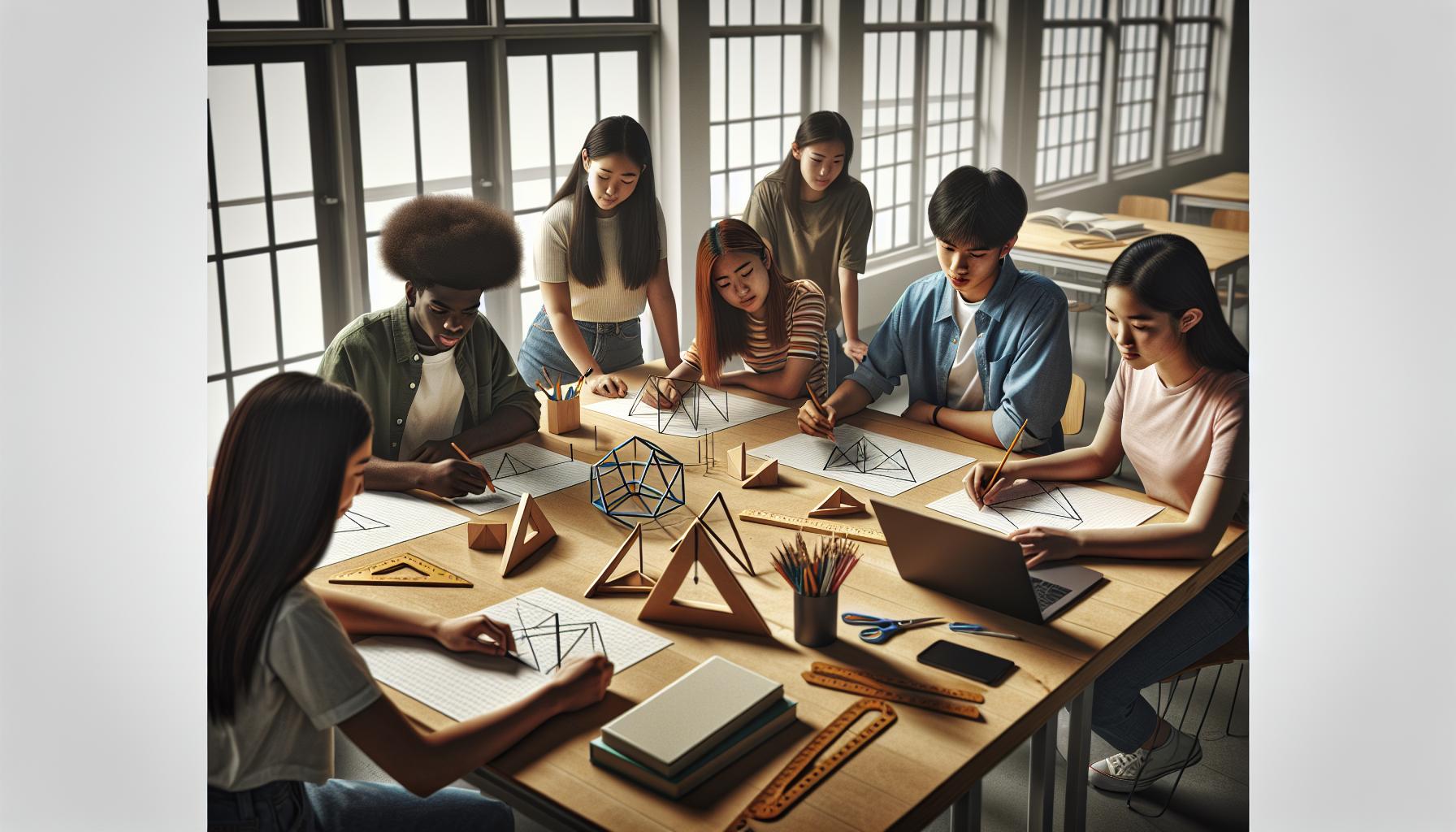
Project-Based Learning: A New Approach in Geometry
In the current educational landscape, project-based learning (PBL) has emerged as a transformative approach, especially in subjects like geometry. This method encourages students to engage deeply with mathematical concepts by applying them to real-world situations. Rather than simply memorizing formulas or algorithms, students embark on projects that require them to explore, design, and create, which cultivates a more profound understanding of geometric principles.
One effective aspect of PBL in geometry is its ability to bridge theoretical knowledge and practical application. For instance, projects such as designing a geometric park or creating a scale model of a building not only involve calculating area and volume but also necessitate critical thinking and problem-solving skills. These projects encourage collaboration among students, allowing them to share ideas and approaches, which enhances their learning experience. As they work together, they can tackle complex problems, fostering a sense of community and teamwork that is essential for success in any field.
Moreover, PBL aligns with different learning styles, accommodating visual, auditory, and kinesthetic learners. The hands-on nature of these projects allows students to visualize and manipulate geometric concepts, making them more accessible. For instance, using technology tools like CAD software or 3D printing can further enrich learning, giving students practical experience in applying geometry to modern design challenges. This integration of technology not only makes learning more engaging but also prepares students for future careers that demand these skills.
In summary, project-based learning in geometry is an innovative approach that offers multifaceted benefits. By focusing on real-world applications, it reduces the gap between abstract concepts and practical use, empowering students to become active learners who can navigate the complexities of mathematics and its applications in everyday life.
Benefits of Engaging Students Through Projects
Engaging students through project-based learning in geometry not only ignites their interest but also fosters deeper understanding of complex concepts. When students are involved in hands-on projects, they’re not just passive recipients of information; they become active participants in the learning process. For instance, designing a scale model of a historical monument requires them to apply geometric principles like proportion and symmetry, making the learning experience both practical and relevant.
These projects also cater to diverse learning styles, allowing students to explore geometry in ways that resonate with them. Visual learners benefit from the opportunity to see and manipulate shapes in a tangible way, while kinesthetic learners thrive through hands-on activities like constructing geometric figures with physical materials. This multisensory approach ensures that all students can grasp the fundamental concepts of geometry, leading to better retention and understanding.
Moreover, projects encourage collaboration and communication among peers, essential skills in today’s interconnected world. As students work in teams, they share ideas and problem-solve together, which not only enhances their mathematical skills but also builds social and teamwork competencies. Research shows that students who collaborate on projects are more likely to develop critical thinking skills, as they’re compelled to negotiate different viewpoints and approaches to reach a common goal.
In essence, project-based learning in geometry transforms abstract concepts into concrete experiences, preparing students for real-life applications. As they engage in projects that mirror real-world challenges, they develop problem-solving skills crucial for their future careers. This dynamic learning environment cultivates not just mathematical expertise but also the confidence to tackle complex problems beyond the classroom.
Effective Learning Methods in Geometry Education
Engaging students in geometry requires more than just traditional lectures; effective learning methods emphasize interaction, exploration, and application. One of the key strategies is integrating project-based learning (PBL), where students dive into real-world scenarios that require applying geometry concepts. For instance, a project might involve designing a sustainable park, where students calculate area, perimeter, and angles to optimize space. This hands-on approach not only solidifies their understanding but also makes learning relevant to their lives.
Another effective method is the use of manipulatives and technology. Tools like geometric modeling software or interactive geometry apps allow students to visualize and manipulate shapes, offering them insights into geometric properties and relationships. Using these resources can make abstract concepts tangible. For example, when students create digital models of 3D shapes, they can better appreciate volume and surface area calculations. This method caters to various learning styles, ensuring that visual, auditory, and kinesthetic learners all have the opportunity to engage meaningfully with the material.
Collaboration also plays a crucial role in effective learning. Group projects foster teamwork while allowing students to share diverse perspectives and ideas. This not only helps them to negotiate solutions but also strengthens their communication skills. For instance, group activities like constructing a scale model of a geometric figure can promote inquiry-based learning, where students must discuss and plan the project’s execution. Through dialogue, they refine their understanding and develop critical thinking skills as they encounter and resolve challenges together.
In summary, employing a variety of interactive methods-such as project-based learning, manipulatives, and collaborative work-can significantly enhance students’ understanding of geometry. These approaches create an engaging learning environment that encourages students to explore geometric concepts more deeply, ultimately equipping them with skills that extend beyond the classroom.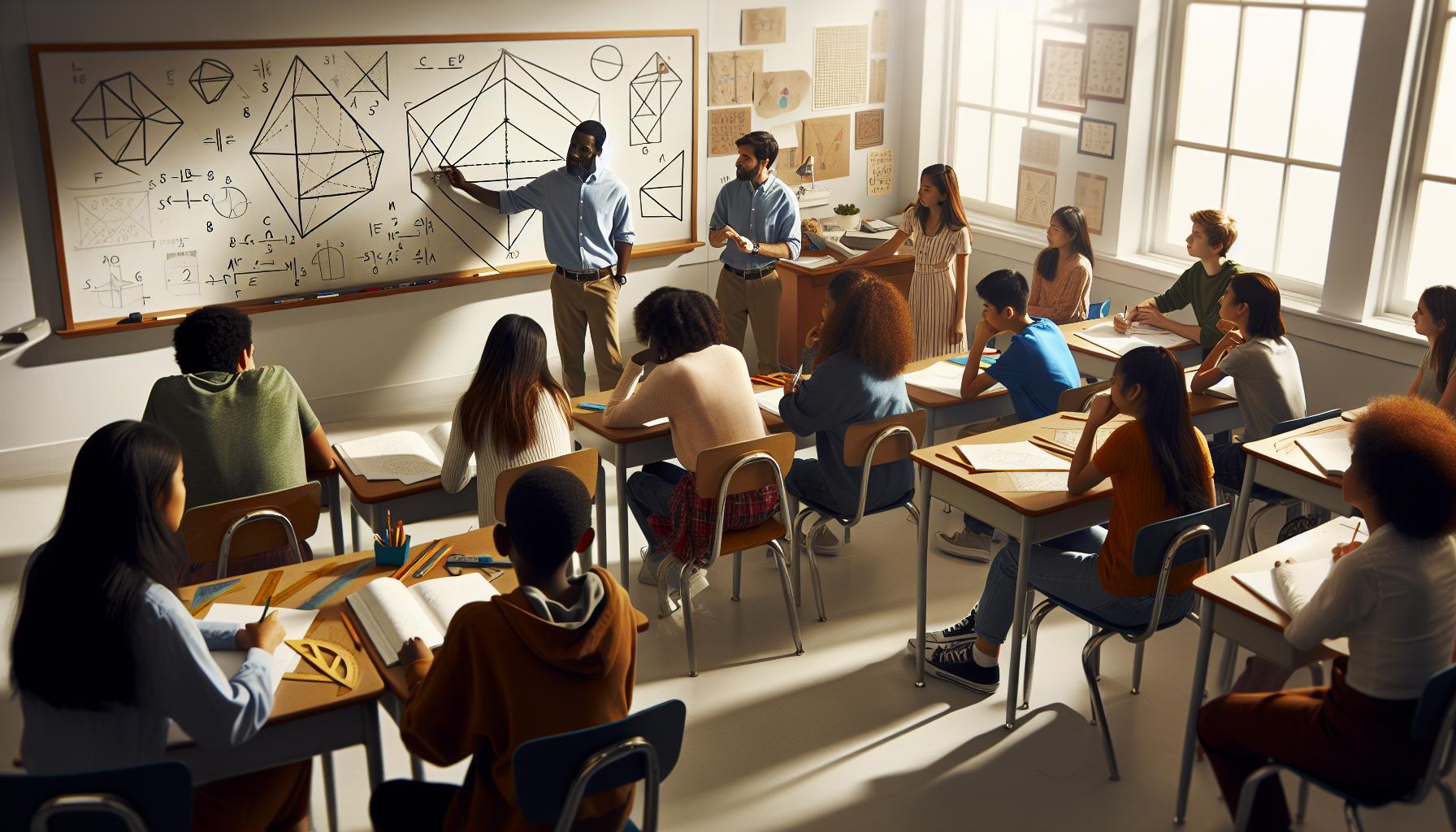
Integrating Technology in Geometry Projects
Integrating technology into geometry projects opens up a world of creative possibilities and enhances student engagement in ways that traditional methods often cannot. Modern tools provide students with the ability to visualize complex concepts, manipulate geometric figures dynamically, and collaborate more effectively, bringing a multisensory approach to learning geometry.
One powerful way to integrate technology is through the use of geometric modeling software. Programs like GeoGebra or SketchUp allow students to construct and explore geometric shapes in 2D and 3D environments. For example, a project where students create a scale model of a city can be dramatically enhanced using these tools. As students design buildings, they can calculate areas and volumes while visualizing their work in real time. This not only makes abstract concepts more concrete but also gives students immediate feedback on their calculations and designs. Additionally, being able to switch from a 2D layout to a 3D model enhances their understanding of dimensions and spatial relationships.
Another engaging technological resource is interactive geometry apps that run on tablets and smartphones. These apps often feature gamified elements to motivate learning. For instance, students might use an app to solve puzzles that require them to apply properties of angles, triangles, or circles. By encouraging exploration and problem-solving in an interactive format, these apps foster critical thinking and can appeal to various learning styles. Furthermore, students can share their results and collaborate with peers through these platforms, integrating social learning into technology use.
Creating Collaborative Virtual Environments
Online platforms such as Google Classroom or Microsoft Teams extend the concept of collaboration beyond the classroom. In geometry projects, these tools can facilitate group work where students share ideas, upload their designs, and provide feedback on each other’s work. For example, in a project to design a community park, one student might work on the layout, while another focuses on calculating the area of playgrounds and green spaces. By sharing their findings and combining their designs in a central hub, students learn to communicate their mathematical reasoning, further solidifying their understanding of geometric concepts.
Finally, leveraging virtual reality (VR) in geometry education can create immersive learning experiences. Programs that allow students to step into a 3D geometric environment can drastically enhance comprehension. Imagine students walking through a digitally constructed city where they can manipulate different structures and instantly see how changes affect area and volume. Such a sensory-rich experience not only deepens understanding but also makes mathematics feel relevant and exciting.
By thoughtfully integrating technology into geometry projects, educators can create dynamic learning experiences that inspire students to engage with mathematical concepts creatively and collaboratively. The future of geometry education lies in the harmonious blend of technology and innovative teaching strategies that empower learners to navigate complex geometric landscapes with confidence and curiosity.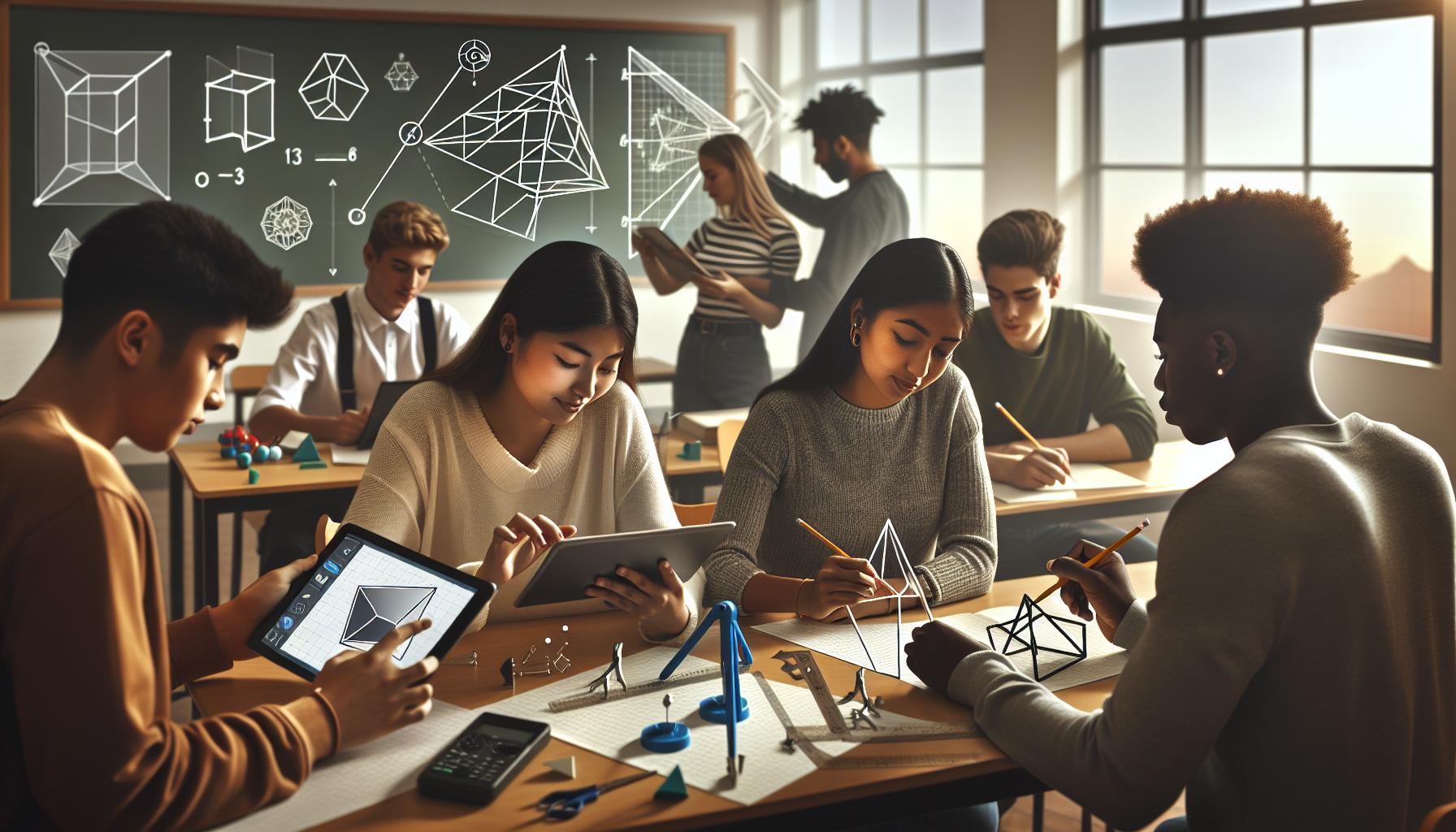
Real-World Applications of Geometry Skills
Understanding geometry is far more than just memorizing formulas and theorems; it’s a powerful skill set applied in countless real-world scenarios. From architecture and engineering to art and nature, the applications of geometric principles are vast and impactful. For instance, architects utilize geometry to create visually appealing and structurally sound buildings. They rely on geometric shapes to optimize space, ensure stability, and even enhance natural light in their designs. This connection between geometry and architecture can inspire students by showing them how their mathematical education translates into careers that shape our physical environment.
In the world of technology, geometry plays a crucial role in computer graphics and animation. Game designers and computer animators leverage geometric modeling to create 3D environments and characters. Understanding geometric transformations-such as scaling, rotation, and translation-is essential for developers working to create dynamic and engaging visual experiences. When students engage in projects that require them to design a game level or animate a character, they practice applying geometry in a context that is not only relevant but also exciting and current.
Applications in Daily Life
The practical use of geometry extends to more everyday tasks like home gardening or furniture arrangement. When planning the layout of a garden, for example, gardeners often use geometric shapes to maximize space and ensure their plants receive ample sunlight. Similarly, arranging furniture involves spatial reasoning where individuals assess dimensions and shapes to optimize comfort and functionality in living spaces. Projects that involve planning a room layout or a garden space can help students understand how geometry influences daily decisions, making learning relatable and directly applicable to their own lives.
Furthermore, technology-enhanced projects can vividly illustrate these applications. Consider a project where students use geometric software to design models for community upgrades-like parks or public spaces. This hands-on experience not only reinforces their understanding of geometric concepts but also illustrates their role in community planning, fostering civic responsibility and engagement. Real-world applications of geometry underscore the importance of this subject, equipping students with the tools necessary to navigate and shape the world around them effectively. By connecting classroom concepts to tangible experiences, project-based learning in geometry can inspire students to appreciate its relevance and utility throughout their lives.
Collaborative Learning: The Power of Team Projects
In project-based learning, collaborative team projects are not just beneficial; they are transformative. When students work together on geometry projects, they engage in a rich educational experience that fosters not only mathematical understanding but also essential interpersonal skills. Collaboration encourages students to share diverse perspectives, tackle complex problems collectively, and create solutions that they might not have arrived at working alone. This shared effort cultivates a sense of community, often leading to deeper investment in the project and enhanced outcomes.
One effective approach to structuring collaborative geometry projects is to assign roles based on individual strengths and interests. For example, in a project where students design a scaled model of a historical building, some can focus on calculations, while others handle the artistic representation. This division allows each member to contribute meaningfully, whether they excel in analytical thinking or creative design. Utilizing tools like design software or sharing platforms can further streamline collaboration, making it easier for teams to visualize and iterate on their ideas. By integrating technology into their teamwork, students learn to communicate effectively about complex concepts and methodologies, mirroring the professional environment they will encounter later in life.
Incorporating reflective practices is another key to enhancing collaborative learning. After completing a project, teams should take time to discuss what worked well and what could improve next time. This reflection reinforces the learning process and encourages a growth mindset, motivating students to take risks and embrace challenges in future projects. Furthermore, teachers can guide these discussions with targeted questions that prompt students to think critically about their collaborative experience, enhancing both their mathematical and cooperative skills.
Emphasizing the power of teamwork in project-based geometry learning not only prepares students for academic success but also equips them with vital life skills such as communication, problem-solving, and adaptability. As they navigate through team dynamics and learn from each other, students gain confidence and the ability to articulate their ideas, setting a strong foundation for their future endeavors in any field.
Step-by-Step Guide to Designing Geometry Projects
Designing effective geometry projects can transform classroom learning into an engaging and practical experience. When students are involved in hands-on projects, they not only apply geometric concepts but also cultivate critical thinking, problem-solving, and collaboration skills. Here’s a structured approach to creating projects that resonate with learners.
Define Clear Objectives
Begin by identifying the learning outcomes for your geometry project. What concepts do you want students to master? Whether it’s understanding the properties of shapes, calculating area and volume, or applying the Pythagorean theorem, make sure the objectives are specific, measurable, and aligned with curriculum standards. Clear goals help guide the project’s development and set expectations for students.
Choose Relevant and Engaging Topics
Select a theme that captures students’ interests and demonstrates the real-world application of geometry. For instance, have students design a model of a community park where they incorporate geometric shapes in play structures and landscaping. This allows them to explore concepts like symmetry, tessellation, and area while engaging in a project that feels relevant and meaningful.
Structure the Project to Foster Collaboration
To leverage collaborative learning, divide students into teams and assign roles based on their strengths. For example, one student can manage measurements and calculations, while another handles design and presentation. This not only encourages each student to contribute their unique skills but also mimics the diverse roles found in professional settings, enhancing the teamwork experience.
Plan for Assessment and Reflection
Establish criteria for assessing both the project deliverables and the collaborative process. Develop rubrics that evaluate aspects such as creativity, understanding of geometric concepts, and teamwork. Incorporate opportunities for reflection by having students present their projects and discuss the challenges they encountered, what they learned, and how they worked together. This reflective practice helps solidify their learning and prepares them for future projects.
By implementing these steps, educators can design geometry projects that not only reinforce mathematical understanding but also empower students with essential skills for success in and beyond the classroom.
Assessment Strategies for Project-Based Learning
To effectively assess project-based learning in geometry, it’s essential to go beyond traditional testing methods and embrace a multifaceted approach. Projects not only reveal students’ understanding of geometric concepts but also their creativity, collaboration, and problem-solving skills. A well-thought-out assessment strategy can transform these projects into valuable learning experiences, reinforcing students’ mastery of the subject while holding them accountable for their contributions.
Start by designing clear and comprehensive rubrics that outline specific criteria for evaluating student work. These rubrics should assess numerous dimensions, such as:
- Content Understanding: Evaluate how well students demonstrate knowledge of geometric principles and their application.
- Creativity and Innovation: Consider the originality of the project, including unique designs and solutions to problems.
- Collaboration: Assess how effectively team members work together, including communication and division of responsibilities.
- Presentation Skills: Look at how well students articulate their project ideas and findings, both verbally and visually.
Each area within the rubric should feature specific language detailing what constitutes exemplary, satisfactory, and needs improvement levels of performance. For example, a score of ‘4’ could indicate that the project exceeds expectations by demonstrating a deep understanding of geometric concepts and employing innovative thinking, while a ‘1’ might show minimal effort or understanding.
Incorporating self-assessment and peer review can further enrich the evaluation process. Encourage students to reflect on their contributions and the overall group dynamic through guided questions, such as:
- What challenges did you encounter during this project, and how did you address them?
- How did your team divide responsibilities, and what worked well in your collaborative efforts?
These reflective practices foster a growth mindset and allow students to pinpoint areas for personal and collective improvement.
Lastly, consider offering different forms of feedback throughout the project lifecycle, not just at its conclusion. Formative assessments, such as check-ins and progress reports, provide opportunities for ongoing feedback and adjustment. This approach helps students refine their work continuously, preparing them for a more robust final assessment and deepening their learning experience. By employing these strategies, educators can create a meaningful assessment environment that captures the rich learning outcomes of project-based geometry education.
Incorporating Differentiation in Geometry Tasks
In the realm of education, particularly in geometry, it’s increasingly recognized that students do not all learn in the same way. This understanding calls for differentiation-an approach that tailors learning experiences to meet the diverse needs of students. A compelling fact to consider is that differentiated instruction can enhance student engagement and learning outcomes, ensuring that every learner feels challenged and supported. By integrating various strategies and resources in project-based learning, educators can effectively cater to different learning styles, interests, and readiness levels.
To begin with, one effective method of differentiation involves providing students with choices in their project topics or the modes of expression they use to communicate their findings. For instance, while working on a project about geometric transformations, some students might choose to create a digital presentation using software like Google Slides, while others could design physical models or write a report describing their processes. This flexibility not only allows students to engage with the material in ways that resonate with their individual strengths but also fosters a sense of ownership over their learning.
Additionally, scaffolding is a powerful differentiation strategy in geometry tasks. By breaking down complex concepts into manageable steps, educators can support students who may struggle with more abstract ideas. For example, when introducing the concept of the Pythagorean theorem, teachers might first guide students through hands-on activities that illustrate right triangles, followed by visual aids that display the relationships within these triangles. This gradual progression enables all students, regardless of their initial skill levels, to grasp fundamental geometric principles before applying them in more challenging contexts.
Utilizing Group Dynamics
Collaborative projects are another avenue for differentiation. By strategically forming diverse groups, students can learn from one another’s strengths and perspectives. This peer interaction can be particularly beneficial in geometry, where visual-spatial reasoning varies significantly among learners. For example, a project that requires designing a park layout could pair students skilled in drafting with those excelling in spatial reasoning. Such collaboration encourages a rich exchange of ideas and techniques, resulting in a more comprehensive understanding of geometric concepts.
Ultimately, incorporating differentiation into geometry tasks enriches the learning environment, fostering an inclusive atmosphere where all students can thrive. Teachers who embrace this approach not only enhance student engagement but also equip their learners with crucial skills for collaboration and creative problem-solving, key competencies for both academic and real-world success.
Case Studies: Successful Geometry Projects in Action
In the evolving landscape of education, project-based learning (PBL) has emerged as a transformative approach, particularly in the realm of geometry. Successful implementations of PBL reveal not just the feasibility of engaging students meaningfully but also the profound impact on their understanding and retention of geometric concepts. A striking example comes from a high school geometry class tasked with designing sustainable urban spaces. Students collaborated in teams to create 3D models of parks that incorporated geometric principles and elements of environmental science. By utilizing software like SketchUp, they explored geometric transformations and spatial reasoning while actively engaging with real-world environmental issues. This not only led to a deeper understanding of geometry but also equipped students with a broader awareness of sustainability.
Another compelling case study arises from an elementary school setting, where students were engaged in a community project to design a new playground. They conducted surveys to gather input from peers and community members, fostering a sense of ownership and relevance in their work. As they mapped out the playground using geometric shapes and calculated area and perimeter, they encountered and overcame challenges such as maximizing space and ensuring safety standards. This interdisciplinary approach-combining geometry with social studies and community service-not only reinforced their mathematical understanding but also nurtured critical skills like teamwork and communication.
Key Takeaways from Successful Projects
The success of these projects hinges on several key factors:
- Real-World Context: Projects grounded in real-life scenarios enhance student engagement.
- Collaboration: Working in teams promotes peer learning and diverse perspectives.
- Use of Technology: Incorporating tools like CAD software facilitates hands-on learning and creates a dynamic learning environment.
- Ownership of Learning: Encouraging student-led inquiry fosters responsibility and motivation.
By analyzing these examples, educators can glean insights into the mechanics of effective project-based learning in geometry. Each project serves as a blueprint, illustrating how students can engage with mathematical concepts in meaningful ways that extend beyond traditional classroom walls. The lessons learned from these cases highlight the immense potential of PBL not only to teach geometry but to inspire a generation of critical thinkers ready to tackle complex problems in their communities and the world at large.
Resources and Tools for Project-Based Geometry
Engaging students in geometry through project-based learning can be significantly enhanced with the right resources and tools. When students have access to a variety of educational technologies and materials, their ability to explore geometric concepts increases, which in turn fosters deeper understanding and retention of the subject matter.
One of the most impactful tools for project-based geometry is computer-aided design (CAD) software, such as SketchUp or Tinkercad. These platforms allow students to visualize and manipulate geometric shapes in a three-dimensional space. By engaging with these digital tools, learners can create models that represent real-world structures or designs, reinforcing their understanding of spatial relationships and geometric principles. Projects could involve designing a small building or a piece of furniture, where students must calculate dimensions and analyze how different shapes fit together.
In addition to software, a wealth of online resources offers lesson plans, project ideas, and activity guides tailored specifically for geometry education. Websites such as Teachers Pay Teachers and Edutopia provide a plethora of materials that educators can adapt to their classroom needs. Furthermore, platforms like Nearpod and Kahoot! can facilitate interactive lessons where students can collaborate on geometry challenges or test their knowledge in engaging, game-like formats.
The integration of physical tools cannot be overlooked either. Basic supplies like geometric manipulatives, measuring tapes, and graph paper are essential for hands-on activities. These materials allow students to construct models, draw diagrams, and engage in problem-solving activities that deepen their comprehension of geometric concepts.
Ultimately, combining digital and physical resources creates a rich, multifaceted learning environment. To maximize the educational experience, educators can also encourage students to document their project processes and reflections, perhaps through a digital portfolio or blog. This practice not only enables students to track their learning journey but also emphasizes the importance of feedback and revision in the project-based learning framework.
Future Trends in Geometry Education and Engagement
As education evolves, so do the methods we use to engage students in subjects like geometry. Innovations in technology and pedagogy are paving the way for more interactive, personalized, and relevant learning experiences. One noteworthy trend is the shift towards blended learning environments, which combine traditional classroom teaching with online resources. This approach allows students to learn at their own pace and revisit complex concepts through digital content such as videos, interactive simulations, and collaborative online platforms.
Leveraging Virtual and Augmented Reality
One of the most exciting advancements is the use of virtual reality (VR) and augmented reality (AR) in geometry education. By immersing students in three-dimensional virtual environments, these technologies help demystify abstract concepts. For example, students can manipulate geometric shapes within a VR landscape, providing a visceral understanding of volume, area, and spatial relationships. AR applications can overlay geometric forms onto real-world environments, allowing students to visualize and measure dimensions in situ-such as measuring a room and using AR tools to design a layout based on geometric principles.
These interactive experiences not only enhance engagement but also cater to various learning styles, making geometry more accessible and enjoyable for all students. Imagine a student designing a geometric garden in a virtual setting, where they apply concepts of symmetry, area, and perimeter in a tangible and visually appealing way.
Cross-Disciplinary Approaches
Another trend gaining traction is the integration of geometry with other disciplines, such as art, history, and science, commonly referred to as STEM/STEAM education (Science, Technology, Engineering, Arts, and Mathematics). This approach helps students see the relevance of geometry in real-world contexts. For instance, projects that explore the mathematical symmetry in Islamic art or the geometric principles of architectural design can provide students with a richer, more engaging learning experience. By connecting geometry to various fields, educators can foster creativity and critical thinking, enabling students to apply their knowledge in diverse and practical ways.
In addition, project-based learning is becoming increasingly collaborative, utilizing online platforms for teamwork among students from different geographic locations. This not only enhances communication skills but also exposes students to diverse perspectives, enriching their learning experience. By working on projects that address real-world problems, such as designing sustainable buildings or analyzing geometric patterns in nature, students develop a sense of purpose and agency in their learning.
These trends signify a move towards a more holistic and engaging approach to geometry education, one that prepares students for the challenges of the future while fostering a genuine love for learning in mathematics. By embracing these innovations, educators can create dynamic, relevant, and effective learning experiences that resonate with students today.
Faq
Q: What are the key benefits of project-based learning in geometry?
A: Project-based learning (PBL) enhances engagement by connecting geometry concepts to real-world applications. It fosters critical thinking, improves collaboration skills, and encourages students to take ownership of their learning. Implementing projects can also improve retention of geometric principles as students apply them creatively in tangible tasks.
Q: How can technology enhance geometry projects?
A: Integrating technology in geometry projects can provide interactive tools such as 3D modeling software and online simulations. These resources allow students to visualize complex concepts and collaborate effectively. Additionally, technology supports diverse learning styles, ensuring all students can engage with the material meaningfully.
Q: What are effective assessment strategies for project-based geometry learning?
A: Effective assessment strategies include rubrics that evaluate both the process and the final project outcomes. Incorporating peer assessments and self-reflections can also provide comprehensive insights into students’ understanding. This approach encourages accountability and critical thinking as students learn from feedback.
Q: How can differentiation be incorporated in geometry project assignments?
A: Differentiating geometry project assignments involves tailoring tasks to meet varying skill levels and learning styles. Offering choices in project topics or formats, such as visual presentations, models, or written reports, allows each student to engage meaningfully. Flexible grouping also promotes collaboration among diverse learners.
Q: Why is collaboration important in geometry project-based learning?
A: Collaboration is crucial in geometry project-based learning as it cultivates teamwork skills and exposes students to different perspectives. Working in groups encourages dialogue, enhances problem-solving abilities, and fosters a deeper understanding of geometric concepts through shared knowledge and experience.
Q: When is the best time to implement project-based learning in geometry?
A: The best time to implement project-based learning in geometry is when students have a foundational understanding of key concepts. Initiating projects after teaching essential geometric principles allows students to explore and apply what they’ve learned, reinforcing their knowledge through practical experience.
Q: Where can educators find resources for project-based geometry learning?
A: Educators can find resources for project-based geometry learning through online platforms, educational websites, and collaborative teaching communities. Resources may include ready-made project templates, lesson plans, and case studies of successful projects. Exploring these can provide valuable inspiration and practical guidance.
Q: What skills can students develop through project-based geometry?
A: Students can develop a variety of skills through project-based geometry, including critical thinking, problem-solving, and analytical skills. Additionally, they learn to manage projects, communicate ideas effectively, and work collaboratively, all of which are essential for academic success and future career opportunities.
The Way Forward
Project-Based Geometry empowers learners to actively engage with mathematical concepts through hands-on applications and collaborative problem-solving. By applying these effective learning methods, students not only grasp geometrical principles but also enhance critical thinking and teamwork skills that are vital in today’s educational landscape. Don’t miss the opportunity to deepen this knowledge-explore our resources on interactive geometry tools and techniques to further enrich your learning experience.
Take the next step towards mastery in geometry by subscribing to our newsletter for ongoing tips and strategies, or check out our collection of case studies showcasing successful project implementations. Join the conversation by sharing your experiences in the comments below; your insights could inspire another educator or student! Continue enhancing your skills and expertise-delve into related topics, like Geometry-Based Learning Activities and Collaborative Classroom Practices, to keep your educational journey dynamic and impactful!


