Did you know that understanding how heat transfer works can significantly impact everything from cooking techniques to engineering designs? At its core, heat transfer refers to the movement of thermal energy from one object to another, driven by temperature differences. Misunderstanding this essential concept can lead to inefficient energy use, faulty designs, or even safety hazards. Whether you’re a student eager to grasp the basics or a professional looking to optimize your projects, knowing which way heat transfers-conduction, convection, or radiation-can enhance your practical skills and improve outcomes. This article will unravel the intricate principles behind thermal direction, empowering you to apply this knowledge in real-world scenarios. Let’s dive into the fascinating world of heat transfer and discover how it shapes our everyday lives!
Understanding the Basics of Heat Transfer
Heat transfer is a fundamental concept that influences a vast array of fields from engineering to environmental science. At its core, heat transfer is the movement of thermal energy from one object, or system, to another, driven primarily by temperature differences. Understanding the basics of this process is essential for grasping how energy flows in various applications, whether it’s in designing a more efficient heating system or understanding weather patterns.
The three primary modes of heat transfer-conduction, convection, and radiation-each operate under different mechanisms but ultimately achieve the same end: the equilibration of temperature. Conduction occurs when heat is transferred through direct contact between molecules in solids. For instance, when a metal spoon is placed in a hot pot of soup, thermal energy moves from the hot soup to the cooler spoon, heating it up as the molecules collide. Convection, on the other hand, involves the transfer of heat through fluid motion. This is evident in how warm air rises and cool air sinks, creating a circulatory flow that warms a room. Radiation is unique as it doesn’t require a medium to transfer heat; thermal energy travels through electromagnetic waves, such as sunlight warming your skin on a sunny day.
In practical terms, the effectiveness of heat transfer can depend heavily on the materials involved. Metals, for example, are excellent conductors of heat due to their free electrons, while insulators like wood and plastic resist heat flow. This insider knowledge can guide engineers and architects in choosing materials for thermal management, impacting everything from household heating to spacecraft design. As technology evolves, the ongoing development of advanced materials, such as aerogels and phase-change materials, promises even greater efficiency in controlling heat transfer, highlighting the continuous interplay between science and practical application.
Understanding these principles not only enhances our grasp of energy efficiency but also deepens our appreciation for natural phenomena. For instance, wildlife relies on these heat transfer mechanisms; animals like polar bears have insulating fur to minimize heat loss in frigid environments, while others, like reptiles, use basking in the sun to regulate their body temperatures. Whether it’s the engineered systems sustaining human life or the intricate adaptations of nature, the fundamentals of heat transfer are crucial in navigating the world around us.
The Science Behind Thermal Direction
Heat transfer is a fascinating phenomenon that dictates how thermal energy moves from one body to another. Central to understanding this process is recognizing the direction in which heat flows, which is fundamentally dictated by temperature gradients. In simple terms, heat always travels from a hotter object to a cooler one until thermal equilibrium is reached. This directional flow is not just a theoretical concept; it has profound implications in daily life, engineering, and even natural ecosystems.
To grasp the nuances of thermal direction, it’s essential to consider the three primary modes of heat transfer: conduction, convection, and radiation. Each mode operates under specific principles but shares the same ultimate goal of energy redistribution. For instance, in conduction, heat moves through direct contact at the molecular level. When you touch a hot cup of coffee, heat transfers from the cup (at a higher temperature) to your hand (at a lower temperature). In contrast, convection involves the movement of fluids-think of how warm air rises and cool air fills in, creating circulation patterns that efficiently distribute heat. Radiation, on the other hand, is the mechanism through which energy travels in waves; this is how sunlight warms the Earth, operating independent of a medium.
Understanding these mechanisms allows for better predictions and applications in various fields. Engineers design heating and cooling systems with thermal direction in mind to optimize energy use, while architects consider building placement to maximize natural heating from the sun. Even in wildlife, animals have adapted their behaviors and physical traits to manage heat; for instance, nocturnal creatures avoid the heat of the day, while desert species have evolved to exploit thermal gradients to maintain their body temperatures.
Recognizing how these principles of heat transfer play out in real-world scenarios not only enhances our technological advancements but also promotes deeper insights into the natural world. Whether you’re designing a home, studying environmental patterns, or engaging in energy management, understanding the science of thermal direction opens up a myriad of possibilities for innovation and efficiency.
Conduction, Convection, and Radiation Explained
When it comes to understanding how heat is transferred, the three main mechanisms-conduction, convection, and radiation-play crucial roles in our everyday lives. Each of these methods follows distinct principles, yet they all center around the same fundamental concept: the movement of thermal energy from higher to lower temperatures. Understanding these modes can empower us to optimize heating and cooling systems, better design our environments, and improve energy efficiency.
Conduction
Conduction is the process by which heat transfers through direct contact between materials. Imagine a metal spoon placed in a hot pot of soup; as the spoon heats up, the thermal energy moves from the hot soup to the cooler spoon. This occurs at the atomic level: hotter, faster-moving molecules collide with neighboring cooler molecules, transferring energy in the process. The efficiency of conduction depends on the material’s properties – metals, for example, are excellent conductors due to their free electrons, while materials like wood or plastic serve as insulators.
Practical applications of conduction abound. For instance, when designing kitchen tools, selecting materials with high thermal conductivity can ensure rapid heating or cooling, such as using copper pots for efficient cooking. Conversely, understanding insulation can help reduce heat loss in homes, promoting energy efficiency and comfort.
Convection
Convection differs significantly as it involves the movement of fluids-liquids and gases. This mode of heat transfer occurs when warmer parts of a fluid rise and cooler parts sink, creating a circulating flow. A common example is boiling water: as the water at the bottom heats up, it rises, while cooler water descends to take its place, forming a continuous circulation pattern.
Engineers utilize this principle in various ways, from designing radiators that heat homes efficiently to optimizing cooling systems in electronics. Moreover, understanding convection is vital for natural phenomena as well, like ocean currents and atmospheric weather patterns, which are driven by temperature differentials on a large scale.
Radiation
Radiation is unique among the heat transfer methods because it does not require a medium; heat can travel through the vacuum of space. Thermal radiation occurs as energy is emitted in the form of electromagnetic waves, primarily infrared radiation. A familiar example is the warmth you feel from the sun on your skin despite the cold air around you.
In practical terms, radiation has led to innovations in energy-efficient heating systems, such as radiant floor heating, where warmth is distributed through surfaces rather than via air movement. Understanding radiation is also essential in fields like astronomy, where interpreting the heat signatures of distant stars can reveal much about their composition and distance.
In summary, each method of heat transfer-conduction, convection, and radiation-offers unique characteristics and applications that can influence both our day-to-day experiences and broader scientific inquiries. By grasping these concepts, we can better harness thermal energy in our lives, enhancing both comfort and efficiency.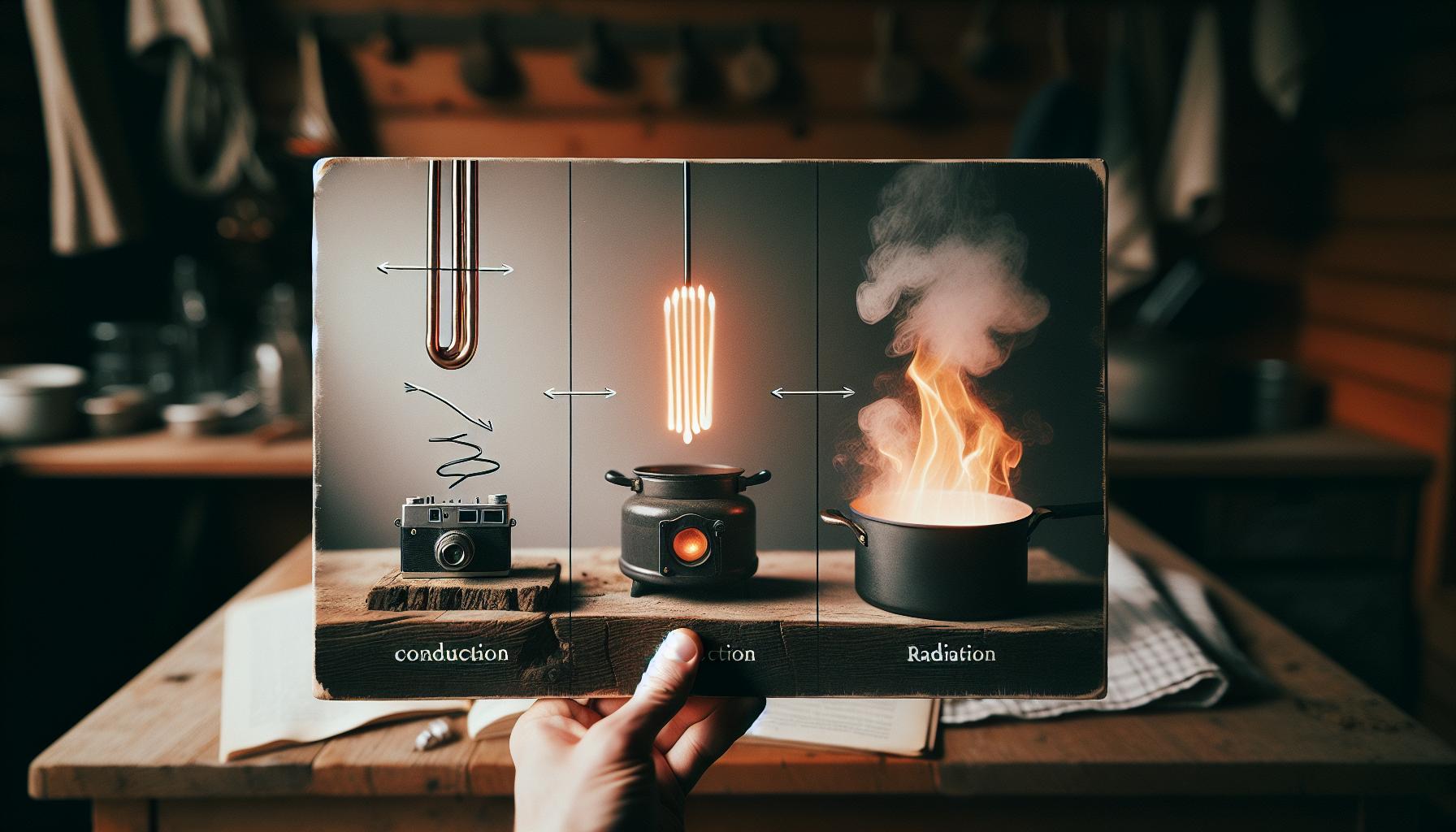
How Temperature Differences Drive Heat Flow
Temperature differences are the essential driving force behind heat flow, dictating how and why thermal energy moves through various systems. At its core, heat transfer occurs naturally in response to gradients: energy flows from areas of high temperature to regions of lower temperature until thermal equilibrium is reached. This principle is foundational in a range of real-world applications, from everyday cooking techniques to sophisticated climate control systems.
Understanding the mechanics behind this flow entails recognizing the nature of thermal energy itself. For instance, when you place a hot pan on a cooler countertop, heat rapidly transfers from the pan to the surface until both reach a similar temperature. This basic interaction showcases how significantly temperature imbalances influence the rate and direction of heat flow. The steeper the temperature gradient, the faster the rate of heat transfer will be, following Fourier’s law of conduction, which quantifies this relationship in mathematical terms. Essentially, the flow of heat can be considered analogous to the flow of water-higher elevations (in this case, higher temperatures) will naturally seek to equalize with lower elevations (lower temperatures).
The implications of these temperature differences stretch into numerous domains. In engineering, temperature control is critical, whether designing engines to ensure optimal thermal efficiency or developing refrigeration systems that prevent overheating. In building design, architects utilize thermal mass-materials that store heat-to stabilize indoor temperatures, effectively managing heat flow to enhance energy efficiency. As such, comprehending is indispensable for innovations aimed at improving energy management and sustainability.
Furthermore, real-life scenarios illustrate the impact of thermal gradients. Take a simple example: when the sun heats the ground during the day, this heat is subsequently transferred to the air above it, raising the air temperature and creating a convection current. This current not only affects local weather patterns but also drives larger climatic systems. By harnessing these natural phenomena, technologies are being developed to optimize heat exchange processes, such as solar thermal collectors that convert sunlight into usable thermal energy, embodying the harnessing of temperature differentials for practical ends. Understanding these dynamics equips us to create smarter technology and sustainable solutions in an energy-conscious age.
Real-Life Applications of Heat Transfer
In our daily lives, heat transfer is not just a scientific principle; it is a phenomenon that governs various practical applications from cooking to climate control. For instance, when you bake bread, heat conduction transfers energy from the oven walls to the dough. This process is crucial for achieving that golden crust and soft interior. Similarly, the concept of convection comes into play when sautéing vegetables, as hot oil circulates and ensures even cooking, demonstrating how heated substances move throughout a medium.
Applications in Engineering
In engineering, understanding heat transfer leads to innovative designs that improve efficiency and performance. For example, in automotive engineering, managing the thermal energy in an engine is vital for preventing overheating and ensuring smooth operation. Engineers utilize cooling systems, which often include radiators and coolant fluids, to transfer heat away from the engine effectively. This showcases how the principles of conduction and convection are employed to enhance vehicle longevity and safety.
Building Design and Energy Efficiency
Architects and builders are increasingly considering heat transfer when designing energy-efficient homes. They strategically use materials with high thermal mass, like concrete and brick, which absorb and retain heat during the day and slowly release it at night. This technique reduces the need for artificial heating and cooling, leading to significant energy savings. Moreover, passive solar design harnesses heat from sunlight, directing it into spaces that require warmth while minimizing heat loss through insulation and window placement.
Tech Innovations
Cutting-edge technologies are capitalizing on the principles of heat transfer to create sustainable solutions. For example, solar thermal collectors leverage sunlight to produce heating energy, utilizing the heat transfer process to convert solar radiation into usable thermal energy for residential or industrial needs. Innovations in nanotechnology are also paving the way for advanced materials with improved thermal properties, enabling more effective heat management systems in electronics and aerospace industries.
In summary, recognizing how heat moves affects many aspects of our lives-from the kitchen to complex engineering designs. As technology progresses, the importance of understanding thermal dynamics will only grow, guiding us towards more efficient and sustainable practices.
The Role of Material Properties in Heat Transfer
Understanding how materials influence heat transfer is fundamental to harnessing this process effectively. Both natural and engineered materials showcase unique properties that can significantly alter thermal conductivity, specific heat, and thermal mass. For instance, metals such as copper and aluminum are known as excellent conductors, making them ideal for applications that require efficient heat dissipation, such as in electronics and cooking utensils. In contrast, materials like wood and fiberglass demonstrate lower thermal conductivity, serving as effective insulators in buildings and appliances, thereby reducing unwanted heat loss.
Several factors determine a material’s ability to conduct heat. Thermal conductivity is the primary characteristic that dictates how quickly heat can be transmitted through a substance. This property depends on the material’s structure, arrangement of particles, and bonding. For example, diamond, despite being a non-metal, has an exceptionally high thermal conductivity due to its strong covalent bonding. Understanding this property allows architects, engineers, and manufacturers to select materials that either promote or restrict heat flow according to specific needs.
Material specific heat capacity also plays a significant role in thermal management. This is the amount of heat per unit mass required to raise the temperature of a material by one degree Celsius. Materials with high specific heat can absorb and store more energy without significant temperature changes, making them valuable in applications that require thermal stability. Water is a prime example of a substance with high specific heat, often employed in thermal regulation systems where consistent temperatures are crucial, such as in nuclear reactors or climate control systems in buildings.
Another aspect to consider is thermal mass, which refers to a material’s ability to absorb and retain heat. Builders and architects leverage this property when designing energy-efficient structures. For instance, a building with high thermal mass, like one made from concrete or brick, can absorb heat during the day and release it at night, helping to stabilize temperatures without excessive reliance on heating or cooling systems. By understanding these material properties and their implications in real-world applications, we can create more energy-efficient solutions that optimize heat transfer in everyday scenarios.
Misconceptions about Heat Transfer Direction
Heat transfer is a fundamental concept that often leads to confusion about its direction. A common misconception is that hot objects inherently emit heat in all directions equally until they reach thermodynamic equilibrium. While it’s true that heat flows naturally from hot to cold due to the second law of thermodynamics, the pathways and methods of this transfer can be more nuanced than simply “hot to cold.”
One major misunderstanding is related to the mechanisms of heat transfer-conduction, convection, and radiation. For instance, many people believe that all heat transfer occurs only through direct contact. While conduction is a significant mode in solid materials (think of a metal spoon getting hot from resting in a pot of boiling water), convection is vastly influential in fluids (like warm air rising from a heater). Similarly, radiation can occur across a vacuum, reflecting how the sun heats the Earth even though space between them is cold. Recognizing these various mechanisms allows for a better understanding of how heat is transferred and emphasizes that the direction of heat transfer is influenced by context and environment.
Another point of contention revolves around the idea that insulating materials only prevent heat loss without accounting for how they manage heat flow. Insulators don’t stop heat transfer; instead, they slow it down. For example, a thermos bottle significantly reduces heat transfer through poor conductivity, ensuring beverages retain their desired temperature for extended periods. Yet, it is critical to understand that heat will still flow out of a hot drink into a colder environment over time; it just does so at a much slower rate.
By appreciating these insights into heat transfer direction-recognizing its pathways, mechanisms, and the role of insulation-individuals can make more informed decisions in various real-world applications. Whether you’re designing energy-efficient buildings, developing cooling systems, or simply selecting appropriate cooking tools, grounding your understanding of heat transfer in scientific principles rather than misconceptions will lead to better outcomes and efficiency.
The Impact of Surroundings on Thermal Movement
The flow of heat is not only governed by the temperature difference between objects but is also significantly affected by the surrounding environment. Understanding this concept can enhance the effectiveness of heat transfer applications in various fields, from engineering to everyday life. For example, consider how a metal spoon left in a hot pot absorbs heat quickly. The spoon’s material properties, coupled with the surrounding temperature of the pot and air, critically influence the rate of heat transfer. The heat doesn’t travel in isolation; it interacts with everything around it, modulating its path and intensity.
Factors Affecting Heat Transfer in Surroundings
Several key factors in a surrounding environment determine how heat moves. First, the medium of transfer plays a crucial role. In a vacuum, there’s no medium for convection, so heat transfer occurs only through radiation, such as solar heating of a spacecraft. Conversely, in fluids (liquids and gases), convection currents can significantly speed up heat transfer. For instance, when boiling water, warm water rises while cooler water sinks, creating a continual flow that enhances heat distribution.
Another factor to consider is temperature gradients. A stark contrast in temperatures between an object and its surroundings will lead to a more rapid transfer of heat. For example, a heat sink used in electronics relies on ambient air to dissipate heat from the device. If the surrounding air is cooler, the heat transfer away from the device accelerates, prolonging its lifespan. On the other hand, in an insulated environment, even a small temperature difference might lead to slower heat loss or gain due to the reduced thermal gradient.
Real-World Implications of Surroundings
The impact of surroundings extends into many practical applications. In architecture, understanding heat movement through walls, windows, and roofs can lead to energy-efficient designs. Using materials with high thermal mass, such as concrete, can absorb heat during the day and release it at night, stabilizing indoor temperatures without excessive energy consumption.
Moreover, the design of HVAC systems takes into account heat transfer efficiency based on surrounding factors like insulation levels, airflow patterns, and external temperatures. A well-designed system can minimize energy use while maintaining comfort. Everyday scenarios, such as cooking, also highlight how surroundings affect heat transfer. The choice of cookware, the type of heat source, and even the cookware’s color can optimize or hinder cooking efficiency.
By recognizing and responding to how the environment influences thermal movement, one can harness this knowledge in practical situations-making conscious decisions about materials, spatial arrangements, and energy usage to enhance thermal efficiency and reduce waste. Understanding this interplay not only creates efficiencies but also contributes to more sustainable practices in thermal management.
Heat Transfer in Everyday Life Scenarios
To understand heat transfer in everyday life, consider this: every time you walk into a kitchen, you’re witnessing dynamic thermal interactions. Whether it’s the heat emanating from a freshly baked loaf of bread or the way ice melts on a countertop, these everyday scenarios provide vital lessons about how heat flows in our environment.
In cooking, the principles of conduction, convection, and radiation come into play simultaneously. For instance, when you cook an egg in a frying pan, the heat conducts directly from the pan to the egg. However, the surrounding air also plays a role through convection, as warmer air rises and cooler air descends, affecting how evenly the egg cooks. Choosing the right cookware can enhance this process; for example, a heavy-bottomed pan distributes heat more evenly, preventing hot spots that can lead to uneven cooking. Additionally, coverings like lids can trap heat and moisture, which further influences cooking efficiency.
Beyond the kitchen, heat transfer principles are crucial in our homes. The design of HVAC systems is a powerful example. Engineers optimize these systems by analyzing how air moves and where heat loses occur due to drafty windows or poorly insulated walls. For instance, adding insulation can significantly decrease energy expenditure by reducing unwanted heat exchange, keeping warm air in during winter months and blocking the summer heat. Selecting energy-efficient windows with low-emissivity (low-E) coatings can also enhance thermal performance, reflecting infrared light and keeping indoor temperatures stable.
In the realm of personal comfort, understanding how heat transfer affects our daily experiences can lead to more informed choices. For instance, wearing lighter, breathable fabrics in hot weather allows sweat to evaporate more efficiently, cooling the body through convection. In winter, opting for darker colors can absorb more sunlight, helping to retain warmth. Even our choice of beverages can illustrate heat transfer. For example, a ceramic mug retains heat longer than a metal one, enabling your coffee to stay warm as you savor it at a leisurely pace.
By recognizing these principles at play in daily life, you can make choices that enhance comfort, improve energy efficiency, and even elevate culinary successes. Heat transfer is not just a scientific concept; it’s an essential aspect of how we live and interact with our environment every day.
Advanced Concepts in Thermal Dynamics
Heat transfer is a phenomenon that goes beyond mere theory; it’s intricately linked to real-world dynamics and innovations in technology. At its core, understanding this process is vital for enhancing everything from household comfort to industrial efficiency. One of the most fascinating concepts within thermal dynamics is the effective manipulation of heat through materials and systems, which can lead to significant energy savings and performance improvements.
A key element in advanced heat transfer is thermal conductivity, which measures how quickly heat passes through a material. For example, metals are generally good conductors due to their free electrons that facilitate efficient thermal transfer. In contrast, insulators like wood or foam are designed to resist heat flow, making them ideal for maintaining desired temperatures in buildings. Engineers often use materials with varying thermal conductivities strategically in applications such as heat exchangers-devices that transfer heat between two or more fluids-where optimizing the flow and contact surfaces is crucial for efficiency.
The concept of phase change is another advanced area that plays a vital role in thermal dynamics. Materials can absorb or release substantial amounts of energy as they change from solid to liquid or gas. For instance, phase change materials (PCMs) are used in thermal energy storage systems. They can store excess heat generated during the day and release it at night, smoothing out temperature fluctuations and reducing the need for heating or cooling. This ability is not only practical for energy conservation but also essential in improving thermal comfort in residential and commercial buildings.
In conclusion, exploring the advanced concepts of thermal dynamics opens doors to innovative applications that redefine energy efficiency. Researchers and engineers continue to push the boundaries by developing smart materials and systems that adapt in real-time to changing thermal environments. Whether applied in renewable energy systems, building design, or everyday gadgets, understanding and harnessing heat transfer can lead to both economic and environmental benefits, making it an exciting field for researchers and practitioners alike.
Innovations in Heat Transfer Technology
The field of heat transfer technology has seen remarkable advancements, driving efficiency and creating sustainable solutions across various domains. One standout innovation is the development of thermoelectric materials. These materials convert heat directly into electricity and are gaining traction in waste heat recovery systems. For example, industries can leverage these materials to capture waste heat from processes, such as in power plants or manufacturing facilities, converting energy that would otherwise be lost into usable power, thus improving overall energy efficiency.
Another significant breakthrough is the implementation of nanofluids-suspensions of nanoparticles in conventional heat transfer fluids. These fluids exhibit enhanced thermal properties, such as increased thermal conductivity, which allows for more effective heat transfer in applications ranging from cooling systems in electronics to enhanced performance in heating and cooling units. For instance, in a typical radiator, replacing conventional water with a nanofluid can significantly reduce the energy required to achieve the same cooling effect, showcasing a practical application that benefits users in both industrial and residential settings.
In the realm of smart materials, phase-changing microcapsules are another exciting innovation. These microcapsules contain phase-change materials (PCMs) that can absorb and release heat as they transition between solid and liquid states. Their integration into building materials creates environments that can autonomously regulate temperature, absorbing excess heat during the day and releasing it at night. This not only enhances thermal comfort but also contributes significantly to energy savings, particularly in climates that experience substantial temperature fluctuations.
The future of heat transfer technology is also trending towards dynamic thermal management systems. These systems utilize advanced sensors and algorithms to continuously monitor and adjust thermal properties in real time. For instance, incorporating machine learning algorithms can optimize HVAC systems for maximum efficiency, reducing energy consumption by adjusting heating and cooling parameters based on occupancy and external weather conditions. This represents a leap forward in energy management, ensuring optimal performance and sustainability.
As these innovations unfold, they provide not just theoretical improvements but also practical solutions that enhance energy efficiency, reduce waste, and ultimately lead to more sustainable practices across various sectors. The intersection of technology and thermal dynamics opens pathways for further explorations, ensuring that the future of heat transfer technology remains vibrant and impactful.
Future Trends in Thermal Management
The future of thermal management promises to redefine how we understand and implement heat transfer principles across various sectors. As our technology advances, the integration of smart systems into thermal management is increasingly vital. These systems leverage real-time data and analytics to inform efficient regulation of temperature, ensuring optimal thermal comfort in settings such as homes, commercial buildings, and even electric vehicles. For example, imagine an HVAC system that not only adjusts based on temperature but also learns from your interactions and preferences, using predictive algorithms to ensure energy-efficient operation tailored to your lifestyle.
Smart Materials Revolution
Emerging smart materials are playing a critical role in future thermal management strategies, particularly phase change materials (PCMs). These materials can absorb, store, and release heat effectively during their transition between solid and liquid states. By embedding these PCMs in construction materials, buildings can naturally regulate temperature, improving energy efficiency considerably. This approach is particularly beneficial in regions with extreme temperature variations, where buildings can maintain comfortable conditions with minimal energy use, effectively reducing reliance on traditional heating and cooling systems.
Nanotechnology and Enhanced Fluids
Nanotechnology is another frontier poised to impact thermal management significantly. The development of nanofluids, which are engineered fluids infused with nanoparticles, enhances thermal conductivity and heat transfer efficiency. Their application in cooling systems can lead to reduced energy consumption compared to conventional fluids. For instance, utilizing nanofluids in automotive cooling systems increases performance and can lead to lighter, smaller, and more efficient designs, offering considerable improvements in fuel efficiency and engine performance.
Integration with Renewable Energy Sources
Finally, the integration of thermal management systems with renewable energy sources is set to become a norm rather than an exception. Utilizing solar thermal energy in buildings and utilizing advanced thermal storage techniques can maximize the effectiveness of harnessed energy, contributing to a more sustainable energy ecosystem. This synergy reflects a shift towards greener energy solutions, aligning with global efforts to reduce carbon footprints and address environmental challenges. By adopting these innovative approaches, industries and consumers alike can actively participate in creating a more energy-efficient future, where heat transfer principles work harmoniously with cutting-edge technology.
Frequently asked questions
Q: What are the three main methods of heat transfer?
A: The three primary methods of heat transfer are conduction, convection, and radiation. Conduction occurs through direct contact between materials, convection involves the movement of fluids, and radiation is the transfer of energy through electromagnetic waves without a medium.
Q: How does temperature difference influence heat transfer?
A: Heat transfer occurs from areas of higher temperature to areas of lower temperature. This temperature gradient drives the flow of heat, enhancing the rate of transfer until thermal equilibrium is reached between the two regions.
Q: Why is understanding thermal conductivity important?
A: Thermal conductivity determines how quickly heat transfers through materials. Understanding this property allows for the efficient selection of materials in applications like insulation, cooking, and electronics, optimizing energy use and operational safety.
Q: In what ways does convection differ from conduction?
A: Convection involves the movement of heat through fluids (liquids and gases), whereas conduction requires direct contact between solid materials. Convection often results in more effective heat transfer due to the bulk movement of fluid.
Q: What factors affect heat transfer in everyday appliances?
A: Heat transfer in appliances is influenced by factors such as material properties, temperature difference, surface area, and the mode of heat transfer. For instance, materials with high thermal conductivity will transfer heat more efficiently, impacting appliance effectiveness.
Q: How do surface conditions impact heat transfer?
A: Surface conditions, such as texture and cleanliness, significantly impact heat transfer. Rough surfaces can enhance turbulence in convection, while clean, smooth surfaces often allow for better radiation heat transfer due to minimized thermal barriers.
Q: What role does thermal equilibrium play in heat transfer?
A: Thermal equilibrium occurs when two objects reach the same temperature, halting heat transfer between them. Understanding this concept is critical in applications where controlling temperature differences is necessary, such as in thermal management systems.
Q: How does insulation work to reduce heat transfer?
A: Insulation materials work by minimizing heat transfer through conduction and convection. Insulating materials often have low thermal conductivity, trapping air or creating barriers that slow down the flow of heat, thus improving energy efficiency.
In Summary
Understanding the direction of heat transfer is crucial for applications in thermodynamics and everyday life, from household insulation to industrial processes. Now that you’ve grasped the key principles of thermal direction, it’s time to put your knowledge into action. Whether you’re looking to optimize energy efficiency at home or dive deeper into advanced heat transfer concepts, we have the resources to assist you. Check out our articles on “The Basics of Thermal Conductivity” and “Implementing Effective Insulation Solutions” for further insights.
Don’t miss out on enhancing your skills-subscribe to our newsletter for the latest updates and tips in thermodynamics. If you have questions or insights to share, feel free to comment below; we love engaging with our community! Remember, the more you explore, the more you’ll learn about the fascinating ways heat influences our world.
Get our latest guides, news, and insights highlighted in your Google Search & AI Overviews.