Heat transfer is a fundamental concept that impacts both everyday life and advanced scientific applications. Whether you’re cooking, managing climate control in a building, or designing cutting-edge technology, understanding the three kinds of heat transfer-conduction, convection, and radiation-can significantly enhance your efficiency and effectiveness. Each method plays a crucial role in how energy is exchanged and transformed, influencing everything from thermal comfort to energy costs. By grasping these principles, you empower yourself to make informed decisions that can lead to better energy management and innovative solutions. Curious to delve deeper? Let’s explore the nuances of each heat transfer method and their practical implications!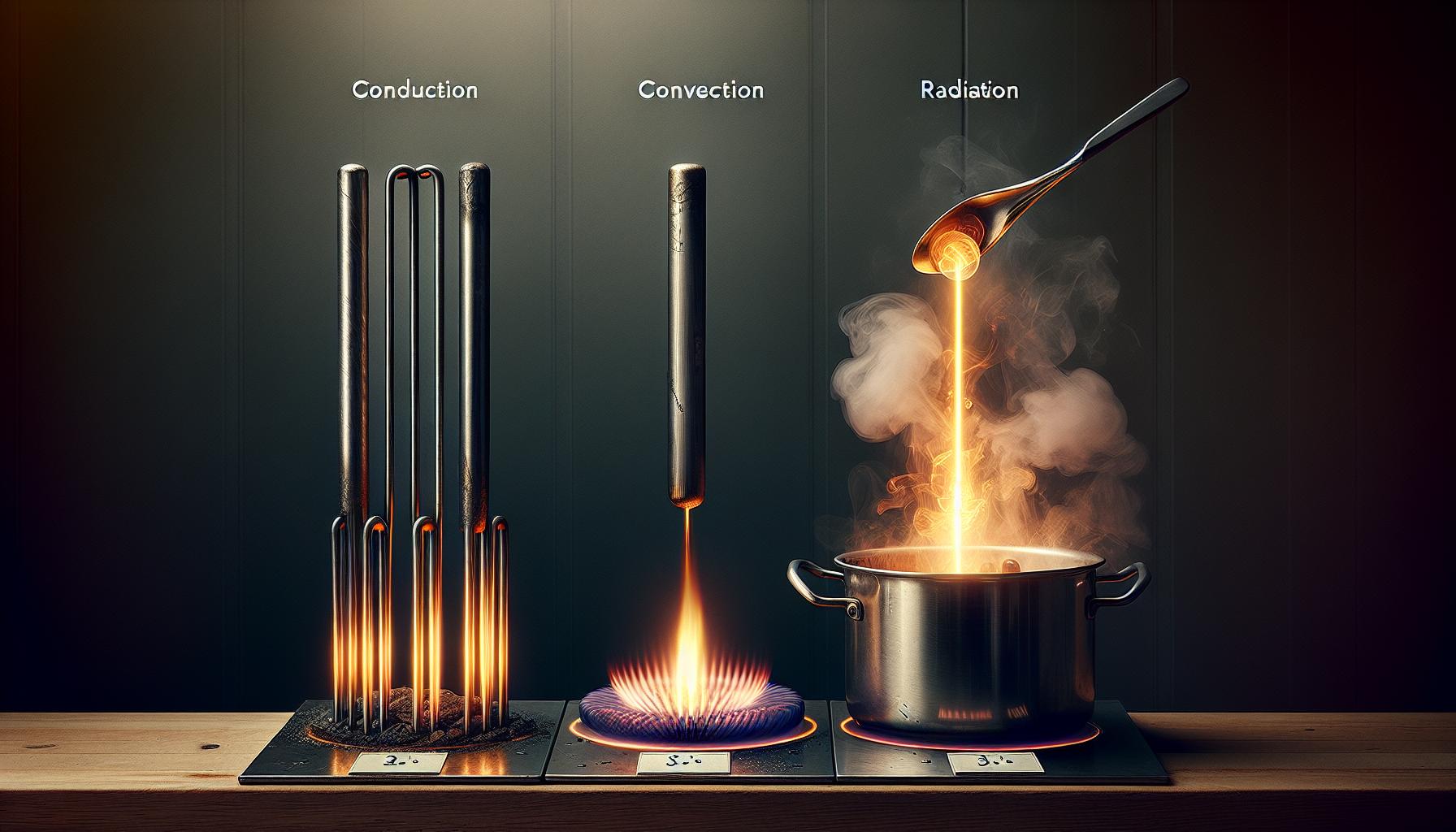
Types of Heat Transfer: An Overview
Heat transfer is an essential concept that influences many aspects of our daily lives, from cooking to climate control. Understanding the three primary modes of heat transfer-conduction, convection, and radiation-equips us with the tools to manage thermal energy effectively in various applications. Each of these methods operates on distinct principles, yet they often work together to achieve efficient energy transfer.
Let’s begin with conduction, the process by which heat moves through a material without the material itself moving. This occurs at the molecular level, as faster-moving molecules collide with slower ones, transferring energy. A classic example is a metal spoon heated in a pot of boiling water; the heat is conducted from the water into the spoon, making it warm to the touch. In terms of applications, understanding conduction is vital in material science and engineering, particularly when selecting materials for insulation or heat exchangers.
Next, convection involves the movement of fluid (liquid or gas) and the transfer of heat within that fluid. It can occur in two ways: natural convection, driven by buoyancy forces due to temperature differences, and forced convection, which uses pumps or fans to enhance fluid movement. A common example of natural convection is the warm air rising from a heater, while forced convection is exemplified by a fan blowing air across a hot surface to speed up cooling. This method is critical in numerous applications, including heating systems, cooling of electronic components, and even in culinary processes like boiling or frying.
Lastly, radiation differs significantly from the other two methods as it involves the transfer of heat through electromagnetic waves, such as infrared radiation. Unlike conduction and convection, radiation does not require a medium, which means it can occur in the vacuum of space. A clear example is the warmth felt from sunlight reaching the Earth-a combination of electromagnetic waves and heat energy moving across space. Understanding radiation plays a crucial role in solar energy technology and thermal management in buildings.
These three heat transfer methods not only govern how energy moves in our environment but also provide a foundation for designing more efficient systems-whether in engineering, environmental science, or everyday tasks. By mastering the characteristics and applications of conduction, convection, and radiation, individuals can optimize performance in various practical scenarios.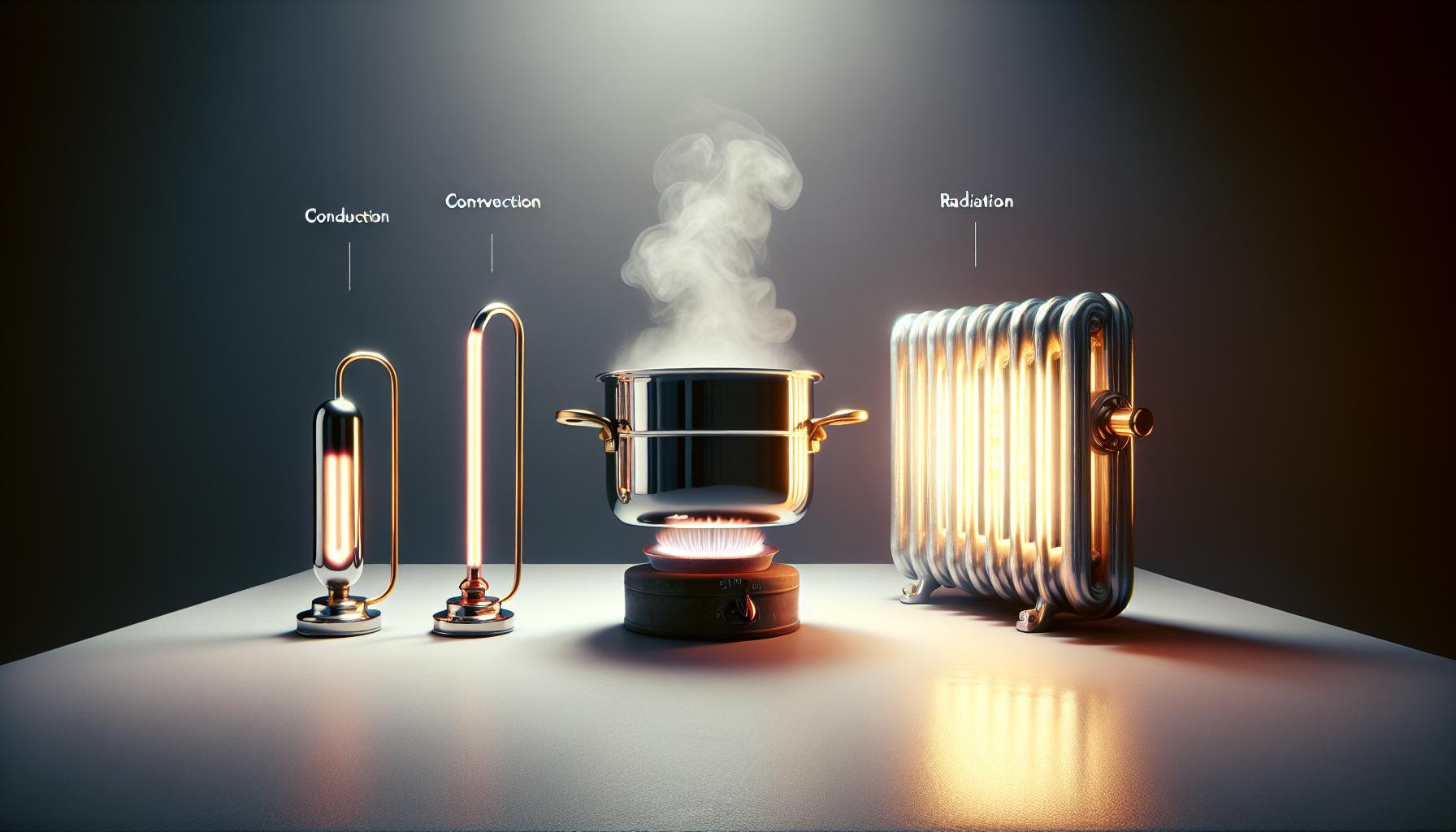
Understanding Conduction: Mechanisms and Examples
Heat transfer through conduction is a fundamental process that occurs whenever energy is transmitted across materials. At its core, conduction involves the direct transfer of heat from one molecule to another in a stationary medium, without any overall movement of the substance itself. A striking example of conduction is the experience of picking up a metal spoon that has been resting in a hot pot of water: the heat from the water transfers into the spoon, warming it up through direct molecular interactions.
Mechanisms of Conduction
The mechanism of conduction can be understood through two primary factors: temperature difference and material properties. When two objects of different temperatures come into contact, energy naturally flows from the hotter object to the cooler one until thermal equilibrium is reached. The rate at which this heat transfer occurs is influenced by the thermal conductivity of the materials involved. For instance, metals such as copper and aluminum are excellent conductors, allowing heat to move rapidly through them. In contrast, materials like wood or rubber are poor conductors and are classified as insulators due to their low thermal conductivity.
Real-World Applications
Understanding conduction is pivotal in various practical domains. In cooking, knowing how conduction works can help optimize cooking times and techniques. For example, using a heavy-bottomed pan enhances even heat distribution, thereby facilitating better cooking of food. In engineering, the principles of conduction guide the design of heat exchangers and thermal insulators, where the goal is either to enhance heat transfer efficiency or to minimize unwanted heat loss or gain.
Moreover, advancements in materials science continue to unveil innovative thermal conductive materials that are tailored for specific applications-from high-efficiency insulators in buildings to lightweight conductors in electronics. As technology marches forward, the understanding of conduction not only helps in optimizing energy use but also in developing materials that can better combat the challenges posed by heat transfer in various environments.
In sum, grasping the principles of conduction has profound implications across everyday life and industry, thereby enabling us to harness and manage heat energy more effectively.
Exploring Convection: Natural vs. Forced Flow
Understanding how heat transfers through convection opens up a fascinating glimpse into everyday phenomena, from the warmth of a cozy room to the cooling systems in modern buildings. Convection, a process that occurs in fluids (liquids and gases), involves the movement of molecules, which carries heat across the medium. There are primarily two types of convection: natural convection and forced convection, each playing a vital role in different applications and environments.
Natural convection relies on the inherent movement created by temperature differences within a fluid. As a fluid is heated, it becomes less dense and rises, while cooler, denser fluid sinks to take its place. This cycle creates a continuous flow that facilitates heat transfer. A classic example is the warm air rising from a heater, causing cooler air to flow in from below to maintain a steady temperature. This process is not just limited to indoor heating; it’s also responsible for ocean currents and weather patterns, showcasing the significant impact of natural convection on the Earth’s climate system.
In contrast, forced convection involves external forces, such as fans or pumps, to enhance the movement of fluid and thus increase heat transfer efficiency. This method is commonly seen in heating and cooling systems in buildings, where air is actively circulated to distribute warmth or coolness. A practical example is a forced-air furnace that pushes warm air through ducts into various rooms. The efficiency of forced convection systems often leads to quicker heating or cooling than natural convection, making them preferable in many engineered systems, especially in industrial applications.
Overall, the understanding and application of both natural and forced convection are crucial not just in engineering and environmental science but also in our everyday lives. Recognizing how these processes impact temperature regulation and energy consumption can guide better design choices for heating and cooling systems, potentially leading to energy savings and enhanced comfort in homes and workplaces.
Radiation and Heat Transfer: How It Works
In the realm of heat transfer, radiation stands out as the method that allows energy to travel without the need for a medium such as air or water. This is because radiation involves the transmission of thermal energy in the form of electromagnetic waves. A familiar example of this phenomenon is the warmth felt from the sun on your skin, even on a clear, cold day. The sun emits infrared radiation, which travels through the vacuum of space to reach Earth, carrying heat energy with it.
The fundamental principle of thermal radiation is that all objects emit radiation based on their temperature, according to Stefan-Boltzmann law. This relationship indicates that the total energy radiated per unit surface area of a black body is proportional to the fourth power of its absolute temperature. Simply put, the hotter an object is, the more energy it emits. This creates a significant advantage in various applications, from passive solar heating systems to radiative heating elements used in cooking appliances.
### Key Concepts of Radiation and Heat Transfer
- Emissivity: This property indicates how effectively a surface emits thermal radiation compared to a perfect black body. Materials with high emissivity (close to 1) are excellent emitters of radiation, while those with low emissivity reflect more radiant energy.
- Wavelength and Temperature: The peak wavelength of emitted radiation shifts with temperature, governed by Wien’s Law. Hotter objects emit radiation at shorter wavelengths, transitioning from infrared to visible light as temperatures increase, explaining why heated metals glow.
- Applications: Efficient heat management through radiation is prevalent in various fields, from designing energy-efficient homes utilizing radiant barriers to developing advanced thermal insulation materials that minimize heat loss.
### Practical Examples of Radiative Heat Transfer
One excellent application of radiant heat transfer is found in greenhouses, which utilize transparent materials to allow sunlight to enter while trapping heat inside. The sun heats the plants and soil, and the emitted thermal radiation cannot escape easily through the glass or plastic, developing a warm, controlled environment for growth. Similarly, in cooking, infrared grills use radiant heat to cook food more evenly and efficiently compared to traditional methods.
Understanding the principles of radiative heat transfer is critical for optimizing energy use and enhancing comfort in buildings and technologies alike. By leveraging the efficiency of radiation, designers can create systems that not only operate effectively but also contribute to sustainable practices by reducing energy consumption.
Real-World Applications of Heat Transfer
In today’s world, heat transfer seamlessly permeates many facets of our daily lives, often without our conscious awareness. From the comfort of our homes to the efficiency of our appliances, the principles of conduction, convection, and radiation are actively at play. Understanding the real-world applications of these heat transfer methods not only enhances our appreciation for them but also empowers us to make informed decisions in energy efficiency and technology.
Conduction in Everyday Life
When you touch a hot stove, the heat transfers directly through the metal to your skin-a classic example of conduction. This transfer occurs through direct contact and is most noticeable in solid materials. In construction, choosing the right materials can significantly affect thermal performance. For instance, metals have high thermal conductivity and can quickly transfer heat, while wood and insulation materials are preferred for their low conductivity, helping to keep homes warm in winter and cool in summer.
A practical application of conduction is in cookware. The choice of materials such as aluminum or copper for pots and pans allows for rapid heat distribution, which is essential for effective cooking. When baking, ceramic and glass dishware, while slower to heat up, provide even cooking temperatures that prevent hot spots, perfectly demonstrating how conduction principles guide everyday tasks in the kitchen.
Convection: The Power of Flow
Convection is critical in various systems where heat is transferred by the movement of fluid. It naturally occurs when hot air rises and cool air sinks, creating a cycle of circulation. This mechanism is harnessed in home heating systems, where warm air from radiators rises and spreads warmth throughout a room, demonstrating how natural convection can efficiently maintain comfortable temperatures.
Forced convection is commonly found in applications like air conditioning and refrigerators, where fans move air or refrigerants to expedite heat exchange processes. Industrial baking ovens often employ forced convection fans to circulate hot air, resulting in evenly baked goods. Recognizing the efficiency of convection allows individuals to optimize their home and industrial heating and cooling systems for better energy consumption.
Radiation: Harnessing Energy
Radiative heat transfer is another method that influences numerous applications. This type of heat transfer can be found in the warmth emitted by a radiator or the heat felt from the sun, even when you are indoors. Its principles are applied in solar panels, which convert sunlight directly into usable energy for heating water or generating electricity.
In modern architecture, buildings utilize radiant barriers and reflective materials to minimize heat absorption, reducing cooling costs in warmer climates. Infrared heaters, which rely entirely on radiative heat transfer, offer targeted warmth in spaces without heating the air, making them an energy-efficient option compared to traditional heating methods.
Understanding these not only illustrates the versatility of its principles but also emphasizes their importance in enhancing our quality of life and driving technological advancements. By making conscious choices based on heat transfer methods, we can enhance energy efficiency, comfort, and sustainability in our environments.
The Science Behind Heat Transfer Efficiency
Efficient heat transfer is fundamental to maximizing energy use in both residential and industrial settings. Understanding how different modes of heat transfer-conduction, convection, and radiation-operate allows us to fine-tune systems for optimal performance. By focusing on the underlying science, we can unlock new efficiencies that reduce costs and enhance comfort in our environments.
When it comes to conduction, the efficiency of heat transfer is highly influenced by the material’s thermal conductivity. Materials with high conductivity, like metals, transfer heat quickly, which is excellent for cooking utensils but not so great for building materials where insulation is key. For instance, double-glazed windows are engineered to minimize heat transfer, creating a buffer that keeps interiors warm during winter and cool in summer. Selecting the right materials for specific applications can greatly improve energy efficiency-think of how much energy is wasted through poorly insulated walls or windows.
In convection processes, understanding the differences between natural and forced convection can lead to significant energy savings. Natural convection relies on buoyancy-driven flows-warm air rises while cooler air sinks-which creates circulation without mechanical aid. However, forced convection, such as in HVAC systems, can move air more efficiently across larger spaces, especially when powered by energy-efficient fans. By designing systems that leverage the right type of convection for the application, such as using variable speed drives in HVAC systems, users can significantly reduce energy consumption.
Radiation, the transfer of heat through electromagnetic waves, also presents unique opportunities for efficient heat transfer. Reflective materials and surfaces can be employed strategically to reduce unwanted heat gain or loss. For example, using radiant barriers in attics can help keep homes cooler in the summer, directly affecting energy consumption related to air conditioning. Furthermore, technologies like solar panels make use of radiant heat principles, converting solar energy directly into usable power. As advances in materials science emerge, the efficiency of radiative systems will continue to improve, offering exciting prospects for renewable energy applications.
By understanding and applying the principles of heat transfer efficiency, we open the door to smarter energy use. Whether it’s optimizing insulation materials, enhancing convection-based systems, or harnessing radiant heat, these insights lead not only to economic benefits but also contribute to a more sustainable future. As we move towards increasingly energy-conscious regulations and consumer expectations, the need to enhance heat transfer efficiency will only grow in importance.
Factors Affecting Various Heat Transfer Methods
Efficient heat transfer is influenced by a variety of factors that can enhance or hinder the effectiveness of conduction, convection, and radiation. Understanding these elements is crucial, as it enables engineers and homeowners alike to optimize their heating and cooling systems, ensuring comfort and energy efficiency.
When it comes to conduction, the thermal conductivity of the material plays a pivotal role. For instance, metals like copper and aluminum are excellent conductors of heat, making them ideal for applications that require quick heat transfer, such as cookware and heat sinks. Conversely, materials like wood or fiberglass exhibit low thermal conductivity, making them suitable for insulation in buildings. Additionally, the thickness of the material and the temperature gradient (the difference in temperature across the material) significantly impact conduction; a larger temperature difference will enhance the rate of heat transfer.
In convection, both natural and forced flows are affected by factors such as fluid velocity, temperature difference, and fluid properties. In natural convection, the movement of fluid occurs due to buoyancy forces; thus, in a well-insulated space, warm air rises while cooler air descends. In contrast, forced convection relies on mechanical means, such as fans or pumps, to increase the flow rate of the fluid, thereby boosting the heat transfer rate. Using fins or baffles can also enhance heat transfer in systems like radiators by increasing the surface area for heat exchange with the surrounding air.
Radiation heat transfer is unique as it does not require a medium; instead, it occurs through electromagnetic waves. The emissivity of surfaces is a key factor here, determining how effectively they can emit or absorb radiation. Black surfaces, for example, have high emissivity and are excellent at radiating heat, whereas shiny surfaces (like aluminum foil) have low emissivity. The distance between surfaces and the temperature difference between them also affect radiation. Techniques like using reflective insulation can take advantage of these principles to minimize heat loss in buildings, particularly in attics.
In summary, maximizing heat transfer involves a thoughtful selection of materials and design strategies tailored to the specific methods of heat transfer at play. By considering factors such as thermal conductivity, flow dynamics, and surface properties, we can create environments that not only utilize energy more efficiently but also reduce operational costs and enhance comfort.
Heat Transfer in Everyday Life: Common Examples
Heat transfer is a fundamental concept that affects our daily experiences, often without us even realizing it. Whether you’re cooking a meal, enjoying a warm beverage, or feeling the chill of a cold breeze, heat transfer plays a crucial role in shaping those experiences. Understanding the three main types of heat transfer-conduction, convection, and radiation-can deepen our appreciation for these everyday interactions with heat.
In cooking, conduction is at the forefront when you place a pan on a stove. The heat from the burner transfers directly into the pan and then into the food, cooking it evenly. Different materials conduct heat at different rates; for instance, copper pans heat quickly and respond well to changes in temperature, while cast iron maintains heat longer, making it ideal for slow cooking. Convection comes into play in ovens and boiling water, where heated air (or liquid) circulates, distributing thermal energy uniformly. This is why foods tend to cook more thoroughly in convection ovens compared to static ones.
On a broader scale, we experience radiation when we feel warmth from the sun or a fire. This transfer of heat occurs without the need for a medium; instead, it travels via electromagnetic waves. Radiant heat can warm your skin on a sunny day, even if the air temperature is cooler. Homes utilize this principle with low-emissivity coatings on windows, which reflect heat back inside during winter while allowing sunlight in.
Understanding these principles helps us make informed decisions in everyday scenarios, like choosing cookware or optimizing home heating. For instance, knowing that a thermally conductive saucepan will cook food faster can save time in the kitchen, and recognizing the importance of insulating materials in homes not only enhances comfort but can also lead to significant energy savings.
By exploring these examples of heat transfer from our daily lives, we gain insights that translate into practical solutions, whether improving culinary skills or enhancing home comfort through better energy efficiency practices.
Comparing Heat Transfer Methods: Pros and Cons
Heat transfer is an integral part of our everyday experiences and understanding its various methods can empower us to make better decisions in numerous applications-from cooking to construction. Each of the primary heat transfer methods-conduction, convection, and radiation-brings its own set of advantages and disadvantages, making them appropriate for specific scenarios while also presenting limitations.
Conduction
Conduction is the process of heat transfer through direct contact between materials. It’s highly efficient in solids, especially metals, which have tightly packed atoms that facilitate energy transfer. A major advantage of conduction is its predictability and speed; for example, when a metal spoon is placed in a hot pot, it quickly conducts the heat along its length. However, the effectiveness of conduction decreases in less dense materials, such as wood or fabric, which restricts their heat transfer capabilities. Thus, while conduction is ideal for quick heating tasks-like sautéing vegetables-it’s not the best choice for insulating structures, where you’d prefer to reduce heat flow.
Convection
Convection involves the movement of fluids (liquids or gases) that circulate, distributing heat. This method can be either natural or forced. In natural convection, warmer, less dense fluid rises while cooler, denser fluid sinks, creating a continuous cycle. In contrast, forced convection occurs when an external force, like a fan or pump, moves the fluid, significantly enhancing heat transfer rates. This makes convection particularly effective in cooking techniques like roasting or baking, where even heat distribution is essential. However, it’s important to note that convection works best in fluids-it’s less efficient in solids. Furthermore, its reliance on movement means that in still environments, heat transfer may be significantly slower.
Radiation
Radiation distinguishes itself by the fact that it doesn’t require a medium; it can transfer heat through a vacuum. This is how we receive warmth from the sun. The main advantage of radiation is its ability to traverse large distances without any loss of energy through conduction or convection. It can also be easily manipulated with materials to enhance comfort; for example, low-emissivity coatings on windows can limit unwanted heat loss in winter while allowing sunlight to enter. However, radiation can be less effective in environments where heat is required to be distributed evenly or rapidly, making it less suitable when immediate temperature changes are needed.
Understanding the pros and cons of these heat transfer methods equips us with knowledge that applies to diverse fields-from engineering and environmental sciences to culinary arts. By choosing the appropriate method in various situations, we can enhance efficiency, save energy, and optimize outcomes.
Thermal Insulation: Minimizing Heat Transfer
The importance of thermal insulation cannot be overstated, particularly in a world increasingly focused on energy efficiency and comfort. Proper insulation minimizes heat transfer, which is critical whether you’re trying to keep warm in winter or cool in summer. By understanding how insulation works and its role in the three main types of heat transfer-conduction, convection, and radiation-you can make informed choices that enhance energy efficiency in buildings and everyday products.
Effective thermal insulation primarily operates by reducing conduction, the direct transfer of heat through materials. Insulation materials, such as fiberglass, foam, or cellulose, have low thermal conductivity, which means they resist heat flow. This property is quantified by the R-value-a measure of insulation’s effectiveness; the higher the R-value, the better the insulation. For instance, a well-insulated home can significantly reduce heating and cooling costs, leading to substantial energy savings over time.
Another critical aspect is minimizing the effects of convection. In structures, air leakage can allow warm air to escape in winter and enter in summer, increasing heating and cooling loads. Sealing gaps and using insulated windows and doors can significantly enhance overall thermal efficiency. Furthermore, radiant barriers, which reflect heat instead of absorbing it, help combat heat transfer through radiation, particularly in attics and roofs where sunlight can dramatically increase indoor temperatures.
In everyday life, thermal insulation is vital in products ranging from household appliances to personal items like coolers and insulated mugs. These products leverage insulation techniques to maintain temperatures, whether keeping beverages hot or cold. By choosing products with effective thermal insulation, consumers can enjoy better performance while contributing to energy efficiency, illustrating the practical application of these scientific principles.
In summary, understanding and applying the principles of thermal insulation allow us to enhance comfort and reduce energy consumption effectively, making it a crucial consideration in construction, product design, and everyday living.
Advanced Concepts in Heat Transfer: What to Know
The complexity of heat transfer can often be surprising; for instance, did you know that the principles governing how heat moves can significantly impact the energy efficiency of our homes and the design of our appliances? Understanding advanced concepts in heat transfer not only illuminates the underlying physics but also empowers you to make smarter decisions about energy consumption and product usage in daily life.
One advanced concept worth exploring is the idea of thermal bridges. These are areas in building envelopes (like walls and roofs) where materials with high thermal conductivity bypass insulating layers, resulting in unwanted heat loss or gain. Identifying and mitigating thermal bridges can lead to substantial energy savings. For example, using insulated framing techniques and advanced sealants can significantly enhance a building’s thermal performance, supporting the broader goal of energy efficiency.
Another fascinating area is the role of phase change materials (PCMs) in heat transfer applications. PCMs absorb or release large amounts of latent heat as they transition between solid and liquid states, which can be leveraged in building materials and thermal storage solutions. Integrating PCMs into walls or ceilings can help maintain comfortable indoor temperatures with less reliance on heating and cooling systems, illustrating a practical implementation of thermal storage concepts in modern architecture.
To demystify these ideas further, consider the practical application of heat exchangers, which optimize the heat transfer process between two or more fluids, thereby enhancing energy efficiency in systems ranging from HVAC to industrial processes. By maximizing the transfer of heat while minimizing energy loss-and often incorporating advanced materials and designs-engineers can achieve remarkable efficiency improvements.
Incorporating a deeper understanding of these advanced concepts opens up new pathways for both research and practical application. As technology continues to evolve, so too will the methods we use to manipulate heat transfer, leading to innovative solutions in energy conservation, building design, and consumer products. Embracing these principles can empower individuals and businesses alike to become better stewards of energy, creating a more sustainable future.
Future Trends in Heat Transfer Technology
The landscape of heat transfer technology is evolving rapidly, with innovations poised to reshape how we manage thermal energy across various applications. As the demand for energy efficiency increases, researchers and engineers are exploring sophisticated materials and systems that capitalize on the principles of conduction, convection, and radiation in new, exciting ways.
One promising trend is the integration of nano-materials into heat transfer systems. These materials, which operate at the atomic or molecular scale, have demonstrated enhanced thermal conductivity compared to their conventional counterparts. For instance, carbon nanotubes and graphene can significantly improve heat transfer rates, making them ideal for applications like advanced cooling systems in electronics and efficient energy storage solutions in buildings. The fine-tuning of these materials at the nanoscale enables unprecedented control over thermal properties, paving the way for innovative designs that optimize energy use while minimizing waste.
Smart Thermal Management Systems
The advent of the Internet of Things (IoT) has also ushered in a new era of smart thermal management systems. These systems utilize sensors and smart algorithms to monitor and adjust heating and cooling processes dynamically. By implementing real-time data analytics, these technologies can optimize energy consumption based on actual usage patterns, leading to substantial savings. For example, residential HVAC systems equipped with IoT solutions can learn homeowner preferences and adjust temperatures accordingly, thereby enhancing comfort and energy efficiency. This shift not only reduces operational costs but also contributes to a more sustainable energy footprint.
Advanced Insulation Techniques
Another area of innovation lies in advanced insulation technologies. Traditional materials are being supplemented or replaced by aerogels and insulated glazing systems, which provide superior thermal resistance without the bulk. Aerogels, known for their lightweight and porous nature, can dramatically reduce heat transfer in buildings and industrial applications, while also being environmentally friendly. As regulations become stricter regarding energy efficiency in construction, such high-performance materials will likely take center stage, driving down heating and cooling costs while enhancing overall building performance.
As these trends continue to develop, the future of heat transfer technology looks promising, with numerous opportunities for researchers and engineers to create more effective, efficient solutions. By embracing these advancements, industries can expect not only to comply with environmental standards but also to lead the way in sustainable energy practices.
Frequently asked questions
Q: What are the three types of heat transfer?
A: The three types of heat transfer are conduction, convection, and radiation. Conduction involves direct contact transfer through solids, convection involves heat transfer in fluids via movement, and radiation occurs through electromagnetic waves across space. Understanding these helps in various applications such as thermal insulation and energy efficiency.
Q: How does conduction work in heat transfer?
A: Conduction is the process where heat energy is transferred through materials without any movement of the material itself. Molecules vibrate in place, transferring energy to neighboring molecules. This method is essential in applications like cooking with metals or thermal management in buildings.
Q: What is convection and how is it different from conduction?
A: Convection is the heat transfer method in fluids (liquids or gases) where warmer, less dense regions rise while cooler, denser areas sink. This creates circulation. Unlike conduction, where heat transfer occurs through direct contact, convection involves the movement of the fluid itself.
Q: Can you explain radiation as a heat transfer method?
A: Radiation is the transfer of heat through electromagnetic waves and doesn’t require a medium. All objects emit infrared radiation based on their temperature. This is why you can feel warmth from the sun or a fire without direct contact.
Q: Why is understanding heat transfer important?
A: Understanding heat transfer is crucial for energy efficiency, designing heating and cooling systems, and improving materials used in construction. Knowledge of heat transfer methods can lead to better thermal insulation solutions, significantly impacting energy consumption in buildings.
Q: What factors can affect heat transfer efficiency?
A: Heat transfer efficiency can be affected by factors such as temperature difference, material conductivity, surface area, and flow characteristics. For example, increasing the surface area can enhance heat exchange rates, making heat transfer more efficient.
Q: How does heat transfer occur in everyday life?
A: Heat transfer occurs in many daily activities, such as cooking, heating spaces, and cooling. For instance, boiling water (convection), warming hands on a radiator (conduction), or feeling heat from the sun (radiation) are common examples that illustrate the concepts clearly.
Q: What are practical applications of the three heat transfer methods?
A: Practical applications include insulation in buildings (conduction), heating systems like furnaces (convection), and solar panels or infrared heaters (radiation). Each method plays a distinct role in improving energy efficiency and comfort in various environments.
In Summary
Understanding the three kinds of heat transfer-conduction, convection, and radiation-equips you with essential insights applicable in various fields, from engineering to environmental science. As you explore these concepts further, consider diving into our detailed articles on thermal conductivity and heat exchange systems. Don’t miss out on our practical guides that expand on these theories with real-world applications.
We encourage you to take the next step! Subscribe to our newsletter for more expert insights or explore our resources to enhance your knowledge. If you have questions or thoughts about heat transfer, please leave a comment below; we’re eager to engage with you. Explore the science of heat transfer today and unlock the potential for innovative applications in your work or studies.
Get our latest guides, news, and insights highlighted in your Google Search & AI Overviews.