Heat transfer is a fundamental concept that impacts everything from everyday cooking to advanced engineering solutions. Understanding its forms-conduction, convection, and radiation-enables us to harness energy more efficiently and innovate in technology. Whether you’re a student tackling physics, a researcher diving into thermal dynamics, or a DIY enthusiast working on home improvements, mastering heat transfer is crucial. By exploring these mechanisms, you’ll gain practical insights that not only clarify theoretical principles but also maximize the effectiveness of your projects. Dive in to discover how these processes influence both the natural world and modern applications.
Forms of Heat Transfer: An Overview
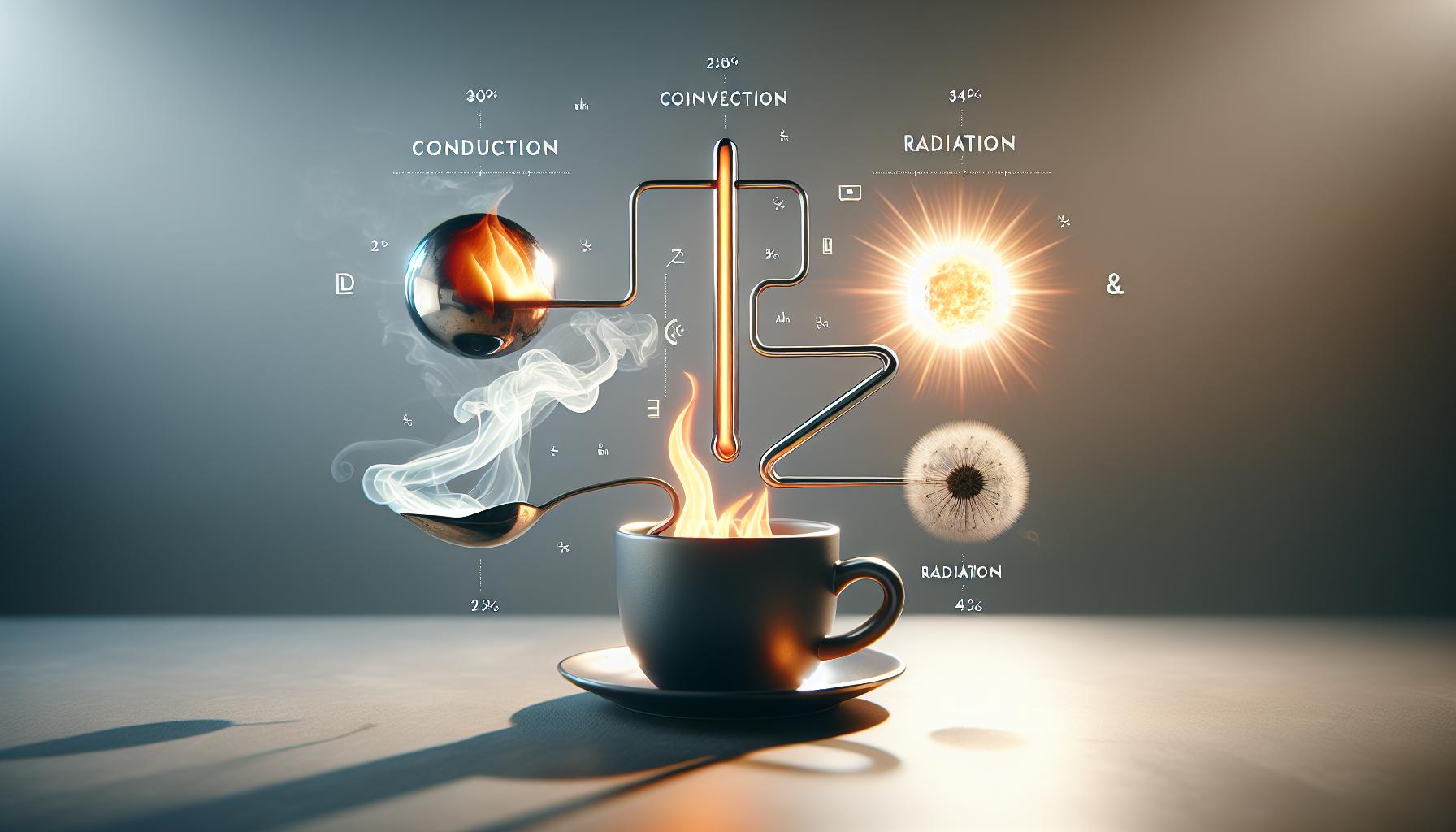
Heat transfer is a fundamental concept that plays a pivotal role in both natural and engineered systems. Understanding how heat moves from one place to another can aid in everything from improving household energy efficiency to innovating in industrial applications. The three primary forms of heat transfer-conduction, convection, and radiation-each operate under different principles and are essential for various practical scenarios.
Conduction
Conduction occurs through direct contact between materials. When an object is heated, its particles vibrate and pass their energy to adjacent particles, transferring heat along the object. A prime example of conduction is the way a metal spoon becomes hot when left in a pot of boiling water. The efficiency of conduction is largely determined by the material’s thermal conductivity-a coefficient that signifies how well a material conducts heat. Metals, for instance, are excellent conductors, while materials like wood or rubber serve as insulators.
Convection
In contrast, convection involves the movement of heat through fluids (liquids and gases). As the fluid warms, it becomes less dense and rises, while cooler, denser fluid sinks, creating a circulation pattern. This process is exemplified in heating systems like radiators and in natural processes like ocean currents. Convection is crucial in weather patterns and is utilized in various applications, including HVAC systems where warm air is distributed throughout a building.
Radiation
Radiation is unique among the three forms as it does not require a medium to transfer heat. It occurs through electromagnetic waves, such as infrared radiation from the sun. When you stand near a campfire, the warmth you feel is due to radiative heat transfer. This method is significant in outer space, where heat transfer happens in a vacuum, and is vital for solar energy applications.
The interplay between these three forms of heat transfer can have a substantial impact on everyday life. Understanding their principles allows individuals and engineers alike to design more efficient heating and cooling systems, contributing to energy savings and enhancing comfort in both domestic and industrial environments. By recognizing the nuances of each method, we can leverage their unique properties for innovative technologies and sustainable solutions.
Conduction: The Direct Contact Phenomenon
When you think about how heat travels through materials, consider this: have you ever touched a hot stove and quickly pulled your hand away? That’s conduction in action. This form of heat transfer occurs when two objects at different temperatures come into direct contact, and heat flows from the warmer object to the cooler one. It’s a fundamental process that underlies everyday phenomena, from cooking to building design, and it is essential for anyone looking to optimize energy efficiency in their homes or workplaces.
Direct contact is the key to conduction, and the efficiency of this process depends heavily on the materials involved. Some materials, like metals, are great conductors of heat because their atomic structure allows free electrons to move easily, transferring energy quickly. In contrast, insulators such as wood and rubber resist heat flow, making them ideal for applications where heat retention or temperature regulation is crucial. To illustrate, think of a wooden handle on a frying pan: it stays relatively cool while the metal base gets hot, protecting your hands from burns.
Understanding the thermal conductivity of materials can guide decisions in various fields, including engineering, cooking, and even electronics. For instance, when designing heated floors, using materials with higher conductivity can enhance warmth distribution, while insulation is critical in minimizing heat loss. To further delve into efficiency, consider this table that outlines different materials and their thermal conductivities:
| Material | Thermal Conductivity (W/m·K) |
|---|---|
| Copper | 401 |
| Aluminum | 237 |
| Steel | 50 |
| Wood | 0.1 – 0.2 |
| Rubber | 0.1 – 0.25 |
In practical applications, the principles of conduction are harnessed in both simple and complex systems. Cooking is a prime example; when simmering a pot on the stove, conduction transfers heat from the burner through the pot and into the food. Engineers also capitalize on conduction in heat exchangers, where efficient thermal transfer is critical for energy systems and industrial processes. By leveraging the science of conduction, everyday activities and industrial applications alike can be optimized for better heat management, ultimately leading to increased energy efficiency and safety.
Convection: Movement of Heat Through Fluids

The movement of heat through fluids, known as convection, operates on principles that are both fascinating and practically significant in a variety of contexts. Everyday experiences, such as feeling warm air rising from a heater or the chilling breeze during a summer swim, perfectly illustrate this phenomenon. Convection involves the transfer of heat through the motion of fluids (liquids and gases). When a fluid is heated, it becomes less dense and rises, while cooler, denser fluid moves in to take its place, creating a continuous cycle known as a convection current.
Understanding convection is crucial for multiple applications, from cooking to climate control in buildings. For example, when boiling water in a pot, the heat from the burner heats the water at the bottom. This hot water then rises to the surface, while cooler water descends to take its place, maintaining an even temperature throughout the pot. In the context of HVAC systems in buildings, convection plays a critical role in heating or cooling rooms efficiently. Radiators, for instance, rely on convection currents: as the radiator heats the air around it, this warmed air rises, drawing cooler air toward the unit, which then gets heated and continues the cycle, effectively distributing heat across the room.
Key Factors Influencing Convection
Several factors affect the efficiency of convection:
- Fluid Properties: The viscosity and density of a fluid will influence how freely it moves and how effectively it can carry heat.
- Temperature Gradient: A larger temperature difference between the heat source and the fluid leads to stronger convection currents, enhancing heat transfer.
- Surface Area: Increasing the surface area of the heat source boosts the contact with fluid, promoting better heat transfer.
Practical Applications
When considering the practical implications of convection, one can find a myriad of applications:
- Cooking: Convection ovens use fans to circulate hot air, cooking food more evenly and efficiently compared to traditional ovens.
- Weather Patterns: Atmospheric convection currents drive winds and weather systems, highlighting the importance of this phenomenon on a global scale.
- Industrial Processes: In manufacturing, convection plays a vital role in cooling processes, such as in the cooling of molten metals or in chemical reactors.
The principles of convection not only improve the efficiency of cooking and heating but also help us understand larger systems like weather and climate. By recognizing how heat transfer through fluids works, one can optimize processes in engineering, cooking, and even everyday home life, demonstrating the far-reaching importance of this form of heat transfer.
Radiation: Heat Transfer Without a Medium

Heat transfer through radiation is a fascinating phenomenon that occurs without the need for any medium. Unlike conduction and convection, which require direct contact or a fluid movement, radiation utilizes electromagnetic waves to transfer energy. This is the same principle that allows us to feel the warmth of the sun on our skin, even when we are standing millions of kilometers away in the vacuum of space. Understanding radiation as a form of heat transfer opens up a whole world of applications and insights into natural and man-made processes.
Radiation operates predominantly through infrared radiation, a subset of the electromagnetic spectrum. All objects emit thermal radiation based on their temperature; hotter objects radiate more energy than cooler ones. This concept is crucial when considering the efficiency of heat transfer systems. For example, in solar heating applications, panels are designed to maximize radiation absorption, converting sunlight into usable thermal energy. This is not only evident in solar water heating systems but also in architecture, where building materials and designs are optimized to enhance solar gain while minimizing heat loss during colder months.
Key Concepts of Radiation
Understanding the key concepts surrounding radiation can help clarify how it functions effectively in various contexts:
- Emissivity: This is a measure of how effectively an object emits thermal radiation compared to a perfect black body. Materials with high emissivity, like black surfaces, are excellent at emitting and absorbing radiation.
- Stefan-Boltzmann Law: This law states that the total energy radiated per unit surface area of a black body is proportional to the fourth power of its absolute temperature. Hence, even small increases in temperature can lead to significant increases in radiated energy.
- Wavelength: Different wavelengths of radiation interact differently with materials. Infrared radiation is particularly effective at transferring heat, while visible light can be energy-intensive in other forms of energy transfer.
Practical Applications of Radiation
The practical applications of heat transfer through radiation are vast and impactful:
- Heating Systems: Radiant floor heating systems utilize the principles of radiation to directly warm objects, including flooring materials and, consequently, the occupants of a room.
- Space Technology: In outer space, thermal radiation is the primary method of heat transfer. Spacecraft are designed to manage excessive heat through radiation shields that reflect and dissipate solar energy.
- Cooking Appliances: Infrared grills and toaster ovens use radiation to cook food efficiently, providing rapid heating by targeting the food directly rather than heating surrounding air.
Radiation-based heat transfer not only plays a critical role in natural processes but also drives innovation in engineering and technology. By harnessing the principles of radiation, we can improve energy efficiency, enhance comfort in our environments, and develop new technologies that respond intelligently to the heat dynamics of our surroundings. Understanding this fundamental concept helps us leverage it across diverse fields, from renewable energy solutions to advanced materials science.
Comparative Analysis of Heat Transfer Methods
Understanding the nuances between conduction, convection, and radiation can transform how we approach heat transfer in both everyday applications and advanced scientific endeavors. Each method offers unique mechanisms for energy movement, each suited to different environments and requirements. By comparing these forms, we can leverage their strengths in practical applications, whether in engineering, cooking, or climate control.
Conduction is the most straightforward form of heat transfer, occurring when two objects at different temperatures are in direct contact. This transfer relies on the vibration of particles; for instance, a metal spoon in a hot pot quickly becomes warm. However, conduction is generally more effective in solids, particularly metals, because their tightly packed atoms facilitate quicker energy transfer. Consequently, understanding the thermal conductivity of materials is critical in design, especially in creating efficient thermal insulators or conductors where needed.
Convection involves the movement of heat through fluids (liquids and gases) and is characterized by the mass motion of those fluids. This process is influenced by density differences caused by temperature variations. For example, in a heating system, warm air rises while cooler air descends, creating a circulating pattern that distributes heat. Convection is essential in many applications, such as cooking (e.g., boiling water) and climate control systems that rely on air flow. Engineers often optimize convection by designing systems that enhance fluid movement, improving overall heat efficiency.
Radiation, unlike conduction and convection, does not require a medium; it transfers energy through electromagnetic waves. This method is particularly vital in environments where conduction and convection are less effective, such as in space, where no air exists to facilitate heat transfer. For example, sunlight reaches Earth through radiation, and specialized technologies such as infrared heaters exploit this principle. A clear understanding of emissivity and absorptivity can play a pivotal role in designing energy-efficient systems that utilize these principles effectively in renewable energy applications and thermal management.
In summary, each heat transfer method has distinct characteristics and applications that can be harnessed for improved efficiency and innovation. By analyzing the contexts in which conduction, convection, and radiation excel, designers and engineers can create optimized systems that enhance performance across various fields-principally by matching the right transfer method to specific operational needs. This comparative analysis provides a framework for integrating these principles into practical solutions, whether for industrial processes, consumer appliances, or architectural designs.
Factors Influencing Heat Transfer Efficiency
The efficiency of heat transfer is influenced by a multitude of factors that range from material properties to environmental conditions. Understanding these factors is crucial for optimizing heat management in various applications-from designing energy-efficient buildings to improving the performance of cooking appliances.
One of the primary determinants of heat transfer efficiency is the thermal conductivity of materials. This intrinsic property measures how efficiently heat can move through a substance. For instance, metals like copper and aluminum have high thermal conductivities, making them ideal for applications where rapid heat transfer is essential, such as in heat exchangers and cooking utensils. Conversely, materials with low thermal conductivity, such as wood or foam, are excellent insulators. Selecting appropriate materials based on their thermal properties can dramatically enhance the effectiveness of insulation in buildings or thermal systems.
Another key factor is temperature difference. Heat transfer occurs more rapidly when there is a significant temperature gradient between the heat source and the heat sink. This principle is often leveraged in industrial processes and HVAC systems, where maintaining a high temperature difference between air and heating or cooling elements maximizes efficiency. Techniques like optimizing the flow rate in convection systems can help maintain a favorable temperature gradient, thereby improving heat transfer rates.
Environmental conditions, such as pressure and humidity, also play a significant role, especially in convection and radiation. For example, increased humidity can affect the density of air, thereby influencing convection currents and heat distribution. In radiation, the presence of particles in the air can interfere with the transmission of heat, as seen in foggy weather, which minimizes solar gain in buildings. Understanding these environmental impacts allows engineers and designers to better predict and optimize heat transfer in their designs.
Lastly, the surface area available for heat exchange is a practical consideration in many engineering applications. Increasing the surface area of heat exchangers or using fins on heat sinks can significantly improve efficiency. Moreover, ensuring that surfaces are clean and free of dust or oxidation can enhance radiative and conductive heat transfers, further optimizing performance.
In summary, awareness of these factors is instrumental in making informed decisions that enhance heat transfer efficiency. By harnessing the right materials, optimizing conditions, and maximizing surface area, we can achieve significant improvements in energy management across various applications.
Applications of Heat Transfer in Daily Life
In our everyday lives, heat transfer plays a crucial role, influencing everything from cooking our meals to maintaining comfortable indoor temperatures. A simple example can be found in the kitchen where we employ conduction, convection, and radiation in various cooking methods. When using a stovetop, for instance, conduction occurs as heat travels from the burner through the pot to the food. Understanding these principles can significantly enhance culinary techniques, ensuring perfectly cooked dishes while maximizing energy efficiency.
Cooking appliances are prime examples of how heat transfer methods are harnessed in daily life. Microwaves utilize radiation to heat food quickly by agitating water molecules. This process allows for even cooking without the need for additional oils or fats, which can be particularly beneficial for health-focused meal preparation. Meanwhile, ovens use a combination of convection and conduction; hot air circulates around the food, baking it evenly while direct contact enhances browning. By comprehensively understanding these heat transfer methods, individuals can make informed decisions about cooking times and temperatures, leading to improved culinary results.
Another practical application of heat transfer is in residential heating and cooling systems, where convection currents are harnessed to regulate indoor climates. Forced-air systems distribute warm air via ducts, while radiant floor heating uses conduction to warm surfaces from below, providing a comfortable, consistent temperature. Homeowners can optimize these systems by adjusting thermostat settings, insulating windows, and ensuring that vents are unobstructed, ultimately reducing energy consumption and costs.
In the field of technology, heat transfer applications are continuously evolving. Innovations in thermal management technologies, such as advanced heat sinks in electronics and materials engineered for better thermal conductivity, are paving the way for more efficient devices. This leads not only to improved performance but also to longer lifespans for gadgets and vehicles alike. By acknowledging the principles of heat transfer in these applications, consumers and engineers alike can contribute to a more sustainable future by making informed choices that optimize both functionality and energy usage.
Real-World Examples of Heat Transfer in Action
Every day, we encounter various forms of heat transfer, often without realizing it. For instance, think about the simple enjoyment of a hot cup of coffee. The warmth of the cup on your hands illustrates conduction; heat travels from the coffee, through the ceramic, and into your skin. This subtle yet powerful demonstration of conduction is just one of the many ways heat transfer manifests in our lives.
Conduction in Action
In industrial settings, conduction plays a vital role in manufacturing processes. For example, during metal forging, intense heat is applied to change the material properties of metals. The heat conduction from the furnace to the metal ensures uniform temperature distribution, which is essential for achieving the desired mechanical properties of the final product. Insulating materials are frequently used to control conduction, minimizing heat loss and enhancing efficiency.
Convection and Everyday Life
Another prevalent form of heat transfer is convection, evident in your home’s heating system. When you use a central heating system, hot air rises through ducts and circulates through your living spaces, warming the air via convection currents. Alternatively, consider how soup heats on the stove: the heat from the burner warms the pot, then transfers to the soup, creating movement as the hot liquid rises and the cooler liquid sinks. This cyclical movement efficiently distributes heat, ensuring the soup warms evenly.
Radiation: The Unseen Heat Transfer
Radiation, the least intuitive form of heat transfer, operates without a medium. For example, the warmth you feel from the sun as you walk outside is due to solar radiation. Similarly, infrared heaters use this principle to transfer heat to objects directly, allowing for rapid warmth without needing air to mediate the transfer. This mechanism is harnessed in various applications, from heating outdoor spaces to providing warmth in greenhouses.
Understanding these real-world examples of heat transfer not only enriches our grasp of physical principles but also helps us improve our daily practices, from optimizing cooking methods to enhancing energy efficiency in our homes. Each instance underscores the importance of these phenomena in shaping our environment and facilitating comfort and productivity.
Innovations in Heat Transfer Technologies
Innovative advancements in heat transfer technologies are transforming how we manage energy, improve efficiency, and access thermal comfort in various applications, from residential heating to industrial processes. One of the most exciting developments is the use of advanced materials that enhance heat conduction, such as graphene and carbon nanotubes. These materials enable significantly higher thermal conductivity compared to traditional metals, making them ideal for applications in electronics where efficient heat dissipation is crucial for performance and reliability.
Another promising innovation is the integration of nanotechnology in thermal insulation. Traditional insulation materials are being supplemented with nanostructured materials that reflect and scatter thermal radiation more effectively. For instance, aerogels, often referred to as “frozen smoke,” provide exceptional thermal resistance while being lightweight. This technology not only improves energy efficiency in buildings but also has apparent applications in aerospace and automotive industries, where reducing weight is critical for performance.
Smart Heat Transfer Systems
The rise of smart technologies has led to the development of systems that actively manage heat transfer. These systems use sensors and control algorithms to optimize heating and cooling based on real-time data, significantly improving energy efficiency. For example, programmable thermostats can learn occupants’ behaviors to minimize energy use while maintaining comfort. Furthermore, smart window technologies that change their properties based on sunlight exposure can dramatically reduce the need for heating and air conditioning.
Phase Change Materials (PCMs)
Phase change materials represent an innovative approach to thermal management by storing and releasing heat during phase transitions-much like ice melting into water absorbs heat. These materials can be incorporated into building materials or installed in HVAC systems to stabilize indoor temperatures and reduce energy consumption. By integrating PCMs, we can harness excess heat during the day and release it when it’s needed most-during cooler evenings-enhancing overall energy efficiency in buildings.
Through these technologies, the landscape of heat transfer is evolving, providing practical solutions that bridge theory and application. These innovations not only lead to enhanced energy efficiency but also move us toward more sustainable practices in managing thermal energy across various domains.
Common Misconceptions About Heat Transfer
Understanding heat transfer can be a complex endeavor, and many commonly held beliefs may not align with scientific facts. For instance, a prevalent misconception is that heat naturally moves from cold to hot areas. In reality, the second law of thermodynamics dictates that heat flows from hot to cold, a principle that underpins the functionality of heat engines and refrigeration systems. Recognizing this fundamental rule helps clarify a variety of phenomena we encounter daily, such as why ice melts in a warm room rather than vice versa.
Another misconception involves the mode of heat transfer itself. Many people think that conduction, convection, and radiation operate independently; however, they often work together in various applications. For instance, when boiling water, conduction heats the pot, which in turn heats the water by convection, while infrared radiation from the stove provides additional warmth. This interplay enhances our understanding of how energy transfers in our environment and can drive more effective heating and cooling solutions.
The belief that thicker insulation is always better is another common misunderstanding. While it might seem intuitive that more material would impede heat flow, insulation works by slowing the transfer of heat rather than completely blocking it. Factors such as the type of insulation, installation quality, and local climate also play critical roles in efficiency. For example, some materials work optimally at specific thicknesses, and adding more may not significantly enhance thermal performance. Choosing the right insulation strategy based on environmental conditions and specific applications can lead to much more effective energy use.
To boost understanding further, consider the impact of thermal mass. Many assume that materials like concrete or brick simply conduct heat. While they do conduct, they also store heat, releasing it slowly over time, which can help stabilize indoor temperatures in buildings. By recognizing how different materials interact regarding heat transfer, homeowners and builders can make smarter choices that enhance comfort and efficiency.
Heat Transfer in Engineering and Design
In the realm of engineering and design, mastering the principles of heat transfer is not just beneficial; it’s essential for creating efficient systems. From HVAC designs in buildings to the thermal management of electronic devices, understanding how heat moves through conduction, convection, and radiation influences material choices, system layouts, and operational effectiveness.
To optimize performance, engineers often integrate multiple heat transfer methods. For example, in electronic cooling systems, conduction is utilized to transfer heat away from components to a heat sink, while convection currents carry the heat away from the sink. Additionally, designers might include insulating materials to enhance efficiency, thereby reducing energy consumption. Employing thermal simulation tools allows engineers to model how heat transfer occurs within their designs before physical prototypes are built, enabling informed decisions that mitigate overheating risks and enhance performance.
Another critical aspect is the impact of material selection. Metals like copper and aluminum are favored for their excellent thermal conductivity in applications requiring quick heat dissipation. In contrast, materials like plastics may be chosen for insulation purposes because of their lower thermal conductivity, serving to reduce unwanted heat transfer. The balance between these properties comes into play particularly in thermal management solutions such as heat exchangers or insulation in building designs.
Moreover, advances in technology have fostered innovative approaches to heat transfer challenges. For instance, phase change materials (PCMs) are utilized to absorb and release heat as they change states, significantly improving energy efficiency in building designs and thermal storage systems. Understanding these materials and their applications can help engineers devise better strategies for passive heating and cooling, ultimately leading to wiser energy use and sustainable designs.
Incorporating these insights into engineering and design not only improves the performance and efficiency of systems but also aligns with a growing trend toward sustainability. Engineers equipped with a robust understanding of heat transfer principles can create innovative solutions that are both functional and environmentally friendly.
Future Trends in Heat Transfer Research
In the ever-evolving landscape of thermal management, heat transfer research is on the cusp of transformative breakthroughs. As the demand for energy efficiency and sustainability grows, innovative strategies and technologies for efficient heat transfer are emerging. These advancements not only promise to enhance performance across various sectors but also address critical challenges in energy consumption and environmental impact.
One exciting area of focus is the development of advanced materials such as metamaterials, which can manipulate heat flow in unprecedented ways. Metamaterials can be engineered to exhibit thermal properties that do not exist in nature, allowing for improved thermal insulation or enhanced heat conduction at specific wavelengths. This capability could revolutionize applications ranging from electronics cooling to building insulation, where achieving the optimal balance between heat retention and dissipation is vital.
Another promising line of research is the integration of computational modeling and machine learning into heat transfer studies. Using sophisticated algorithms, researchers are now able to predict heat transfer behavior in complex systems with greater accuracy. This not only expedites the design process but also helps in the optimization of existing systems. For instance, machine learning can analyze vast datasets to identify the most efficient configurations of heat exchangers or to optimize the thermal management strategies of emerging technologies like electric vehicles and renewable energy systems.
Moreover, the quest for sustainable engineering solutions has led to a renewed interest in passive heat transfer techniques, such as those using phase change materials (PCMs). Researchers are now exploring novel formulations of PCMs that respond dynamically to varying thermal conditions, which could significantly boost their efficiency in applications such as energy storage and building materials. The adaptability of these materials to not just absorb but also release heat effectively highlights a future where materials can interact intelligently with their environment.
As we stand on the brink of these advancements, the convergence of interdisciplinary approaches-combining materials science, thermodynamics, and computational physics-will play a crucial role in shaping the future of heat transfer research. Embracing these innovations will not only enhance operational efficiencies but also contribute to a more sustainable future, where energy use is optimized for the benefit of both technology and the environment.
Frequently Asked Questions
Q: What are the three main forms of heat transfer?
A: The three main forms of heat transfer are conduction, convection, and radiation. Conduction involves direct contact between materials, convection refers to heat transfer through fluid motion, and radiation occurs via electromagnetic waves, allowing heat to travel through a vacuum without a medium.
Q: How does conduction differ from convection in heat transfer?
A: Conduction is the transfer of heat through direct contact between materials, relying on physical particle interaction. In contrast, convection involves the movement of heat through fluids (liquids or gases) as warmer, less dense areas rise and cooler, denser areas sink, creating a circulation pattern.
Q: When is radiation the dominant form of heat transfer?
A: Radiation becomes the dominant form of heat transfer when there is no medium present, such as in a vacuum. Examples include the heat from the Sun reaching Earth or the warmth felt from a fire without touching it, demonstrating that heat can travel through empty space.
Q: What factors influence heat transfer efficiency?
A: Factors such as temperature difference, material properties, surface area, and insulation significantly influence heat transfer efficiency. For optimal performance in applications, focus on selecting materials with high thermal conductivity and maximizing the contact area.
Q: Why is understanding heat transfer important in engineering?
A: Understanding heat transfer is crucial in engineering because it informs the design of thermal systems, affects material selection, and impacts energy efficiency. Effective heat management can enhance safety and performance in buildings, engines, and electronics.
Q: How does convection contribute to weather patterns?
A: Convection plays a key role in weather patterns by distributing heat throughout the atmosphere. Warm air rises, creating low-pressure areas, while cooler air gains density and sinks, driving wind currents and influencing cloud formation and precipitation.
Q: In what ways are heat transfer principles applied in everyday life?
A: Heat transfer principles are applied in everyday life through various technologies like refrigerators, heaters, and cookware. For instance, cookware utilizes conduction for cooking, while heating systems often use convection for effective temperature distribution.
Q: What common misconceptions exist about heat transfer?
A: A common misconception is that heat flows from cold to hot bodies, when actually heat flows from hotter to colder objects. Additionally, many believe that all heat transfer requires direct contact, overlooking the importance of radiation in many scenarios.
Future Outlook
Understanding the forms of heat transfer-conduction, convection, and radiation-equips you with valuable insights for practical applications in everyday life and scientific endeavors. Whether you’re a student, researcher, or just curious about thermal dynamics, mastering these concepts is crucial. Don’t miss the chance to deepen your knowledge: explore our articles on thermal conductivity and real-world examples of convection and radiation effects.
Ready to apply what you’ve learned? Visit our resources page for tools and guides that can support your research or projects. We invite your thoughts-leave a comment, share your experiences, or ask questions to connect with our community of curious minds. By expanding your understanding of heat transfer, you enhance not only your expertise but also your ability to engage with related topics such as thermodynamics and environmental science. Join us on this journey of discovery and innovation!
Get our latest guides, news, and insights highlighted in your Google Search & AI Overviews.