Heat transfer is a fundamental concept that governs not only how we experience our daily environment but also how we design efficient systems in engineering and technology. Understanding the three primary methods of heat transfer-conduction, convection, and radiation-can empower you to optimize energy use, enhance comfort, and even innovate in the realm of sustainability. Whether you’re a student grappling with scientific principles, an engineer seeking practical applications, or simply curious about the mechanisms that keep your home warm in winter, grasping these concepts is crucial. As we delve into the intricacies of each method, you’ll discover their unique properties and real-world implications, fostering a deeper appreciation for the science surrounding us. Let’s explore how these processes work and why they matter in both theory and practice.
Understanding Heat Transfer: An Overview
Heat transfer is a fundamental concept in science and engineering, essential for everything from designing efficient heating systems to understanding climate dynamics. At its core, heat transfer refers to the movement of thermal energy from one object or area to another, driven by temperature differences. This process occurs through three primary methods: conduction, convection, and radiation. Understanding these mechanisms not only helps in mastering physics but also aids in practical applications, such as improving energy efficiency in homes and machines.
Methods of Heat Transfer
The three methods of heat transfer-conduction, convection, and radiation-each operate under different principles and processes.
- Conduction occurs when heat is transferred through direct contact; it is most efficient in solids, where closely packed molecules enable quick energy transfer. An everyday example is touching a metal spoon that’s been left in a hot pot; the heat from the pot conducts through the spoon to your hand.
- Convection involves the movement of heat by the physical motion of fluid (liquids and gases). As a fluid is heated, it becomes less dense and rises, while cooler fluid moves in to take its place. This method is the reason why your room feels warmer when you sit near a heater or why boiling water moves in a circular pattern.
- Radiation is unique as it does not require any medium; heat transfer occurs through electromagnetic waves, primarily infrared radiation. A common instance of this is feeling the warmth of the sun on your skin, even when you are in the shade-the sun’s heat reaches you without needing air or another medium to travel through.
Importance of Heat Transfer Understanding
Recognizing the differences between these methods is crucial for optimizing systems, whether you’re designing an energy-efficient house, improving industrial processes, or even just cooking a meal.
For instance, in the aerospace industry, engineers must consider how heat transfers in various environments to protect spacecraft from extreme conditions during launch and re-entry. Similarly, in cooking, understanding these principles can help in selecting the right cookware for specific tasks to ensure even cooking and energy efficiency.
With these concepts in mind, one can appreciate the intricate balance of heat transfer in both natural and artificial systems, laying the groundwork for deeper exploration into each method’s mechanics and their practical applications.
The Three Methods of Heat Transfer Explained
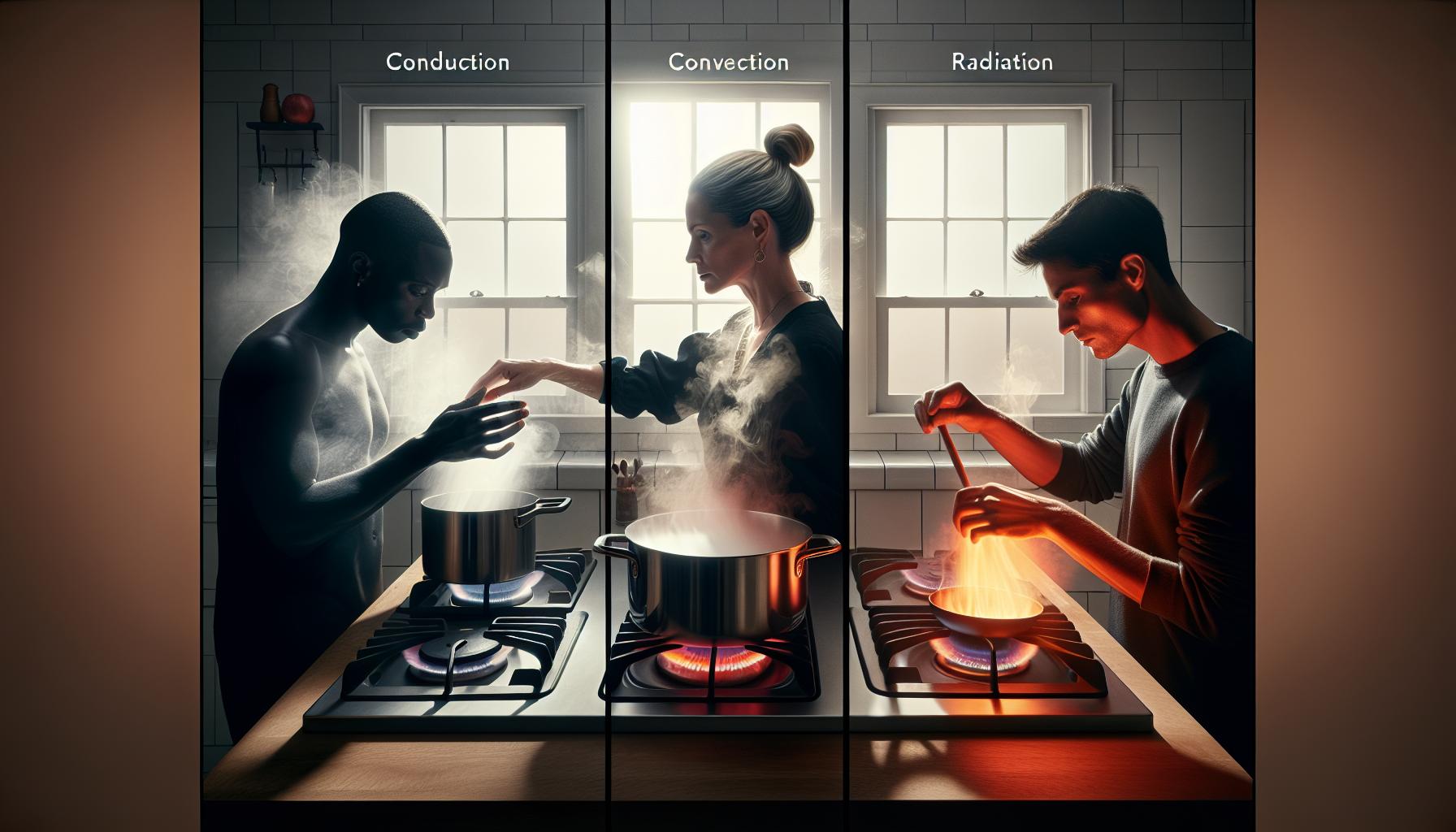
Heat transfer is a fascinating phenomenon that plays a crucial role in our daily lives, from the way we cook food to understanding weather patterns. When we discuss the methods of heat transfer, we’re delving into three distinct yet interconnected processes: conduction, convection, and radiation. Each method has unique characteristics and applications, making it essential to comprehend how they function and where they are most effective.
In conduction, heat transfer occurs through direct contact between materials. This method is particularly efficient in solids, where particles are closely packed, allowing for rapid energy transfer. For example, consider a metal pan on a stove: the heat conducted from the burner to the pan directly heats the food inside. The efficiency of conduction depends on the material’s thermal conductivity; metals like copper and aluminum are excellent conductors, while wood and rubber are poor conductors, making them ideal for handles and grips that don’t overheat.
Convection, on the other hand, involves the movement of heat through fluids (liquids and gases). As a fluid is heated, it becomes less dense and rises, while cooler fluid moves in to take its place, creating a circulation pattern. This is why when you heat a pot of water on the stove, you can see the water moving as it boils. In buildings, convection is crucial for effective heating and cooling, as systems rely on air circulation to maintain comfortable temperatures. Understanding the principles of convection can lead to more effective HVAC system designs and energy savings.
Lastly, radiation distinguishes itself by transferring heat through electromagnetic waves without needing a medium. The warmth you feel from sunlight on your skin, even when in the shade, is a classic example of radiation at work. This method is significant in scenarios like space travel, where, outside Earth’s atmosphere, heat is transferred purely through radiation. By grasping the differences between these heat transfer mechanisms, we can apply this knowledge to optimize everything from energy use in homes to industrial applications and environmental controls, making our systems more efficient and effective.
Conduction: How Heat Travels Through Solids
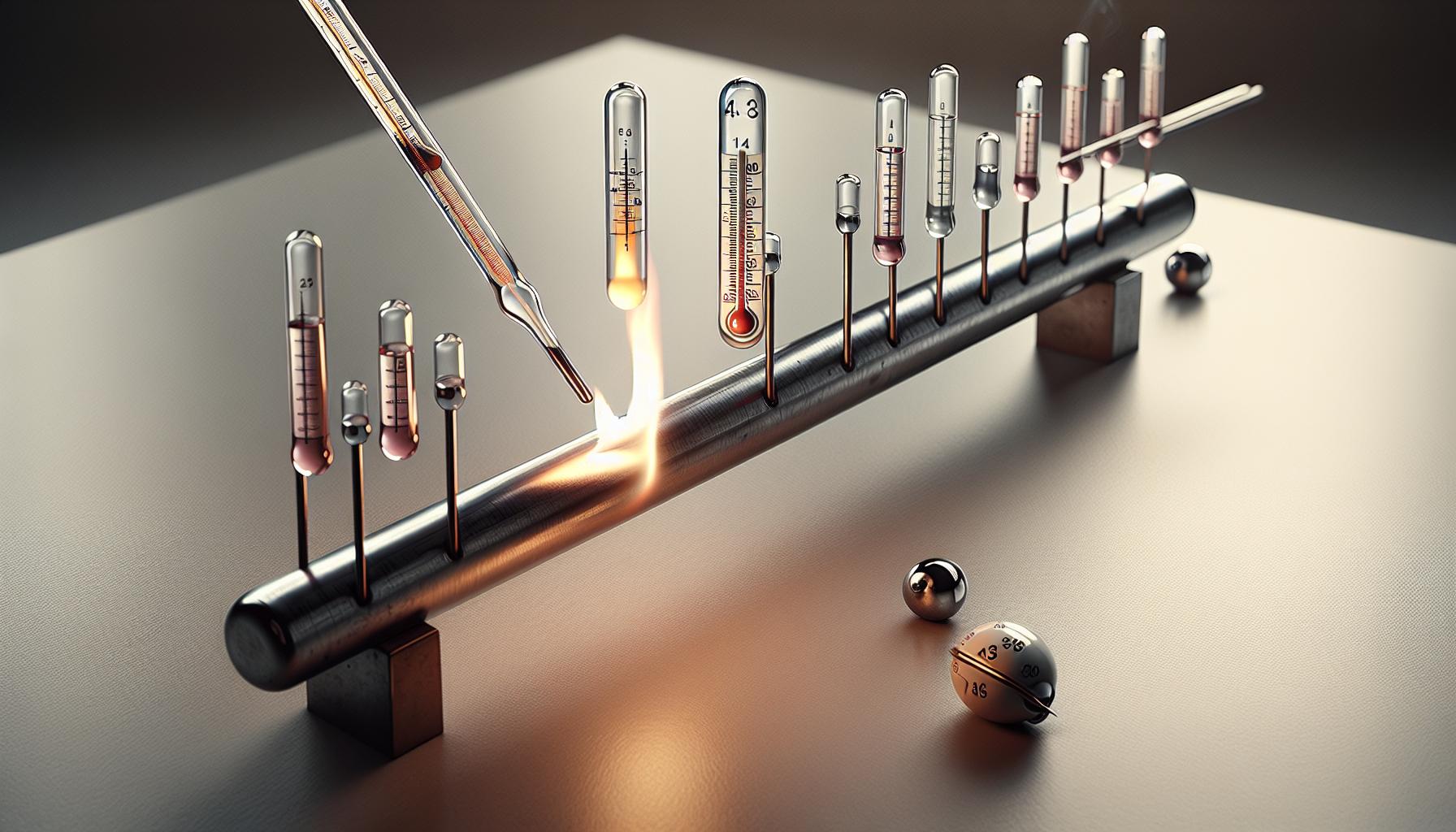
When you feel the heat of a freshly baked cookie sheet, you’re experiencing the fundamental process of conduction. This method of heat transfer occurs through direct contact between materials, enabling energy to move from one object to another. As solids consist of closely packed particles, conduction allows for a rapid transfer of kinetic energy, resulting in efficient heat flow. For example, when a metal spoon rests in a hot pot of soup, the heat from the soup is conducted through the spoon, making it feel warm to touch.
The efficiency of conduction is largely dictated by the thermal conductivity of the materials involved. Thermal conductivity is a material property that indicates how easily heat can flow through that material. Metals such as copper and aluminum possess high thermal conductivity, making them excellent choices for cookware and heat exchangers. In contrast, materials like wood and rubber exhibit poor thermal conductivity, which leads to their common usage in applications requiring insulation from heat, such as handles on pots and pans to prevent burns.
To illustrate, let’s break down how conduction functions in everyday life:
- Cooking: The heat from a stovetop burner transfers to metal cookware, which then conducts heat to the food.
- Heating a Homes: Radiators heat the air in a room, which then conducts warmth to nearby surfaces, ensuring an even distribution of temperature.
- Electronics: Heat sinks in devices like computers transfer excess heat away from sensitive components to maintain optimal operating temperatures.
Understanding conduction helps optimize various applications, from improving cooking efficiencies to enhancing energy conservation in buildings. By selecting materials with the right thermal properties for specific tasks, we can harness the power of conduction to its fullest potential, making everyday processes more effective and efficient.
Convection: Movement of Heat in Fluids
Moving heat through fluids is a dynamic process that significantly influences our daily lives-think boiling water or the gentle breeze of a fan on a hot day. Convection, a key method of heat transfer, occurs when warmer, less dense fluid rises while cooler, denser fluid sinks, creating a continual circulation pattern. This movement can be described as natural convection, which happens due to temperature differences, or forced convection, where an external force, like a fan or a pump, drives the fluid movement.
In practical terms, when you heat a pot of water on the stove, the water at the bottom heats up first, becomes less dense, and rises to the surface, allowing cooler water to sink down to the bottom to be heated. This cycle continues until the heat is evenly distributed throughout the pot. The effectiveness of convection depends on various factors including fluid properties, the temperature difference, and the geometry of the system. It’s worth noting that fluids with high heat capacities-like water-are typically more efficient at transferring heat, making them ideal for cooking and heating applications.
Applications of Convection in Everyday Life
Understanding convection helps us harness its power in various applications. For example:
- Heating Systems: Residential heating systems often rely on convection; hot air rises from heating vents, circulating throughout rooms for effective temperature control.
- Cooling Systems: In electronics, heat sinks facilitate convection by increasing the surface area for heat to dissipate, keeping devices like computers from overheating.
- Cooking: Convection ovens use fans to circulate hot air around food, cooking meals evenly and efficiently compared to traditional ovens.
Factors Affecting Convection
The rate of convection heat transfer is influenced by properties such as fluid velocity, temperature, and the presence of obstacles that can disrupt flow. For instance, greater fluid movement typically enhances heat transfer efficiency, which is why forced convection systems (like air conditioning units) are often more effective than their natural counterparts. In systems where fluid dynamics play a critical role, such as in chemical processing or heat exchangers, understanding these nuances can significantly enhance performance and energy efficiency.
In conclusion, recognizing how convection operates in both natural and controlled environments empowers us to improve various technology and processes, whether it’s optimizing home heating or innovating industrial applications.
Radiation: Heat Transfer Without Medium
Heat transfer through radiation is fascinating and crucial to understanding energy dynamics in our environment. Unlike conduction and convection, radiation does not require a medium to transfer heat; it can occur even in the vacuum of space. This process involves the emission of electromagnetic waves, primarily in the infrared spectrum, which carry energy away from an object. When these waves come into contact with another object, they transfer energy, leading to an increase in temperature.
A practical example of radiation is the warmth felt from sunlight. Even when the air is cool, the sun’s rays can heat surfaces, and this is the essence of radiant heat transfer. Similarly, when you stand near a campfire, you can feel the heat even if there is no direct contact or airflow. This is because the fire emits infrared radiation, which travels through the air and warms your skin directly, showcasing how radiation works in everyday life.
Characteristics of Radiative Heat Transfer
The efficiency and effectiveness of radiative heat transfer depend on a few factors:
- Surface Area: The larger the surface area of the radiating object, the more heat it can emit.
- Temperature: Hotter objects radiate heat more effectively. According to Stefan-Boltzmann law, the total energy radiated per unit surface area is proportional to the fourth power of the object’s absolute temperature.
- Emissivity: This property indicates how efficiently a surface emits thermal radiation compared to a perfect black body. Materials with high emissivity (like black surfaces) are more effective radiators.
Understanding radiation is essential for optimizing energy efficiency in various applications. For instance, radiant barriers, commonly used in building insulation, reflect radiant heat back towards its source, keeping homes cool in summer and warm in winter. Similarly, infrared heaters utilize this method by emitting infrared radiation to warm objects and people directly rather than heating the air, leading to efficient energy use.
Incorporating knowledge of radiative heat transfer can lead to practical innovations, making everyday technologies more effective while enhancing comfort and energy conservation. Knowing how to manipulate this form of heat transfer can result in better designs in architecture, automotive engineering, and even cooking!
Factors Influencing Heat Transfer Efficiency
Efficient heat transfer is foundational in numerous applications, from household heating systems to industrial processes. Understanding the factors that influence the efficiency of heat transfer can significantly enhance performance in these systems. Multiple elements come into play, including material properties, temperature gradients, and environmental conditions.
One primary factor is the thermal conductivity of the materials involved. High conductivity materials, such as metals, facilitate rapid heat transfer through conduction, making them ideal for applications like cooking utensils or heat exchangers. Conversely, insulating materials like fiberglass or foam slow down heat transfer, keeping heat in or out of spaces where it is desired. The choice of materials based on their thermal properties ultimately impacts the effectiveness of the heat transfer process in any system.
Another critical aspect is the temperature difference between the objects or substances involved. The greater the temperature gradient, the more vigorous the heat transfer. This principle is evident in everyday examples: a hot coffee mug cools quickly on a chilly morning, with the rapid transfer of heat into the surrounding air. This concept is quantified by Fourier’s law, which states that the heat transfer rate is proportional to the temperature difference and the area through which the heat flows.
Lastly, the flow characteristics of fluids play an essential role in convection heat transfer. Factors such as fluid velocity, viscosity, and density can significantly bolster or hinder the efficiency of heat transfer in liquids and gases. For instance, in heating mechanisms, circulating fluids often enhance thermal exchange compared to stagnant configurations. Understanding these dynamics allows engineers to optimize designs for systems such as HVAC units, ensuring maximum efficiency and comfort.
In summary, enhancing heat transfer efficiency demands a careful selection of materials, attention to temperature differences, and an understanding of fluid dynamics. By focusing on these elements, one can significantly improve energy efficiency and performance across various systems and applications, leading to both economic and environmental benefits.
Comparing the Three Methods of Heat Transfer
The intricacies of heat transfer methods reveal how heat migrates from one space to another, playing a crucial role in both natural phenomena and engineered systems. Understanding these methods allows us to optimize various applications-from designing more efficient heating systems to improving industrial processes. The three primary methods of heat transfer-conduction, convection, and radiation-each have distinct mechanisms and contexts in which they excel.
Conduction
Conduction occurs when heat is transferred through solids, where molecules are closely packed and can easily pass kinetic energy along. This method is governed by the material’s thermal conductivity; for instance, metals like copper conduct heat efficiently, making them ideal for cookware and electronic components. In contrast, materials with low thermal conductivity, such as wood or rubber, act as insulators. An example is a metal spoon in a pot of hot soup, where heat moves from the soup to the spoon’s handle-if left too long, it can become hot to the touch. The equation that describes conduction is Fourier’s law, which illustrates the relationship between heat transfer rate, thermal conductivity, and temperature gradient.
Convection
Convection represents the transfer of heat through fluids-liquids and gases-where warmer, less dense portions rise while cooler, denser portions sink. This creates a circulation pattern that facilitates efficient heat distribution. Consider cooking pasta: as water heats up, the hot water rises to the surface while cooler water descends to the bottom, ensuring the noodles cook evenly. The rate of convection is influenced by factors such as fluid viscosity and flow speed; for instance, stirring a pot enhances heat transfer compared to letting it sit. Engineers often rely on convection principles when designing heating and cooling systems, where forced convection (like fans) significantly improves thermal exchange.
Radiation
Radiation differs from the other two methods in that it transfers heat without the need for a medium, utilizing electromagnetic waves. Every object emits radiation based on its temperature; for example, the sun heats the Earth via radiant heat transfer. This method is crucial in applications such as solar panels, where capturing sunlight converts it to usable energy. Unlike conduction and convection, radiation can occur across a vacuum-hence why we feel warmth from the sun even though it is millions of miles away. The efficiency of radiation transfer is influenced by surface properties, such as color and texture, with darker, matte surfaces typically radiating heat more effectively than lighter, shiny ones.
Each of these heat transfer methods interacts within real-world applications, often complementing one another. For instance, consider a home heating system: it conducts heat through pipes, convects heat through air circulation, and can even utilize radiation to warm surfaces. By analyzing the comparative effectiveness of each method, engineers and scientists can innovate solutions that enhance energy efficiency, ultimately leading to cost savings and reduced environmental impact. Understanding when and how to apply these methods empowers us to manipulate heat transfer for an array of practical purposes in our daily lives.
Real-World Applications of Heat Transfer
Heat transfer is a fundamental process at work in countless applications that define our daily lives and the sectors that support them. From the efficiency of heating systems in homes to the performance of cutting-edge technology in industries, understanding heat transfer methods helps optimize functionality and energy consumption. Picture the sun warming the Earth-radiation is just one way heat influences everything from natural climates to engineered solutions.
Conduction in Construction and Cookware
In the construction industry, conduction plays a vital role in designing energy-efficient buildings. The materials chosen for walls, roofs, and windows directly impact heat retention and loss. For instance, using insulated glass can significantly reduce thermal bridging, where heat passes through the structure leading to higher energy bills. In cooking, materials like aluminum and copper are popular for pots and pans due to their excellent conductive properties-this ensures even heating, which is critical when preparing delicate dishes. Users might opt for a stainless-steel pan with an aluminum core to leverage both durability and efficient heat transfer.
Convection in HVAC Systems
Convection is indispensable in heating, ventilation, and air conditioning (HVAC) systems. Central heating systems, for instance, rely on the principles of convection to circulate warm air throughout a space effectively. As warm air rises, it creates a vacuum that draws cooler air back into the heating source. Similarly, convection ovens use a fan to distribute hot air, ensuring that foods cook evenly and more quickly than conventional ovens. Understanding the factors that influence convection-such as airflow patterns and the design of vents-enables engineers to enhance system efficiency, resulting in lower energy use and improved comfort.
Radiation and Renewable Energy
Radiation’s most celebrated application lies within renewable energy, particularly solar energy systems. Solar panels harness radiant energy from the sun and convert it into electricity, showcasing a seamless partnership between nature and technology. As the industry evolves, innovative designs like building-integrated photovoltaics (BIPV) are being developed to enhance energy efficiency while also minimizing aesthetic impact on buildings. Furthermore, advancements in materials that improve heat absorption and retention can lead to more efficient heating solutions, aiding in both individual and commercial energy strategies.
In conclusion, understanding the various methods of heat transfer-conduction, convection, and radiation-enables us to make informed choices that enhance efficiency and functionality in numerous applications. From smart building designs that optimize thermal properties to innovative cooking technologies that improve our culinary experiences, the science behind heat transfer is both practical and immensely relevant in modern life.
Common Myths About Heat Transfer Debunked
Many misconceptions surround the concept of heat transfer, often leading to confusion in both academic and practical contexts. One common myth is the belief that heat transfer only occurs in one direction, from hot to cold. While this is true in terms of net heat flow, heat can simultaneously transfer from cold to hot regions. For example, when you touch a cold metal object, your finger loses heat to the metal, yet the metal absorbs energy from your finger. It’s essential to understand that heat transfer is a dynamic process involving the continuous exchange of energy within a system.
Another prevalent misconception is that conduction, convection, and radiation only operate independently of one another. In reality, these methods often work together in everyday applications. Consider a boiling pot of water on a stove: heat from the burner (convection) warms the air and the pot (conduction), while steam escapes as hot vapor (radiation). This interplay can significantly affect the efficiency of heating systems, such as furnaces and water heaters, emphasizing the need for a holistic understanding of heat transfer methods.
Additionally, many believe that insulation materials are effective in all situations or that all types of insulation perform equally. However, each insulation material has unique properties that determine its effectiveness based on the type of heat transfer involved. For instance, fiberglass and foam boards mainly resist conduction, while reflective insulation excels at minimizing radiant heat loss. In real-world applications, understanding which material to use is key to optimizing energy efficiency in homes and buildings.
In conclusion, dispelling these myths about heat transfer can lead to better energy efficiency strategies, enhanced understanding of thermal systems, and smarter decisions in both building design and everyday life. With a clearer grasp of how all three methods interconnect, people can implement more effective solutions in insulation, HVAC systems, and even cooking techniques.
Advanced Concepts in Heat Transfer Mechanics
Understanding the intricate mechanics of heat transfer can significantly affect technological advancements and everyday applications. At the heart of advanced heat transfer concepts lies the principle of Fourier’s Law, which quantifies the rate of conduction in materials. This law states that the heat transfer rate through a material is proportional to the negative gradient of temperature and the area through which the heat is flowing. This fundamental equation is pivotal for engineers and scientists when designing thermal systems, from electronics cooling to building insulation.
Complex Heat Transfer Systems
In practical scenarios, heat transfer often involves interactions between multiple methods. For instance, in the design of heat exchangers, engineers use the concept of overall heat transfer coefficient (U), which combines conductive, convective, and sometimes radiative heat transfer modes. This coefficient is crucial for assessing the performance of heat exchangers utilized in HVAC systems and renewable energy applications, such as solar water heaters. The efficiency and effectiveness of these systems can be maximized through precise calculations that take into account the temperature differences and flow characteristics of the fluids involved.
- Non-dimensional Analysis: Tools such as the Nusselt number help characterize convective heat transfer relative to conduction. It provides insights into whether flow is laminar or turbulent, significantly influencing heat transfer rates.
- Phase Change Dynamics: Heat transfer during phase changes, such as melting or boiling, introduces additional complexities. The latent heat involved during these transitions must be integrated into thermal analyses, especially in processes like refrigeration and distillation.
Another advanced area of heat transfer mechanics involves the use of computational fluid dynamics (CFD) simulations. These simulations allow for modeling complex thermal behaviors in systems where analytical solutions are impractical. By visualizing how heat moves through various mediums, engineers can optimize designs for various applications, from microelectronics to large-scale industrial processes.
Grasping these advanced concepts not only enriches academic understanding but also enhances practical applications, enabling engineers and scientists to innovate effectively and efficiently in a variety of fields.
Heat Transfer in Everyday Life: Practical Examples
In our daily lives, heat transfer occurs constantly, often without us even realizing it. Understanding how heat moves can help us make better choices, from cooking to home insulation. One practical illustration of conduction can be found in cooking. When you place a metal spoon in a hot pot, the heat from the soup travels through the metal, causing the spoon to become warm. This transfer of energy occurs due to the direct contact between the spoon and the hot liquid, showcasing the fundamental principle of conduction-heat moving from a hot object to a cooler one until thermal equilibrium is reached.
Convection is another method that is vividly illustrated in everyday activities, particularly when boiling water. As the water heats up at the bottom of the pot, it becomes less dense and rises to the top, while cooler water descends to take its place. This movement creates a circulation pattern known as a convection current, effectively distributing heat throughout the liquid. Understanding this principle can enhance cooking techniques, allowing for better results in dishes that require even heating, such as soups or stews.
Radiation, the third method of heat transfer, is perhaps the most intriguing and often overlooked in daily life. A stellar example can be seen when you stand near a campfire and feel the warmth on your skin. Despite the absence of direct contact or medium, you are receiving heat energy through infrared radiation emitted by the fire. This concept extends to how the sun warms the Earth-there’s no air through which the heat travels, yet the energy reaches us, facilitating life.
In addition to these fundamental examples, appreciating heat transfer can impact our home environments. For instance, using insulated windows can minimize unwanted heat loss in winter through conduction and prevent heat gain in summer from radiation. Similarly, understanding convection can influence how we position heating vents or place fans for optimal air circulation, ensuring a comfortable climate indoors. By recognizing these principles, we not only enhance our daily activities but can also make informed decisions that save energy and improve efficiency in our homes and workplaces.
Measuring Heat Transfer: Techniques and Tools
To effectively measure heat transfer, a variety of techniques and tools are available, each tailored to specific applications and methods of heat transfer-conduction, convection, and radiation. Understanding these techniques not only helps in scientific research but also aids in practical scenarios such as improving energy efficiency in buildings, optimizing cooking methods, and ensuring safety in industrial processes.
Techniques for Measuring Heat Transfer
One of the most common methods to measure heat transfer is through thermocouples. These devices consist of two different metals joined at one end, which produce a voltage dependent on temperature differences, allowing for precise thermal measurements. By placing thermocouples at strategic points within a system, such as on heating surfaces or in fluid flow paths, one can monitor heat distribution and transfer rates effectively.
Another useful approach is infrared thermography, which employs infrared cameras to detect heat patterns without direct contact. This method is especially effective for identifying hot spots in electrical systems or assessing the thermal performance of insulation in buildings. Infrared imagery can provide a visual understanding of where heat is being lost or gained, allowing for targeted improvements.
Moreover, in systems involving fluids, flow measurements are crucial. Devices like flow meters can be combined with temperature sensors to calculate heat transfer in liquids or gases by applying the principle of convection. For instance, measuring the inlet and outlet temperatures of a heating system along with the flow rate can yield results about the efficiency of the heating process.
Tools for Practical Measurement
When it comes to specific tools for measuring heat transfer, consider these examples:
- Heat Flux Sensors: These sophisticated tools measure the rate of heat transfer through materials, making them invaluable in building material testing and thermal performance assessments.
- Calorimeters: Used primarily in laboratory settings, calorimeters measure the heat absorbed or released during chemical reactions, aiding in understanding heat production and consumption.
- Data Loggers: These devices can record temperatures over time, allowing for long-term analysis of thermal performance in various environments, helping to refine processes or improve materials’ properties.
By utilizing these techniques and tools, one can achieve a comprehensive understanding of heat transfer dynamics in both theoretical studies and practical applications. This knowledge is instrumental in making informed decisions to enhance energy efficiency, improve safety measures, and innovate processes across various industries. Whether for academic research or everyday applications, mastering heat transfer measurement techniques enables more effective thermal management strategies.
FAQ
Q: What is the difference between conduction, convection, and radiation in heat transfer?
A: The difference lies in the mediums and processes by which heat is transferred. Conduction occurs in solids through direct contact; convection involves fluid motion carrying heat; and radiation transfers heat through electromagnetic waves, requiring no medium. Understanding these differences helps in applying the correct method in various scenarios.
Q: Why is conduction considered the slowest method of heat transfer?
A: Conduction is generally slower because it relies on the direct transfer of kinetic energy between neighboring particles. In solids, this means that heat transfer is limited by the material’s atomic structure and thermal conductivity, unlike convection and radiation, which can be faster due to fluid movements or electromagnetic waves.
Q: In what situations is convection most effective?
A: Convection is most effective in fluids (liquids or gases) where there is a significant temperature gradient, causing warmer, less dense fluid to rise and cooler, denser fluid to sink. This process is utilized in heating systems, cooking, and natural weather patterns, efficiently distributing heat in these mediums.
Q: How does the efficiency of heat transfer methods vary with different materials?
A: The efficiency varies significantly based on the material properties such as thermal conductivity and specific heat capacity. For instance, metals conduct heat through conduction more effectively than insulators, whereas fluids with higher viscosities may slow down convection. Understanding material properties is essential for optimizing heat transfer applications.
Q: Can heat transfer occur in a vacuum?
A: Yes, heat transfer can occur in a vacuum through radiation. Unlike conduction and convection, which require matter for the transfer of thermal energy, radiation allows for heat exchange via electromagnetic waves. This principle is evident in technologies like thermal insulation and solar panels.
Q: What role do surface area and temperature difference play in heat transfer?
A: Surface area and temperature difference are crucial factors affecting the rate of heat transfer. A larger surface area enhances conduction and radiation, while a greater temperature difference accelerates heat transfer rate. Engineers optimize these factors in designing heating and cooling systems for improved efficiency.
Q: How does heat transfer affect everyday appliances?
A: Heat transfer principles are essential in everyday appliances like refrigerators, ovens, and air conditioners. Understanding conduction, convection, and radiation allows for performance optimization, energy efficiency, and safety measures, ensuring appliances operate effectively in various domestic settings.
Q: What are some common misconceptions about heat transfer?
A: A common misconception is that heat always flows from hot to cold without exception. In reality, heat transfer mechanisms depend on surrounding conditions and materials. Additionally, many underestimate the impact of insulating materials, which can significantly improve energy efficiency in buildings and appliances.
In Summary
Understanding the three methods of heat transfer-conduction, convection, and radiation-empowers you to apply this knowledge in practical scenarios, from enhancing energy efficiency in your home to optimizing industrial processes. If you’re eager to explore further, check out our in-depth articles on thermal insulation techniques and energy transfer in fluids.
Don’t let your curiosity stop here! Dive into our related content and sign up for our newsletter to stay updated with the latest insights in the world of thermodynamics. Remember, the more you learn, the better equipped you’ll be to tackle real-world challenges. Have questions or insights? Feel free to leave a comment below! Your engagement not only benefits you but helps build a community that thrives on shared knowledge and expertise.
Get our latest guides, news, and insights highlighted in your Google Search & AI Overviews.