Gravitational force is a fundamental aspect of our universe, governing the motion of everything from falling apples to orbiting planets. Understanding its magnitude and direction can demystify complex movements in both everyday life and advanced scientific contexts. In “Visualizing Gravitational Force: Arrows Show Magnitude,” we’ll illustrate how vectors-represented as arrows-can clarify the strength (magnitude) and direction of gravitational pull, making this abstract concept more tangible. This visual approach not only enhances comprehension for students and researchers alike but also sparks curiosity about how these principles apply in real-world scenarios, such as satellite trajectories and engineering design. By grasping these foundational ideas, you can better appreciate the mechanics that shape our world and engage with the scientific principles that drive innovation. Dive in to explore how a simple arrow can unlock new insights into gravitational interactions!
Understanding Gravitational Force: The Basics

The concept of gravitational force is pivotal in understanding not only our immediate surroundings but also the vast mechanisms of the universe. At its core, gravitational force is an attractive force that acts between any two masses; it’s what keeps our feet on the ground and governs the orbits of planets and moons. This force is proportional to the product of the masses involved and inversely proportional to the square of the distance between them, encapsulated in Newton’s law of universal gravitation. This means that the greater the mass of the objects, or the closer they are to each other, the stronger the gravitational pull they exert on one another.
To visualize gravitational forces, diagrams often employ arrows. Each arrow represents a force, originating from an object with mass, pointing toward another object that it attracts. The length of the arrow indicates the strength of the gravitational force: a longer arrow denotes a stronger force, while a shorter arrow indicates a weaker one. This use of arrows provides an intuitive understanding of magnitude and direction, crucial for grasping how gravitational force operates in various contexts-whether it’s a falling apple or the motion of celestial bodies.
Consider the example of the Earth and the Moon. The gravitational force between them is substantial due to their significant masses, which is why the Moon orbits the Earth instead of drifting away. However, if an object, such as a spacecraft, were to position itself closer to the Moon than to the Earth, the gravitational pull from the Moon would become more pronounced, leading to complex interactions that can be illustrated through arrows representing each celestial body’s gravitational influence.
Moreover, understanding gravitational force extends beyond simple attraction; it branches into more complex domains including celestial mechanics and even the emerging field of gravitational wave astronomy. Tools such as computer simulations and visual models are increasingly employed to aid comprehension, making the abstract concepts more tangible and accessible. These insights not only deepen our understanding of fundamental physics but also enhance our ability to predict and manipulate gravitational phenomena in real-world applications.
The Concept of Force: What it Means in Physics
Understanding the nature of force is fundamental to physics, particularly when exploring gravitational force. At its core, a force is a push or pull on an object resulting from its interaction with another object. Forces can change the motion of an object, either accelerating it, slowing it down, or altering its direction. The gravitational force, one of the four fundamental forces of nature, is unique in that it not only attracts objects with mass but also governs the structure and dynamics of the universe itself.
Forces are represented in diagrams using arrows, which provide a clear visual representation of their characteristics. Each arrow signifies a specific force acting on an object; the direction of the arrow indicates the direction in which the force is applied, while the length represents the magnitude of that force. For example, consider the Earth pulling an apple downward. The arrow pointing toward the center of the Earth shows not only the direction of the gravitational pull but also the strength of that pull, which corresponds to the mass of the apple and the distance to the planet’s center.
In physics, the understanding of force extends beyond mere directional properties. When examining gravitational forces, it’s crucial to appreciate how various masses interact and influence each other. For instance, the gravitational force between the Earth and the Moon is significant, primarily due to their substantial masses and proximity. This interaction is essential not only for maintaining the Moon’s orbit but also plays a vital role in various phenomena such as tides on Earth.
Exploring forces requires a hands-on approach, often involving experiments, simulations, and visual aids. These tools help bridge the gap between theoretical concepts and practical applications, enhancing comprehension. As we continue to advance in technology, our methods for visualizing and understanding forces, including gravity, will only improve, allowing us to reveal new insights into the workings of our universe. Thus, understanding the concept of force, especially gravitational force, serves as a gateway to deeper knowledge in physics and its real-world applications.
Visual Representation: Why Use Arrows?
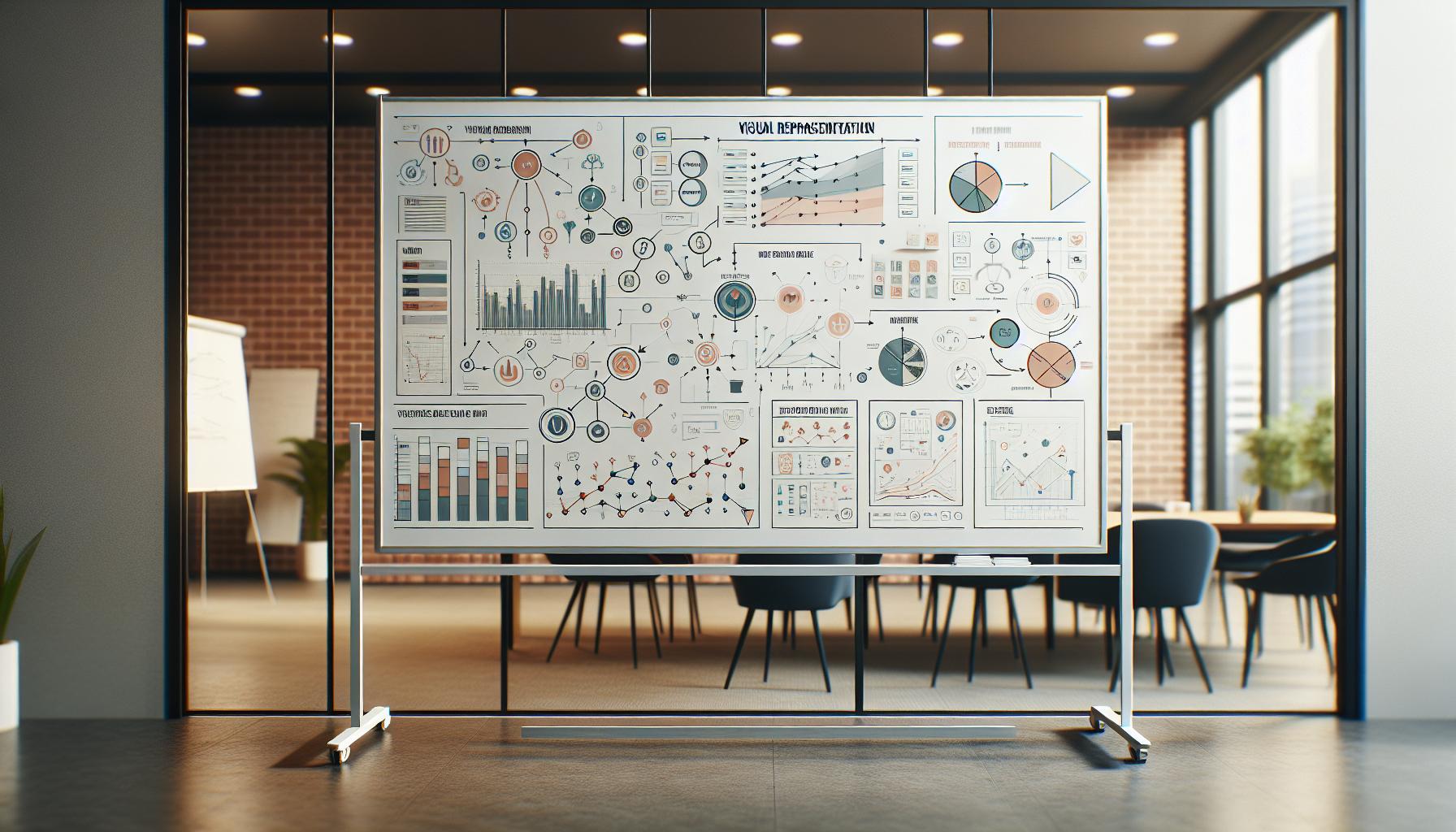
Visual representations of forces using arrows are not just a standard practice in physics; they are an essential tool for understanding the dynamics of how objects interact with one another. When we consider gravitational force, which is fundamentally an attractive force between masses, arrows help illustrate complex relationships in a straightforward and intuitive manner. Each arrow in a force diagram encapsulates vital information: the direction indicates the path of the force, while the length directly corresponds to the magnitude of that force. This means that a longer arrow symbolizes a stronger gravitational pull, while a shorter arrow represents a weaker force.
Using arrows in diagrams can simplify the understanding of gravitational interactions. For example, in the Earth-Moon system, we can visualize not only the force that Earth exerts on the Moon (keeping it in orbit) but also the gravitational force that the Moon exerts back on Earth, albeit weaker due to its lesser mass. By representing these forces with arrows, we can quickly appreciate how they interact and the balance that exists between them. This visual approach enhances learning, making it easier for students and enthusiasts to grasp the fundamental principles of gravitational force.
Moreover, these diagrams are valuable in practical applications, such as engineering and astrophysics, where understanding the force dynamics is crucial for designing stable structures, spacecraft trajectories, or predicting celestial events. The visual clarity that arrows provide enables engineers and scientists to communicate complex ideas effectively, making it easier to collaborate and innovate. The symbolism of arrows turns abstract concepts into tangible visual aids, bridging the gap between theory and practical application in gravitational studies.
How Arrows Indicate Magnitude and Direction
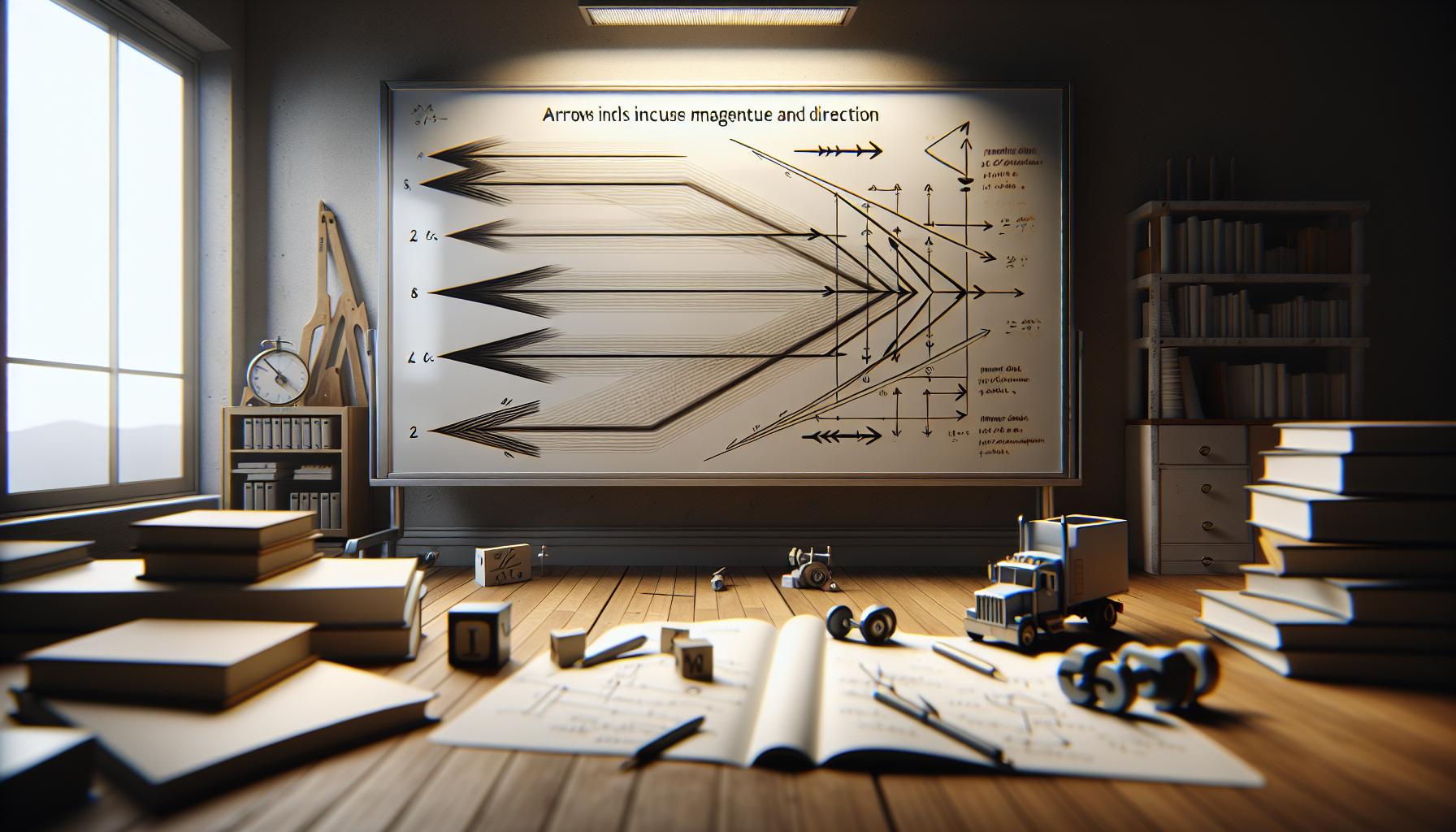
Understanding gravitational force can often feel abstract, but visual tools like arrows make this fundamental concept more tangible. In physics, arrows serve a dual purpose: they indicate both the direction and the magnitude of forces. The gravitational force is no exception; every time we visualize gravitational interactions between objects, arrows become key players in the narrative of motion and attraction.
The length of the arrow represents the strength of the gravitational pull. This means a longer arrow signifies a stronger gravitational force, while a shorter arrow depicts a weaker force. For example, when visualizing the gravitational interaction between Earth and a falling apple, the arrow pointing down from the apple to the center of the Earth will be long, demonstrating the Earth’s stronger gravitational force. In contrast, if we were to depict the gravitational force between two smaller objects, like an apple and a cherry, their arrows would likely be shorter, reflecting their lesser gravitational interactions due to their reduced mass compared to Earth.
Real-World Application
Using arrows to indicate gravitational forces not only aids in comprehension but is also critically important in applied physics. Engineers utilize these visualizations when designing structures that must withstand gravitational forces, ensuring they are stable and safe. For instance, in architectural design, understanding the gravitational force acting on a building allows for appropriate support structures to be integrated. Visual diagrams help convey complex gravitational interactions, ensuring all stakeholders thoroughly understand the requirements and limitations of the designs.
By integrating simple arrow-based diagrams, we illustrate how gravitational forces act in everyday scenarios – from a satellite orbiting Earth to the gravitational effects observed with the Moon’s pull on our oceans. This common visual language empowers learners and professionals alike to communicate intricate ideas clearly and effectively, fostering a deeper understanding of not just gravitational force itself, but also the broader principles governing motion in the universe.
Common Misconceptions About Gravitational Force

Many people hold misconceptions about gravitational force that can complicate their understanding of physics. One common belief is that gravity is an all-or-nothing force; that is, some may think it either exists fully or not at all. In reality, gravitational force acts continuously and varies in strength depending on the masses involved and their distance apart. For instance, the Earth’s gravity is strong enough to keep us grounded, but objects can still experience gravitational influences from other sources, such as the Moon, which causes ocean tides. Understanding that gravity is always in play can reshape how we visualize and interpret interactions in our environment.
Another prevalent misconception is that gravitational force is a directional force that only acts downwards. While we often associate gravity with falling objects, it actually acts toward the center of mass of any object that possesses mass. This means that gravity pulls equally from all directions. For example, in space, astronauts experience microgravity, where they appear to float. This happens because they are in free fall towards Earth, but since they are also moving forward, they keep “missing” the planet, thus creating the sensation of weightlessness. Visualizing gravity as a force acting in all directions, rather than simply downwards, helps clarify many scenarios encountered in physics and engineering.
It’s also a common misconception that the gravitational force between two objects is unaffected by their surroundings. In fact, gravity is influenced by other masses in the vicinity. For instance, the gravitational force between Earth and an object is altered by the presence of other planetary bodies, which can distort the gravitational field. This aspect is crucial for understanding complex systems, such as those found in astrophysics, where the interaction of multiple masses (like stars in a galaxy) must be considered. Recognizing these nuances not only enhances our grasp of gravitational force but also deepens our appreciation for the intricate balances in nature.
Lastly, many believe that gravity operates purely on intuition and common sense. Contrary to that, the principles governing gravitational force can often be counterintuitive. Take, for example, how two objects of different masses fall at the same rate in a vacuum. This is a product of gravitational acceleration being constant (approximately 9.81 m/s² on Earth) regardless of mass, as famously demonstrated by Galileo. Misunderstanding this principle can lead to misconceptions about how objects behave under gravitational influence, underscoring the importance of learning from empirical evidence and formal scientific principles rather than relying solely on intuition.
Real-World Applications of Gravitational Force
Understanding gravitational force goes beyond theoretical concepts; it has critical real-world applications that affect various fields, from engineering to space exploration. One significant impact is in the design and operation of vehicles. For instance, aerospace engineers must account for gravitational forces when calculating the trajectories of spacecraft. During launch, the thrust produced by rocket engines must overcome Earth’s gravitational pull. This calculation determines how much fuel is needed and what kind of trajectory will allow a spacecraft to reach orbit-a process visualized effectively with arrows indicating the magnitude of both thrust and gravitational force acting on the rocket.
In the realm of civil engineering, gravitational force plays a vital role in the structural integrity of buildings and infrastructure. When designing skyscrapers, engineers use advanced modeling techniques to visualize not only the weight of the building but also the gravitational forces acting upon it. Arrows can represent the downward force exerted by the building’s mass, helping engineers ensure that structures can withstand extreme conditions such as earthquakes or high winds. Building materials, anchoring methods, and overall design must all accommodate these forces, often requiring complex calculations rooted in gravitational theory.
Another fascinating application of gravitational force is in the field of navigation and satellite technology. GPS satellites orbit Earth at altitudes where they experience reduced gravitational force compared to objects on the ground. Engineers must take into account gravitational influences from Earth and other nearby celestial bodies when calculating satellite orbits. The positioning and movement of these satellites involve intricate mathematical models that account for changes in gravitational pull, ensuring accurate global positioning data for navigational systems used in everything from smartphones to autonomous vehicles.
Overall, visualizing gravitational force through arrows not only helps in understanding its magnitude and direction but also assists in practical applications across various industries. By effectively displaying the interplay of forces, engineers and scientists can make informed decisions that enhance safety and efficiency in everything from everyday transport to high-stakes aerospace missions.
Advanced Visualization Techniques in Physics
Visualizing gravitational force is a complex endeavor that has greatly benefited from advanced techniques in both theoretical and practical applications. An intriguing approach involves the use of computer simulations that model gravitational interactions in space. These simulations allow researchers to visualize how massive objects, such as planets and stars, exert gravitational pulls on one another over time. By representing forces with vectors, often depicted as arrows, scientists can convey both direction and magnitude of gravitational influences, making it easier to understand scenarios ranging from the orbits of planets to collisions between galaxies.
One widely used method is the particle cloud simulation, where a large number of test particles are influenced by gravitational forces within a specified field. Each particle’s trajectory can be represented with arrows that show the direction of gravitational pull acting on them at any moment. This visualization helps not only in academic scenarios but also in practical fields such as astrophysics, where understanding the gravitational dynamics of clusters of stars or black holes is crucial. Such techniques empower astronomers to predict celestial phenomena, refine theories of cosmology, and validate observational data from telescopes.
Another innovative technique is the use of augmented reality (AR) and virtual reality (VR) in educational settings. These technologies immerse learners in interactive environments where they can manipulate variables such as mass and distance to see firsthand how changes affect gravitational force. In these simulations, arrows dynamically adjust, teaching users about gravitational interactions through visual feedback. For instance, reducing the distance between two objects in an AR simulation will visibly demonstrate how the gravitational force increases, thereby reinforcing the concepts through experiential learning.
Furthermore, graphical visualization software can provide static and dynamic representations of gravitational fields. Tools like MATLAB and Python’s Matplotlib allow scientists to create detailed plots that illustrate gravitational strength across different distances. These visual aids can enhance presentations and publications, making complex data more accessible. A well-crafted graph displaying gravitational gradients can succinctly convey essential findings, helping to bridge the gap between advanced theoretical physics and practical applications.
Through these cutting-edge visualization techniques, not only do we gain clearer insights into the mechanisms of gravitational force, but we also enhance our ability to communicate these concepts effectively, whether in research papers, classrooms, or public outreach. As technology continues to advance, the potential to explore gravitational force and its implications will only expand, inspiring future discoveries in physics and astronomy.
The Role of Gravitational Force in Celestial Mechanics
Gravitational force serves as the cornerstone of celestial mechanics, dictating the movements and interactions of celestial bodies from planets to galaxies. Imagine two massive objects, like the Earth and the Moon, locked in a celestial dance-this dance is orchestrated by gravity. It is the invisible thread that binds these objects together, influencing their orbits and ensuring stability in the complex dynamics of our universe. When visualized, gravitational forces can be represented as arrows that not only indicate the direction of the force but also reflect its magnitude, illuminating the relationships between various celestial bodies.
Understanding the gravitational interactions in celestial mechanics starts with Newton’s Law of Universal Gravitation, which elaborates how every mass attracts every other mass. This equation, often simplified to F = G (m1 m2) / r², neatly ties together mass and distance. Here, G represents the gravitational constant, m1 and m2 are the masses of the objects, and r is the distance between them. Each component of this equation highlights the significance of gravitational pull in determining the trajectories of planets, moons, and even artificial satellites. For instance, when observing a planetary orbit, the gravitational forces at play can be visualized as arrows pointing toward the connected masses, demonstrating both the immense pull they exert on one another and the resulting elliptical paths they trace through space.
In the realm of celestial mechanics, these visual representations become invaluable. They allow astronomers and astrophysicists to predict orbital paths and understand the stability of systems over time. Techniques such as numerical simulations and graphical modeling help bring these forces to life. For example, a computer simulation might display a solar system where arrows dynamically fluctuate as these masses move, providing insights into how gravitational interactions can lead to fascinating phenomena such as orbital resonance or even the formation of new celestial bodies through accretion processes.
Furthermore, the ability to visualize gravitational forces extends to contemporary technology. Augmented and virtual reality applications create immersive experiences that enable students and researchers to manipulate variables and observe outcomes in real-time. This hands-on approach enhances comprehension, providing a deeper understanding of how gravitational forces dictate not only the motion of planets but also the structure and evolution of galaxies. In essence, visualizing gravitational force as arrows helps bridge theoretical physics and practical applications, fostering a greater appreciation for the intricate choreography of celestial mechanics.
Comparative Analysis: Gravitational vs. Other Forces
Understanding the nuances of gravitational force in comparison to other fundamental forces is pivotal for grasping the dynamics that govern our universe. Gravitational force, while the weakest of all known forces, plays a unique and vital role. Unlike electromagnetic or nuclear forces, gravity has an infinite range and is always attractive, meaning it never repulses. This distinctive characteristic makes it the arbiter of celestial movements, influencing not just objects on Earth, but also the sprawling relationships between planets, stars, and galaxies.
To illustrate this further, let’s consider how gravitational force compares to electromagnetic force. Electromagnetic interactions can both attract and repel; for example, like charges repel while opposite charges attract. This duality is pivotal in forming chemical bonds, enabling the complex structures of matter. In contrast, gravity’s unidirectional nature means that, while every object with mass attracts every other object, the strength of this force diminishes rapidly with distance, governed by the inverse square law. While a small magnet can have a stronger electromagnetic pull than the gravitational pull of a massive planet on a nearby object, gravity’s cumulative effect over large distances leads to the formation of celestial bodies and the structure of the universe.
Bridging Forces in Practical Applications
When examining how these forces manifest in everyday life, one can draw connections between gravitational interactions and other forces in diverse settings. Consider how gravity binds Earth’s atmosphere, using gravitational pull to retain gases, while electromagnetic forces govern the behavior of these gases at the molecular level. This interplay is crucial for understanding weather patterns and climatology. Moreover, in engineering applications, the principles of gravity are applied alongside electromagnetic forces in designing structures and ensuring stability in various environments.
Another compelling aspect of comparing these forces lies in the realm of technological advancements. Innovations like magnetic levitation trains showcase how electromagnetic force can counteract gravity, presenting a fascinating juxtaposition to gravitational dominance. Here, we see a practical application where knowing the relative strengths of forces allows engineers to create efficient transport systems. As researchers develop new materials and technologies, an understanding of how gravity interacts with other forces remains fundamental in pushing the boundaries of what is possible.
In summary, while gravitational force is often overshadowed by the more powerful electromagnetic and nuclear forces, its role is indispensable in shaping the fabric of our universe. Understanding how it compares to these other forces not only enriches our comprehension of physics but also provides a critical foundation for advancements across scientific and technological domains. This comparative analysis is essential for anyone looking to grasp the complexities of force interactions, whether for academic pursuits or real-world applications.
Emerging Technologies for Visualizing Forces
The quest to visualize gravitational forces has propelled advancements in technology that transform abstract concepts into tangible insights. As traditional models often struggle to convey the complexities of gravitational interactions, emerging technologies are stepping in to provide clarity. Techniques like computational simulations, virtual reality (VR), and augmented reality (AR) are becoming pivotal in education and research, offering immersive experiences that illustrate how gravity functions in various contexts.
One particularly groundbreaking approach is the integration of VR and AR into educational platforms. By using immersive environments, students and researchers can interact with gravitational fields in real-time, manipulating variables to see firsthand how mass and distance affect gravitational force. For example, a VR simulation can allow users to control the mass of objects and observe how gravitational attraction adjusts dynamically, almost as if conducting a live experiment in a virtual lab. This hands-on learning experience solidifies theoretical knowledge while engaging users more deeply than traditional textbooks or diagrams.
Another key technology is the advancement of high-resolution 3D modeling software. These tools enable scientists to visualize gravitational forces on a macro scale, such as during celestial events like black hole formations or galaxy collisions. By rendering detailed simulations, researchers can analyze the movement of celestial bodies and the gravitational interactions that govern their paths. Such visualizations not only aid in understanding complex theories but also assist in predicting cosmic phenomena and furthering our grasp of the universe’s structure.
In addition to VR and advanced modeling, data visualization techniques are enhancing how we present gravitational data. Interactive graphs and mapping software allow for the analysis of gravitational effects across different terrains on Earth, for example. By visualizing gravitational variations on Earth’s surface, scientists can address practical applications like oil exploration or earthquake preparedness.
With these technologies, the future of learning and understanding gravitational forces looks promising. As we continue to bridge the gap between theoretical physics and practical understanding, these innovations provide exciting ways to engage with, visualize, and manipulate the foundational forces that shape our universe.
Educational Tools and Resources for Learning Gravitational Force
In today’s educational landscape, the visualization of gravitational forces is becoming increasingly essential, allowing students to grasp complex concepts through innovative tools and resources. One of the most effective methods for understanding gravitational interactions is the use of interactive simulations. Platforms like PhET Interactive Simulations and LabXchange provide users with opportunities to manipulate variables such as mass and distance, visually experiencing changes in gravitational force. These dynamic simulations bridge the gap between theoretical physics and practical application, fostering deeper engagement and comprehension.
Immersive Learning Technologies
Another powerful resource is immersive learning technologies such as virtual reality (VR) and augmented reality (AR). These technologies create environments where learners can visualize and interact with gravitational forces in three dimensions. For instance, using VR headsets, students can observe how gravity influences objects in a controlled virtual setting, allowing for experimentation without the constraints of real-world limitations. Programs like Google Expeditions use AR to overlay gravitational concepts on physical spaces, helping students visualize how gravitational pull varies among different celestial bodies and their unique gravitational fields.
Online Courses and Educational Content
Additionally, various online courses and video resources can reinforce understanding. Websites like Khan Academy and Coursera offer courses on physics that include modules dedicated to gravitational forces. These courses often integrate animations and demos that exhibit gravitational effects, like free fall or satellite orbits, making it easier to understand complex behaviors. Moreover, utilizing platforms such as YouTube, educators can find excellent visual explanations and breakdowns of gravitational concepts, supplemented by real-world examples that demonstrate gravity at work.
Engaging with Real-world Examples
To complement these tools, bringing real-world examples into the discussion can significantly enhance learning. Activities such as observing the gravitational effects of different masses using simple household items can encourage hands-on learning. For instance, students can measure how different weights drop when released from the same height, allowing them to personally witness gravitational influence in action. Incorporating such activities fosters curiosity and reinforces theoretical principles by allowing students to see the laws of gravity in motion.
By leveraging these educational tools and resources, learners can develop a robust understanding of gravitational forces, positioning them to tackle more advanced physics with confidence.
Frequently asked questions
Q: How do arrows help in understanding gravitational force?
A: Arrows are crucial in visualizing gravitational force as they represent both the magnitude and direction of the force acting on an object. Shorter arrows indicate weaker gravitational force, while longer arrows signify stronger forces, making these visual tools effective for quick comprehension of gravitational effects.
Q: What is the significance of the length of arrows in force diagrams?
A: The length of arrows in force diagrams directly correlates with the magnitude of the gravitational force. A longer arrow means a more substantial force, providing a clear visual representation that simplifies the interpretation of how gravity influences objects in different scenarios.
Q: Why is it essential to visualize gravitational forces in education?
A: Visualizing gravitational forces enhances understanding by allowing students to see how gravity operates in real-world situations. This form of learning is particularly effective in grasping concepts like weight, mass, and free fall, making complex theories more accessible. For deeper insight, refer to the “Educational Tools and Resources” section of the article.
Q: Can gravitational force visualization aid in scientific research?
A: Yes, visualizing gravitational forces assists scientists in analyzing data, predicting object behavior under various gravitational influences, and developing models-especially in fields like astronomy and aerospace. Advanced visual techniques enable researchers to communicate findings effectively and support simulations of celestial mechanics.
Q: How can visualization techniques improve problem-solving in physics?
A: Visualization techniques, such as using arrows for gravitational forces, enhance problem-solving by providing a graphical interpretation of complex equations. They help students break down problems into manageable parts, fostering a deeper understanding of the underlying physical principles-further discussed in the “Advanced Visualization Techniques” section.
Q: What tools can I use for effective visualization of gravitational forces?
A: Tools such as simulation software, graphing calculators, or educational apps designed for physics can significantly improve the visualization of gravitational forces. These resources often incorporate arrows to show force magnitude and direction, aiding in more dynamic learning experiences. You can explore more in the “Emerging Technologies for Visualizing Forces” segment.
Q: How does gravitational force visualization compare with other forces?
A: Visualizing gravitational force can differ significantly from other fundamental forces, like electromagnetic forces. While gravity is always attractive and grows weaker with distance, other forces can be repulsive or attractive; this nuanced understanding is highlighted through comparative analysis in the article.
Q: What challenges do students face when visualizing gravitational force?
A: Students often struggle with the abstract nature of gravitational concepts and may find it difficult to visualize forces that are non-contact. Utilizing arrow diagrams and practical examples, as outlined in the “Common Misconceptions About Gravitational Force” section, can help overcome these challenges and improve comprehension.
Final Thoughts
As we wrap up our exploration of how arrows effectively visualize gravitational force and its magnitude, remember that understanding these concepts is pivotal in both academic and practical applications. For deeper insights, dive into our articles on Newton’s Laws of Motion and the Fundamentals of Gravity to strengthen your knowledge.
Don’t let your curiosity stop here! Subscribe to our newsletter for updates on the latest science breakthroughs, or explore our interactive simulations that bring these concepts to life. Have questions or thoughts? Join the conversation in the comments below-we love hearing from you! By continuously engaging with this content, you’ll enhance your grasp of fundamental physics concepts and their real-world implications. Together, let’s harness the power of understanding gravitational forces!
Get our latest guides, news, and insights highlighted in your Google Search & AI Overviews.